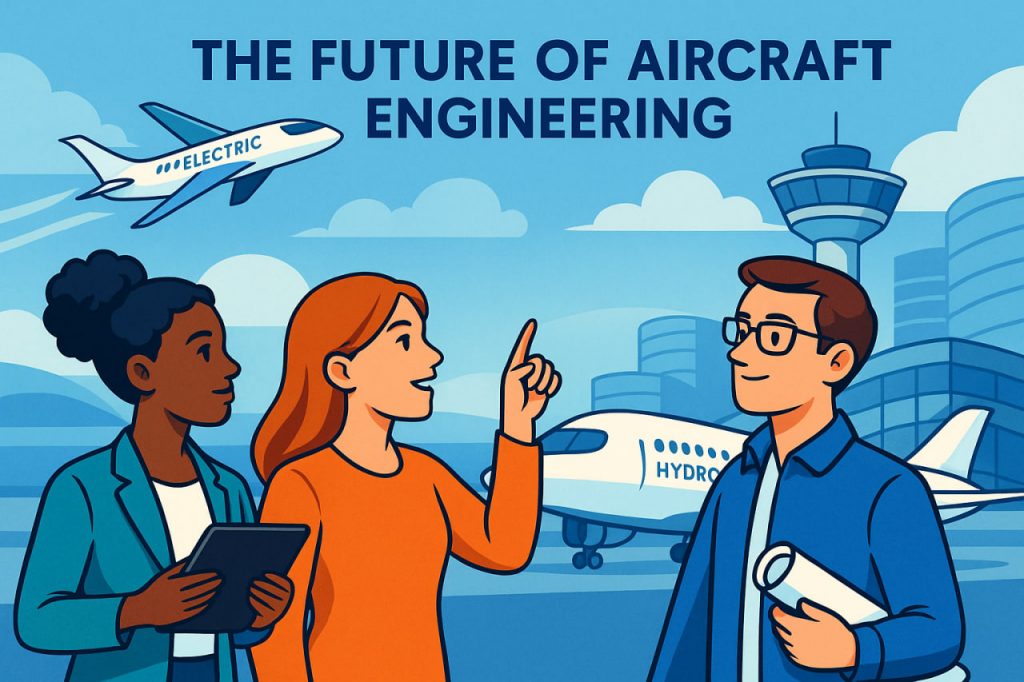
The future of aircraft engineering is shaped by the demand for faster, cleaner, and more efficient air travel. As global connectivity increases, the aviation industry faces new challenges, including environmental sustainability, noise reduction, and improved passenger safety. Researchers and engineers are working to develop new materials, propulsion systems, and aircraft designs that will transform how humans travel. These innovations aim not only to improve flight performance but also to reduce the ecological impact of aviation. The future of aircraft engineering will likely combine advanced technology with responsible design to create an era of smarter and more sustainable air transportation.
Next-Generation Propulsion
One major direction in future aircraft development is the shift toward alternative propulsion systems. Electric and hybrid-electric engines are being tested to reduce emissions and fuel consumption. Hydrogen-powered aircraft are also gaining attention because hydrogen fuel cells produce no carbon emissions when used in propulsion. Aerospace engineers believe that short- and medium-distance flights may be the first to adopt electric systems, while hydrogen technology could support larger, long-range aircraft. The transition to new fuels is still in development, but governments and aviation companies are actively investing in research to accelerate progress.
Advanced Materials and Aerodynamics
Modern aircraft are increasingly built using lightweight composite materials that offer greater strength while reducing overall mass. Future designs may incorporate carbon nanotubes, graphene, and advanced ceramics to improve energy efficiency. Aerodynamic innovations also play a critical role, with new wing shapes and retractable surface features designed to reduce drag during flight. Experts suggest that experimental aircraft may soon resemble sleek, blended-wing designs rather than traditional tube-and-wing structures. Such aircraft would offer improved lift efficiency and reduced fuel usage.
Autonomous and Smart Systems
The integration of artificial intelligence is making aircraft more autonomous and responsive. Smart monitoring systems can evaluate engine performance, weather conditions, and structural integrity in real time, allowing for safer and smoother flights. In the future, semi-autonomous aircraft could reduce pilot workload and enhance safety during complex flight conditions. However, aviation experts emphasize that human oversight will remain essential for decision-making in emergencies. The goal is not to replace pilots entirely, but to create collaborative navigation systems where humans and AI work together.
Interesting Facts
- Some concept aircraft designs feature blended wing bodies, which look similar to flying wings and promise exceptional fuel efficiency.
- Hydrogen-powered aircraft produce only water vapor as exhaust when used in fuel cell systems.
- Next-generation aviation research is heavily influenced by environmental goals set by international climate organizations.
Glossary
- Hybrid-Electric Engine – A propulsion system that combines electric power with traditional fuel-based components.
- Composite Materials – Engineered materials made from two or more substances that provide enhanced strength and reduced weight.
- Blended Wing Body – A type of aircraft design where the wings and body form a single, smooth aerodynamic structure.
- Fuel Cell – A device that converts fuel, such as hydrogen, into electricity through a chemical reaction.