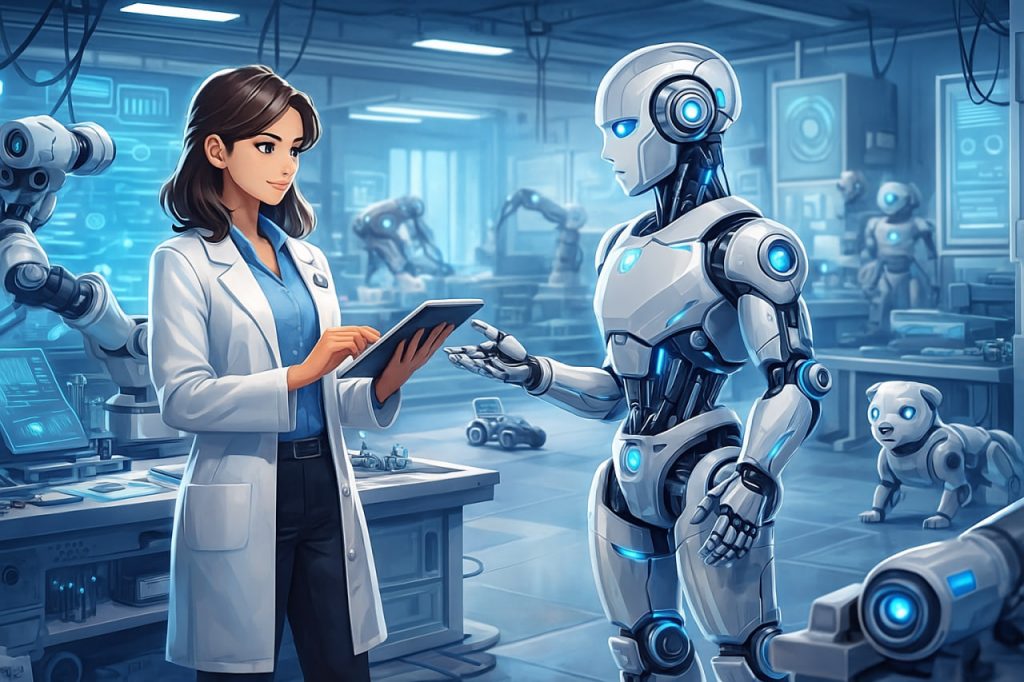
Robotics has entered a new era marked by rapid technological breakthroughs, smarter machines, and unprecedented levels of automation. What began as simple mechanical tools has evolved into a multidisciplinary field combining artificial intelligence, advanced sensors, bio-inspired engineering, and human–machine collaboration. Today’s robots can navigate complex environments, perform delicate tasks with surgical precision, and even learn from experience. Innovations in robotics are reshaping industries such as healthcare, manufacturing, transportation, space exploration, and environmental protection. Understanding these advancements reveals how robots are becoming essential partners to humans, boosting efficiency, safety, and scientific progress.
Modern robotics is driven by powerful computing systems, miniaturized hardware, and new materials such as soft, flexible polymers. These developments allow robots to adapt more naturally to the physical world, interact with humans safely, and accomplish tasks once considered impossible for machines. As engineering continues to evolve, robotics is becoming more intelligent, autonomous, and deeply integrated into everyday life.
AI-Enhanced Robotics
Artificial intelligence has transformed robots from simple automated devices into adaptive systems capable of decision-making and perception. Machine learning algorithms help robots recognize objects, analyze surroundings, avoid obstacles, and optimize their actions in real time. AI also allows robots to learn from data, improving performance without human reprogramming. According to robotics specialist Dr. Marcus Ellwood:
“The fusion of AI and robotics is the core engine
driving the next revolution in automation and human–machine collaboration.”
This integration is essential for applications in logistics, medicine, agriculture, and autonomous vehicles.
Soft Robotics and Bio-Inspired Machines
Soft robotics uses flexible materials that mimic the movements of animals, plants, and human muscles. These robots can bend, stretch, grip fragile objects, and adapt to irregular surfaces. Bio-inspired designs—such as robotic insects, octopus-like grippers, and snake-shaped search-and-rescue bots—allow engineers to build machines that move with natural efficiency. Soft robots are especially useful in healthcare, where gentle manipulation of tissues is required, and in hazardous environments where flexibility reduces mechanical risk.
Collaborative Robots (Cobots)
Collaborative robots, known as cobots, are designed to work directly alongside humans. They are equipped with advanced sensors, force-control systems, and safety algorithms that allow them to stop instantly when detecting human contact. Cobots assist with repetitive, heavy, or precise tasks in manufacturing, laboratories, and warehouses. Their ease of programming and adaptability makes them ideal for small and medium-sized businesses.
Medical and Surgical Robotics
Robotic innovations in medicine have improved surgical accuracy, patient recovery times, and overall healthcare quality. Surgical robots assist with minimally invasive operations, rehabilitation robots help patients regain movement, and diagnostic robots support imaging procedures. Robotics also plays a key role in prosthetics, where advanced bionic limbs respond to neural signals, improving the lives of individuals with limb loss.
Space and Deep-Sea Robotics
Robots are essential for exploring environments that are dangerous or inaccessible to humans. NASA and ESA use robotic rovers, landers, and drones to investigate Mars, asteroids, and icy moons. Deep-sea robots operate under intense pressure, mapping the ocean floor and studying marine biodiversity. These machines expand human knowledge by reaching places we cannot physically explore.
Environmental and Agricultural Robotics
Robotics is increasingly used to support sustainability. Agricultural robots can plant seeds, monitor crops, and harvest produce with high precision, reducing waste and resource use. Environmental robots track pollution, clean oceans, and inspect forests at scale. These systems improve environmental protection and help meet global food demands.
Challenges and Ethical Considerations
Despite impressive progress, robotics still faces challenges. Robots must become safer, more intuitive, and more affordable. Ethical concerns include job displacement, privacy issues, and over-reliance on automated systems. Ensuring responsible development is essential to balancing innovation with social impact. Robotics should always complement human expertise, not replace it.
The Future of Robotics
The next generation of robotics will feature smarter AI, improved autonomy, self-repairing materials, swarm robots, and seamless integration with augmented reality. As robotics continues to advance, machines will increasingly support science, industry, health, and daily life. The future promises a powerful partnership between humans and robots, transforming society in ways that were once science fiction.
Interesting Facts
- The first industrial robot, Unimate, was introduced in 1961 and revolutionized factory automation.
- Some soft robots can operate without motors, powered instead by air pressure or chemical reactions.
- Mars rovers like Perseverance use AI to navigate terrain autonomously.
- Modern cobots can be programmed in minutes, not hours, thanks to intuitive interfaces.
- Swarm robots mimic ant colonies, coordinating their actions without a central controller.
Glossary
- Machine Learning — AI techniques that allow robots to improve performance through experience.
- Cobots — collaborative robots designed to work safely with humans.
- Bio-Inspired Robotics — engineering that uses nature as a design blueprint.
- Autonomy — a robot’s ability to act without continuous human control.
- Soft Robotics — robots built from flexible materials that mimic living organisms.