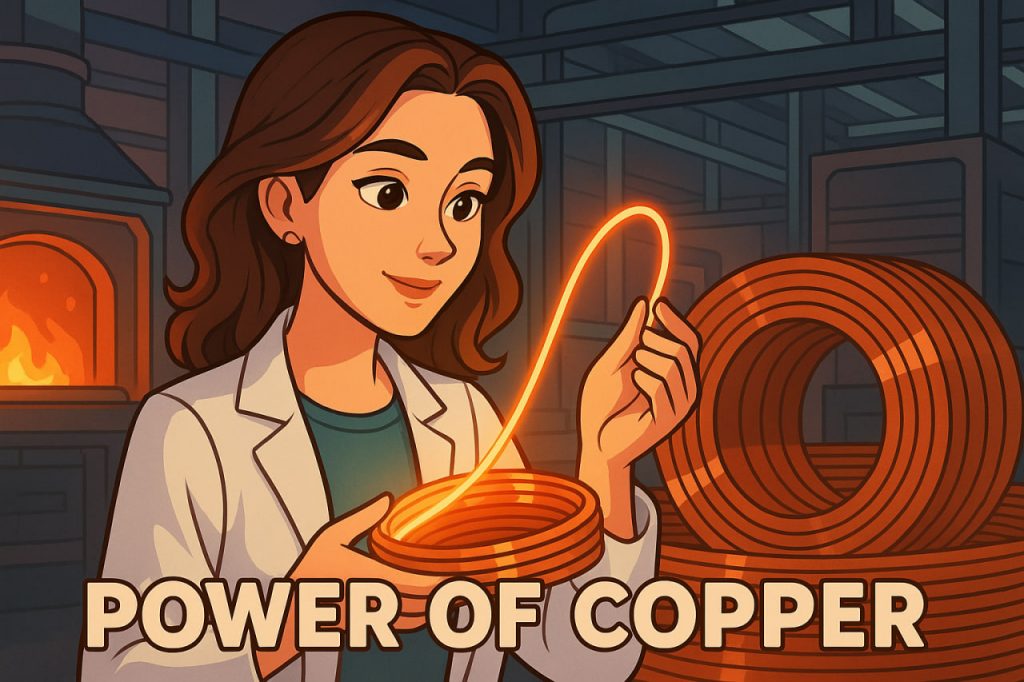
Copper, one of humanity’s oldest and most versatile metals, has shaped civilization for more than 10,000 years. Known for its reddish hue and exceptional conductivity, copper has been a cornerstone of human development, from ancient tools and coins to modern electronics and renewable energy systems. Its unique combination of durability, flexibility, and resistance to corrosion makes it indispensable across industries. Beyond its practical uses, copper holds deep cultural and economic significance—it symbolizes prosperity, technology, and connection. In an age focused on sustainability, this timeless metal continues to play a crucial role in building a greener and more efficient future.
The History and Discovery of Copper
The story of copper dates back to prehistoric times, making it one of the first metals ever used by humans. Archaeologists have discovered copper artifacts in the Middle East that date as far back as 9,000 BCE. Ancient civilizations such as the Egyptians, Greeks, and Romans valued copper for its beauty and utility, using it to craft tools, ornaments, and early forms of currency. The Bronze Age—an era named after the alloy of copper and tin—marked a technological leap in human history, enabling stronger weapons and more durable tools. According to historian Dr. Helen Carter, “Copper was the first metal to connect art, economy, and technology—it shaped the world before iron and steel took over.” Even today, its legacy remains visible in countless aspects of modern life.
Physical and Chemical Properties
Copper’s exceptional properties make it a favorite among engineers and scientists. It is a highly conductive metal, second only to silver, making it ideal for electrical wiring and energy transmission. Its natural malleability allows it to be easily shaped without breaking, while its resistance to rust ensures longevity. The reddish-orange color of copper develops a protective green patina, known as verdigris, over time when exposed to air and moisture. This oxidation layer not only enhances its aesthetic appeal but also prevents further corrosion. Copper’s antimicrobial qualities also make it useful in medical and sanitary applications, reducing the spread of bacteria on frequently touched surfaces.
Applications of Copper in Modern Society
In today’s world, copper is everywhere—from the wiring in our homes to the circuits inside smartphones. The electrical and electronics industries account for nearly half of global copper use. Its high conductivity ensures efficient energy transfer in power grids, electric vehicles, and renewable energy technologies such as wind turbines and solar panels. In construction, copper is used for plumbing, roofing, and architectural design due to its strength and resistance to the elements. Dr. Luis Romero, an electrical engineer, notes, “Every kilowatt of renewable energy depends on copper—without it, the green revolution simply cannot function.” Copper’s versatility continues to make it one of the most strategic materials of the modern era.
The Role of Copper in Health and the Environment
Copper is also essential to biological systems. In trace amounts, it supports red blood cell formation, immune function, and nervous system health. However, excessive exposure can be harmful, highlighting the need for balance. Environmentally, copper is one of the most sustainable metals—100% recyclable without losing its quality. Approximately one-third of all copper used today comes from recycled sources. This recyclability significantly reduces mining demand and energy consumption. Environmental scientist Dr. Naomi Patel explains, “Copper’s life cycle is a model of circular economy—it’s endlessly reusable, aligning perfectly with global sustainability goals.” The challenge now lies in maintaining responsible mining and recycling practices to minimize ecological impact.
Future Innovations and Challenges
As global demand for energy-efficient and eco-friendly technologies grows, copper’s importance continues to rise. It plays a vital role in electric vehicle batteries, smart grids, and next-generation communication systems. However, the increasing demand also presents challenges: declining ore quality, geopolitical tensions, and environmental concerns surrounding mining operations. Researchers are exploring alternatives such as graphene and conductive polymers, yet copper remains unmatched in balancing performance, cost, and availability. Advances in recycling and green mining could ensure that this ancient metal remains central to human progress for centuries to come. The future of copper is not just industrial—it is sustainable, innovative, and deeply connected to the advancement of civilization.
Interesting Facts
- Copper is the only metal that naturally occurs in a distinct reddish color.
- The Statue of Liberty’s green color is due to the oxidation of its copper exterior.
- Nearly 80% of all copper ever mined is still in use today.
- Copper has natural antibacterial properties and is used in hospitals to reduce infection risks.
- It is an essential trace element in the human body, required in small amounts for good health.
Glossary
- Verdigris — A greenish layer that forms on copper as it oxidizes, protecting the metal from further corrosion.
- Conductivity — The ability of a material to transmit electricity or heat efficiently.
- Circular economy — A sustainable system focused on recycling and minimizing waste by reusing materials.
- Malleability — The capacity of a metal to be shaped or bent without breaking.
- Graphene — A single layer of carbon atoms known for its exceptional strength and electrical properties.