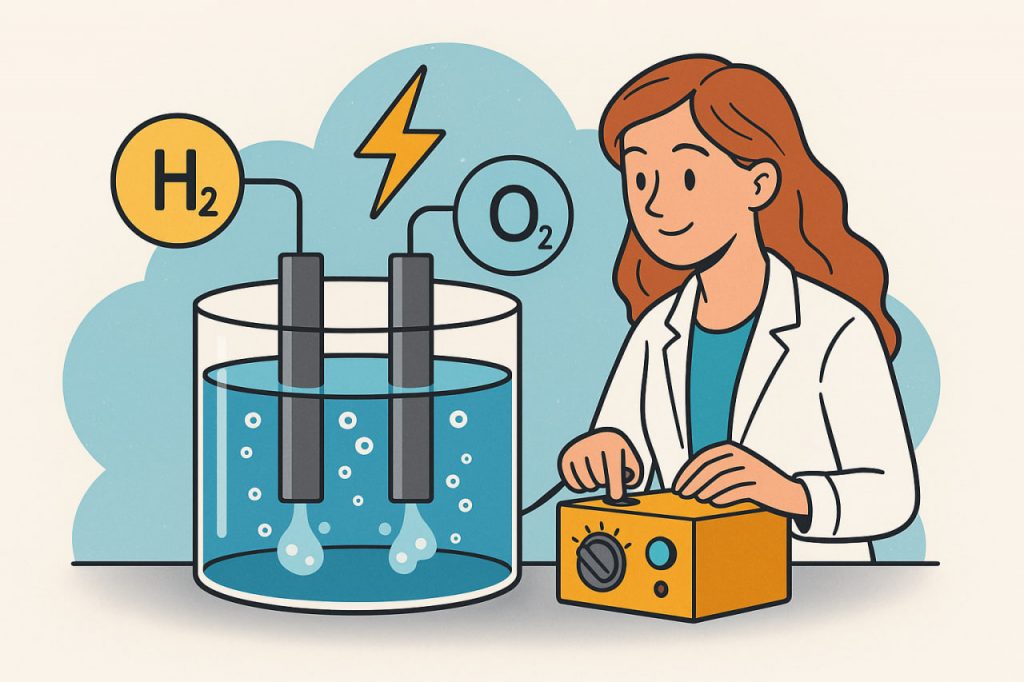
Electrolysis is a fundamental chemical process in which an electric current is used to drive a reaction that would not normally occur on its own. By splitting compounds into their component elements, electrolysis plays a key role in manufacturing, metallurgy, environmental technology, and renewable energy systems. The process is most widely known for splitting water into hydrogen and oxygen, but it is also essential for producing aluminum, chlorine, sodium hydroxide, and many industrial chemicals. In the modern energy landscape, electrolysis is gaining even greater attention as the foundational technology behind green hydrogen, a clean fuel that can help reduce global carbon emissions. Understanding how electrolysis works and why it is so important reveals its influence on energy, industry, and technological innovation.
Electrolysis relies on two electrodes — an anode and a cathode — submerged in an electrolyte solution. When electrical energy is applied, ions in the solution migrate to the electrodes, triggering oxidation and reduction reactions that separate chemical compounds. Although the principle is simple, the applications are far-reaching and technically sophisticated.
How Electrolysis Works
During electrolysis, electrical energy forces chemical bonds to break apart. The electrolyte contains charged particles that move when current is applied. At the anode, oxidation occurs (loss of electrons), while at the cathode, reduction takes place (gain of electrons). This coordinated movement allows targeted separation of substances. The most common example is the electrolysis of water:
- At the anode: water releases oxygen
- At the cathode: water gains electrons and forms hydrogen
According to electrochemistry specialist Dr. Helena Brooks:
“Electrolysis transforms electricity into chemical energy —
it is a bridge between electrical power and material production.”
This ability to convert energy from one form to another makes electrolysis vital in renewable energy strategies.
Industrial Applications of Electrolysis
Electrolysis has been used in industry for over a century. Major applications include:
- Hydrogen production for fuel cells and chemical processes
- Aluminum manufacturing, which depends on molten salt electrolysis
- Chlor-alkali plants, producing chlorine and sodium hydroxide
- Metal refining, such as copper purification
- Electroplating, used to coat objects with thin metal layers
Without electrolysis, much of modern manufacturing, infrastructure, and electronics would not be possible.
Electrolysis and Green Hydrogen
In clean energy research, electrolysis plays a central role in generating green hydrogen, which is made by splitting water using renewable electricity. Green hydrogen is important because it produces no greenhouse emissions during production or use. It can fuel vehicles, store energy, and power industrial furnaces. Electrolyzer technologies such as PEM, alkaline, and solid oxide are being deployed worldwide to scale up hydrogen production and support a sustainable energy transition.
Environmental and Scientific Benefits
Electrolysis is also used in environmental technologies. For example:
- Wastewater treatment uses electrolysis to remove pollutants.
- Metal recovery systems extract valuable materials from industrial waste.
- CO₂ conversion research explores using electrolysis to recycle carbon into useful chemicals.
As new materials and renewable technologies develop, electrolysis is expected to become even more efficient and widely used.
Challenges and Future Development
Despite its advantages, electrolysis still faces limitations. It requires substantial electrical energy, meaning its environmental impact depends on the energy source. Large-scale deployment of green hydrogen demands lower costs, improved electrolyzer efficiency, and expanded renewable infrastructure. Ongoing research aims to reduce energy losses, develop stronger electrode materials, and make electrolysis viable at global scale.
Interesting Facts
- Electrolysis was discovered in the early 1800s by pioneers of modern chemistry.
- Almost all aluminum in the world is produced through electrolytic smelting.
- Green hydrogen from electrolysis emits zero CO₂ during production.
- Solid oxide electrolyzers can operate at 700–800°C, improving efficiency.
- Electrolysis helps recover rare metals used in electronics and batteries.
Glossary
- Electrolyzer — a device that uses electricity to split chemical compounds.
- Anode — the electrode where oxidation occurs during electrolysis.
- Cathode — the electrode where reduction occurs.
- Electrolyte — a liquid or solid substance containing charged particles.
- Oxidation/Reduction — chemical processes involving loss and gain of electrons.