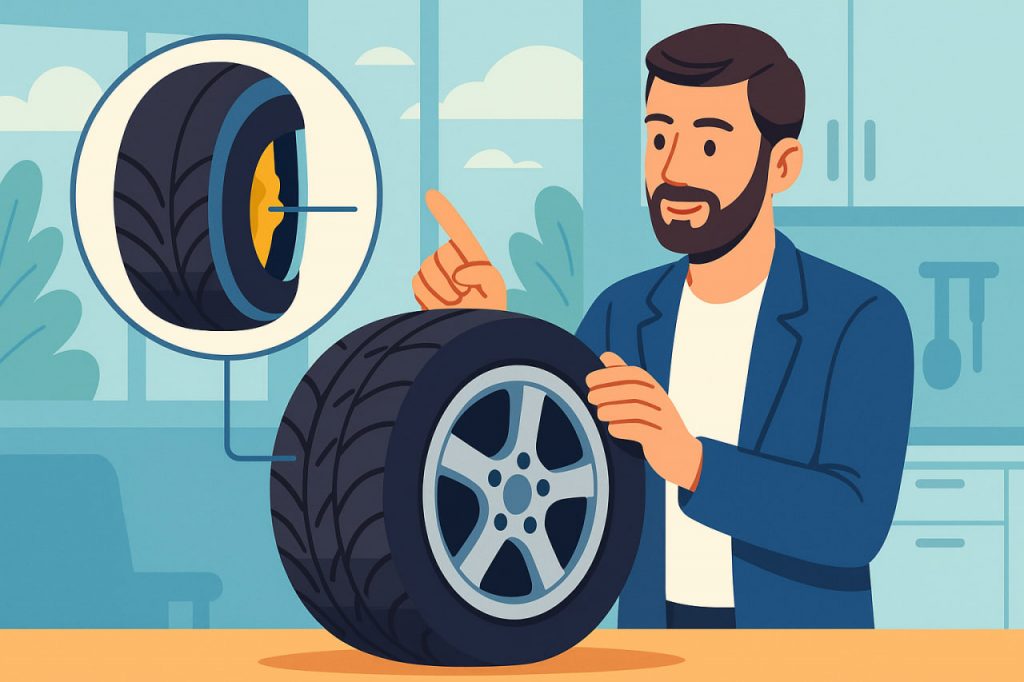
Self-healing tires are one of the most exciting technological innovations in modern transportation. Designed to automatically repair punctures and maintain their structural integrity, these advanced tires offer a safer, more reliable, and longer-lasting alternative to traditional rubber designs. Their development combines material science, polymer chemistry, nanotechnology, and smart engineering. As cities move toward sustainable mobility and autonomous vehicles, self-healing tires could dramatically reduce maintenance costs, improve road safety, and help decrease waste created by tire replacement. Understanding how these tires work, what materials they use, and how close we are to widespread adoption offers a fascinating look into the future of mobility.
Self-healing tire technology mimics biological processes found in nature. Just as human skin can seal small wounds, self-healing materials restore themselves when damaged. These materials support a dynamic and resilient tire structure that remains functional even after multiple punctures. This level of durability has strong implications for drivers, transportation companies, and environmental sustainability.
How Self-Healing Tires Work
Self-healing tires rely on advanced materials that can reconnect molecular structures after being pierced. The most common systems include:
- specialized elastomers that flow into the puncture and harden
- embedded microcapsules containing liquid polymers that break open on impact
- nano-reinforced networks that re-bond on a chemical level
- liquid sealants that immediately plug holes from nails or sharp objects
Some companies integrate flexible, temperature-sensitive materials that activate only when the tire is damaged. According to materials scientist Dr. Sophia Laurent:
“Self-healing polymers behave like living tissue —
they reorganize their bonds to restore strength without external help.”
These technologies ensure that minor punctures are fixed instantly and major damage is reduced significantly.
Benefits of Self-Healing Tires
The adoption of self-healing tire technology offers multiple advantages:
- Enhanced safety — reduces the risk of blowouts and sudden pressure loss.
- Longer lifespan — significantly extends tire durability.
- Lower maintenance — fewer tire replacements mean less cost over time.
- Environmental benefits — reduces rubber waste and resource consumption.
- Improved reliability — ideal for electric and autonomous vehicles where consistent performance is critical.
This technology is particularly useful for commercial fleets, heavy trucks, and long-distance travel.
Types of Self-Healing Tire Technologies
Different manufacturers explore various designs:
- Polymer-based self-healing tires — use chemically reactive materials.
- Sealant-lined tires — feature internal liquid compounds that close punctures.
- Reinforced structural tires — rely on layered materials for automatic repair.
- Airless self-healing concepts — futuristic models designed without inflatable chambers.
Airless designs eliminate punctures altogether and are being tested for future urban mobility systems.
Real-World Examples
Several companies have created working prototypes:
- Michelin’s Uptis concept — an airless tire with self-supporting structure.
- Continental’s ContiSeal — uses a sticky sealing layer for automatic puncture repair.
- Bridgestone and NASA — developing elastic-metal alloy tires for lunar rovers.
These prototypes suggest that self-healing tires will soon reach mainstream markets.
Limitations and Current Challenges
Despite their potential, self-healing tires still face challenges:
- higher cost compared to traditional tires
- effectiveness may vary based on puncture size and location
- temperature sensitivity of some polymers
- limited availability for larger vehicle types
- need for long-term durability testing in harsh conditions
As research advances, these limitations are expected to decrease.
The Future of Self-Healing Tires
Looking ahead, researchers aim to develop fully autonomous self-healing systems that monitor tire health, adjust pressure automatically, and integrate with vehicle sensors. Nanotechnology and AI-driven diagnostics may allow tires to predict failures before they occur. Future tires could even regenerate tread wear, extending their lifespan far beyond current limits. Self-healing tires are set to play a major role in next-generation transportation, from smart cars to delivery robots and space exploration vehicles.
Interesting Facts
- Some self-healing polymers can repair damage in seconds at room temperature.
- The average driver replaces tires every 3–5 years, creating massive waste — self-healing tires help reduce this.
- NASA’s rover tires inspired many modern self-repairing tire concepts.
- Sealant-based tires can automatically repair punctures up to 5–6 mm wide.
- Airless self-healing tires may become standard for autonomous vehicles.
Glossary
- Elastomer — a flexible polymer that can stretch and return to its original shape.
- Microcapsule — tiny containers that release healing chemicals when ruptured.
- Nanotechnology — engineering materials at the atomic and molecular level.
- Airless Tire — a tire designed without internal air pressure, eliminating puncture risks.
- Sealant — a substance that flows into punctures and hardens to stop air leaks.