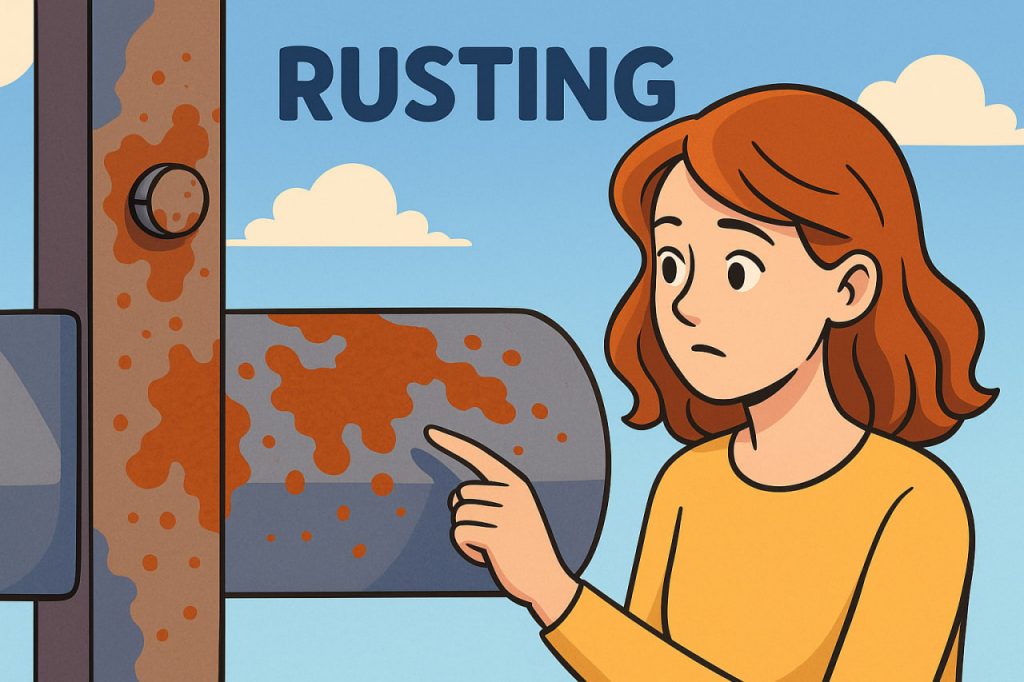
Rusting is a natural chemical process in which iron reacts with oxygen and moisture, forming iron oxide — a reddish-brown substance known as rust. Although rust appears simple and familiar, the underlying chemistry is complex and deeply significant for modern society. Rusting affects buildings, bridges, vehicles, tools, pipelines, and countless products made from iron or steel. Globally, rust-related damage causes billions of dollars in economic losses each year. Understanding why rust forms, how it spreads, and what environmental factors accelerate it helps scientists and engineers design better materials and protective methods.
Rusting is a specific type of corrosion, which refers to the gradual destruction of materials through chemical or electrochemical reactions with their environment. While many metals corrode, iron and steel are especially vulnerable because their oxide layer is weak and flakes off, exposing fresh metal and allowing corrosion to continue. The process is slow but relentless, making rust prevention essential in construction, transportation, and industrial engineering.
What Causes Rusting?
Rust forms when three key components interact:
- iron or steel
- oxygen from the air
- water or moisture
When these elements combine, an electrochemical reaction begins. Water acts as an electrolyte, allowing electrons to move between different areas of the metal surface. Some regions lose electrons (oxidation), while others gain electrons (reduction). This electron flow leads to the formation of iron ions, which react with oxygen to produce iron oxide — rust.
According to corrosion scientist Dr. Markus Adler:
“Rusting is essentially a tiny battery forming on the surface of iron —
electrons move, ions form, and the metal slowly destroys itself.”
This explains why rust develops faster in environments that support electrical and chemical reactions.
How the Rusting Process Works (Step by Step)
- Iron loses electrons
Fe → Fe²⁺ + 2e⁻
This oxidation step produces iron ions. - Oxygen gains electrons
O₂ + 2H₂O + 4e⁻ → 4OH⁻
Oxygen becomes hydroxide ions. - Iron ions react with hydroxide ions
Fe²⁺ + 2OH⁻ → Fe(OH)₂ - Further oxidation forms iron(III) oxide
This becomes hydrated iron oxide — rust.
Rust forms as loose, brittle flakes that do not protect the surface. Instead, they expose fresh metal, allowing corrosion to continue.
Factors That Accelerate Rusting
Rusting is strongly influenced by environmental conditions:
- high humidity
- saltwater or salty air (coastal regions)
- acid rain
- polluted air
- temperature fluctuations
- contact with dissimilar metals (galvanic corrosion)
- scratches or surface damage exposing unprotected metal
Saltwater is especially aggressive because salt increases water’s conductivity, speeding up electron movement.
Where Rusting Causes the Most Problems
Rust affects many critical areas:
- bridges and buildings — structural weakening
- cars and trucks — body and frame deterioration
- ships and offshore platforms — severe saltwater corrosion
- railways — track and equipment damage
- pipelines — leaks and environmental hazards
- industrial machinery — performance decline
Rust-related maintenance is a major expense for infrastructure worldwide.
Methods to Prevent or Slow Rust
Engineers use several strategies to protect metal surfaces:
- painting or coating — blocks moisture and oxygen
- galvanization — coating steel with zinc
- stainless steel — chromium forms a protective oxide layer
- cathodic protection — sacrificial metal blocks corrosion
- oil and grease — prevents moisture contact
- environmental controls — humidity reduction, dehumidifiers
Each method prevents electron flow or blocks exposure to oxygen and water.
Rust in Nature and Industry
Rusting may seem purely destructive, but it also provides valuable scientific information. Rust layers help archaeologists study ancient environments, while controlled corrosion is used in art and architecture for aesthetic effects. Some modern materials even mimic rust-resistant properties found in natural minerals.
Interesting Facts
- Rust causes over $2.5 trillion in global economic damage annually.
- The famous Golden Gate Bridge is painted continuously to protect it from rust.
- Saltwater accelerates rusting up to 10 times faster than freshwater.
- Stainless steel resists rust because chromium forms a self-healing protective layer.
- Rust is a type of electrochemical reaction, similar to how batteries work.
Glossary
- Corrosion — gradual destruction of materials through chemical or electrochemical reactions.
- Oxidation — loss of electrons during a chemical reaction.
- Reduction — gain of electrons in a chemical reaction.
- Galvanization — coating steel with zinc to prevent rust.
- Electrolyte — a substance that allows electron flow in chemical reactions.