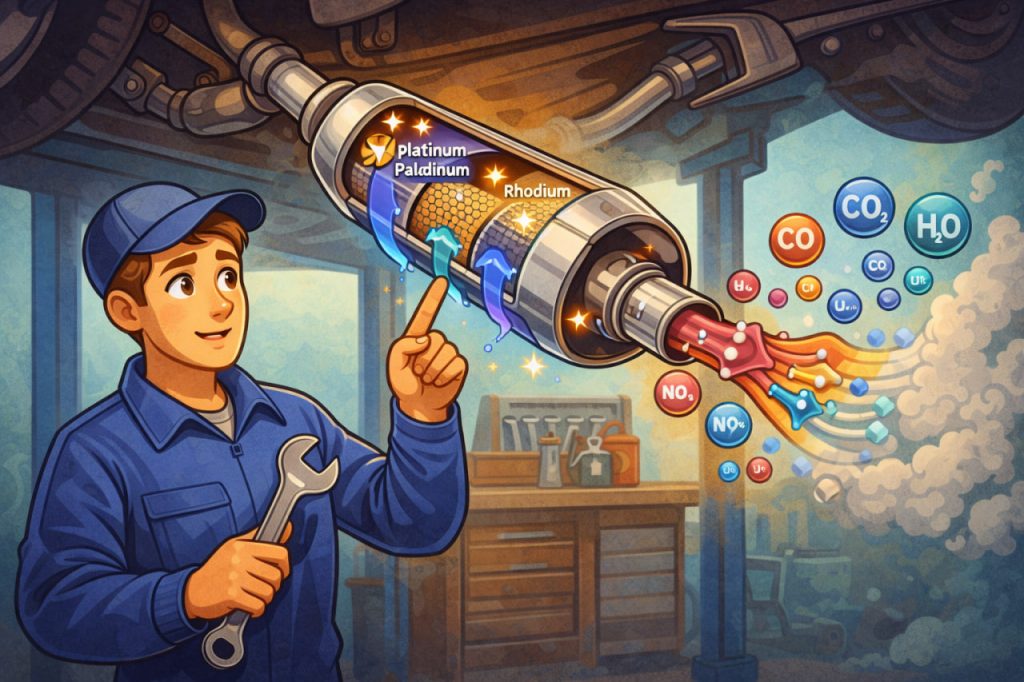
A catalytic converter is a critical component of a modern car’s exhaust system, designed to reduce harmful emissions before they are released into the atmosphere. Although it works silently and is often unnoticed by drivers, this device plays a major role in protecting air quality and human health. As engines burn fuel, they produce toxic gases that would be extremely dangerous if released untreated. The catalytic converter transforms these substances into less harmful compounds through chemical reactions. Understanding how it works helps explain why it is essential for environmental protection and why its failure can lead to serious mechanical and legal problems.
Why a Catalytic Converter Is Necessary
Internal combustion engines produce exhaust gases that contain carbon monoxide, nitrogen oxides, and unburned hydrocarbons. These substances contribute to air pollution, smog formation, and respiratory illnesses. Without a catalytic converter, a single vehicle could emit many times more toxic compounds into the air. Governments around the world introduced strict emission standards to reduce this impact, making catalytic converters a mandatory component in most vehicles. Beyond legal requirements, catalytic converters help reduce the environmental footprint of everyday transportation. By limiting toxic emissions, they play a key role in improving urban air quality and reducing long-term health risks.
How a Catalytic Converter Works
The catalytic converter operates using chemical catalysis, a process that speeds up chemical reactions without being consumed itself. Inside the converter is a ceramic or metallic structure shaped like a honeycomb, which provides a large surface area. This surface is coated with precious metals such as platinum, palladium, and rhodium, which act as catalysts. As hot exhaust gases pass through, harmful compounds react on the surface and are converted into less dangerous substances. Carbon monoxide becomes carbon dioxide, nitrogen oxides are broken down into nitrogen and oxygen, and hydrocarbons are transformed into water vapor and carbon dioxide. These reactions occur rapidly while the engine is running, making the system highly efficient.
Types of Catalytic Converters
Most modern cars use three-way catalytic converters, which simultaneously reduce three major pollutants: carbon monoxide, hydrocarbons, and nitrogen oxides. Older vehicles may have used simpler designs that addressed fewer emissions. Diesel engines often require different catalytic systems due to their combustion characteristics and exhaust composition. Some vehicles also include additional components such as oxygen sensors to help regulate the air–fuel mixture, ensuring the catalytic converter operates at optimal efficiency. The exact design depends on engine type, fuel used, and emission standards in a given region.
What Happens When a Catalytic Converter Fails
A malfunctioning catalytic converter can lead to noticeable performance issues. Drivers may experience reduced engine power, increased fuel consumption, or unusual exhaust smells. In severe cases, a blocked converter can cause overheating and damage other engine components. From an environmental perspective, failure means higher emissions and potential violation of emission laws. Mechanics emphasize that ignoring early warning signs can result in costly repairs, as damage may spread beyond the converter itself. Regular maintenance and timely diagnosis help extend the lifespan of this critical component.
Environmental and Practical Importance
Catalytic converters have significantly reduced vehicle-related air pollution since their widespread adoption. Cities with strict emission controls have seen measurable improvements in air quality over time. While electric vehicles may reduce reliance on exhaust systems in the future, catalytic converters remain essential for millions of cars currently on the road. Their continued use helps bridge the gap between traditional combustion engines and cleaner transportation technologies. Understanding their role highlights how engineering solutions can meaningfully reduce environmental harm without sacrificing mobility.
Interesting Facts
- Catalytic converters can reduce harmful emissions by up to 90% under optimal conditions.
- The precious metals inside converters make them a target for theft due to their high value.
- A catalytic converter must reach high temperatures to work efficiently, often above 400°C.
- Driving with engine misfires can damage the converter by overheating it.
- Emission standards directly influenced the evolution and complexity of catalytic converter design.
Glossary
- Catalytic Converter — a device in the exhaust system that reduces toxic gases through chemical reactions.
- Catalyst — a substance that accelerates a chemical reaction without being consumed.
- Carbon Monoxide — a toxic, colorless gas produced by incomplete fuel combustion.
- Nitrogen Oxides — harmful gases that contribute to smog and respiratory problems.
- Three-Way Converter — a catalytic converter that reduces carbon monoxide, hydrocarbons, and nitrogen oxides simultaneously.