When we think of light, we usually imagine beams or waves. But in modern physics, light also behaves like a particle — and that particle is called a photon. A…
When we look up at the sky, it may seem like space begins just beyond the clouds. But scientifically defining where Earth ends and space begins is far more complex.…
Nuclear fusion is the process by which two light atomic nuclei combine to form a heavier nucleus, releasing an enormous amount of energy in the process. It is the same…
Planets don’t simply appear — they are the result of complex processes unfolding over millions of years. From dust particles in a swirling cloud of gas to massive, orbiting worlds,…
If you could watch Earth from space, you'd see it constantly spinning on its axis — a full rotation every 24 hours. This rotation causes day and night, drives weather…
A laser (Light Amplification by Stimulated Emission of Radiation) is a device that emits a beam of coherent, monochromatic light — meaning all light waves have the same wavelength and…
Jupiter is not just the largest planet in our solar system — it's also a host to dozens of fascinating moons, including several that are covered in ice. These icy…
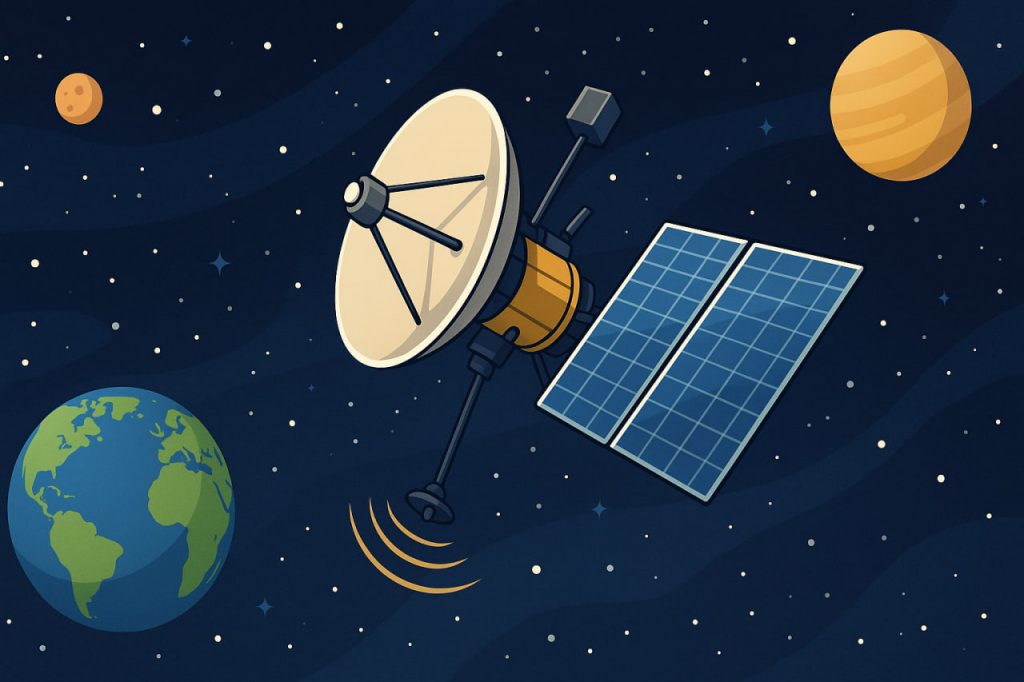
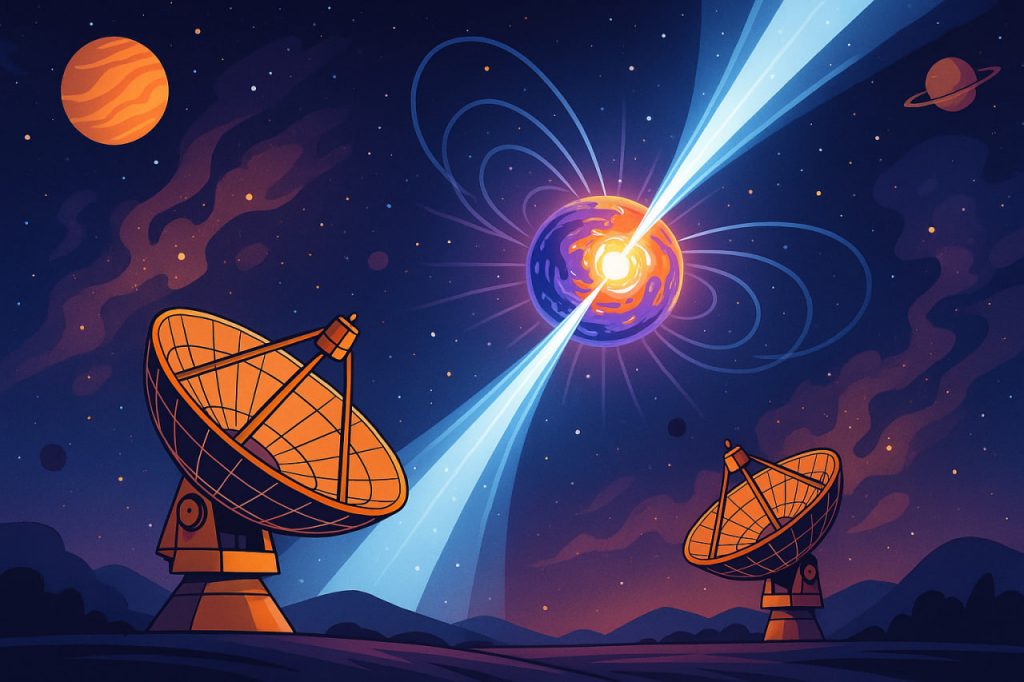
Unlike traditional optical telescopes that capture visible light, a radio telescope detects radio waves emitted by celestial objects. These waves are part of the electromagnetic spectrum, but they have much…
Redshift is a key concept in astronomy that helps scientists understand how distant celestial objects move in space. When we observe light from stars and galaxies, we’re not just seeing…
The asteroid belt is a vast region in space filled with rocky objects of various sizes orbiting the Sun. These objects, called asteroids, are remnants from the early formation of…