A violin and a guitar can play exactly the same musical note, at the same pitch and roughly the same loudness, yet they are almost impossible to confuse. Why? The…
The Standard Model of particle physics describes the known fundamental particles with remarkable precision, but it leaves several major questions unanswered. It does not explain the nature of dark matter,…
Mathematics is the language in which modern physics is written. From the motion of planets to the behavior of electrons, from black holes to quantum fields, some of the most…
Everything around us — rocks, oceans, planets, living organisms, and even our own bodies — is built from matter. Atoms form molecules, atomic nuclei contain protons and neutrons, and inside…
Physics describes everything from falling objects and planetary orbits to atoms, electrons, and light. Yet the rules that work perfectly for everyday objects begin to change when we move into…
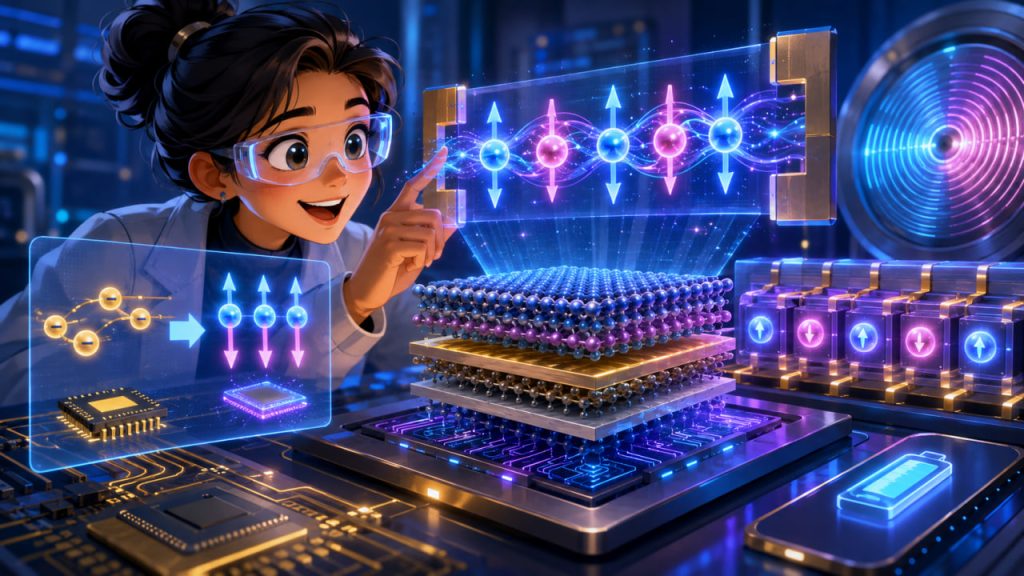
Spintronics is one of the most fascinating fields in modern physics and electronics. Traditional electronics is based mainly on the movement of electric charge. Spintronics goes deeper. It uses another…
Heat is everywhere. It escapes from car engines, industrial machines, power plants, laptops, smartphones, human bodies, and even spacecraft. Most of that heat is wasted because it spreads into the…
At first glance, isotopes seem almost identical. They belong to the same chemical element, have the same number of protons, and usually participate in the same kinds of chemical reactions.…
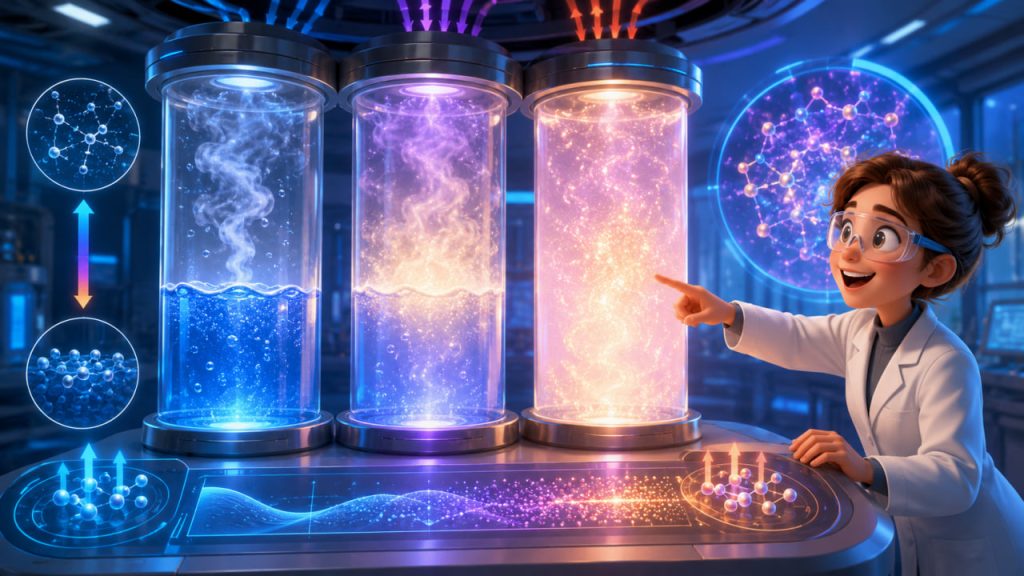
Most people learn that matter has clear states: solid, liquid, and gas. Water freezes into ice, melts into liquid, and boils into vapor. This simple picture works well in everyday…
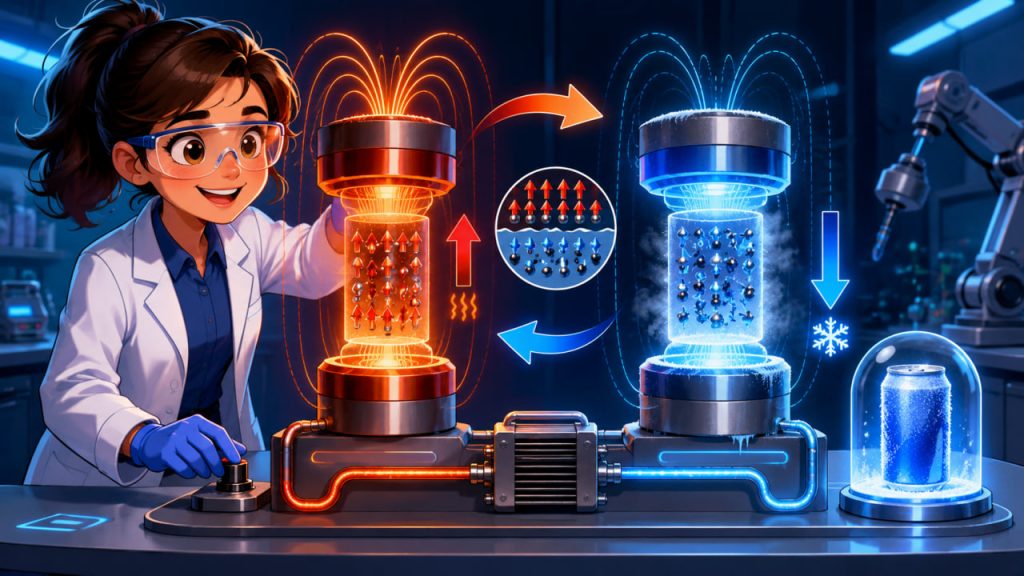
Most refrigerators cool by compressing and expanding gases. This familiar technology works well, but it depends on moving mechanical parts, refrigerants, and energy-intensive cycles. Scientists and engineers are now exploring…