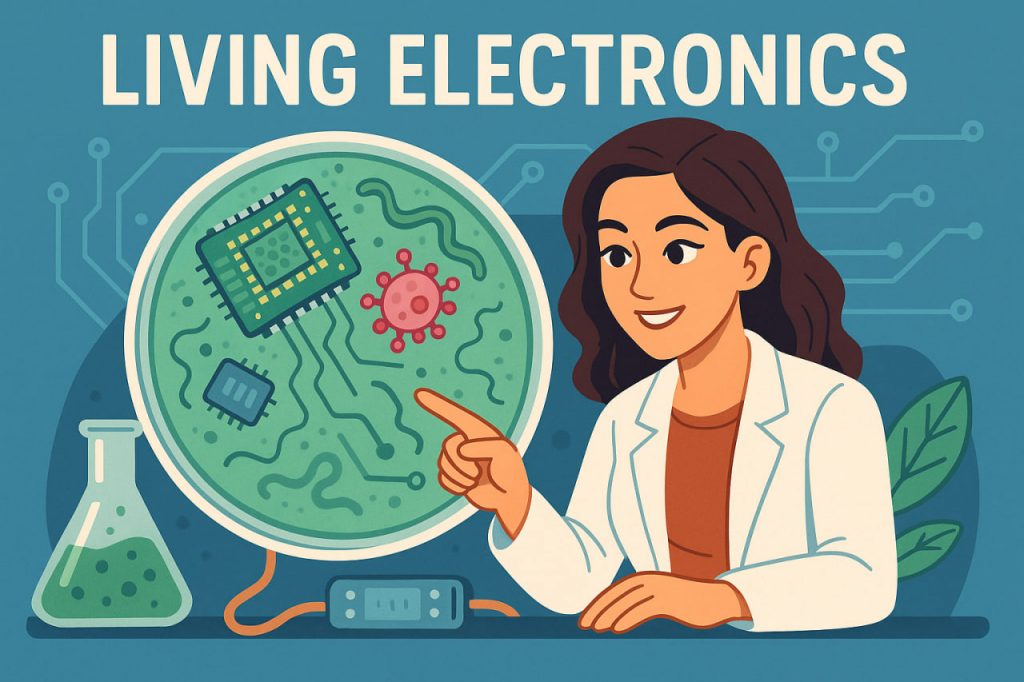
Living electronics, also known as bio-electronics or biological electronic systems, represent a rapidly evolving field that integrates living cells, biological materials, and electronic components into hybrid devices. This emerging technology explores how biological processes can be combined with electronic circuits to create systems that are more adaptive, energy-efficient, and capable of complex sensory functions. Unlike conventional electronics, which rely on synthetic materials and rigid structures, living electronics take advantage of the self-healing, flexible, and environmentally responsive properties of biological tissues or cells. Researchers believe that these innovations will play a major role in future medical diagnostics, environmental monitoring, soft robotics, and implantable devices. Understanding the principles behind living electronics provides insight into how biology and engineering are merging to form a new generation of technological solutions.
How Living Electronics Work
Living electronics operate by integrating biological components—such as bacteria, neurons, or engineered tissues—into electrical circuits or materials. Biological cells can generate electrical signals, respond to environmental changes, or even produce chemical energy, making them ideal candidates for hybrid devices. Engineers often design scaffolds or soft polymers that allow living cells to attach, grow, and interact with electronic sensors. Bioengineer Dr. Lillian Morse explains that living systems offer dynamic responses that conventional materials cannot match, such as growth, repair, and adaptation. She highlights that neural networks, for example, can process information in ways that resemble artificial intelligence but with significantly lower energy consumption. These hybrid systems blur the line between the organic and synthetic, opening new possibilities for functional devices that evolve over time.
Applications in Medicine and Healthcare
Living electronics show great promise in medical technology, particularly in implants and diagnostics where adaptability and biocompatibility are essential. Devices incorporating living tissues can better integrate with the human body, reducing the risk of rejection and improving signal accuracy. Examples include bio-electronic sensors that monitor glucose levels, neural interfaces that communicate with the brain, and soft electronic patches that mimic skin. Medical researcher Dr. Marcus Levin notes that living electronics may revolutionize prosthetics by creating interfaces that can interpret neural signals with higher precision. He emphasizes that their potential to self-heal or adjust to changes in the body could improve long-term performance of implantable devices. As research advances, living electronics are expected to play a central role in personalized medicine and advanced therapeutic systems.
Environmental and Industrial Applications
Beyond medicine, living electronics can contribute to environmental sustainability and industrial innovation. Microbial fuel cells, which use bacteria to generate electricity from organic waste, are an example of how biological processes can support renewable energy production. Other applications include living sensors that detect pollutants, engineered algae circuits that monitor water quality, and biodegradable electronics that reduce long-term waste. Biological materials naturally break down, making them useful for temporary devices that do not require permanent electronic waste. As global attention shifts toward sustainable technologies, living electronics offer promising solutions that minimize ecological impact while maintaining high performance.
Challenges and Future Directions
Despite their potential, living electronics face challenges related to stability, durability, and ethical considerations. Living cells require specific conditions to survive, which can limit the environments in which these devices operate. There are also concerns about controlling biological growth and preventing contamination in hybrid systems. Engineers are exploring strategies such as encapsulation, genetic modification, and artificial scaffolding to enhance stability. Ethical discussions continue around the use of engineered organisms in technology, particularly when systems interact closely with humans. However, ongoing research shows steady progress toward reliable and scalable applications. Many experts predict that living electronics will become a foundational technology in future biomedical devices, ecological monitoring tools, and adaptive robotics.
Interesting Facts
Some living electronics use neurons grown in laboratory conditions to process signals similarly to biological brains.
Bacterial fuel cells can generate electricity from wastewater, offering potential for sustainable energy systems.
Biodegradable bio-electronics may reduce electronic waste by naturally decomposing after use.
Engineered tissues in living electronics can respond to mechanical stress, light, or chemical signals.
Glossary
- Bio-Electronics — technology that integrates biological components with electronic circuits.
- Biocompatibility — the ability of a material or device to interact safely with living tissues.
- Microbial Fuel Cell — a device that uses bacteria to convert organic matter into electrical energy.
- Scaffold — a structure that supports the growth of living cells in engineered systems.