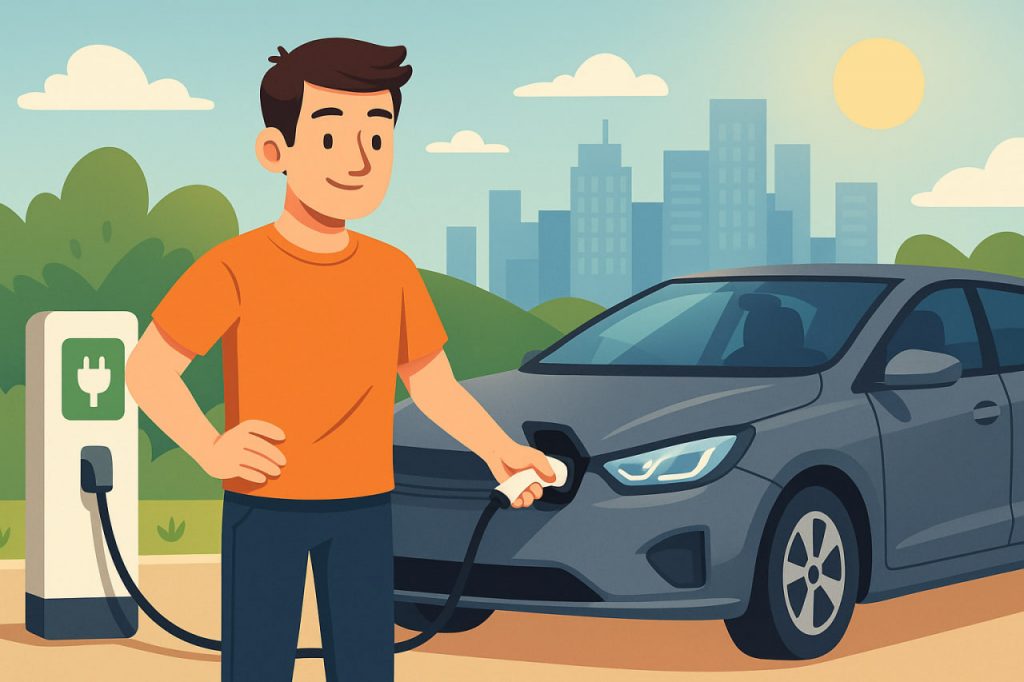
Electric cars have rapidly transformed from a niche technology into one of the most important developments in modern transportation. Powered entirely or partly by electricity instead of gasoline, these vehicles offer cleaner mobility, lower emissions, and a quieter driving experience. As climate concerns and technological innovations accelerate, electric cars are becoming central to global strategies aimed at reducing pollution, improving energy efficiency, and creating sustainable cities. Understanding how electric cars work, their benefits, and their limitations helps drivers make informed choices in a world shifting toward renewable energy.
Electric vehicles (EVs) rely on advanced battery technology, electric motors, and smart energy management systems. Unlike traditional internal combustion engines, EVs do not burn fuel and produce almost no tailpipe emissions. This makes them particularly valuable in urban areas where air quality and noise reduction matter most.
How Electric Cars Work
Electric cars operate using three main components:
- battery pack — stores electrical energy
- electric motor — converts electricity into motion
- power electronics — regulate energy flow between the battery and the motor
When the driver accelerates, electricity flows from the battery to the motor, turning the wheels. Regenerative braking allows the car to recover energy that would otherwise be lost, sending it back into the battery. According to automotive engineer Dr. Michael Rios:
“An electric motor is far more efficient than a combustion engine —
it converts nearly all energy into motion with minimal waste.”
This high efficiency is one of the major advantages of EVs.
Types of Electric Vehicles
There are several categories of EVs, each with different technologies and advantages:
- Battery Electric Vehicles (BEVs) — run entirely on electricity (e.g., Tesla Model 3).
- Plug-In Hybrid Electric Vehicles (PHEVs) — use both an electric motor and a small gasoline engine.
- Hybrid Electric Vehicles (HEVs) — cannot be plugged in; rely on regenerative energy and small batteries.
BEVs have the highest environmental benefit, but PHEVs offer flexibility for drivers without consistent access to charging.
Benefits of Electric Cars
Electric vehicles provide several important advantages:
- zero tailpipe emissions, reducing air pollution
- lower maintenance costs due to fewer moving parts
- quiet operation and smooth acceleration
- reduced dependence on fossil fuels
- high energy efficiency compared to combustion engines
- potential for renewable-powered charging
For many consumers, EVs also offer long-term financial savings, especially when electricity prices are lower than gasoline.
Environmental Impact
Electric cars have environmental benefits, but they also present challenges:
- producing lithium-ion batteries requires significant resources
- battery recycling infrastructure is still developing
- charging with coal-based electricity reduces climate benefits
However, as renewable energy becomes more widespread, EVs gain even greater ecological advantages.
Charging and Range
Modern electric cars can travel 300–600 km on a single charge, depending on model and battery technology. Charging options include:
- home charging — slow but convenient
- public level 2 chargers — moderate charging speed
- fast DC chargers — add hundreds of kilometers in under an hour
Charging infrastructure continues to grow globally, making EV ownership more practical each year.
Limitations and Challenges
Despite their advantages, EVs still face obstacles:
- higher upfront cost compared to gasoline cars
- limited fast-charging availability in some regions
- performance affected by extreme temperatures
- battery degradation over time
Ongoing research aims to develop more durable batteries and expand charging networks.
The Future of Electric Cars
Electric cars are expected to dominate the future automotive market due to:
- stricter emissions regulations
- improvements in solid-state batteries
- integration with smart grids
- autonomous driving technologies
- decreasing production costs
Many countries plan to phase out gasoline vehicles entirely within the next few decades, marking a major shift in global transportation.
Interesting Facts
- Electric cars existed in the early 1900s, long before gasoline vehicles dominated the market.
- Modern EV engines have efficiency rates of 85–95%, far higher than combustion engines.
- Regenerative braking can recover up to 20% of otherwise wasted energy.
- Some EVs can accelerate faster than supercars due to instant torque.
- Future batteries may charge to 80% in under 10 minutes using next-generation technology.
Glossary
- Regenerative Braking — technology that recovers energy during braking and returns it to the battery.
- Lithium-Ion Battery — a high-energy storage device used in most EVs.
- Electric Motor — a device that converts electrical energy into mechanical motion.
- Charging Infrastructure — the network of public and private chargers supporting EVs.
- Solid-State Battery — next-generation battery technology with higher safety and energy density.