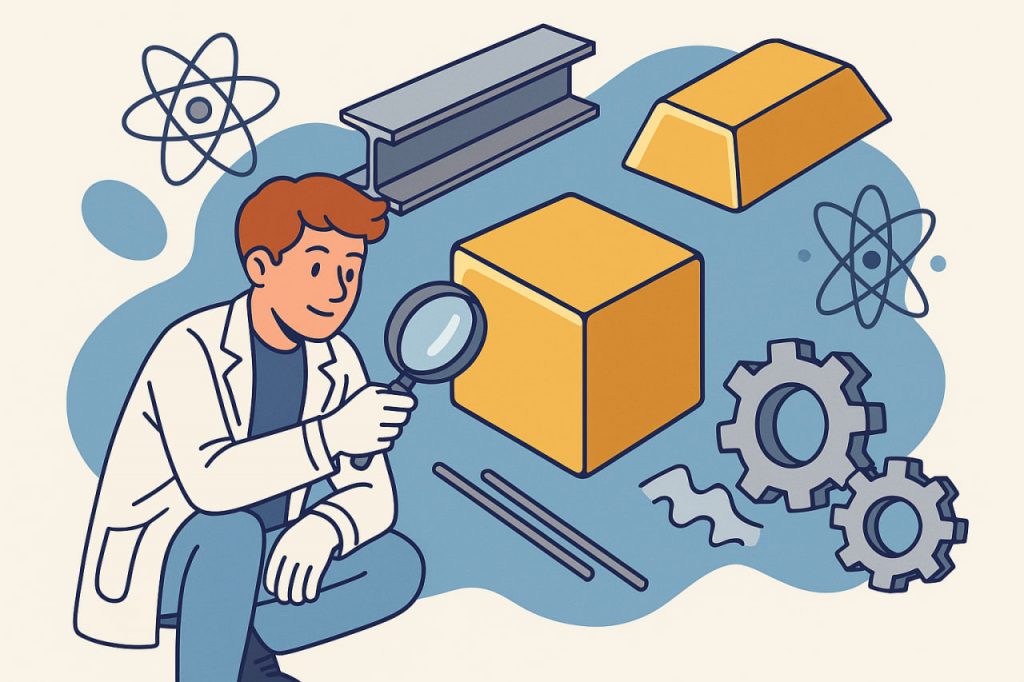
Metals are among the most essential materials in human civilization, shaping everything from tools and infrastructure to electronics and medical devices. Defined by their strength, conductivity, and ability to form alloys, metals have played a crucial role in technological development for thousands of years. From the Bronze Age to modern aerospace engineering, metals remain deeply connected to human progress. Understanding what metals are, how they behave, and why they are so versatile reveals the scientific foundation behind materials we use every day. Although metals may seem simple, their atomic structure and physical properties make them unique among natural materials.
Modern science has identified more than 80 metallic elements, each with its own set of characteristics. Metals are typically solid at room temperature (except mercury), shiny, malleable, and excellent conductors of heat and electricity. They can form complex alloys that enhance strength, corrosion resistance, or magnetic behavior. These qualities allow metals to be used in construction, transportation, energy systems, manufacturing, and advanced technologies.
What Makes Something a Metal?
Metals share a group of fundamental properties determined by their atomic structure:
- high electrical conductivity
- thermal conductivity
- metallic luster
- malleability and ductility
- high melting and boiling points
- ability to form alloys
The secret to these properties lies in metallic bonding, where electrons move freely between atoms, creating a “sea of electrons.” According to materials scientist Dr. Clara Haywood:
“Metals behave like they do because their electrons are not locked to individual atoms —
they form a shared cloud that gives metals their unique strength and conductivity.”
This bonding structure is what allows metals to be shaped, stretched, and used in demanding environments.
Types of Metals
Metals can be divided into several categories based on their properties and uses:
1. Ferrous Metals
Contain iron and are typically magnetic. Examples:
- steel
- cast iron
- stainless steel
They are used in construction, transportation, and heavy machinery.
2. Non-Ferrous Metals
Do not contain iron and resist corrosion. Examples:
- aluminum
- copper
- zinc
- titanium
Used in aviation, electronics, and food-safe applications.
3. Precious Metals
Rare, corrosion-resistant, and often valuable. Examples:
- gold
- silver
- platinum
Used in jewelry, electronics, and scientific instruments.
4. Alloys
Mixtures of two or more metals designed to improve performance. Examples:
- bronze (copper + tin)
- brass (copper + zinc)
- duralumin (aluminum-based alloy)
Alloys expand the uses of metals far beyond their natural state.
How Metals Are Produced
Metal production involves several key steps:
- mining ore from natural deposits
- concentration to separate metal-bearing minerals
- smelting using high heat and chemical reactions
- refining to remove impurities
- casting or rolling into useful shapes
Production requires significant energy, making recycling essential for sustainability. Metal recycling is highly efficient — for example, aluminum can be recycled indefinitely with minimal quality loss.
Why Metals Are Essential Today
Metals power nearly every modern technology:
- electronics (copper wiring, gold contacts)
- transportation (steel frames, aluminum aircraft)
- renewable energy (turbine blades, solar panel frames)
- medical tools (titanium implants, stainless-steel instruments)
- construction (reinforced concrete, structural steel)
From smartphones to skyscrapers, metals remain irreplaceable in engineering and daily life.
Environmental and Health Considerations
Metal production impacts the environment due to mining and energy use. Heavy metals such as lead, mercury, and cadmium can be harmful to human health, so regulations limit their use. Safer alternatives and recycling practices help reduce ecological impact and pollution.
Interesting Facts
- About 75% of all aluminum ever produced is still in use thanks to efficient recycling.
- Gold is so malleable that 1 gram can be stretched into a 2-kilometer-long wire.
- Copper was one of the first metals used by humans, dating back over 10,000 years.
- Steel is the most recycled material on Earth, even more than plastic or paper.
- Mercury is the only metal that is liquid at room temperature.
Glossary
- Metallic Bonding — a type of chemical bonding where electrons move freely among atoms.
- Alloy — a mixture of metals that enhances strength or durability.
- Smelting — extracting metal from ore using heat and chemical reactions.
- Ferrous — metals containing iron.
- Malleability — the ability of a metal to be shaped without breaking.