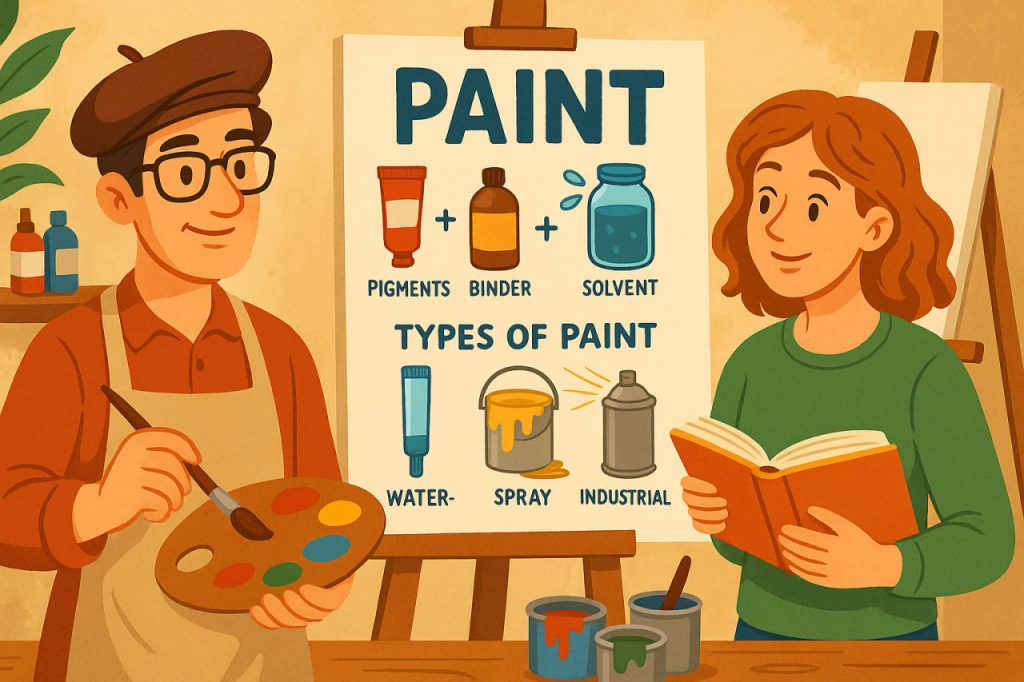
Paint is one of humanity’s oldest and most versatile creations — a material used for protection, decoration, communication, and artistic expression. From prehistoric cave walls to modern skyscrapers, paint has shaped visual culture and practical technology across thousands of years. At its core, paint is a mixture of pigments, binders, solvents, and additives, each serving a specific role in color, durability, texture, or application. Whether used in fine art, engineering, or interior design, paint transforms surfaces, protects materials, and allows humans to express ideas visually.
Modern paint is the result of both scientific advancement and creative innovation. Its performance depends on chemistry, environmental conditions, and the purpose for which it is designed. Understanding how paint functions helps us appreciate why different types exist, how they should be used, and why safe handling is essential.
What Paint Is Made Of
Paint contains four major components:
- Pigments — give color and opacity
- Binders — form a solid film and adhere to surfaces
- Solvents (or water) — make paint spreadable
- Additives — improve drying, texture, stability, and resistance
Different combinations produce paints for artistic use, industrial coatings, cars, homes, and more.
According to materials scientist Dr. Helena Foster:
“Paint is a complex engineering material —
every drop contains chemistry designed for a specific purpose.”
This explains why choosing the right paint type matters.
Types of Paint and Their Uses
1. Water-Based Paints (Acrylic, Latex)
- quick drying
- low odor
- ideal for interior walls and artistic work
Acrylic paint is especially versatile, used in fine arts and crafts.
2. Oil-Based Paints
- smoother finish
- excellent durability
- used for woodwork, metal, and professional art
They dry slowly because the binder reacts with oxygen.
3. Enamel Paints
- hard, glossy finish
- used on machinery, appliances, and metal structures
4. Spray Paints
- fast application
- uniform finish
- used in automotive coatings, construction, and street art
5. Industrial Coatings
Designed for extreme conditions:
- corrosion-resistant paints
- heat-resistant paints
- marine coatings
- anti-fouling layers for ships
How Paint Works
After application, paint undergoes a chemical process:
- Solvent evaporates or water dries.
- Binder forms a continuous film.
- Pigments become locked in place.
- Additives enhance durability, UV protection, or moisture resistance.
This film protects the surface from:
- moisture
- rust
- UV radiation
- chemical exposure
- wear and tear
Paint Through History
Paint is not just a modern invention. Ancient civilizations used natural pigments:
- ochre
- charcoal
- minerals like malachite
- plant extracts
These early paints decorated caves, pottery, temples, and clothing.
Environmental and Health Considerations
Some paints contain chemicals such as VOCs (volatile organic compounds), which can affect indoor air quality. Today, many manufacturers offer:
- low-VOC or zero-VOC paints
- water-based alternatives
- eco-friendly pigments
Safe handling and proper ventilation remain important when working with paints.
Why Paint Matters
Paint impacts nearly every aspect of human life:
- Art — expressing ideas, emotions, and culture
- Architecture — defining mood and space
- Industry — protecting structures and machines
- Transportation — improving safety and durability
- Science — coatings used in optics, electronics, aerospace
Paint is both a functional technology and a powerful artistic medium.
Interesting Facts
- Some pigments used in Renaissance paintings were made from semi-precious stones like lapis lazuli.
- Modern paints can be engineered to be self-cleaning, using nanotechnology.
- The world’s earliest known paints, found in African caves, are over 70,000 years old.
- Paint on bridges and ships prevents billions in corrosion damage each year.
- The color “Egyptian blue” is considered the first artificial pigment in history.
Glossary
- Pigment — a substance that provides color to paint.
- Binder — the component that holds pigment together and adheres it to surfaces.
- Solvent — the liquid that makes paint spreadable before it dries.
- VOCs — volatile chemicals released from some paints during drying.
- Film Formation — the process of paint hardening into a protective layer.