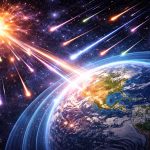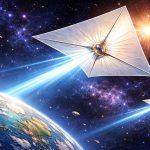
Long-duration space missions expose astronauts to radiation levels far higher than those experienced on Earth. Unlike our planet, which is protected by a magnetic field and thick atmosphere, deep space offers little natural shielding against high-energy particles. During missions to Mars or beyond, crews would spend months or even years outside Earth’s protective magnetosphere. Prolonged exposure to space radiation increases risks of cancer, nervous system damage, and other health complications. Protecting astronauts from radiation is therefore one of the most critical challenges in planning deep-space exploration. Effective solutions require a combination of engineering, biology, and mission design strategies.
Sources of Space Radiation
Space radiation mainly comes from two sources: galactic cosmic rays and solar particle events. Galactic cosmic rays are high-energy particles originating outside the solar system, capable of penetrating spacecraft walls and human tissue. Solar particle events, produced by solar flares and coronal mass ejections, can release intense bursts of radiation within minutes. Unlike radiation exposure on Earth, space radiation is continuous and difficult to avoid. Aerospace health researcher Dr. Laura Chen explains:
“Space radiation is not a single hazard but a spectrum of high-energy particles that interact unpredictably with human tissue.”
Because these particles travel at near-light speeds, shielding and monitoring must be extremely reliable.
Passive Shielding Materials
One primary method of protection is passive shielding, which involves using materials to absorb or deflect radiation. Traditional spacecraft use aluminum structures, but lighter materials rich in hydrogen—such as polyethylene—are often more effective against cosmic rays. Water, food supplies, and fuel can also be strategically placed around crew habitats to serve as additional shielding. Some mission designs propose covering living modules with layers of Martian soil after landing to reduce exposure. Although shielding reduces risk, it cannot completely block all radiation, especially the most energetic cosmic rays.
Active Shielding Concepts
Scientists are also exploring active shielding technologies that use magnetic or electric fields to deflect charged particles. These systems would function similarly to Earth’s magnetosphere, creating a protective barrier around the spacecraft. However, generating strong magnetic fields requires significant energy and complex engineering. Research is ongoing to determine whether compact superconducting systems could make this feasible. Active shielding remains largely experimental but represents a promising long-term approach.
Mission Planning and Safe Zones
Radiation protection also depends on smart mission planning. Spacecraft can include designated storm shelters, heavily shielded compartments where astronauts take refuge during solar particle events. Continuous radiation monitoring systems detect increases in particle levels, allowing crews to respond quickly. Mission timing may also consider solar activity cycles, as certain periods carry higher risk. Shortening travel duration through improved propulsion reduces cumulative exposure. These operational strategies complement physical shielding.
Biological and Medical Countermeasures
Beyond engineering solutions, researchers are studying biological countermeasures to reduce radiation damage. This includes investigating pharmaceuticals, antioxidants, and genetic factors that influence radiation tolerance. While no medication can fully eliminate risk, protective treatments may lower long-term effects. Regular health monitoring before, during, and after missions is essential for managing cumulative exposure. Understanding individual variability helps tailor protective strategies to each astronaut.
The Future of Radiation Protection
As space agencies plan missions to Mars and beyond, radiation protection remains a central design constraint. Advances in materials science, magnetic technologies, and biomedical research are gradually reducing uncertainties. Complete elimination of radiation risk is unlikely, but layered protection strategies significantly improve safety. Long-term human presence in deep space will depend on balancing technological innovation with careful risk assessment.
Interesting Facts
- Astronauts on deep-space missions may receive far higher radiation doses than on Earth.
- Solar particle events can occur with little warning, requiring rapid response.
- Hydrogen-rich materials are more effective at blocking certain cosmic rays.
- Earth’s magnetic field shields us from most high-energy particles.
- Radiation exposure risk increases with mission duration and distance from Earth.
Glossary
- Galactic Cosmic Rays — high-energy particles originating outside the solar system.
- Solar Particle Event — a burst of energetic particles from the Sun.
- Passive Shielding — physical materials used to absorb radiation.
- Active Shielding — magnetic or electric fields designed to deflect radiation.
- Storm Shelter (Spacecraft) — a heavily shielded compartment for solar radiation protection.