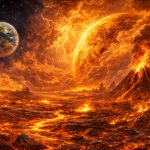
The idea of making Mars suitable for human life has fascinated scientists, engineers, and science fiction writers for decades. Mars is often considered the most Earth-like planet in the Solar System, yet its current conditions are extremely hostile to life as we know it. The planet is cold, dry, and exposed to intense radiation, with a thin atmosphere incapable of supporting liquid water on the surface. Transforming Mars into a habitable world, a process often called terraforming, would require changes on a planetary scale. While some aspects are theoretically possible, others remain far beyond current technological capabilities. Understanding what would be required helps separate scientific discussion from speculation.
Why Mars Is Not Habitable Today
Mars lacks several critical features necessary for sustaining human life. Its atmosphere is more than 100 times thinner than Earth’s and composed mostly of carbon dioxide. This thin atmosphere cannot retain heat, leading to extremely low surface temperatures. Mars also lacks a global magnetic field, allowing solar radiation to reach the surface directly. Liquid water cannot remain stable under current pressure conditions. According to planetary scientist Dr. Bruce Jakosky:
“Mars today is a frozen, irradiated desert,
shaped by loss rather than abundance.”
These limitations define the scale of the challenge.
Thickening the Atmosphere
One proposed step toward habitability is increasing atmospheric pressure and temperature. Scientists have suggested releasing greenhouse gases trapped in polar ice caps or surface minerals. In theory, this could warm the planet and thicken the atmosphere. However, studies indicate that Mars does not contain enough accessible carbon dioxide to create Earth-like conditions. Even with complete release of known reserves, the resulting atmosphere would remain thin. This makes large-scale atmospheric transformation unlikely with current resources.
Water, Temperature, and Stability
Liquid water is essential for life, but Mars currently supports only ice and vapor. Raising temperatures could allow temporary liquid water to exist, but long-term stability would remain difficult. Without sufficient atmospheric pressure, water would quickly evaporate or freeze. Additionally, Mars’s weak gravity makes atmospheric retention difficult over geological time. Any introduced water would require continuous maintenance. Habitability depends not just on presence, but on long-term stability.
Radiation and Magnetic Protection
Earth’s magnetic field protects life from harmful cosmic and solar radiation. Mars lost its magnetic field billions of years ago, contributing to atmospheric loss. Some theoretical proposals suggest creating artificial magnetic shields in space to deflect solar wind. While conceptually interesting, such solutions are technologically speculative. Radiation exposure remains one of the greatest obstacles to surface habitation. Shielded habitats would be necessary even under improved atmospheric conditions.
Is Terraforming Mars Realistic
Most scientists agree that fully terraforming Mars into an Earth-like planet is not currently realistic. Partial habitability, such as enclosed or underground habitats, is far more achievable. These controlled environments would allow human presence without altering the entire planet. Terraforming remains valuable as a thought experiment that pushes technological and ethical boundaries. Mars teaches us how fragile planetary habitability truly is.
Interesting Facts
- Mars once had liquid water billions of years ago.
- The planet lost most of its atmosphere due to solar wind stripping.
- Even full CO₂ release on Mars would not match Earth’s pressure.
- Radiation on Mars is far higher than on Earth’s surface.
- Controlled habitats are considered more realistic than full terraforming.
Glossary
- Terraforming — the hypothetical process of altering a planet to resemble Earth.
- Atmospheric Pressure — force exerted by gases surrounding a planet.
- Magnetic Field — a protective field that deflects charged particles.
- Greenhouse Gas — a gas that traps heat in an atmosphere.
- Planetary Habitability — conditions that allow long-term support of life.