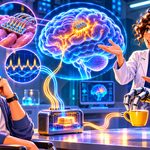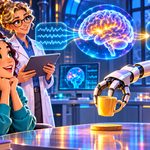
Imagine wanting to lift a cup when your hand will not respond. Or trying to take a step while your legs remain still. Neurological injuries can interrupt messages traveling between the brain and muscles.
New neurotechnology is finding ways to reconnect those messages. Devices can activate nerves, interpret intentions, or support movement practice. Some experimental systems have even helped people regain movements after years of paralysis, changing what rehabilitation may eventually achieve.
What Happens to Movement After a Nerve Injury?
The brain controls movement through signals traveling down the spinal cord to muscles. A serious spinal cord injury can interrupt these pathways while leaving some muscle-controlling circuits below the injury intact. A stroke, by contrast, damages part of the brain and can disrupt the networks that coordinate movement.
Impairment depends on injury location and severity. Rehabilitation strengthens remaining connections and develops useful abilities. Neurotechnology can stimulate or bypass damaged pathways.
How Can Electricity Help Muscles Move Again?
Functional electrical stimulation (FES) uses carefully controlled electrical pulses to activate nerves that make muscles contract. Electrodes may be placed on the skin or implanted. With the right timing, stimulation can help open a hand, lift a foot, or practice a reaching movement.
FES is not simply exercising a muscle with electricity. Synchronized with intention and physical therapy, it can connect attempted movement with feedback. This repeated pairing may support the nervous system’s ability to learn.
Can Spinal Cord Stimulation Restore Walking?
The spinal cord contains networks coordinating movement. Researchers influence these networks through epidural electrical stimulation, delivered by electrodes implanted near the spinal cord. Stimulation can make surviving pathways more responsive.
In a landmark 2018 study, three people with longstanding spinal cord injuries regained assisted walking abilities using precisely timed stimulation and intensive rehabilitation. Their progress required specialized equipment and training. The achievement was not an instant cure for paralysis, but a powerful demonstration that dormant movement networks can sometimes be recruited.
What Is a Digital Bridge Between the Brain and Spine?
A brain-computer interface (BCI) records signals linked to a person’s intention to move and translates them into commands. Combined with spinal stimulation, it creates a brain–spine interface. The system adjusts assistance according to intended movements.
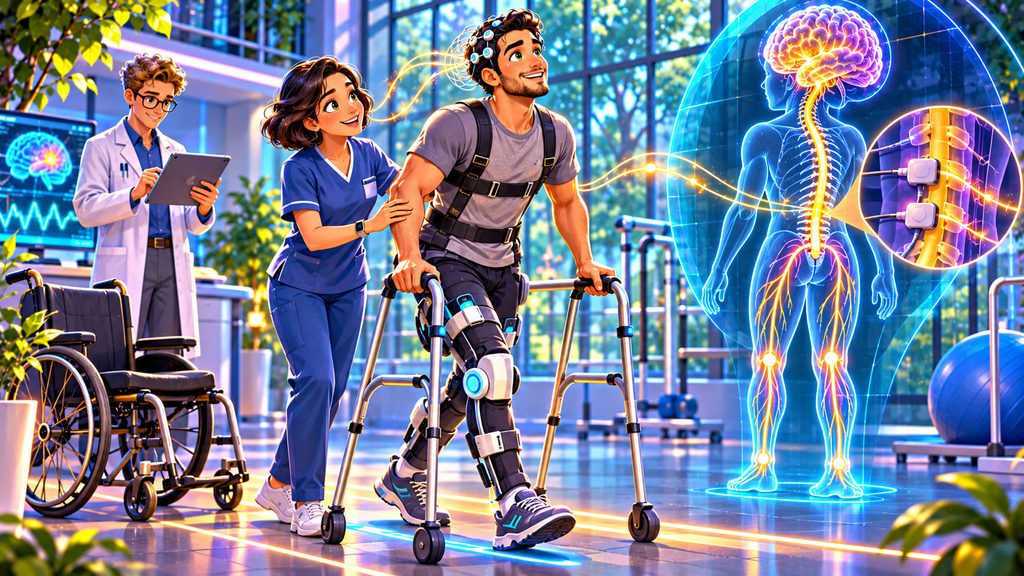
In 2023, a team led by neuroscientist Grégoire Courtine and neurosurgeon Jocelyne Bloch reported a remarkable result. A man who had lived with paralysis after a spinal injury used implanted devices to stand, walk, negotiate obstacles, and climb stairs with assistance. Following rehabilitation, he also regained some walking ability with crutches even when the interface was switched off.
Can Neurotechnology Restore Hand Strength?
Recovering the ability to hold a spoon or fasten clothing can be as important as walking. A less invasive approach, transcutaneous spinal cord stimulation, delivers electrical pulses through electrodes on the skin over the spine. It can enhance remaining pathways supporting hand movement.
In a 2024 clinical trial involving 60 participants with chronic cervical spinal cord injuries, 72% achieved meaningful improvements in both a strength measure and a functional measure. Treatment included movement practice. A related system received U.S. regulatory authorization in December 2024 for defined patients with incomplete cervical spinal cord injuries, providing a clinical option beyond experimental implants.
What Did Scientists Discover About Restoring Touch?
Grasping delicate objects also requires information about pressure and contact. The brain normally adjusts grip continuously using these incoming signals. Without sensory feedback, even successful finger movement can be difficult to control.
A study published in July 2026 described a neuroprosthesis that combined recordings of movement intention, muscle stimulation, and feedback delivered to sensory areas of the brain. One participant with severe spinal injury handled objects and recovered some sensation and arm function. Some gains persisted when parts of the system were turned off, suggesting benefits beyond immediate assistance.
Can These Technologies Help After a Stroke?
After a stroke, someone may intend a movement yet struggle to perform it. Researchers have studied systems that detect imagined or attempted hand movement and then trigger electrical stimulation at the right moment. This connects intention with movement and feedback.
A 2024 analysis of ten randomized trials involving 290 patients found improvements in upper-limb motor outcomes with brain-interface-guided electrical stimulation. The results support combining technology with rehabilitation. Recovery still varies from person to person, and treatment must match the individual’s medical condition.
Why Are Robotic Exoskeletons Used in Rehabilitation?
A robotic exoskeleton is a wearable mechanical device that helps guide or support movement. Some assist stepping, while others help practice hand tasks. Sensors can measure timing, joint motion, and the amount of assistance required.
These devices enable repeated controlled movements. Repetition matters because the nervous system adapts through experience, a property called neuroplasticity. Robots provide assistance and practice opportunities; they do not automatically repair damaged nerves.
Why Is Rehabilitation Still Essential?
A stimulator can create movement, but useful recovery also requires balance, strength, coordination, and confidence. Therapists tailor exercises to patients’ goals. Repeated practice may help surviving neural connections become more effective.
The most promising results often come from combining precise technology with carefully designed rehabilitation, not replacing therapists with machines. Future devices may offer more personalized stimulation. Each improvement can make everyday tasks easier to manage.
Taking a step or lifting a cup can transform a day. Which ability would you be most excited to see neurotechnology help someone regain: walking, using their hands, or another everyday movement? Share your thoughts in the comments.
Interesting Facts
- In 2018, precisely timed spinal stimulation helped three participants with chronic spinal injuries regain assisted walking abilities.
- A 2023 brain–spine interface linked brain activity to spinal stimulation and enabled one participant to navigate obstacles and stairs.
- In a 2024 trial, 72% of 60 participants achieved meaningful gains in both strength and function measures.
- Some spinal stimulation methods use electrodes on the skin rather than implanted hardware.
- A 2026 experimental neuroprosthesis combined movement assistance with artificial touch feedback.
- Repeated movement practice may help the nervous system strengthen surviving pathways.
Glossary
- Neurotechnology — Technology designed to measure, interact with, or modify nervous system activity.
- Spinal Cord Injury — Damage to the spinal cord that can interrupt movement and sensation signals.
- Functional Electrical Stimulation (FES) — Electrical pulses used to activate nerves and produce purposeful muscle contractions.
- Epidural Electrical Stimulation — Stimulation delivered through electrodes placed near the spinal cord.
- Brain-Computer Interface (BCI) — A system that converts recorded brain activity into commands for an external device.
- Brain–Spine Interface — A system linking detected movement intentions with stimulation of spinal circuits.
- Transcutaneous Spinal Cord Stimulation — Stimulation delivered through electrodes positioned on the skin over the spine.
- Sensory Feedback — Information about touch, pressure, or movement that helps guide actions.
- Neuroprosthesis — A device that supports or restores nervous system functions.
- Robotic Exoskeleton — A wearable robotic mechanism designed to assist movement.
- Neuroplasticity — The nervous system’s ability to change its connections and functions through experience or training.