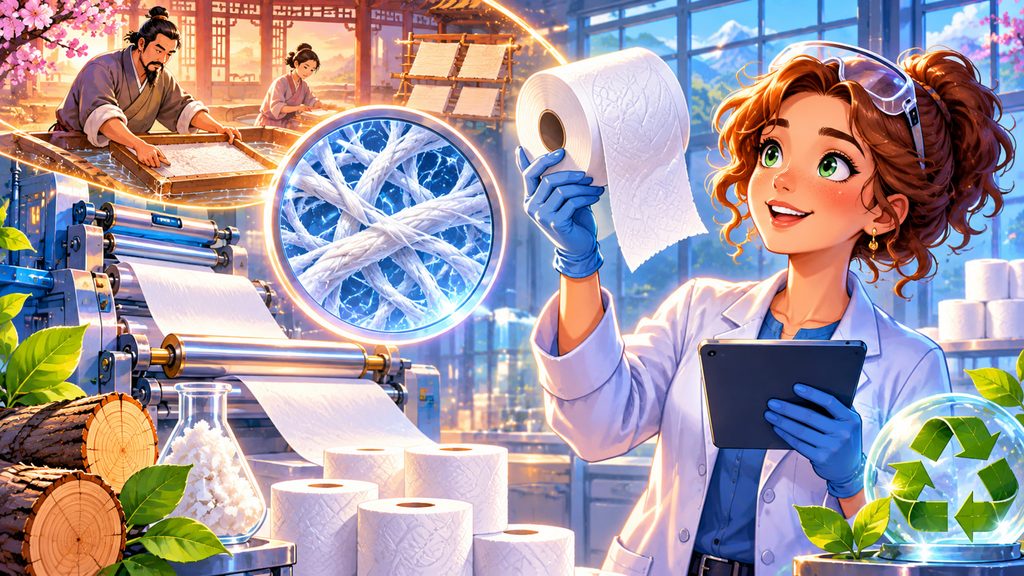
A small roll of white paper sits quietly in almost every modern bathroom. It rarely attracts attention until the last sheet disappears, yet its history stretches across centuries and continents. Behind its soft texture lies an extraordinary combination of ancient inventions, industrial engineering, and chemistry. Toilet paper is one of those everyday products that reveals surprisingly much about how civilization has changed.
From imperial China to modern paper factories, this humble invention has undergone a remarkable transformation. People once relied on water, cloth, leaves, and other locally available materials for personal hygiene. Today, manufacturers produce enormous quantities of specially engineered tissue designed to be comfortable, absorbent, and disposable. Understanding how it evolved reveals a fascinating story about technology, public health, and the environment.
What Did People Use Before Toilet Paper?
Before manufactured toilet paper became widely available, personal hygiene depended heavily on geography, climate, and social customs. People used water, leaves, moss, cloth, and various other materials according to local traditions. Historical evidence also records the use of wooden or bamboo implements in parts of Asia. These methods differed considerably, and no single practice represented the entire ancient world.
Water-based cleaning has remained common across many cultures, particularly in parts of Asia, the Middle East, and southern Europe. In some regions, people developed dedicated washing vessels or plumbing fixtures long before modern disposable tissue became widespread. These traditions demonstrate that toilet paper was never the only solution to personal hygiene. Its eventual popularity resulted from convenience, manufacturing, and changing bathroom infrastructure.
Ancient China: Where Toilet Paper Began
The earliest known written references to paper used for personal hygiene come from China. In the sixth century, scholar Yan Zhitui mentioned avoiding paper bearing respected classical writings for toilet purposes. His observation indicates that paper was already being used for cleaning. It also provides a fascinating glimpse into the relationship between daily habits and cultural values.
By the fourteenth century, Chinese authorities were producing toilet paper on a remarkable scale. Records from 1393 describe approximately 720,000 large sheets made for the imperial court, alongside 15,000 smaller perfumed sheets for the imperial family. These quantities reveal that toilet paper was an established manufactured product rather than an occasional luxury. Centuries before modern toilet rolls appeared, Chinese papermakers had already developed a substantial market for personal hygiene paper.
The Birth of Commercial Toilet Paper
Modern commercially packaged toilet paper gained attention in the United States during the nineteenth century. In 1857, New York entrepreneur Joseph Gayetty began selling specially prepared sheets intended for bathroom use. His product was marketed as a more comfortable alternative to newspapers and other improvised materials. Unlike modern rolls, Gayetty’s paper was sold in packages of separate sheets.
The invention arrived during an era of expanding urban sanitation and changing attitudes toward hygiene. Indoor plumbing was becoming more widespread, although many households still lacked modern bathrooms. Manufacturers gradually recognized that personal hygiene products represented a promising business opportunity. Turning an ordinary piece of paper into a standardized consumer product required both technical innovation and changing social habits.
Who Invented the Toilet Paper Roll?
The familiar toilet paper roll emerged through several nineteenth-century inventions. In 1871, American inventor Seth Wheeler patented a method of perforating paper to make sheets easier to separate. His later developments included improvements to rolled toilet paper and dispensing systems. The idea transformed a simple stack of paper into a convenient, compact product.
The Scott Paper Company helped popularize toilet paper sold on rolls around 1890. Manufacturers gradually refined the design, creating the recognizable combination of a cardboard tube, continuous paper, and evenly spaced perforations. These seemingly minor improvements made the product easier to store, dispense, and transport. The modern roll was the result of decades of development rather than one sudden invention.
How Is Modern Toilet Paper Manufactured?
Most conventional toilet paper begins with cellulose fibers obtained from wood or recovered paper. Manufacturers turn these fibers into a watery mixture called pulp, removing unwanted materials and preparing the fibers for papermaking. The mixture is spread into an extremely thin sheet, and much of the water is removed. The remaining material passes through specialized drying equipment.
Many tissue machines use a large heated cylinder called a Yankee dryer. A blade removes the dried sheet while producing tiny wrinkles through a process known as creping. These microscopic folds help create softness, stretch, and a more comfortable texture. The finished tissue is wound into large rolls before being cut, perforated, and packaged for household use.
Why Is Toilet Paper So Soft?
Toilet paper must balance properties that are surprisingly difficult to combine. It needs enough strength to remain usable during handling, yet it should feel gentle against sensitive skin. Manufacturers achieve this balance by selecting suitable fibers and carefully controlling the structure of the paper. Softness is an engineered property, not simply the result of making paper thinner.
The arrangement of fibers affects flexibility, absorbency, and surface texture. Longer fibers generally improve strength, while fiber selection and processing influence softness. Manufacturers also use embossing, pressing small patterns into the tissue to change its texture and bulk. Some products combine multiple thin layers, known as plies, to provide greater thickness and comfort.
Why Does Toilet Paper Break Apart in Water?
One of toilet paper’s most important characteristics becomes noticeable only after it is flushed. Unlike paper towels, conventional bathroom tissue is designed to lose strength and disperse relatively easily when exposed to water and agitation. The fibers are held together largely by bonds that weaken as the paper becomes saturated. This helps reduce the risk of blockages in properly functioning plumbing systems.
However, not every bathroom product behaves the same way. Wet wipes, even some marketed as flushable, may remain intact long enough to cause problems in drains and wastewater equipment. Paper towels and facial tissues are also designed differently from toilet paper. The safest general rule for ordinary sewer and septic systems is to flush only human waste and toilet paper.
What Is the Environmental Cost of Toilet Paper?
Toilet paper production requires raw materials, energy, water, and transportation. Products made from virgin pulp use newly processed plant fibers, while recycled tissue incorporates recovered paper. Both manufacturing methods have environmental impacts, but recycled fibers can reduce demand for newly harvested wood. The actual footprint depends on sourcing, processing, energy consumption, and waste management.
Forests are especially important because they support biodiversity and store carbon. Environmental organizations have raised concerns about tissue products linked to logging in ecologically valuable forests, including parts of the Canadian boreal region. Recycled paper and responsibly sourced alternatives can help reduce pressure on these ecosystems. Buyers can look for credible certification and transparent sourcing practices rather than assuming that every product labeled natural is environmentally preferable.
Could Bamboo Replace Traditional Toilet Paper?
Bamboo has attracted attention because many species grow rapidly and can produce substantial amounts of fiber. Manufacturers can process bamboo into pulp suitable for tissue products. Its rapid growth makes it an interesting alternative to conventional wood fibers. However, growing quickly does not automatically make a material environmentally superior.
Land use, chemical processing, transportation distances, and manufacturing efficiency all influence the final result. Bamboo plantations can also create environmental problems if they replace natural habitats. Products using responsibly managed sources may offer advantages, but their impact depends on the entire production chain. Sustainable toilet paper is ultimately about responsible materials and manufacturing, not a single fashionable ingredient.
Why Did Toilet Paper Disappear From Stores in 2020?
During the early COVID-19 pandemic, toilet paper became an unexpected symbol of consumer anxiety. Shoppers purchased unusually large quantities, leaving supermarket shelves empty in numerous countries. Fear of future shortages encouraged additional buying, making temporary shortages worse. At the same time, staying at home shifted demand away from offices, restaurants, and public facilities.
The problem revealed how specialized modern supply chains can be. Commercial toilet paper often uses different packaging, formats, and distribution systems from household products. Factories and suppliers could not instantly redirect every available roll to supermarkets. The shortages demonstrated how sudden changes in consumer behavior can disrupt supplies of even simple everyday goods.
Is Toilet Paper the Future of Bathroom Hygiene?
Many countries already use bidets and other water-based cleaning systems alongside or instead of toilet paper. Modern designs range from separate bathroom fixtures to compact toilet attachments. These technologies can reduce paper consumption, although their overall environmental effects also depend on water use, energy, materials, and manufacturing. Different approaches suit different homes and infrastructure.
Toilet paper remains convenient because it requires little equipment and is easy to store and distribute. Nevertheless, improvements in recycled materials, production efficiency, and responsible forestry could reshape the industry. The next important innovation may be less visible than the invention of the roll itself. It may involve producing an ordinary household necessity with fewer environmental costs.
A product that appears simple has connected ancient Chinese manufacturing, nineteenth-century entrepreneurship, modern chemistry, and global trade. Its history shows how everyday conveniences often depend on centuries of experimentation. Even a toilet paper roll can tell a story about human ingenuity. Have you ever considered switching to recycled toilet paper or a bidet, or do you prefer the traditional roll? Share your thoughts in the comments.
Interesting Facts
- Written evidence of toilet paper use in China dates back to the sixth century.
- Chinese imperial records from 1393 describe the production of hundreds of thousands of toilet paper sheets.
- Joseph Gayetty introduced commercially packaged toilet paper in the United States in 1857.
- Seth Wheeler patented a paper-perforation method in 1871 that contributed to the development of convenient rolled paper.
- The Scott Paper Company helped popularize toilet paper rolls around 1890.
- Modern tissue manufacturers use microscopic wrinkles to improve softness and flexibility.
- Panic buying and changes in household demand contributed to toilet paper shortages during the COVID-19 pandemic.
Glossary
- Cellulose Fibers — Natural plant fibers that form the structural foundation of most paper products.
- Pulp — A mixture of processed fibers and water used to manufacture paper.
- Yankee Dryer — A large heated cylinder used to dry tissue paper during manufacturing.
- Creping — A process that forms tiny wrinkles in paper to improve softness and flexibility.
- Embossing — Pressing patterns into paper to modify its texture and thickness.
- Ply — A single layer of tissue paper; multiple plies are combined in thicker products.
- Virgin Pulp — Paper-making fiber produced from newly processed plant material rather than recovered paper.
- Supply Chain — The network of production, storage, transportation, and distribution involved in delivering a product.
- Bidet — A bathroom fixture or attachment that uses water for personal cleaning.