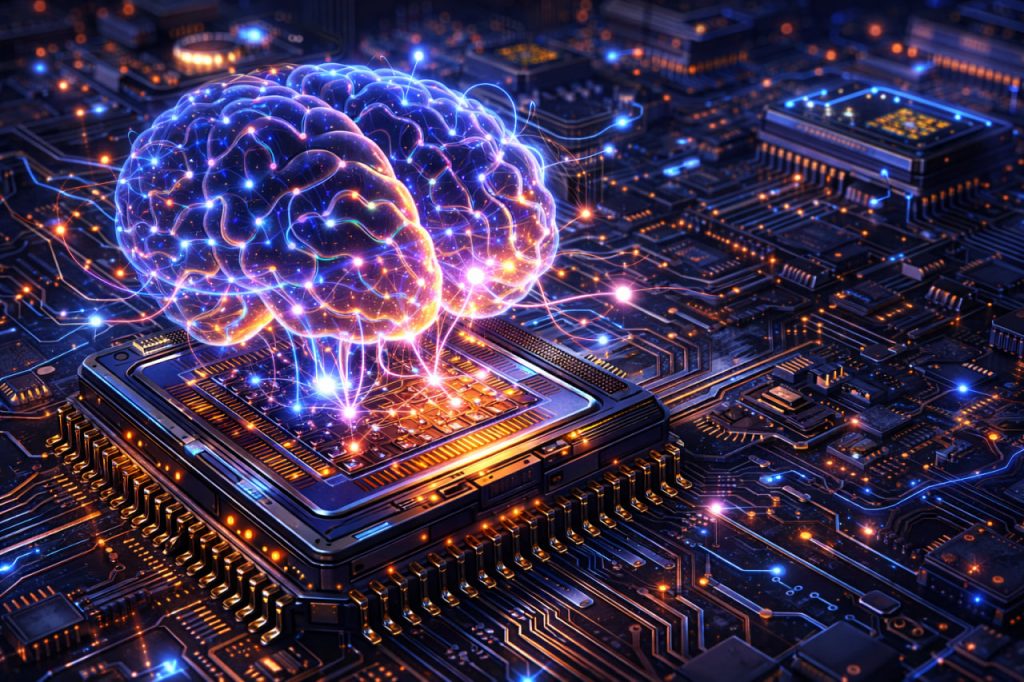
Neuromorphic chips are a new generation of processors designed to mimic the structure and function of the human brain. Unlike traditional computers that process information sequentially using rigid architectures, neuromorphic systems are inspired by biological neural networks. They attempt to replicate how neurons and synapses communicate, allowing machines to process information in parallel and adapt over time. This approach promises dramatic improvements in energy efficiency, pattern recognition, and real-time decision-making. As artificial intelligence becomes more integrated into daily life, neuromorphic computing may represent the next major shift in hardware design. Understanding how these chips work reveals why they are considered a potential revolution in computing.
How Neuromorphic Chips Differ from Traditional Processors
Conventional processors separate memory and computation into distinct units, constantly transferring data between them. This structure consumes significant energy and limits efficiency. Neuromorphic chips, in contrast, integrate memory and processing more closely, similar to how neurons and synapses operate in the brain. Signals are transmitted through artificial synaptic connections that strengthen or weaken based on activity. Computer engineer Dr. Lena Hoffmann explains:
“Neuromorphic systems do not just simulate intelligence in software.
They embed learning principles directly into hardware.”
This architecture allows for faster pattern recognition and reduced power consumption compared to classical systems.
Energy Efficiency and Real-Time Processing
One of the most significant advantages of neuromorphic chips is their low energy consumption. The human brain operates on roughly 20 watts of power, far less than most modern supercomputers. Neuromorphic designs aim to approach this level of efficiency by using event-driven processing, meaning computation occurs only when signals are active. This makes them particularly suitable for applications requiring constant real-time analysis, such as robotics, autonomous vehicles, and edge computing devices.
Learning and Adaptability
Neuromorphic chips are designed to support spiking neural networks, where signals are transmitted as discrete electrical pulses. This method closely resembles how biological neurons fire. Such systems can adapt dynamically, adjusting synaptic strengths based on experience. Instead of retraining entire models as in classical AI, neuromorphic hardware can learn incrementally. This makes it potentially more flexible and resilient in changing environments.
Current Applications and Research
Although still in early stages, neuromorphic chips are already being tested in specialized fields. They show promise in sensory processing, speech recognition, and low-latency robotics control. Some research institutions are integrating neuromorphic processors into experimental AI systems to evaluate performance benefits. However, programming such hardware requires new frameworks and algorithms, as traditional software methods are not fully compatible.
Challenges and Limitations
Despite their potential, neuromorphic systems face technical hurdles. Manufacturing complexity, limited scalability, and lack of standardized programming tools slow widespread adoption. Additionally, fully replicating the brain’s complexity remains far beyond current technological capabilities. Researchers continue exploring materials science innovations and hybrid models that combine classical and neuromorphic computing.
Future Outlook
Neuromorphic chips may not replace conventional computers but could complement them in specialized tasks. Their ability to process sensory data efficiently makes them ideal for smart devices and AI-powered systems. As research advances, neuromorphic architectures could become foundational for next-generation artificial intelligence. By bringing hardware closer to biological principles, computing may become more adaptive, efficient, and intelligent.
Interesting Facts
- The human brain contains approximately 86 billion neurons.
- Neuromorphic chips use spiking neural networks to mimic neuron firing.
- Event-driven processing reduces unnecessary energy consumption.
- Some neuromorphic systems operate with extremely low power usage.
- Brain-inspired computing bridges neuroscience and engineering.
Glossary
- Neuromorphic Chip — a processor designed to mimic neural structures.
- Spiking Neural Network — a neural model based on discrete electrical pulses.
- Synapse — a connection point between neurons.
- Event-Driven Processing — computation triggered only by signal activity.
- Parallel Processing — simultaneous data handling across multiple pathways.