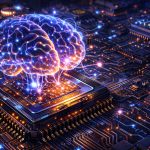
Quantum neural networks (QNNs) represent a cutting-edge fusion of quantum computing and artificial intelligence. While classical neural networks process information using traditional bits (0s and 1s), quantum systems use qubits, which can exist in multiple states simultaneously thanks to superposition. This fundamental difference opens the possibility for dramatically enhanced computational power in certain tasks. Researchers believe that quantum neural networks could one day solve problems too complex for even the most advanced classical supercomputers. Although still largely experimental, QNNs are attracting significant attention in physics, computer science, and AI research. Understanding how they work requires exploring both quantum mechanics and machine learning principles.
How Quantum Neural Networks Differ from Classical Ones
Classical neural networks rely on layers of interconnected nodes that adjust weights during training to recognize patterns. Quantum neural networks, however, use quantum circuits where qubits interact through quantum gates. These gates manipulate probability amplitudes rather than deterministic values. Superposition allows qubits to represent multiple possibilities at once, while entanglement creates correlations between qubits that have no classical equivalent. Quantum computing researcher Dr. Alan Rivera explains:
“Quantum neural networks do not simply compute faster.
They explore solution spaces in fundamentally different ways.”
This difference could allow QNNs to process certain types of optimization and pattern-recognition problems more efficiently.
Potential Advantages
One of the most promising aspects of quantum neural networks is their theoretical ability to handle extremely large datasets and complex optimization tasks. In areas such as cryptography, materials science, and drug discovery, QNNs might accelerate pattern detection beyond classical capabilities. Because quantum systems operate probabilistically, they may excel at exploring many possible solutions simultaneously. However, these advantages apply only to specific problem types where quantum speedups are mathematically proven.
Current Limitations
Despite their potential, quantum neural networks face significant technical challenges. Quantum hardware is still in early development, with limited qubit counts and high error rates. Maintaining stable quantum states requires extremely low temperatures and precise environmental control. Noise and decoherence can disrupt calculations before meaningful results are obtained. Additionally, developing practical algorithms for QNNs remains an ongoing research effort.
Hybrid Approaches
Many researchers are exploring hybrid models that combine classical neural networks with quantum processors. In such systems, classical computers handle data preprocessing and interpretation, while quantum circuits perform specific computational subroutines. This approach allows gradual integration of quantum computing without requiring fully mature quantum hardware. Hybrid systems may become the first practical applications of quantum-enhanced AI.
Future Outlook
Quantum neural networks are still at an experimental stage, but research is progressing rapidly. Advances in quantum error correction, qubit stability, and algorithm design may unlock new possibilities within the coming decades. While QNNs are unlikely to replace classical neural networks entirely, they could complement them in specialized domains. Their development reflects a broader shift toward merging physics and computation in unprecedented ways.
Interesting Facts
- Qubits can exist in superposition, representing multiple states simultaneously.
- Entanglement allows qubits to remain correlated even when separated.
- Quantum computers must operate at extremely low temperatures.
- Hybrid quantum-classical systems are currently the most practical approach.
- Large-scale quantum neural networks remain under active research.
Glossary
- Quantum Neural Network (QNN) — a neural network model implemented using quantum circuits.
- Qubit — the basic unit of quantum information.
- Superposition — a quantum state where a particle exists in multiple states at once.
- Entanglement — a quantum correlation between particles.
- Decoherence — loss of quantum state stability due to environmental interaction.