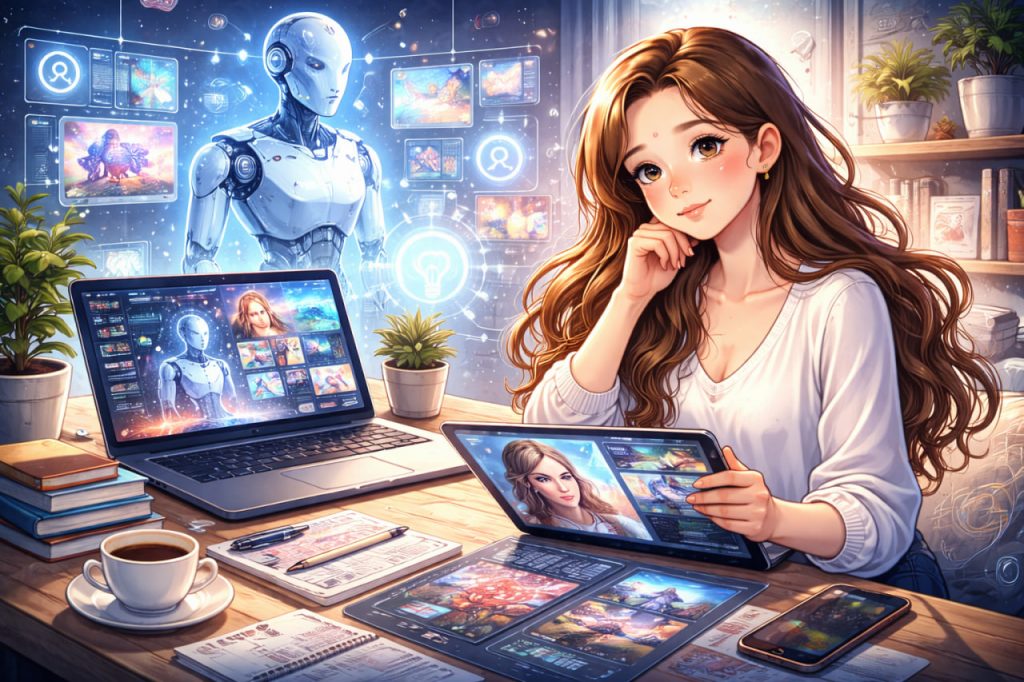
The rapid development of artificial intelligence has transformed how text, images, music, and software are created. Neural networks can now generate complex creative works in seconds, raising a fundamental legal question: who owns AI-generated content? Traditional copyright law was designed to protect works created by human authors. However, when a machine produces content based on training data and algorithms, authorship becomes less clear. Courts, policymakers, and technology companies are actively debating how intellectual property frameworks should adapt. Understanding this evolving landscape is essential for creators, businesses, and users navigating AI-driven creativity.
The Traditional Concept of Authorship
Copyright law in most countries is based on the idea of human authorship. A work must typically reflect human creativity and original expression to qualify for protection. If no human creative input is involved, copyright protection may not apply. Legal scholar Dr. Laura Mendes explains:
“Copyright protects human creativity,
not automated output produced without meaningful human direction.”
This principle creates challenges when AI systems generate works independently.
AI as a Tool vs. AI as an Author
A key distinction lies in whether AI is used as a creative tool or operates autonomously. If a human provides detailed prompts, edits outputs, and exercises creative judgment, they may be considered the author. In this scenario, AI functions similarly to a camera or design software. However, if content is generated with minimal human intervention, determining ownership becomes more complex. Most jurisdictions currently do not recognize AI systems themselves as legal authors. Therefore, fully autonomous AI creations may fall into the public domain in some regions.
Training Data and Intellectual Property Concerns
Another major issue involves the training data used by neural networks. AI models are trained on vast datasets that may include copyrighted material. Questions arise about whether generated outputs infringe on original works or whether training itself constitutes fair use. According to technology law expert Dr. Martin Alvarez:
“The debate is not only about ownership of output,
but about the legality of the data that shaped it.”
Ongoing legal cases worldwide seek to clarify these boundaries.
Different Approaches Around the World
Countries are taking varied approaches to AI-generated content. Some jurisdictions require significant human involvement for copyright eligibility. Others are considering new categories of protection specifically for AI-assisted works. Regulatory bodies aim to balance innovation with protection for original creators. As legal systems adapt, international harmonization may become necessary to address cross-border digital distribution.
Future Legal and Ethical Directions
The evolution of AI challenges long-standing definitions of creativity and authorship. Policymakers face the task of encouraging technological progress while safeguarding intellectual property rights. Possible solutions include clearer disclosure requirements, licensing frameworks, or updated copyright definitions. Ultimately, the ownership of AI-generated content depends on how societies define creativity in the digital era. The discussion continues as technology advances and legal interpretations evolve.
Interesting Facts
- Most copyright laws were developed long before AI-generated works existed.
- Some courts have ruled that works created without human input cannot receive copyright protection.
- AI systems themselves cannot currently hold legal rights.
- Legal debates often focus on both output ownership and training data use.
- International agreements may be needed to standardize AI copyright rules.
Glossary
- Copyright — legal protection granted to creators of original works.
- Human Authorship — the requirement that a work be created by a person to qualify for protection.
- Public Domain — works not protected by copyright and freely usable by anyone.
- Training Data — datasets used to teach AI models patterns and relationships.
- Intellectual Property — legal rights protecting creations of the mind.