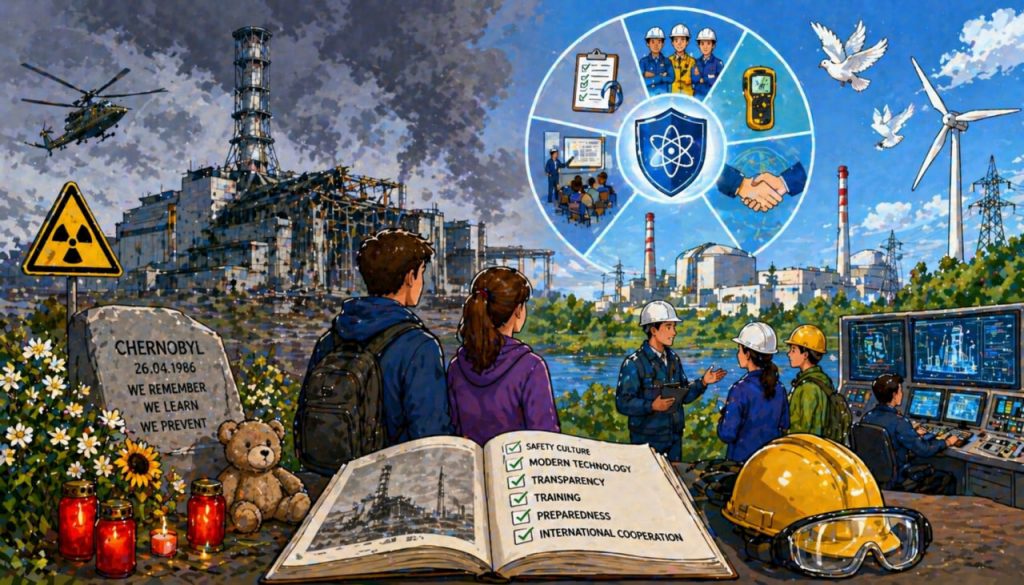
The anniversary of the Chernobyl disaster serves as a powerful reminder of the risks associated with nuclear energy when safety systems fail. On April 26, 1986, a reactor at the Chernobyl Nuclear Power Plant in present-day Ukraine exploded during a safety test, releasing massive amounts of radioactive material into the environment. It remains one of the worst nuclear accidents in history.
Decades later, Chernobyl continues to influence global nuclear safety standards. Understanding what went wrong—and how modern science and policy aim to prevent similar disasters—is essential for ensuring a safer future.
What Happened at Chernobyl?
The Chernobyl disaster occurred during a poorly designed and improperly executed safety test. Operators attempted to simulate a power outage to see how the reactor would behave, but a combination of human error and flawed reactor design led to an uncontrollable power surge.
The reactor overheated, leading to explosions that destroyed the reactor core. Large quantities of radioactive substances were released into the atmosphere, spreading across Europe.
The consequences included:
- Immediate fatalities among plant workers and firefighters
- Long-term health effects, including increased cancer risk
- Environmental contamination affecting land, water, and wildlife
Key Causes of the Disaster
The catastrophe was not caused by a single failure but by a combination of factors.
Design flaws: The RBMK reactor design had inherent instability under certain conditions.
Human error: Operators violated safety protocols during the test.
Lack of safety culture: Critical risks were underestimated or ignored.
Poor communication: Information about reactor behavior was not fully understood by staff.
These factors combined to create a situation where a small mistake escalated into a major disaster.
The Role of Nuclear Safety Culture
One of the most important lessons from Chernobyl is the importance of safety culture. This refers to the attitudes, practices, and priorities that ensure safety is always the top concern.
After the disaster, nuclear organizations worldwide began emphasizing:
- Strict adherence to safety procedures
- Continuous training for operators
- Transparent communication of risks
- Independent oversight and regulation
According to the International Atomic Energy Agency (IAEA):
“A strong safety culture is the most important factor in preventing nuclear accidents.”
Improvements in Reactor Design
Modern nuclear reactors are significantly safer than those used in the 1980s. Engineers have redesigned systems to reduce the risk of accidents and limit their consequences.
Key improvements include:
- Passive safety systems that function without human intervention
- Automatic shutdown mechanisms
- Containment structures designed to prevent radiation leaks
- More stable reactor physics
These advancements ensure that even if something goes wrong, the system is more likely to remain under control.
The Importance of International Cooperation
Nuclear safety is a global issue. Radiation does not respect national borders, as demonstrated by the spread of contamination after Chernobyl.
Today, countries cooperate through international organizations to:
- Share safety data and research
- Conduct joint inspections
- Develop common safety standards
This collaboration helps ensure that lessons learned from past disasters are applied worldwide.
Emergency Preparedness and Response
Another critical lesson from Chernobyl is the need for effective emergency response systems. Early delays in evacuation and communication increased the impact of the disaster.
Modern preparedness includes:
- Clear evacuation plans
- Real-time monitoring of radiation levels
- Public communication systems
- Training for emergency responders
Quick and organized responses can significantly reduce the impact of any future incident.
Transparency and Public Trust
In 1986, information about the disaster was initially withheld, which delayed protective actions and increased public exposure.
Today, transparency is considered essential. Governments and organizations are expected to:
- Provide accurate and timely information
- Communicate risks clearly
- Involve the public in safety discussions
Building trust helps ensure that people respond appropriately during emergencies.
The Role of Technology in Prevention
Modern technology plays a major role in preventing nuclear accidents.
Advancements include:
- Digital monitoring systems that track reactor conditions in real time
- Artificial intelligence for predictive maintenance
- Improved materials that withstand extreme conditions
These tools allow operators to detect and address problems before they escalate.
Lessons Beyond Nuclear Energy
The lessons of Chernobyl extend beyond nuclear power. They apply to all high-risk industries, including aviation, chemical production, and energy systems.
Key principles include:
- Prioritizing safety over efficiency
- Learning from past mistakes
- Encouraging accountability at all levels
These principles help reduce the risk of large-scale technological disasters.
Why Remembering Chernobyl Matters
The anniversary of the Chernobyl disaster is not only about remembering the past but also about protecting the future. It highlights the importance of vigilance, responsibility, and continuous improvement.
While nuclear energy remains a powerful source of low-carbon electricity, it must be managed with the highest level of care. The lessons learned from Chernobyl continue to shape policies and technologies that make nuclear power safer today.
Interesting Facts
- The Chernobyl explosion released more radiation than the atomic bombs dropped on Hiroshima and Nagasaki combined.
- The nearby city of Pripyat was evacuated only 36 hours after the accident.
- Wildlife has returned to the exclusion zone, creating an unexpected natural reserve.
- The reactor was covered by a massive structure called the “sarcophagus,” later replaced by a modern containment system.
- Some radioactive materials from the disaster were detected thousands of kilometers away.
Glossary
- Radiation — Energy released as particles or waves that can affect living tissue.
- Reactor Core — The central part of a nuclear reactor where energy is produced.
- Containment Structure — A barrier designed to prevent radioactive materials from escaping.
- Safety Culture — Organizational practices that prioritize safety and risk prevention.
- Evacuation Zone — An area cleared of people due to danger or contamination.