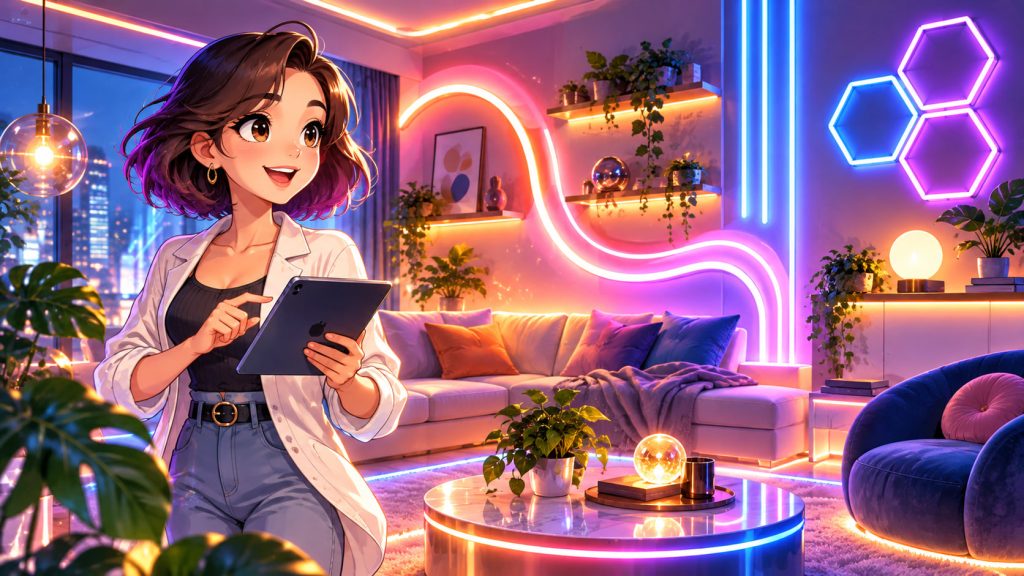
Neon lighting has made a spectacular comeback. Once associated mainly with vintage advertising signs, Las Vegas casinos, and bustling city streets, its unmistakable glow now appears in modern apartments, gaming rooms, restaurants, luxury hotels, and futuristic architectural designs.
Today, neon lighting is much more than a decorative trend. Advances in LED technology have made it possible to create flexible, energy-efficient lighting systems that reproduce the appearance of traditional neon while offering greater control over brightness, color, and installation.
From subtle illumination behind furniture to spectacular glowing installations, modern neon lighting can completely transform the atmosphere of a space.
But what makes neon so visually appealing, how does it work, and is it worth installing in your home?
What Is Neon Lighting?
Traditional neon lighting consists of sealed glass tubes containing low-pressure gas.
When an electrical current passes through the gas, its atoms become excited and emit visible light.
Pure neon produces a characteristic reddish-orange glow. Other gases, phosphor coatings, and colored glass allow manufacturers to create a wider variety of colors.
For decades, these illuminated tubes were used primarily for commercial advertising and architectural decoration.
Modern technology has introduced a popular alternative: LED neon lighting.
Instead of gas-filled glass tubes, LED neon uses rows of light-emitting diodes enclosed in flexible, translucent materials that diffuse their light.
The result is a continuous, glowing line that closely resembles traditional neon.
LED neon combines the recognizable appearance of classic neon with the flexibility of modern semiconductor technology.
Why Neon Lighting Has Become Popular Again
Modern interior design increasingly uses light as a decorative element rather than simply a practical necessity.
Neon fits perfectly into this approach.
Its vibrant colors create strong visual accents, while its distinctive glow adds depth and character to otherwise ordinary environments.
Social media has also contributed to its popularity. Colorful gaming setups, illuminated bedrooms, and futuristic home offices have made neon-style lighting a recognizable part of contemporary digital culture.
Several advantages explain its renewed popularity:
- A wide selection of colors and lighting effects.
- Flexible installation possibilities.
- Compatibility with smart home systems.
- Relatively low energy consumption with modern LEDs.
- The ability to create personalized decorative designs.
Unlike traditional ceiling lights, neon lighting can become part of the architecture itself, emphasizing shapes, furniture, and structural details.
Traditional Neon vs. LED Neon: What Is the Difference?
Although traditional neon and LED neon can look remarkably similar, their underlying technologies are fundamentally different.
Traditional neon requires glass tubes, specialized electrodes, and a high-voltage power supply.
Each installation is typically manufactured for a particular design. Skilled technicians heat and bend glass tubes to create the desired shapes.
LED neon uses semiconductor light sources positioned inside flexible silicone or similar diffusing materials.
This construction makes many LED products easier to transport, cut to specified lengths, and install.
LED neon generally offers lower operating power requirements, better resistance to accidental impacts, and convenient compatibility with electronic lighting controls.
However, traditional neon has a distinctive appearance that some designers still prefer. Its luminous glass tubes and characteristic glow remain especially attractive in vintage signs and artistic installations.
Traditional neon offers an authentic visual character, while LED neon provides greater versatility for everyday decorative lighting.
How Neon Lighting Changes the Atmosphere of a Room
Lighting has an enormous influence on how people perceive interior spaces.
Color, brightness, direction, and contrast can make the same room feel relaxing, energetic, mysterious, or futuristic.
Warm amber and reddish tones often create an intimate atmosphere, making them popular for restaurants, lounges, and decorative living-room installations.
Blue and purple lighting can establish a futuristic appearance, particularly when combined with reflective surfaces, dark furniture, and modern technology.
Green and turquoise accents are frequently used in gaming environments and contemporary entertainment spaces.
The placement of the light is equally important.
Hidden illumination behind furniture creates a floating effect. Light installed along architectural edges emphasizes the geometry of a room.
For a balanced result, neon should usually complement existing lighting rather than replace it entirely.
The Best Places to Install Neon Lighting
Neon lighting can be used in almost any environment, provided that the fixtures are appropriate for the location.
Bedrooms and living rooms benefit from soft illumination behind headboards, televisions, and shelving units. Indirect lighting creates a relaxing atmosphere without exposing occupants to excessive glare.
Gaming rooms and home offices are particularly suitable for RGB lighting. Adjustable colors allow users to personalize their surroundings, while dimming controls help maintain comfortable brightness during long sessions.
Restaurants and commercial interiors use neon to establish recognizable visual identities. Glowing installations around bars, reception areas, and decorative walls can create memorable environments.
Outdoor architectural lighting can emphasize building facades, terraces, garden paths, and entertainment areas. These installations require weather-resistant fixtures designed for outdoor conditions.
The most successful designs use neon selectively, allowing illuminated elements to stand out against darker surroundings.
Energy Efficiency and Operating Costs
One of the biggest advantages of modern LED neon is its relatively low electricity consumption.
Traditional neon requires specialized electrical equipment to excite gas inside glass tubes. LED neon generates light using semiconductor components.
LED products can be highly efficient, although actual power consumption depends on brightness, construction, color, and the quality of the power supply.
Another benefit is longevity.
High-quality LED lighting can operate for tens of thousands of hours under appropriate conditions. However, excessive heat, unsuitable power supplies, and poor installation can substantially shorten its useful life.
For consumers comparing products, power consumption, luminous output, warranty, and build quality are more informative than decorative appearance alone.
Expert Perspective: Lighting Is More Than Brightness
Influential American lighting designer Richard Kelly developed an approach based on three essential elements: ambient luminescence, focal glow, and the play of brilliants.
His principles remain relevant to contemporary architectural lighting.
Ambient illumination provides general visibility. Focal lighting directs attention toward specific objects or areas. Decorative brilliance introduces sparkle, visual interest, and atmosphere.
Neon lighting is especially effective in this third role.
A glowing architectural outline or carefully positioned neon installation can add character without requiring the entire room to be brightly illuminated.
The most effective neon interiors combine decorative lighting with functional illumination instead of relying on intense colors everywhere.
Smart Neon Lighting and RGB Technology
Modern neon lighting is becoming increasingly intelligent.
RGB LED systems combine red, green, and blue light to produce a wide selection of colors.
Some advanced systems also include dedicated white LEDs, providing more flexible options for everyday illumination.
Smart controllers can introduce programmable effects, automatic schedules, adjustable brightness, and integration with home automation platforms.
Certain addressable LED systems can control individual sections independently, creating moving gradients and animated lighting patterns.
This technology makes it possible to change the atmosphere of a room without physically modifying the installation.
A gaming room, for example, can switch from colorful entertainment lighting to softer background illumination with a single preset.
What to Consider Before Installing Neon Lighting
Choosing the right product involves more than selecting an attractive color.
Indoor installations require suitable power supplies, appropriate cable management, and sufficient ventilation around electrical components.
Outdoor products must have appropriate ingress-protection ratings for the conditions in which they will operate.
It is also important to consider brightness.
Excessively bright lighting or exposed LEDs positioned directly within someone’s field of view can produce uncomfortable glare.
For bedrooms and relaxation areas, dimmable lighting provides greater flexibility, particularly during the evening.
Traditional high-voltage neon installations should be designed and serviced by qualified professionals.
Correct installation, electrical compatibility, and appropriate brightness are essential for both visual comfort and long-term reliability.
Interesting Facts
- Pure neon gas produces a reddish-orange glow rather than the entire rainbow of colors associated with modern neon signs.
- The first commercial neon signs appeared in the early 20th century.
- French engineer Georges Claude played a major role in developing and commercializing neon lighting.
- Not every illuminated sign commonly called neon actually contains neon gas.
- Flexible LED neon can create continuous glowing curves that would be difficult to reproduce using rigid conventional lighting fixtures.
- RGB lighting systems can produce millions of digital color combinations, although the visible results depend on the hardware and controller.
- Traditional neon signs can remain operational for many years when properly manufactured and maintained.
Glossary
- Neon Lighting — Illumination traditionally produced by electrical discharge through gas-filled glass tubes; the term is also commonly used for modern decorative LED alternatives.
- LED — Light-Emitting Diode, a semiconductor device that produces light when electrical current passes through it.
- LED Neon — Flexible or rigid LED lighting designed to reproduce the continuous glow of traditional neon tubes.
- RGB — Red, Green, and Blue, the three primary light colors combined in electronic lighting systems to produce other colors.
- RGBW — An RGB lighting system that includes a separate white light channel.
- Diffuser — A translucent material that distributes light more evenly and reduces the visibility of individual LEDs.
- Luminous Flux — The total quantity of visible light emitted by a source, measured in lumens.
- Dimmer — An electronic device or control system used to adjust lighting brightness.
- IP Rating — Ingress Protection rating, a classification describing an electrical enclosure’s resistance to dust and water.
- Addressable LEDs — LEDs or LED groups that can be controlled independently to produce dynamic lighting effects.
- Ambient Lighting — General background illumination that establishes the overall lighting level and atmosphere of a space.
- Color Temperature — A measurement in kelvins describing whether white light appears warmer or cooler.