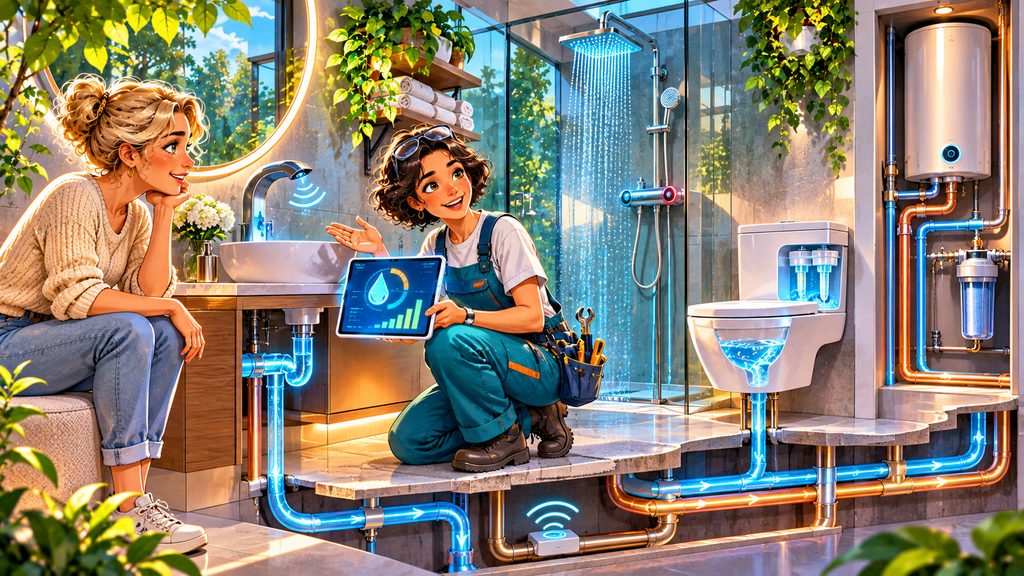
Imagine stepping into a bathroom where the shower maintains your preferred temperature, the faucet turns on without being touched, and hidden sensors detect a water leak before it damages the floor. What once seemed futuristic is becoming increasingly practical in modern homes.
Plumbing has evolved far beyond ordinary pipes, sinks, and toilets. Today’s innovations combine water efficiency, electronics, advanced materials, and intelligent controls. The most important advances are not simply about luxury: they can reduce water waste, lower energy consumption, improve safety, and make everyday routines more comfortable.
How Modern Plumbing Is Changing Our Homes
For generations, residential plumbing followed a relatively simple principle: deliver clean water and remove wastewater safely. Modern systems still perform these essential functions, but they can now monitor consumption, regulate temperature, and identify unusual water flow.
The transformation reflects growing interest in energy efficiency, environmental protection, and connected homes. A well-designed bathroom can provide precise control without unnecessarily complicated equipment. The real achievement is making sophisticated engineering almost invisible during everyday use.
Water-Saving Faucets: Less Water Without Losing Comfort
One of the simplest innovations is the aerator, a small component fitted to the outlet of a faucet. It mixes air into the flowing water, helping create a comfortable stream while reducing consumption. Modern faucets may also incorporate flow regulators that maintain a relatively consistent output despite changes in water pressure.
The US Environmental Protection Agency’s WaterSense program certifies bathroom faucets using no more than 1.5 gallons per minute, approximately 5.7 liters. That represents at least 30% less flow than the US standard of 2.2 gallons per minute. Efficient fixtures can save water without requiring homeowners to change their daily habits dramatically.
Smart Showers That Control Temperature Precisely
Modern shower technology increasingly emphasizes comfort and temperature stability. A thermostatic mixing valve automatically adjusts the balance between hot and cold water to maintain the selected temperature when supply conditions change. This can reduce sudden temperature fluctuations and help protect users from scalding.
Digital showers add programmable settings, electronic controls, and sometimes smartphone connectivity. Certain systems remember preferred temperatures or manage multiple shower outlets independently. However, their additional electronics introduce maintenance requirements, making reliability and replacement-part availability important considerations.
The Evolution of Toilets and Bidet Technology
Toilets have become substantially more water-efficient through improvements in bowl geometry and flushing mechanisms. US WaterSense-certified toilets use no more than 1.28 gallons, or about 4.8 liters, per flush. This is 20% less water than the US federal standard of 1.6 gallons.
Many modern bathrooms also feature dual-flush systems, providing separate options for liquid and solid waste. Advanced bidet toilets may offer heated seats, adjustable washing functions, warm-air drying, and automatic lid operation. These features can improve comfort and accessibility, although electrical safety and regular nozzle maintenance remain essential.
Touchless Faucets and Contact-Free Hygiene
A touchless faucet uses an electronic sensor to detect hands and activate water flow automatically. These systems are common in public bathrooms and increasingly appear in residential interiors. They can reduce unnecessary running water and limit contact with frequently touched handles.
Contact-free operation does not automatically make a water system free of microorganisms. The Centers for Disease Control and Prevention notes that complex electronic fixtures can present water-management challenges under certain conditions. Correct installation, regular cleaning, and proper water circulation remain important for hygiene.
Intelligent Sensors That Detect Hidden Leaks
A small water leak behind a cabinet can remain unnoticed until flooring, walls, or furniture are damaged. Modern smart leak detection systems use moisture sensors, flow measurements, or pressure monitoring to identify abnormal conditions. Some devices send notifications to a smartphone, while others can trigger automatic shutoff valves.
The EPA reports that undetected household leaks can waste thousands of gallons annually. Sensors placed near washing machines, toilets, water heaters, and under sinks can provide an additional protective layer. Preventing water damage is often much less expensive than repairing a seriously flooded home.
New Plumbing Materials: Copper, PEX, and Modern Composites
Traditional copper piping remains valued for its durability and heat tolerance. However, modern construction increasingly uses cross-linked polyethylene (PEX) and multilayer composite pipes. These materials are flexible, relatively lightweight, and can reduce the number of fittings required in certain installations.
Each material has advantages and limitations. Plastic pipes require appropriate protection from excessive heat, ultraviolet exposure, and incompatible chemicals, while copper can be vulnerable to corrosion under particular water conditions. Proper certification, installation methods, and local building requirements are more important than selecting a material simply because it is fashionable.
Drinking Water Safety Begins Inside the Plumbing System
Clean water supplied by a utility can still encounter problems inside a building. Corroded components, unsuitable fittings, stagnant water, or inadequate maintenance may affect quality. Modern plumbing therefore emphasizes certified drinking-water materials and backflow prevention, which stops potentially contaminated water from reversing into the drinking-water supply.
Temperature management is equally important. Legionella bacteria can multiply in some poorly managed water systems, particularly where water remains stagnant at favorable temperatures. Professional system design, appropriate hot-water controls, and routine maintenance help reduce these risks.
More Efficient Hot Water With Heat Pump Technology
Heating water represents a substantial share of household energy consumption. A heat pump water heater transfers heat from surrounding air into a water tank rather than producing all its heat through electrical resistance. According to the US Department of Energy, these systems can be two to three times more energy-efficient than conventional electric-resistance water heaters.
They do require suitable installation space, airflow, and temperature conditions. Some models also have backup heating elements for periods of high demand. When combined with efficient showers and faucets, improved water heating can reduce both energy use and operating expenses.
Can Modern Plumbing Reuse Household Water?
A growing area of sustainable plumbing involves greywater recycling, which collects selected wastewater from showers, bathroom sinks, or laundry for suitable non-drinking purposes. Depending on treatment requirements and local regulations, reclaimed water may be used for toilet flushing or landscape irrigation.
These systems require careful separation from drinking-water pipes and appropriate treatment, storage, and maintenance. Untreated greywater can contain microorganisms and chemical residues, so reuse is not automatically safe. Nevertheless, properly engineered systems can reduce demand for fresh water in suitable buildings.
Why Bathroom Design Is Becoming More Accessible
Modern plumbing design increasingly considers older adults, children, and people with limited mobility. Curbless showers, adjustable showerheads, lever handles, and appropriately positioned fixtures can make bathrooms easier to use. Anti-scald protection and slip-resistant surfaces add practical safety benefits.
Universal design aims to create spaces that accommodate a broad range of users without requiring extensive adaptations later. A thoughtfully planned bathroom can remain comfortable as household needs change. Accessibility is therefore becoming an essential engineering consideration rather than merely an optional luxury.
What Should You Prioritize When Upgrading Your Plumbing?
The most expensive technology is not necessarily the most valuable improvement. Replacing inefficient fixtures, repairing leaks, upgrading worn pipes, and improving hot-water controls may offer more meaningful benefits than installing elaborate electronic equipment. A renovation should begin with the condition of the existing system.
Look for certified products, repairable components, reliable warranties, and professional installation. Consider long-term operating costs alongside the initial purchase price. The best modern plumbing combines efficiency, durability, safety, and convenience rather than technology for its own sake.
Smart bathrooms offer an interesting glimpse into how ordinary household infrastructure is evolving. Which innovation would you value most in your home: automatic leak protection, water-saving fixtures, intelligent showers, or a more energy-efficient hot-water system? Share your thoughts in the comments.
Interesting Facts
- WaterSense-certified bathroom faucets use at least 30% less water than the US standard flow rate.
- WaterSense-certified toilets use no more than 4.8 liters of water per flush.
- WaterSense-certified showerheads limit flow to approximately 7.6 liters per minute.
- Modern leak detection systems can monitor water flow and automatically shut off the supply in certain emergencies.
- Heat pump water heaters can be two to three times more energy-efficient than conventional electric-resistance models.
- In 2024, approximately 3.4 billion people worldwide still lacked safely managed sanitation services.
- Modern plumbing systems increasingly combine water-saving technology with sensors and automated controls.
Glossary
- Aerator — A faucet attachment that mixes air into flowing water to help maintain a comfortable stream while reducing consumption.
- Thermostatic Mixing Valve — A device that regulates the mixture of hot and cold water to maintain a selected temperature.
- Dual-Flush System — A toilet mechanism offering different flushing volumes depending on need.
- Touchless Faucet — An electronically controlled faucet activated by sensors rather than manual handles.
- Smart Leak Detection — Technology that monitors moisture or water flow to identify potential leaks.
- Cross-Linked Polyethylene (PEX) — A flexible polymer widely used in modern water supply piping.
- Backflow Prevention — Devices or methods designed to stop contaminated water from flowing backward into a drinking-water system.
- Legionella — Bacteria that can grow in certain water systems and cause Legionnaires’ disease.
- Heat Pump Water Heater — A system that uses electricity to transfer environmental heat into domestic hot water.
- Greywater Recycling — The collection and appropriate treatment of selected household wastewater for non-drinking applications.
- Universal Design — Designing spaces and products for safe and convenient use by people with different physical abilities.