
AlphaFold: How AI Solved a 50-Year-Old Scientific Problem
For decades, one of biology’s greatest challenges was understanding how proteins fold into their three-dimensional shapes.
Useful articles about our universe and science

For decades, one of biology’s greatest challenges was understanding how proteins fold into their three-dimensional shapes.

Artificial intelligence systems improve over time by analyzing errors, adjusting internal parameters, and refining predictions based on feedback.

Emotional artificial intelligence, often called affective computing, refers to systems designed to detect, interpret, and simulate human emotions.

Artificial intelligence is rapidly transforming industries, governments, and everyday life, raising an important question: should AI be regulated with strict global laws similar to those...

As artificial intelligence systems increasingly influence finance, healthcare, hiring, and public policy, one critical question emerges: why did the model make that decision?

Diffusion models are a class of artificial intelligence systems designed to generate images by gradually transforming noise into structured visuals.

Multimodal models are a new generation of artificial intelligence systems capable of processing and integrating multiple types of data—such as text, images, audio, and sometimes video—within...

Interstellar travel—the journey beyond our solar system to other stars—has long been a dream of scientists and science fiction writers alike.
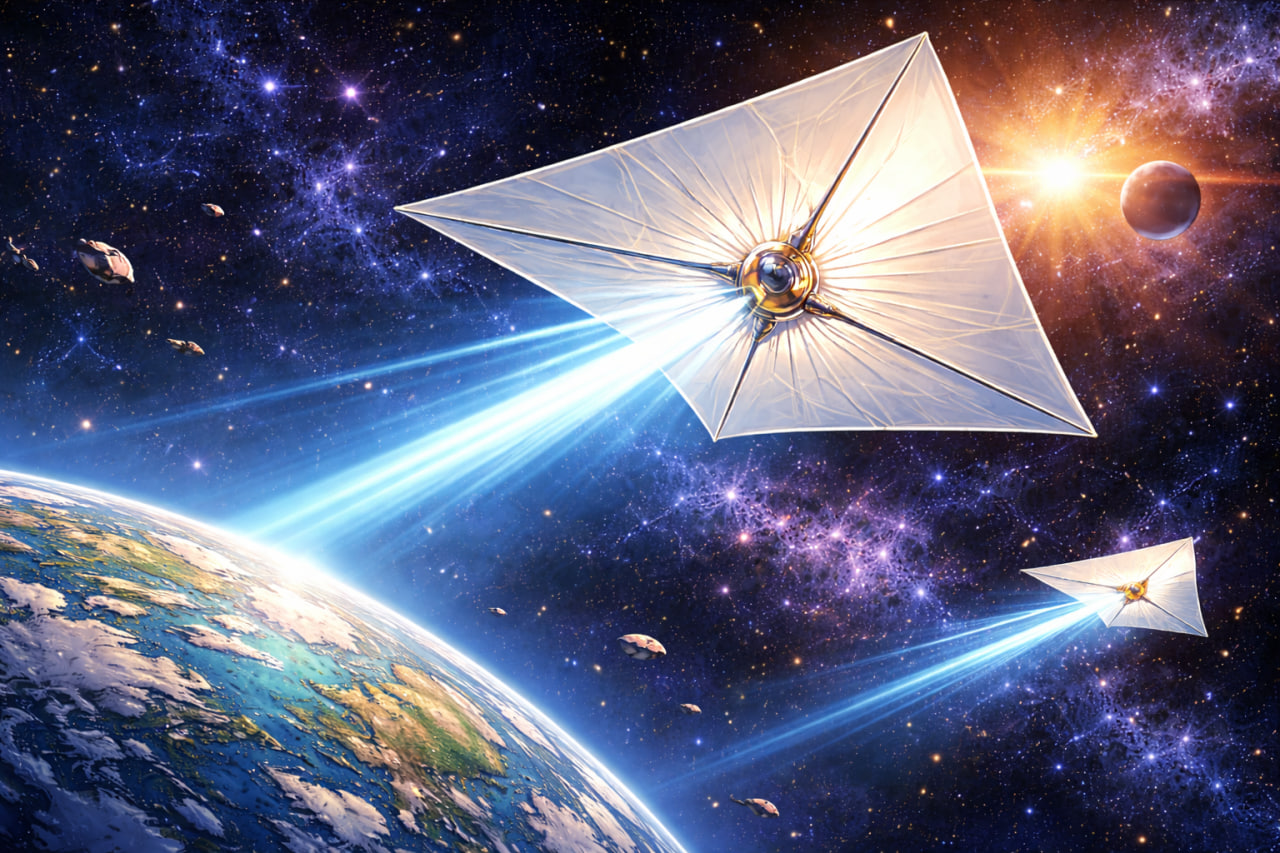
Light sail technology is one of the most innovative propulsion concepts in modern space exploration.

Long-duration space missions expose astronauts to radiation levels far higher than those experienced on Earth.