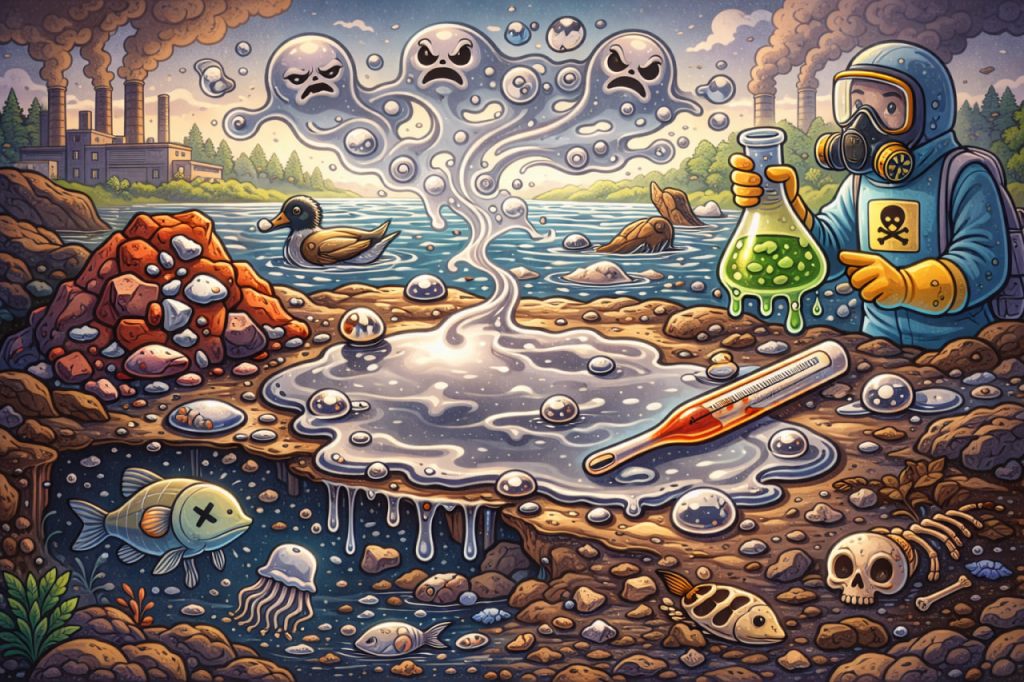
Mercury is one of the most unusual elements in nature. It is the only metal that exists in a liquid state at room temperature, giving it a unique appearance and behavior. Known since ancient times, mercury has been used in medicine, industry, and science, but it is also highly toxic and dangerous to living organisms. Its dual nature—useful yet hazardous—makes it one of the most studied elements in environmental and health sciences. Understanding mercury helps reveal how certain substances can both benefit and threaten life on Earth.
What Is Mercury
Mercury is a chemical element with the symbol Hg, derived from the Latin word hydrargyrum, meaning “liquid silver.” It is dense, reflective, and flows like a liquid metal.
Key Properties
- Liquid at room temperature
- High density and surface tension
- Conducts electricity
- Evaporates slowly into toxic vapor
“Mercury’s beauty is deceptive —
its physical uniqueness hides serious health risks.”
Where Mercury Is Found in Nature
Mercury occurs naturally in the Earth’s crust, often in the mineral cinnabar. It can be released into the environment through natural processes such as:
- Volcanic eruptions
- Weathering of rocks
- Ocean emissions
However, human activities have significantly increased mercury levels in the environment.
Human Sources of Mercury Pollution
Industrial processes are the main contributors to mercury pollution.
Major Sources
- Coal burning power plants
- Mining and metal processing
- Waste incineration
- Industrial chemicals
Once released, mercury can travel long distances through the atmosphere before settling in water or soil.
Mercury in Water and Food Chains
In aquatic environments, mercury is transformed by microorganisms into methylmercury, a highly toxic form that accumulates in living organisms.
Bioaccumulation
- Small organisms absorb mercury
- Fish eat smaller organisms
- Larger predators accumulate higher concentrations
This process, known as biomagnification, means that top predators—including humans—are exposed to the highest levels.
Effects on Human Health
Mercury is a powerful neurotoxin that affects the brain, nervous system, and organs.
Health Risks
- Damage to the nervous system
- Memory and cognitive problems
- Impaired motor skills
- Developmental issues in children
Exposure can occur through contaminated food (especially fish), air, or direct contact.
Environmental Impact
Mercury pollution affects ecosystems by harming wildlife and disrupting biological processes.
- Fish and marine animals suffer from toxicity
- Birds and mammals accumulate mercury through diet
- Ecosystems lose balance due to poisoned food chains
Because mercury persists in the environment, its effects can last for decades.
Can Mercury Be Controlled?
Reducing mercury pollution requires global effort.
Key Solutions
- Limiting industrial emissions
- Transitioning to cleaner energy sources
- Monitoring food safety
- International agreements like the Minamata Convention
These measures aim to reduce mercury release and protect both human health and ecosystems.
Why It Matters
Mercury is a reminder that even naturally occurring substances can become dangerous when human activity disrupts natural balance. Managing mercury pollution is essential for protecting the environment, wildlife, and future generations.
Interesting Facts
- Mercury is the only metal that is liquid at room temperature.
- It was once used in thermometers and medical treatments.
- Methylmercury is the most toxic form of mercury.
- Mercury can travel globally through the atmosphere.
- It can remain in ecosystems for decades or longer.
Glossary
- Mercury (Hg) — a toxic liquid metal element.
- Methylmercury — a highly toxic organic form of mercury.
- Bioaccumulation — buildup of a substance in an organism over time.
- Biomagnification — increase of toxin concentration up the food chain.
- Neurotoxin — a substance that damages the nervous system.