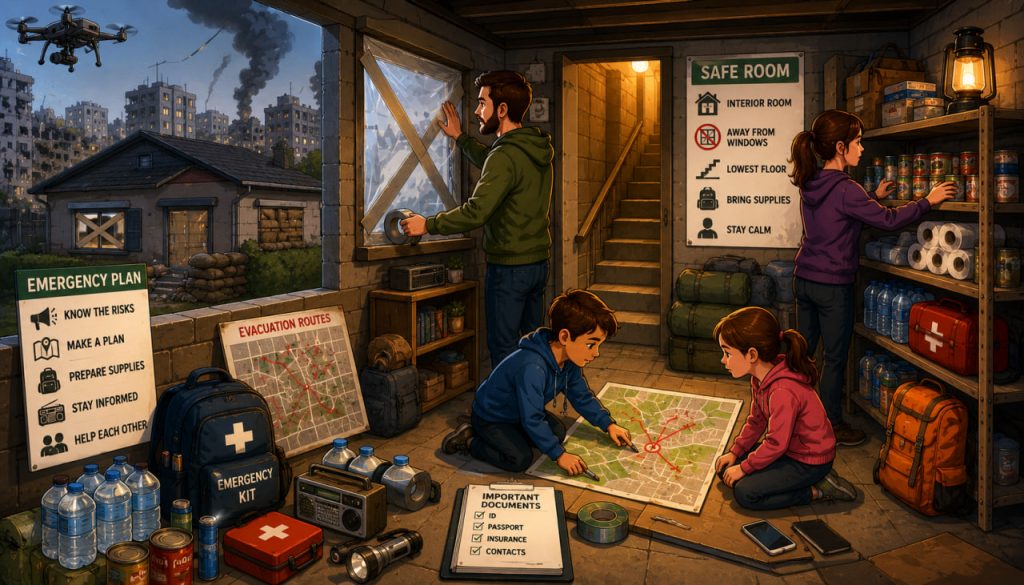
Protecting a home during active military conflict is not the same as ordinary home security. In wartime, the main threats may include shelling, drone strikes, broken windows, power outages, fire, water disruption, forced evacuation, looting, unexploded ordnance, and loss of communication.
The most important rule is simple: people matter more than property. A house can be repaired or replaced. Human life cannot.
This guide focuses on civilian safety, emergency preparedness, and practical home protection. It does not cover weapons, traps, confrontation, or military tactics.
Start With Reliable Information
During active conflict, misinformation spreads quickly. Before making decisions, identify official and trusted information channels.
Use:
- Local government alerts
- Emergency services announcements
- Civil defense instructions
- Humanitarian organization updates
- Community warning systems
- Radio broadcasts if the internet fails
The Red Cross recommends making an emergency plan that covers both sheltering in place and evacuation, because different emergencies require different responses.
Your home safety plan should always follow local official instructions first. If authorities order evacuation, the safest way to protect your family may be to leave early rather than wait.
Choose the Safest Room in the House
Every home should have a designated safe area.
The best room is usually:
- Away from exterior walls
- Away from windows
- On the lowest practical floor
- Close to load-bearing walls
- Large enough for family members
- Easy to reach quickly
- Supplied with emergency basics
Bathrooms, hallways, basements, storage rooms, and interior corridors may be safer than rooms facing the street. OSHA describes shelter-in-place as choosing an interior room with no or few windows, and advises closing shades, blinds, or curtains when there is danger of explosion.
Do not wait for an attack to decide where to go. Practice reaching the safe room quickly, including at night.
Reduce Window and Glass Hazards
Windows are one of the most dangerous parts of a home during explosions or nearby impacts.
You cannot make ordinary windows fully blast-proof, but you can reduce injury risk.
Practical steps include:
- Keep beds and seating away from windows
- Close curtains or blinds during alerts
- Use heavy curtains where possible
- Apply safety film if available before danger escalates
- Remove glass decorations from shelves
- Store mirrors away from sleeping areas
- Avoid standing near windows to watch events outside
Tape on glass is often overestimated. It may hold some pieces together, but it does not make a window safe against blast pressure.
The safest protection from glass is distance. Stay away from windows during alerts, explosions, and air-raid warnings.
Prepare a Stay-at-Home Emergency Kit
If movement outside becomes dangerous, your household may need to survive indoors for several days.
The Red Cross recommends keeping emergency supplies in an easy-to-carry kit that can be used at home or taken during evacuation.
Your home kit should include:
- Drinking water
- Non-perishable food
- Flashlights
- Batteries or power banks
- First-aid supplies
- Essential medications
- Copies of documents
- Cash in small denominations
- Hygiene products
- Warm clothing
- Radio or offline communication device
- Pet supplies if needed
Prepare separate bags for children, elderly relatives, and anyone with medical needs.
A good emergency kit is not a luxury. It is basic infrastructure for surviving disruption.
Protect Against Fire
Fire is a major risk during conflict because explosions, damaged electrical systems, gas leaks, and unsafe heating methods can ignite buildings.
Keep fire extinguishers accessible and check that adults know how to use them. Move flammable liquids, paper piles, curtains, and unnecessary clutter away from heat sources.
Know how to shut off electricity, gas, and water if it is safe to do so. Do not enter damaged utility areas if you smell gas, see sparks, or suspect structural damage.
During power outages, avoid using outdoor grills, generators, or fuel-burning heaters indoors. The CDC warns that power outages create health and safety hazards, including risks related to food, water, medication, and unsafe equipment use.
Never trade one emergency for another by creating a fire or carbon monoxide risk inside the home.
Secure Water, Food, and Medicine
Conflict can disrupt stores, roads, pharmacies, electricity, and clean water systems.
Store drinking water in clean containers. Keep food that requires little or no cooking. Choose items that your household already eats, because stress is not the best time to experiment with unfamiliar food.
Important supplies include:
- Bottled water
- Canned food
- Manual can opener
- Dry grains or ready meals
- Baby food if needed
- Prescription medicines
- Pain relievers
- Oral rehydration salts
- Basic hygiene products
The CDC advises taking emergency steps to keep water safe and prevent illness when normal water systems are disrupted.
If refrigeration fails, be careful with meat, dairy, fish, eggs, and cooked leftovers. Unsafe food can create a medical emergency when hospitals may already be overwhelmed.
Make Evacuation Easier Before It Is Needed
Protecting a home also means knowing when to leave it.
Prepare a go-bag near the exit. Keep documents, medications, phone chargers, spare keys, and cash in one place. If you have a vehicle, keep fuel available when possible and know several routes out of the area.
Your evacuation plan should include:
- Where to go
- How to get there
- Who travels together
- How to contact separated relatives
- What to do with pets
- What documents to carry
- Which neighbor may need help
The Red Cross emphasizes practicing evacuation routes and planning how family members will reconnect if separated.
Leaving early is often safer than leaving late under panic, shelling, curfew, or road closures.
Avoid Unexploded Ordnance and Military Debris
After attacks, dangerous objects may remain in streets, yards, roofs, fields, and damaged buildings.
Do not touch:
- Shell fragments
- Rockets
- Grenades
- Drones
- Mines
- Unfamiliar metal objects
- Suspicious packages
- Ammunition
- Burned or damaged military equipment
The ICRC warns that unexploded and abandoned ordnance can remain dangerous in urban settings and pose serious risks to civilians and essential infrastructure.
If you find a suspicious object, move away, warn others, mark the area from a safe distance if appropriate, and report it to local authorities.
Curiosity can be deadly. Treat every unknown military object as dangerous.
Do Not Turn Your Home Into a Target
A civilian home should remain visibly civilian.
Avoid storing military equipment, allowing armed positions on the property, or using the home for activities that could make it appear connected to combat operations. International humanitarian law distinguishes between civilians, civilian objects, and military objectives, but urban warfare can blur risks on the ground.
The ICRC has repeatedly emphasized that urban warfare causes severe civilian harm and can destroy essential infrastructure, especially when explosive weapons are used in populated areas.
The safest home is one that stays away from military activity as much as possible.
Expert Perspective
The International Committee of the Red Cross argues that urban warfare creates exceptionally high risks for civilians because homes, hospitals, schools, roads, electricity networks, and water systems are tightly connected in cities. Its work highlights a key reality: protecting civilians is not only about individual behavior, but also about preserving essential services and reducing harm in populated areas.
For homeowners, this means preparation should focus on survival basics: safe shelter, water, food, medicine, communication, evacuation, and avoiding explosive remnants of war.
Interesting Facts
- Interior rooms without windows are often safer than rooms with large exterior walls.
- Heavy curtains may reduce some flying glass risk, but they cannot make windows blast-proof.
- A manual can opener can become essential when electricity is unavailable.
- Power banks should be charged before alerts become frequent.
- Emergency documents should be stored in both physical and digital form.
- Unexploded ordnance can remain dangerous for years after fighting ends.
- A home emergency plan should include pets, elderly relatives, children, and people with disabilities.
Glossary
- Shelter in Place — Staying inside a safer indoor location during an emergency instead of evacuating immediately.
- Safe Room — The safest available room in a home, usually interior, low, and away from windows.
- Go-Bag — A packed emergency bag that can be taken quickly during evacuation.
- Unexploded Ordnance — Military ammunition or explosive devices that did not detonate but may still explode later.
- Civilian Object — A non-military object such as a home, school, hospital, or shop.
- Power Outage — A loss of electricity that may affect lighting, heating, refrigeration, communication, and medical equipment.
- Emergency Kit — A prepared set of supplies for surviving disruption at home or during evacuation.
- Evacuation Route — A planned path used to leave a dangerous area safely.