Animal Cloning: How Science Creates Genetic Copies and What It Means for the Future
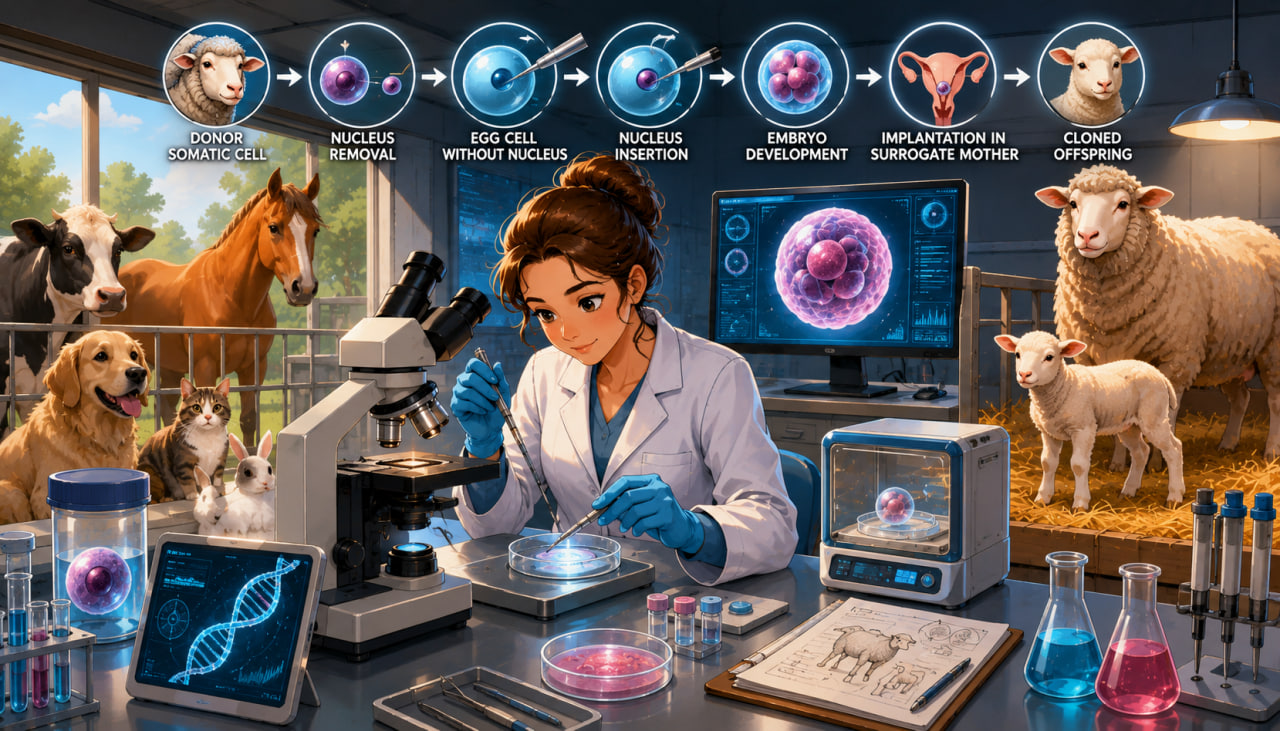
Animal cloning is one of the most fascinating and controversial achievements of modern biotechnology. Once considered the realm of science fiction, cloning became a scientific reality in 1996 with the birth of Dolly the sheep, the world's first mammal cloned from an adult body cell. Since then, scientists have successfully cloned dozens of animal species, including cattle, horses, cats, dogs, rabbits, wolves, and endangered animals. But what exactly is animal cloning? Can it help save endangered species? Does a clone behave exactly like the original animal? And could this technology one day transform conservation, agriculture, and medicine? The answers are more complex than many people realize. Animal cloning is a powerful scientific tool, but it is neither a method for creating identical personalities nor a simple solution to biodiversity loss.