Challenges

Water Desalination: How Humans Turn Seawater Into Drinking Water
Hi-Tech Smart Technology Inventions

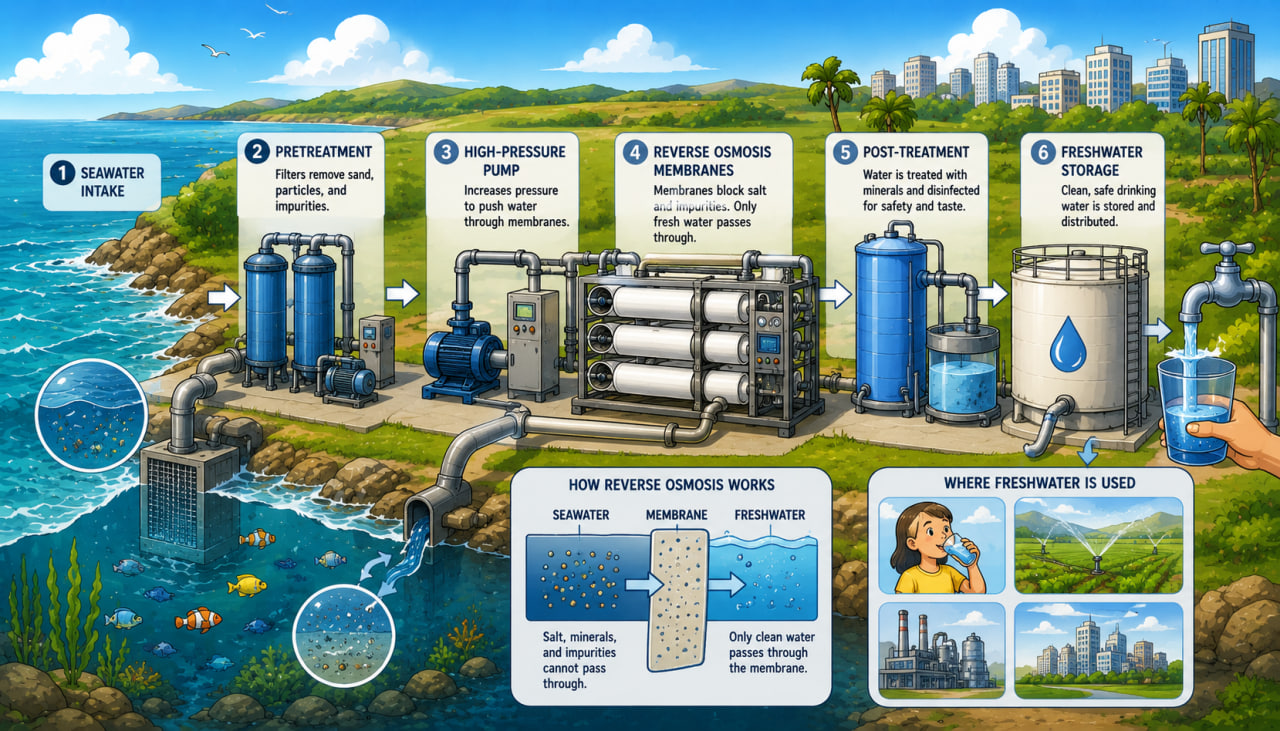
Water Desalination: How Humans Turn Seawater Into Drinking Water

Freshwater shortages are becoming one of the biggest global challenges of the modern era. As populations grow and climate change affects natural water supplies, many countries are turning to desalination technology to produce clean drinking water from the ocean. Desalination plants already provide water for millions of people worldwide. Understanding how desalination works reveals how science and engineering can help solve critical environmental problems.


How Many Books and Documents Are Not on the Internet — and Where to Find Them
History Science Be Smart

How Many Books and Documents Are Not on the Internet — and Where to Find Them

The internet gives the impression that nearly all human knowledge is accessible with a simple search, but in reality, a vast portion of books and documents still remains offline. Estimates suggest that only a fraction of all published materials has been digitized, especially when considering historical archives, rare manuscripts, and local publications. Millions of works exist only in physical form, stored in libraries, private collections, or institutional archives. The reasons for this gap include technical limitations, legal restrictions, and the sheer scale of global knowledge production. Understanding why so much information is not online helps researchers, students, and curious readers expand their search beyond digital sources. In many cases, the most valuable or unique materials require traditional methods of discovery.

Space Archaeology: Can We Find Evidence of Lost Civilizations?
Space Stories Universe What if?

Space Archaeology: Can We Find Evidence of Lost Civilizations?

The idea of discovering traces of lost extraterrestrial civilizations has fascinated scientists and the public for decades. While traditional archaeology studies human history through physical remains on Earth, space archaeology explores the possibility of detecting technological or structural evidence beyond our planet. With the rapid development of astronomy and space exploration, scientists are beginning to ask whether it is possible to identify signs of past intelligent life elsewhere in the universe. Although no confirmed discoveries have been made, modern research focuses on indirect clues—such as unusual energy signatures, artificial structures, or unexplained cosmic phenomena. Understanding these possibilities helps expand the search for life beyond simple biology and into the realm of advanced civilizations.

The First Human Spaceflight: How It Happened
History Science Be Smart

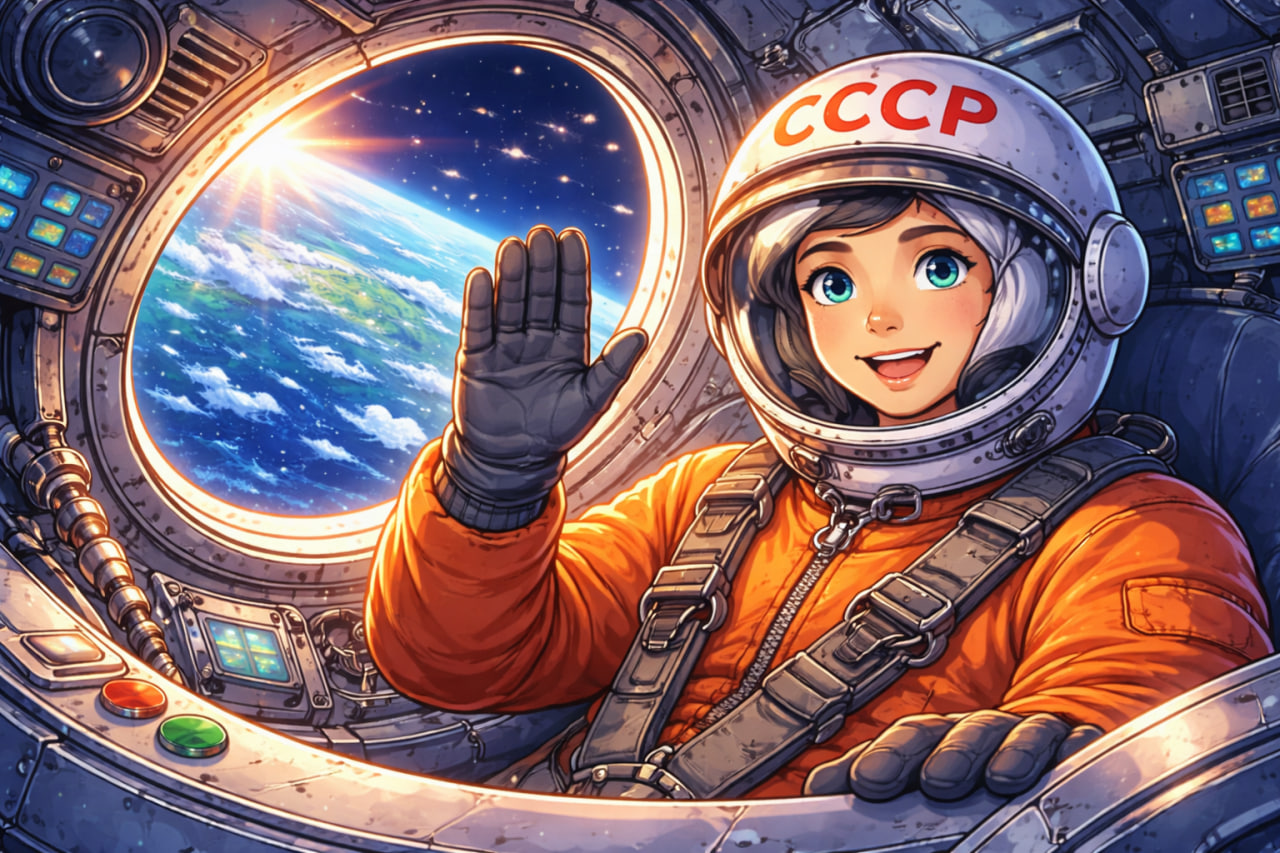
The First Human Spaceflight: How It Happened

The first human spaceflight marked one of the most significant milestones in the history of science and exploration. It was a moment when humanity crossed a boundary that had existed for all of history—the boundary between Earth and space. This achievement was not only a technological breakthrough but also a powerful symbol of human curiosity, courage, and ambition. During the early 1960s, the world was deeply engaged in the space race, a competition between global superpowers striving to demonstrate scientific and technological superiority. The success of sending a human into orbit required years of research, testing, and risk-taking, as engineers worked to solve problems that had never been encountered before. Understanding how this historic mission unfolded reveals both the complexity of early space travel and the determination behind one of humanity’s greatest achievements.

Space Debris: What It Is and What We Can Do About It
Space Stories Be Smart Earth & Moon

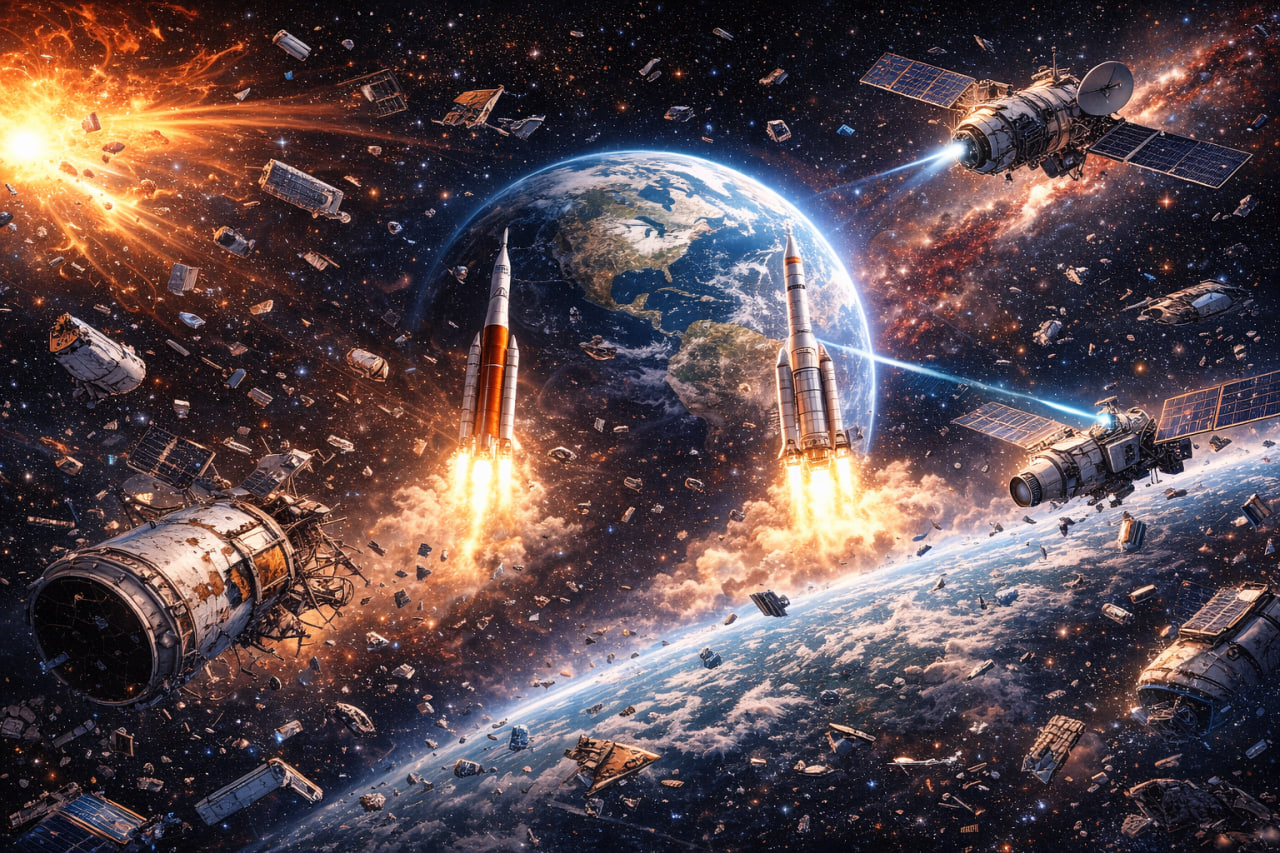
Space Debris: What It Is and What We Can Do About It

Space debris, often called space junk, refers to defunct satellites, fragments from collisions, and leftover parts of rockets orbiting Earth. While invisible to most people, this growing cloud of debris poses a serious threat to active satellites, space missions, and future exploration. Even tiny fragments can travel at extremely high speeds, making them capable of causing significant damage. As humanity becomes increasingly dependent on satellite technology, the issue of space debris is becoming more urgent. Understanding its origins and solutions is essential for maintaining safe and sustainable access to space.