Smart Technology

Fiber Optics: The Light That Carries the Internet
Neuro-Tech Hi-Tech Smart Technology

Fiber Optics: The Light That Carries the Internet

Fiber optics is one of the quiet technologies that makes modern life possible. Every video call, cloud backup, online payment, streaming movie, search request, and international message depends on huge networks moving data at incredible speed. Much of that traffic travels not through copper wires or radio waves, but through thin strands of glass carrying pulses of light. At first, the idea sounds almost magical: information becomes light, travels through a glass fiber thinner than a human hair, and then turns back into digital data. But behind this magic is precise physics, advanced engineering, and decades of innovation. Fiber optic communication is the backbone of the modern internet because it can move enormous amounts of information quickly, reliably, and over long distances.


PageRank Algorithm: How Mathematics Helped Make Google Great
Smart Technology News Mathematics

PageRank Algorithm: How Mathematics Helped Make Google Great

In the late 1990s, the internet was growing faster than anyone could organize it. Millions of web pages appeared online, but finding the best information was frustrating. Early search engines often ranked pages mainly by how many times a keyword appeared on a page. That made results easy to manipulate. A low-quality page could repeat a word many times and appear higher than a genuinely useful source. Then came Google, built around a powerful mathematical idea called PageRank. Instead of looking only at words on a page, PageRank analyzed the structure of the web itself. It treated links between pages as signals of importance. If many valuable websites linked to one page, that page was probably important too. This simple but brilliant idea changed online search. Google did not become great only because it indexed more pages. It became great because it ranked information better.

Budget-Friendly Kitchen Gadgets That Save Time: The Best Affordable Appliances for Every Home
KnowHow Smart Technology Smart Home

Budget-Friendly Kitchen Gadgets That Save Time: The Best Affordable Appliances for Every Home

Modern kitchens are becoming smarter, faster, and more efficient than ever before. While premium appliances often receive the most attention, many affordable kitchen gadgets can dramatically reduce cooking time, simplify meal preparation, and make everyday tasks much easier. You don't need an expensive smart kitchen to enjoy the benefits of modern technology. Today's budget-friendly appliances are designed to help with chopping, mixing, cooking, cleaning, and food storage while consuming relatively little electricity. Whether you're preparing meals for a family or cooking for yourself, choosing the right appliances can save both time and effort. This guide explores the most useful affordable kitchen appliances, their advantages, and how to choose the ones that provide the greatest value for your money.

Computer Vision as an Illusion: How AI Sees a Cat as a Cloud of Pixels
Smart Technology AI & Ethics AI

Computer Vision as an Illusion: How AI Sees a Cat as a Cloud of Pixels

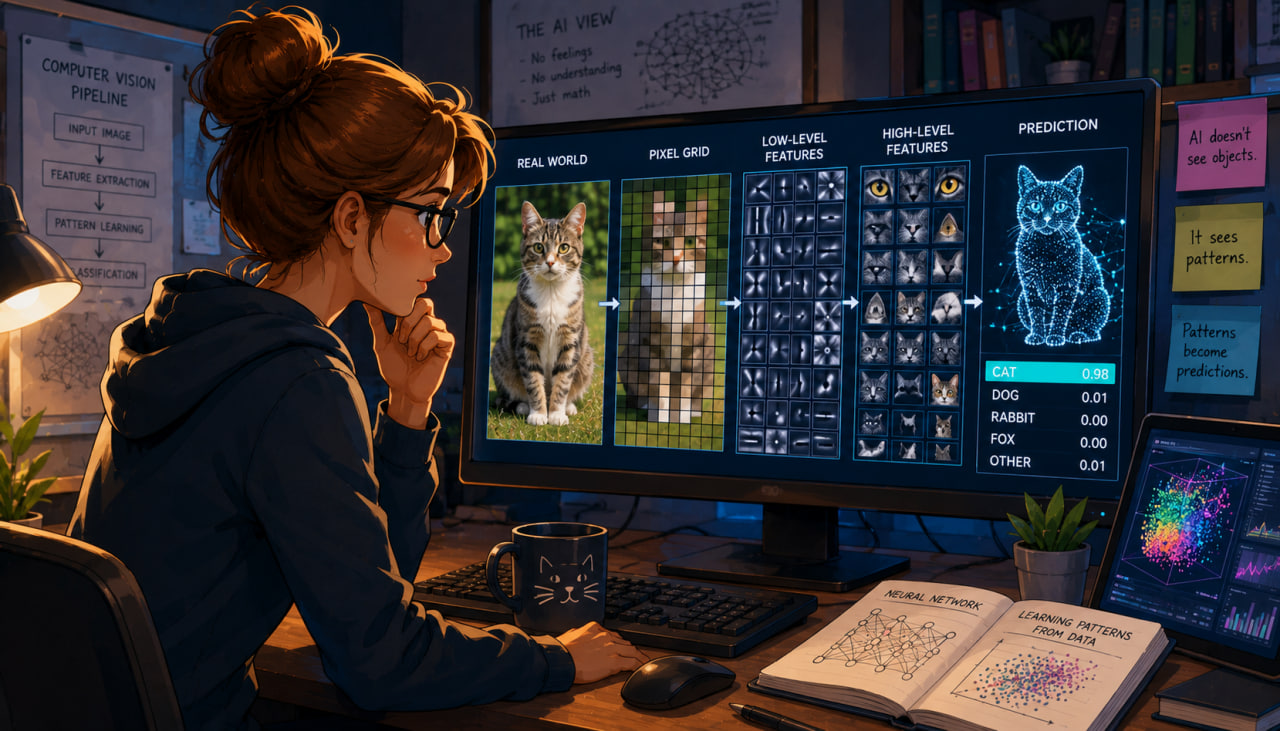
Artificial intelligence can recognize faces, detect tumors in medical scans, identify wildlife in forests, and even help self-driving cars navigate busy streets. To humans, these achievements may seem to suggest that AI "sees" the world much like we do. In reality, modern computer vision works in a fundamentally different way. An AI does not perceive a cat as a furry animal with whiskers, ears, and a tail. Instead, it processes millions of numerical values representing patterns of colored pixels. This distinction is one of the most fascinating aspects of artificial intelligence. While humans interpret images through experience, context, and common sense, computer vision systems rely on mathematical relationships hidden within digital images. Understanding how AI actually "sees" reveals both the remarkable power and important limitations of modern machine learning.

The Microscope: From Ancient Curiosity to Modern Scientific Revolution
Bioengineering Smart Technology Inventions

The Microscope: From Ancient Curiosity to Modern Scientific Revolution

The microscope is one of humanity's greatest scientific inventions. It transformed our understanding of life, disease, materials, and the Universe hidden beyond the limits of human vision. Before microscopes, people had no idea that bacteria, blood cells, or even the intricate structures inside plants and animals existed. Today, microscopes allow scientists to observe individual molecules, viruses, and even the arrangement of atoms. The history of the microscope is a remarkable journey spanning more than two thousand years. From simple magnifying lenses used in ancient civilizations to today's electron and cryo-electron microscopes capable of revealing structures measured in billionths of a meter, each technological breakthrough has opened new frontiers of discovery.

Electric Aircraft and the Rise of Autonomous Aviation Systems
Hi-Tech Smart Technology Inventions

Electric Aircraft and the Rise of Autonomous Aviation Systems

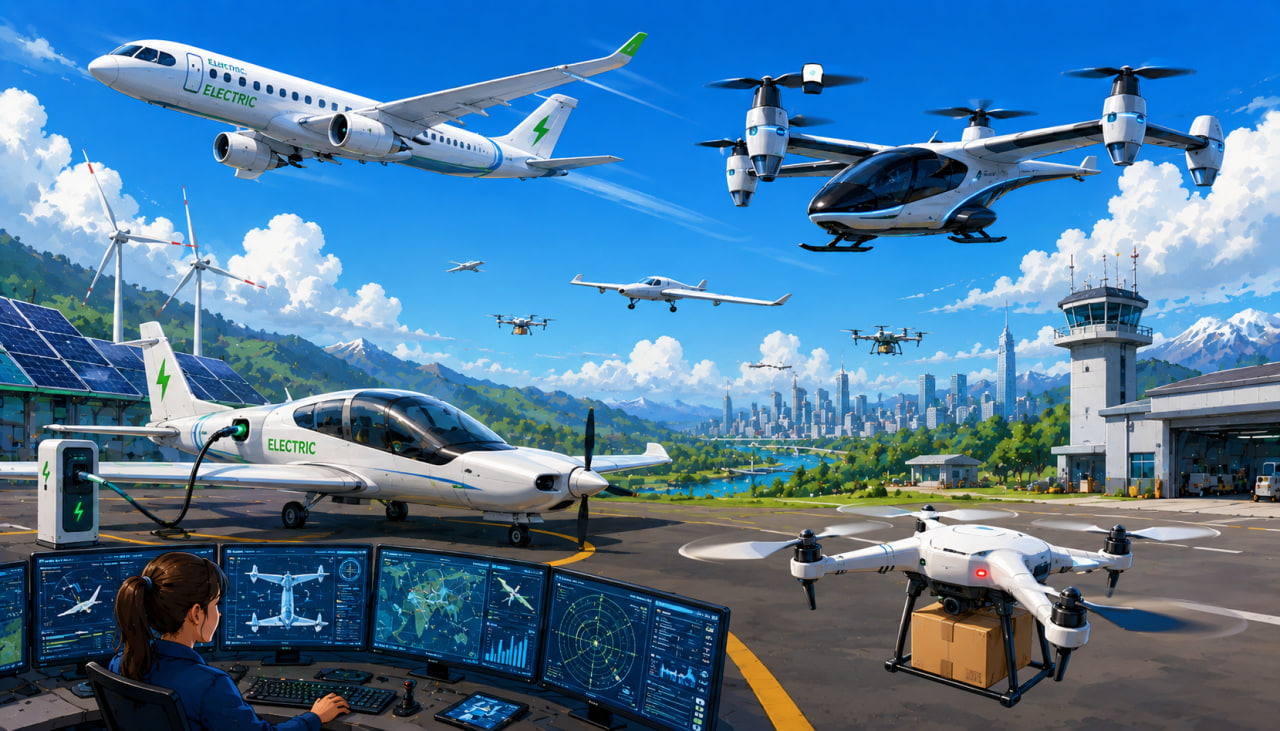
The aviation industry is undergoing one of the most significant transformations since the invention of the jet engine. Electric aircraft, autonomous flight technologies, and advanced unmanned aerial systems are rapidly reshaping the future of air transportation. While commercial airliners still rely almost entirely on conventional jet engines, breakthroughs in battery technology, artificial intelligence, lightweight materials, and autonomous navigation are opening new possibilities for cleaner, safer, and more efficient aviation. From cargo drones delivering medical supplies to experimental electric passenger aircraft, the next generation of aviation is moving toward a future where sustainable propulsion and intelligent flight systems work together. Although major technological challenges remain, experts believe these innovations will dramatically change regional transportation, logistics, emergency services, and urban mobility over the coming decades.

Radar and Sonar: How These Technologies Help Us See the Sky and Explore the Ocean
Smart Technology Science Inventions

Radar and Sonar: How These Technologies Help Us See the Sky and Explore the Ocean

Radar and sonar are two of the most remarkable sensing technologies ever developed. Although they are often mentioned together, they operate in very different environments. Radar uses radio waves to detect objects in the air, on land, and even in space, while sonar relies on sound waves to locate and study objects underwater. Today, these technologies play essential roles in aviation, maritime navigation, military defense, scientific research, weather forecasting, and environmental monitoring. Without radar and sonar, modern transportation and ocean exploration would be far more difficult—and in many cases, far less safe. Understanding how radar and sonar work reveals how humans have learned to "see" where ordinary vision cannot reach.

How to Keep Household Appliances in Good Working Condition: A Practical Guide
KnowHow Smart Technology Smart Home

How to Keep Household Appliances in Good Working Condition: A Practical Guide

Modern homes depend heavily on appliances and electronic devices. Refrigerators preserve food, washing machines save time, air conditioners improve comfort, and computers support work and communication. Yet many homeowners pay little attention to maintenance until something breaks. Proper care can significantly extend the lifespan of household equipment, reduce repair costs, improve energy efficiency, and prevent unexpected failures. In many cases, simple maintenance habits can add years to the life of an appliance. This practical guide explains how to keep household equipment operating safely and efficiently while avoiding common mistakes that lead to premature breakdowns.

What Is 5G? A Simple Guide to the Fifth Generation of Mobile Networks
Neuro-Tech Hi-Tech Smart Technology

What Is 5G? A Simple Guide to the Fifth Generation of Mobile Networks

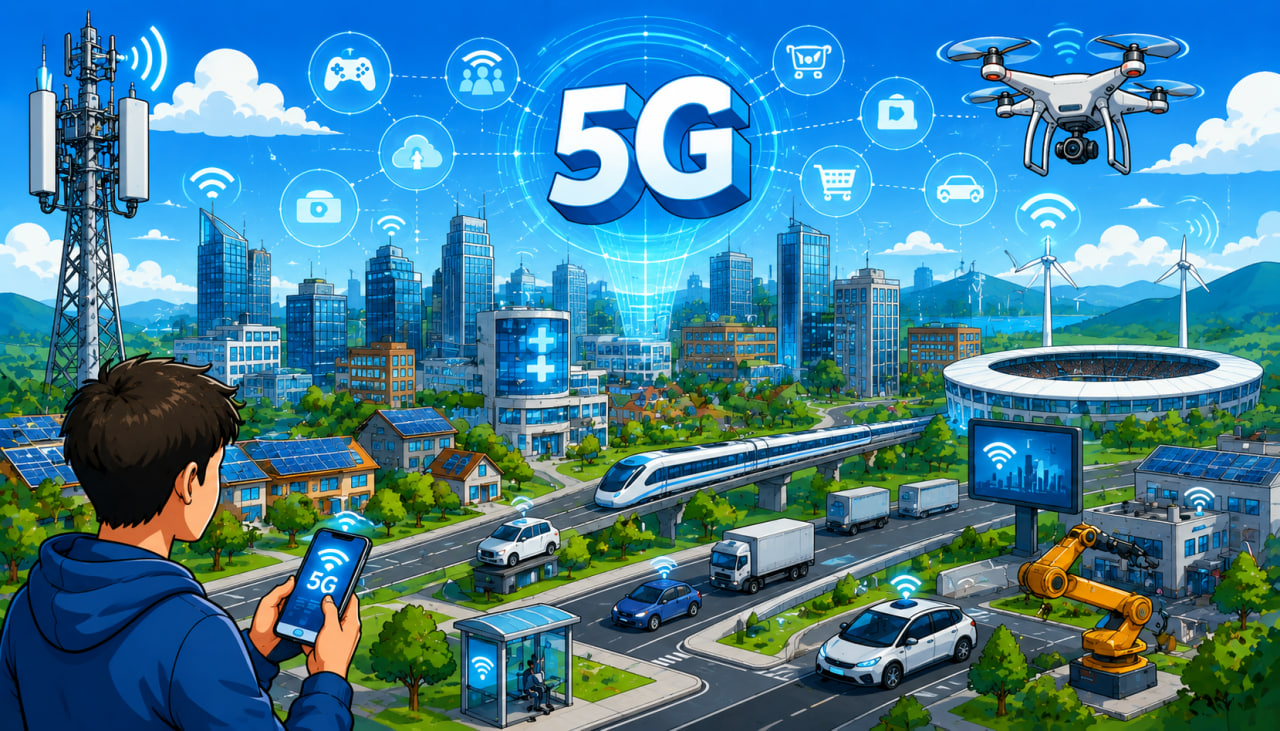
5G is the fifth generation of mobile communication technology. It is the successor to 4G LTE and was designed not only to make smartphones faster, but also to support a new digital infrastructure for cities, industry, transport, medicine, entertainment, and the Internet of Things. For most people, 5G means faster mobile internet, smoother video calls, quicker downloads, and better performance in crowded places. But technically, 5G is much more than a speed upgrade. It is a new network architecture built to connect millions of devices, reduce delay, improve reliability, and support services that older networks were not designed to handle. According to the International Telecommunication Union, 5G, formally known as IMT-2020, is built around three major usage scenarios: enhanced mobile broadband, ultra-reliable low-latency communications, and massive machine-type communications.