
The Kuiper Belt: Exploring the Icy Frontier Beyond Neptune
Far beyond the familiar planets lies a vast region filled with frozen worlds, dwarf planets, and ancient remnants of the early Solar System. This distant zone is known as the Kuiper Belt.
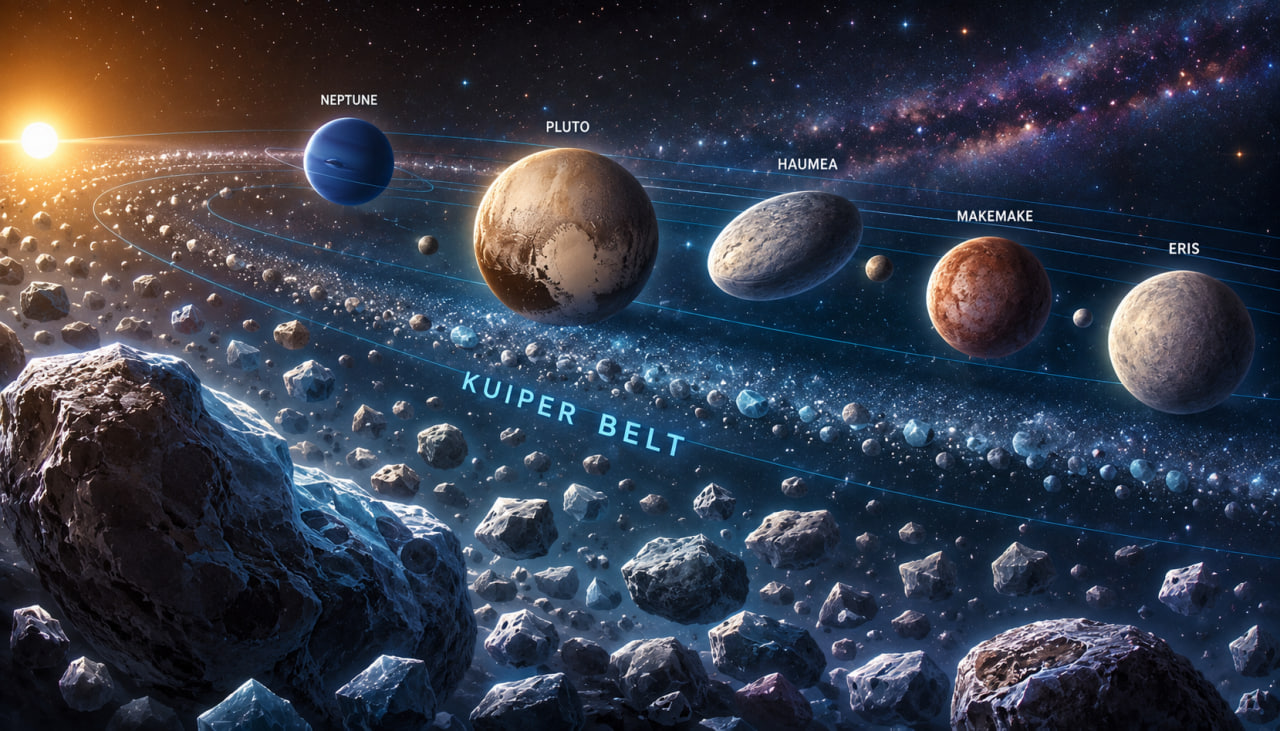
Far beyond the familiar planets lies a vast region filled with frozen worlds, dwarf planets, and ancient remnants of the early Solar System. This distant zone is known as the Kuiper Belt.
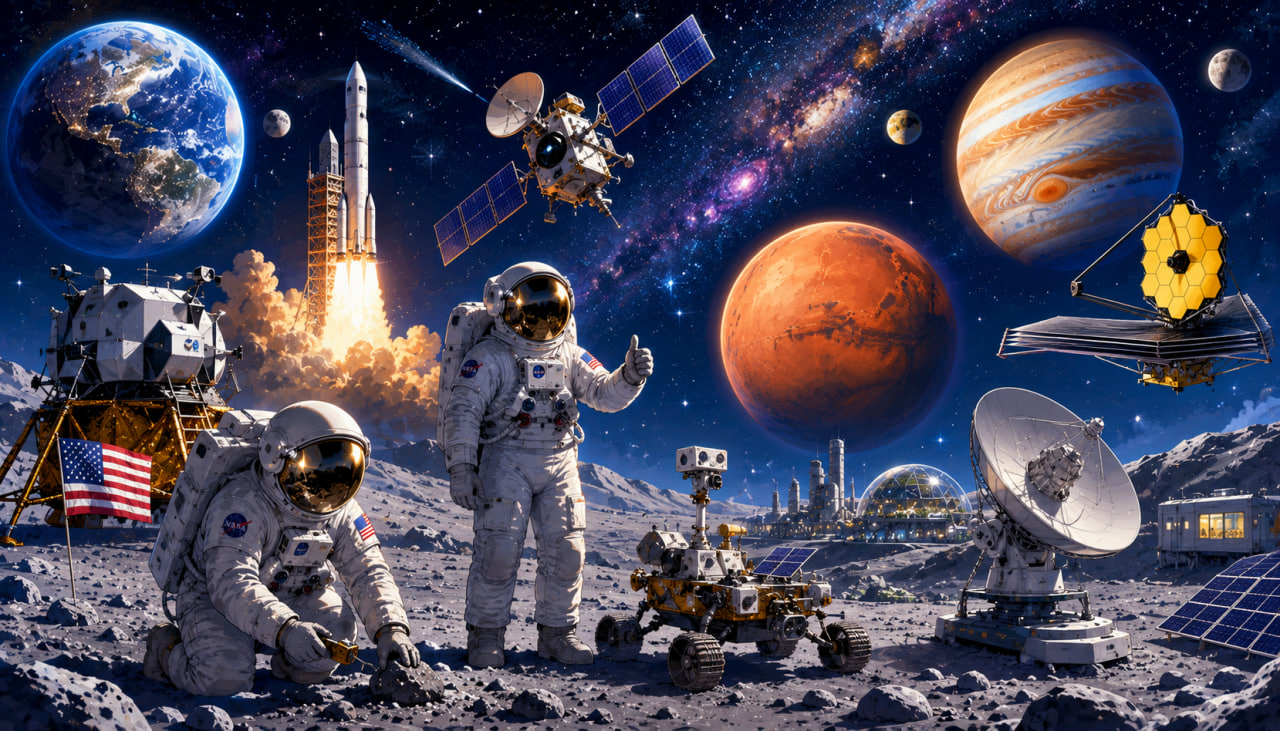
Space exploration entered an exciting new chapter in 2026. Governments, private companies, and international space agencies are launching increasingly ambitious missions that promise to deepen our understanding of the Moon, Mars, asteroids, distant planets, and even the origins of the Universe. While 2026 has not yet delivered evidence of extraterrestrial life, it is becoming one of the most important years for preparing humanity's next giant leap into deep space. New telescopes, robotic explorers, planetary defense missions, and lunar programs are laying the foundation for discoveries that could transform astronomy for decades.
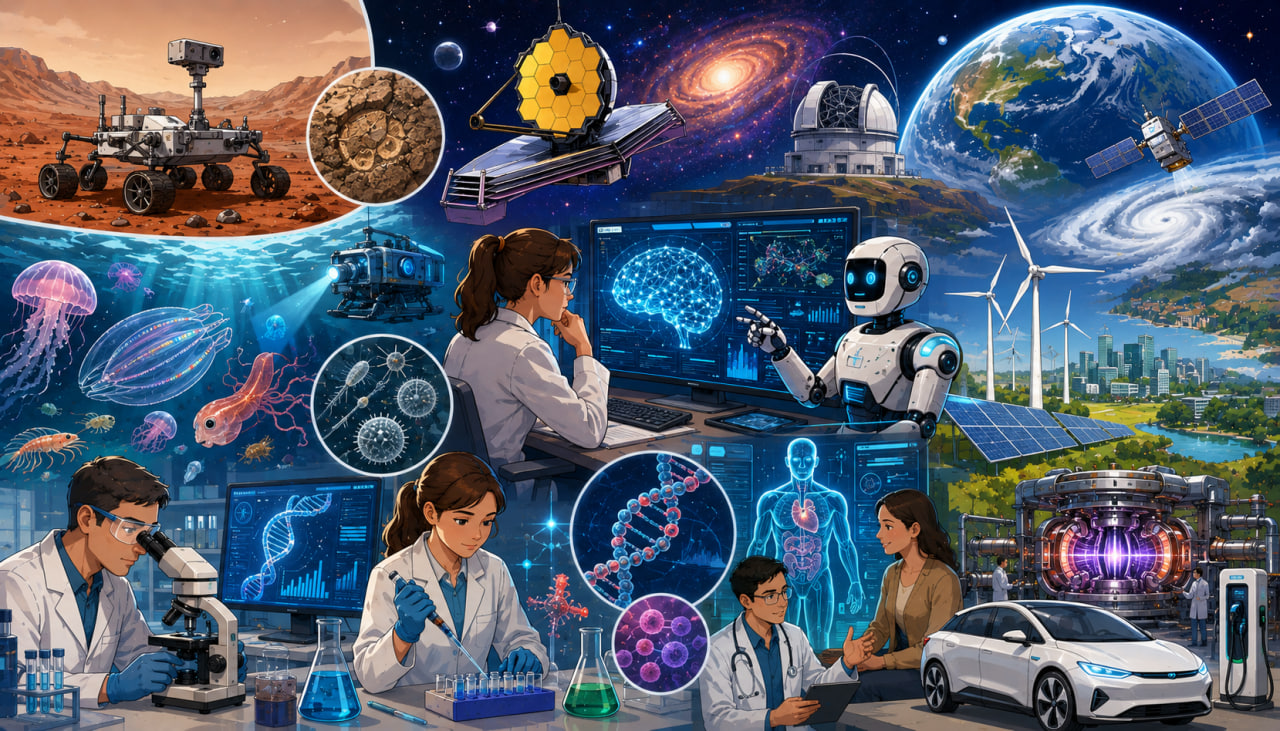
Science in 2026 is moving at an extraordinary pace. From exciting discoveries on Mars and the deep ocean to advances in quantum physics, medicine, artificial intelligence, and astronomy, researchers continue expanding humanity's understanding of the universe. While many breakthroughs are still being verified and refined, several developments have already attracted worldwide attention and may influence science for years to come. This overview highlights some of the most significant scientific news stories of 2026, explaining why they matter and how they could shape the future.

Among all the worlds in our Solar System, Titan, Saturn's largest moon, stands out as one of the most extraordinary. Hidden beneath a dense golden-orange atmosphere lies a landscape unlike anything on Earth. Instead of deserts made of quartz, Titan is covered by enormous fields of dark dunes composed of complex organic particles. Instead of rainwater, methane and ethane fall from the sky, carving rivers and filling lakes across its frozen surface. Discovered in detail by NASA and ESA's Cassini-Huygens mission, Titan has transformed scientists' understanding of planetary geology and chemistry. Its vast dune fields, stretching for thousands of kilometers beneath a hazy methane atmosphere, provide a fascinating glimpse into an alien world where familiar geological processes occur using completely different materials.
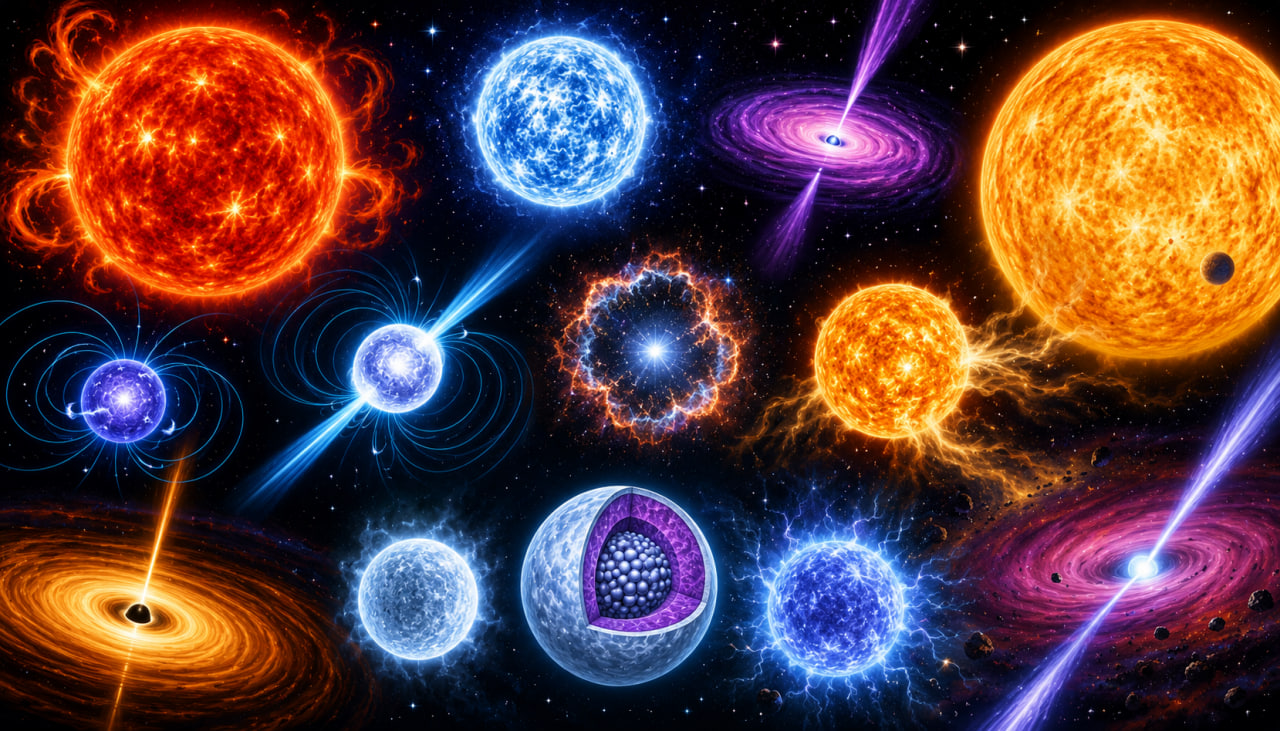
When people imagine stars, they often think of glowing yellow suns like our own. In reality, the Universe contains an astonishing variety of stellar objects that challenge our understanding of physics. Some stars spin hundreds of times every second, while others possess magnetic fields trillions of times stronger than Earth's. There are stars made almost entirely of exotic matter, stars that pulse like cosmic lighthouses, and giant stars so large they could engulf the orbit of Jupiter. These extraordinary objects help astronomers understand how stars evolve, how matter behaves under extreme conditions, and how the Universe itself changes over billions of years. Modern observatories continue to discover increasingly unusual stars, proving that the cosmos is far more diverse than scientists once imagined.
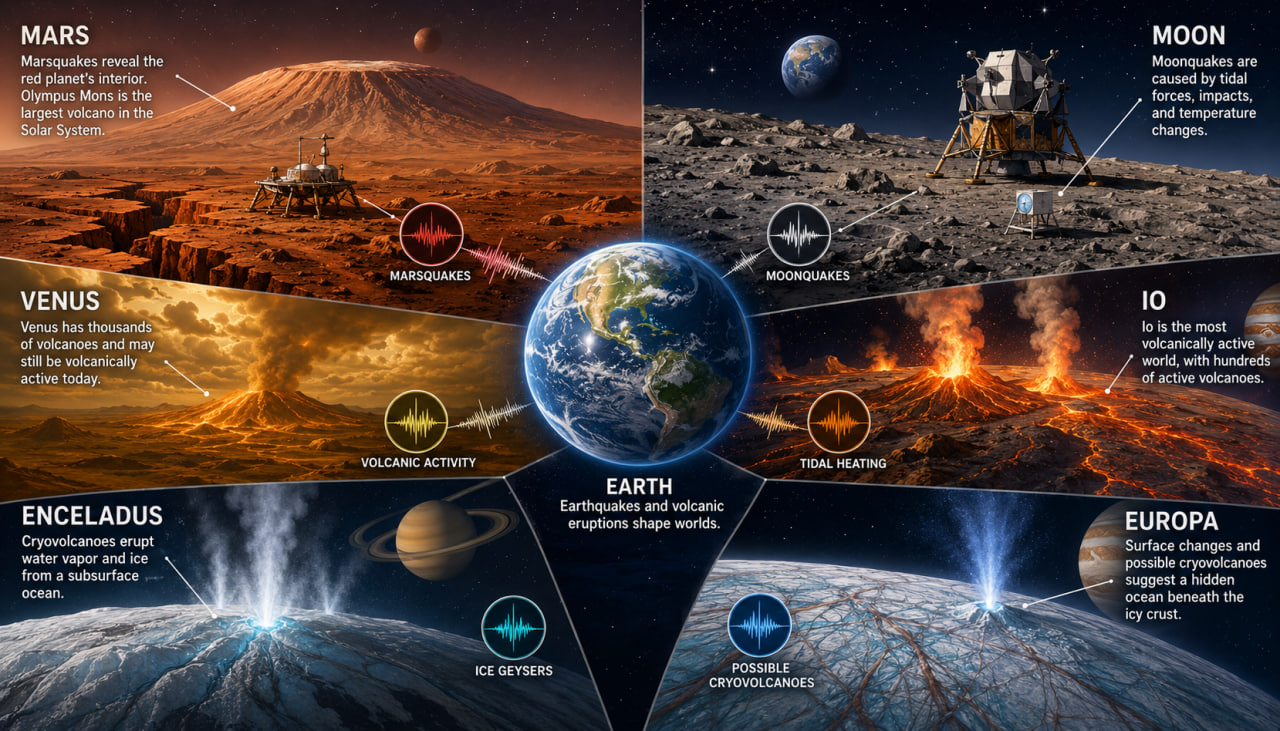
When people think about earthquakes and volcanoes, they usually imagine dramatic events on Earth. However, our planet is not the only world with geological activity. Modern space missions have revealed that earthquakes, volcanic eruptions, and tectonic processes occur—or have occurred—on several other planets and moons throughout the Solar System. These discoveries have transformed planetary science. What once seemed like lifeless rocky worlds are now understood as dynamic environments shaped by powerful internal forces. By studying extraterrestrial geology, scientists gain valuable insights into planetary evolution, interior structure, and even the potential for life beyond Earth. The search for "alien earthquakes" and volcanic activity has become one of the most exciting areas of modern space exploration.
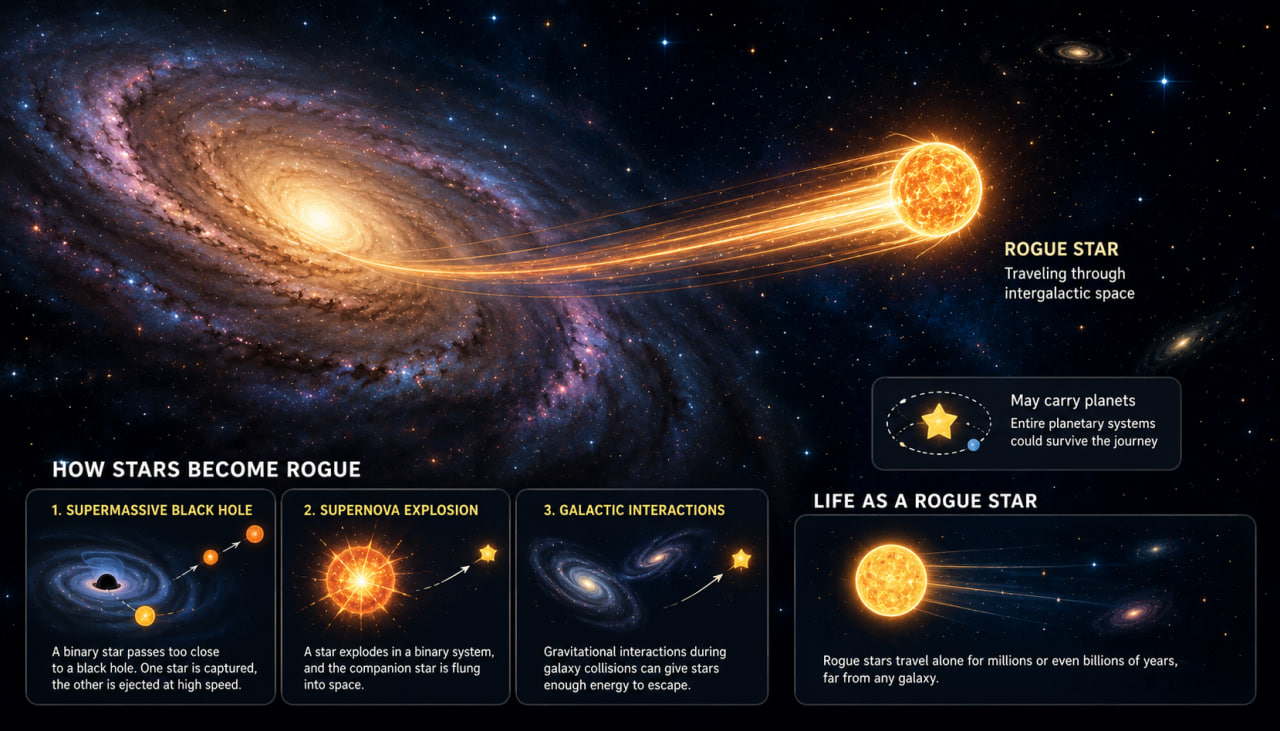
The universe is filled with billions of stars bound together by the gravity of galaxies. Most stars spend their entire lives orbiting within their galactic homes, moving around their galactic centers in predictable paths. However, not all stars remain where they were born. Some are violently expelled from their galaxies and sent hurtling into intergalactic space at extraordinary speeds. These objects, known as rogue stars or hypervelocity stars, are among the most fascinating travelers in the cosmos. Once ejected, they may spend millions or even billions of years crossing the immense voids between galaxies, isolated from the stellar neighborhoods where they originated. Their existence demonstrates that the universe is far more dynamic and chaotic than it may appear.
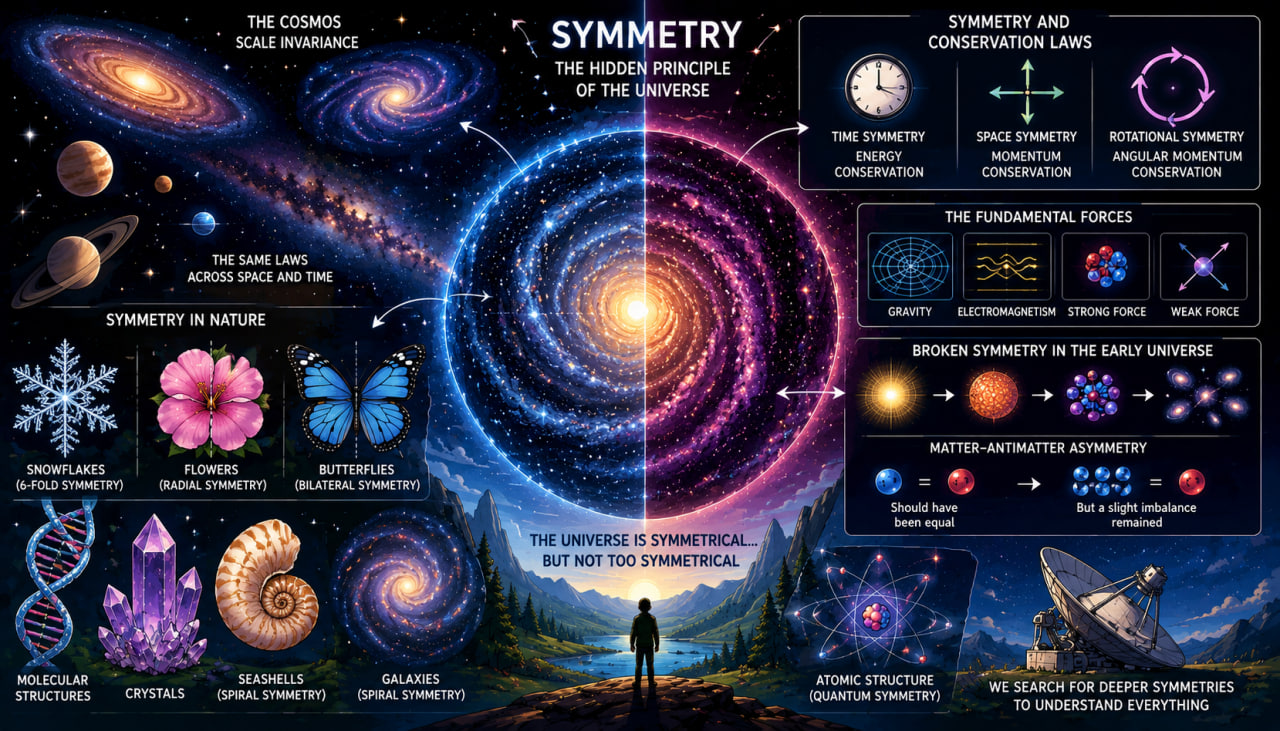
Symmetry is one of the most powerful and fascinating concepts in science. It appears everywhere—from the structure of snowflakes and flowers to the laws that govern stars, galaxies, and the fundamental particles of matter. To many physicists, symmetry is more than just visual balance; it is one of the deepest principles underlying the universe itself. In modern physics, symmetry helps explain why the laws of nature remain consistent across space and time. It plays a crucial role in theories describing gravity, electromagnetism, quantum mechanics, and the structure of the cosmos. Without symmetry, the universe as we know it might not exist. But what exactly is symmetry, and why do scientists consider it so important?
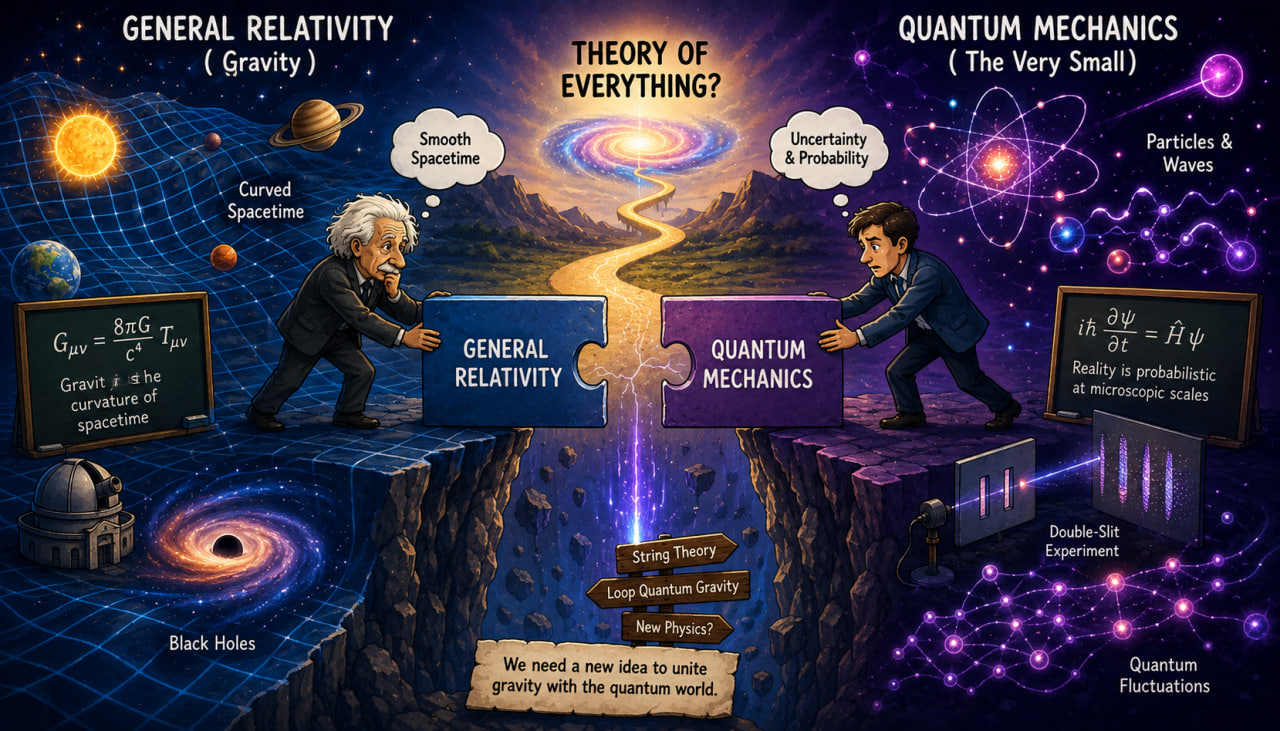
Modern physics is built upon two extraordinarily successful theories. The first is: Quantum Mechanics which describes the behavior of: Atoms Electrons Photons Subatomic particles The second is: General Relativity developed by Albert Einstein to explain: Gravity Space Time The structure of the universe Both theories have passed countless experimental tests and are among the greatest achievements in scientific history. Yet there is a major problem: The two theories do not work well together. When physicists try to combine gravity with quantum mechanics, the mathematics often breaks down. This conflict has inspired one of the most ambitious goals in science: The Theory of Everything a single framework capable of explaining all fundamental forces and particles in the universe. Finding such a theory would represent one of humanity's greatest intellectual achievements.
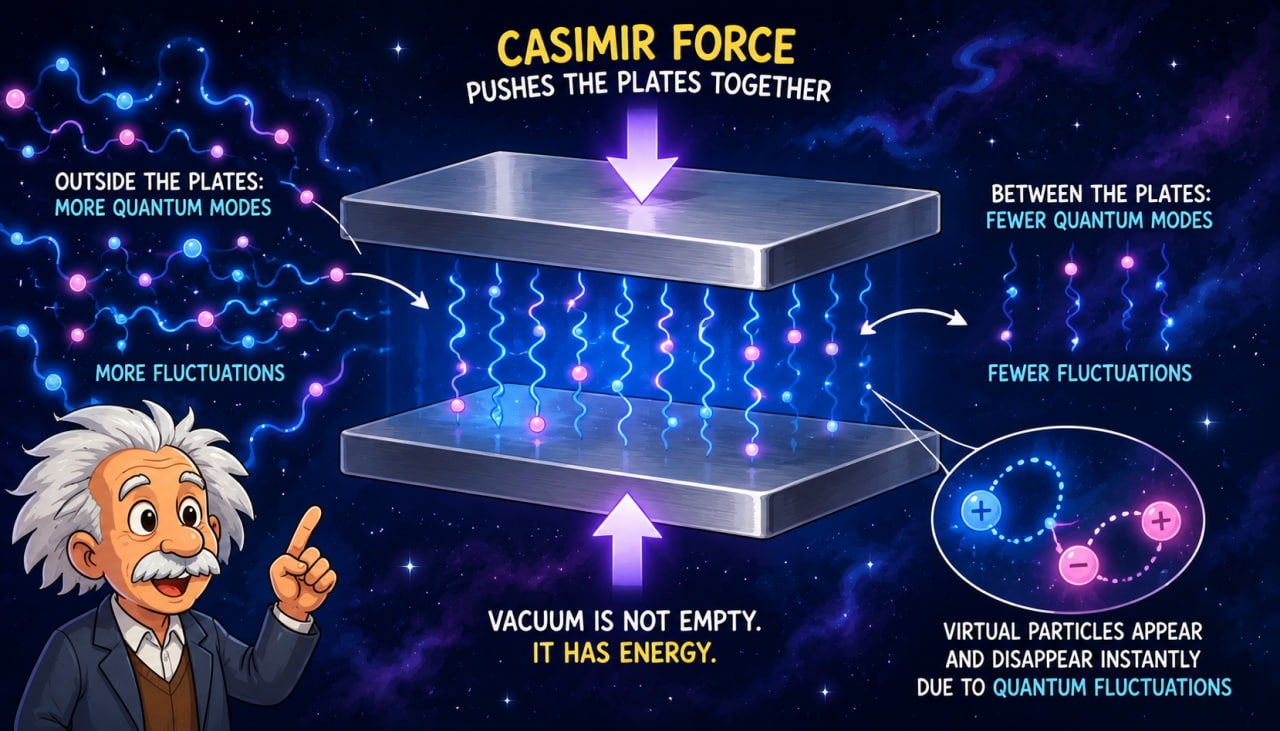
At first glance, empty space appears completely: Silent Motionless Void of matter For centuries, many scientists believed a vacuum represented: True nothingness However, modern quantum physics revealed something astonishing: Empty space is not truly empty. Even in a perfect vacuum, invisible quantum activity constantly exists. One of the strangest demonstrations of this hidden activity is: The Casimir Effect a phenomenon where two extremely close objects in a vacuum begin attracting each other seemingly because of: “Nothing.” This mysterious force emerges from: Quantum fluctuations Vacuum energy The strange behavior of virtual particles The Casimir Effect became one of the most fascinating predictions of: Quantum field theory because it shows that even empty space possesses: Physical properties Energy Measurable forces Understanding the Casimir Effect helps reveal how reality behaves at extremely small scales where: Quantum mechanics dominates the universe.