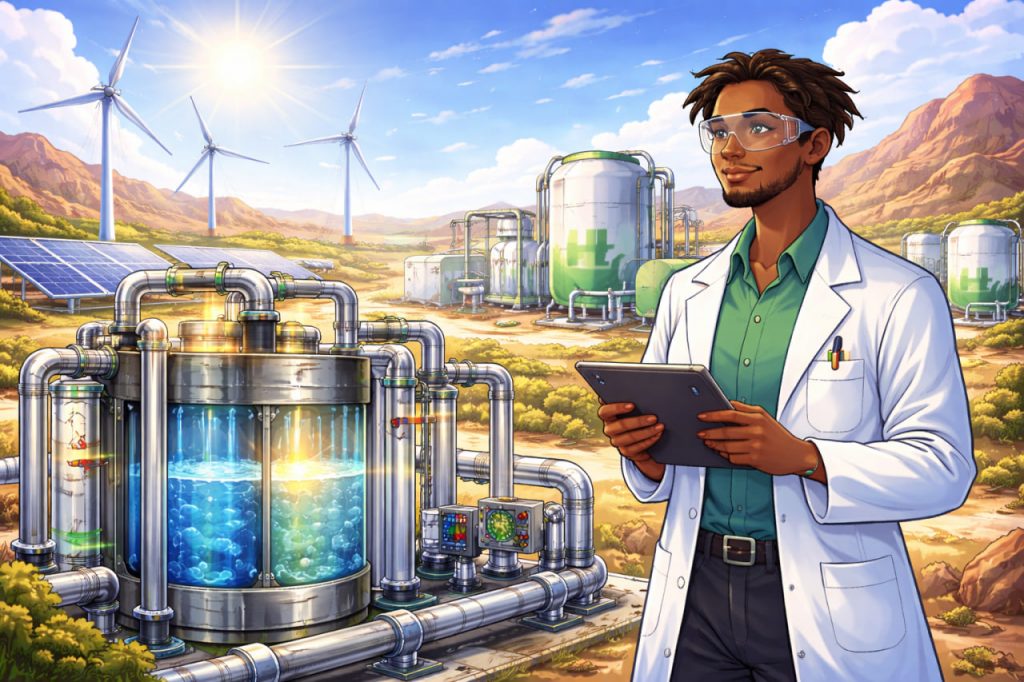
Electrolysis is a fundamental scientific process that is gaining renewed attention in the global search for clean energy technologies. At its core, electrolysis uses electricity to split water into its basic elements—hydrogen and oxygen. Although the concept has been known for more than two centuries, modern engineering and renewable energy systems are giving this technology new importance. When powered by renewable electricity such as wind or solar energy, electrolysis can produce green hydrogen, a fuel that releases no carbon emissions when used. Because hydrogen can store and transport energy, electrolysis is increasingly seen as a bridge between renewable electricity and sectors that require dense, transportable fuels. Scientists, engineers, and energy planners are now studying how large-scale electrolysis systems could reshape global energy infrastructure in the coming decades.
The Basic Principles of Electrolysis
Electrolysis works by passing an electric current through water containing dissolved electrolytes, which improves the conductivity of the liquid. When electricity flows through the system, water molecules separate into hydrogen gas and oxygen gas at two different electrodes. Hydrogen forms at the cathode, while oxygen forms at the anode, and the gases can then be collected separately. The process requires a device called an electrolyzer, which includes electrodes, membranes, and control systems that regulate the chemical reactions. According to electrochemistry researcher Dr. Martin Keller:
“Electrolysis is a remarkable example of how electricity can drive chemical change, turning water into a clean energy carrier.”
Although the basic reaction is simple, optimizing efficiency, durability, and cost remains a major engineering challenge.
Types of Modern Electrolyzers
Several different types of electrolyzers are currently used or under development, each with unique advantages. Alkaline electrolyzers are the oldest and most widely used technology, known for their durability and relatively low cost. Proton exchange membrane (PEM) electrolyzers operate at higher efficiencies and respond quickly to fluctuations in renewable electricity supply, making them suitable for pairing with solar or wind farms. A third emerging technology, solid oxide electrolyzers, operates at very high temperatures and can achieve exceptional efficiency when integrated with industrial heat sources. Researchers continue to improve these systems to reduce energy losses and extend their operational lifespan.
Electrolysis and the Hydrogen Economy
Electrolysis plays a central role in the concept of a hydrogen economy, where hydrogen becomes a major energy carrier alongside electricity. Hydrogen produced through electrolysis can be used in fuel cells to generate electricity, burned as a clean industrial fuel, or converted into synthetic fuels such as ammonia or methanol. This versatility allows hydrogen to serve industries that are difficult to electrify directly, including steel production, long-distance shipping, and heavy transport. Energy strategist Dr. Elena Navarro explains:
“Electrolysis allows renewable electricity to be stored in chemical form, creating energy reserves that can be transported across continents.”
This capability could help stabilize energy systems dominated by intermittent renewable sources.
Efficiency Challenges and Energy Requirements
Despite its potential, electrolysis is an energy-intensive process. Splitting water requires substantial electricity, and additional energy may be needed to compress or liquefy hydrogen for storage and transportation. As a result, the overall efficiency of hydrogen production through electrolysis is lower than simply using electricity directly. Engineers are therefore working to improve electrode materials, membrane durability, and system design to reduce energy losses. Advances in catalysts and nanomaterials may help increase efficiency while lowering costs.
Future Prospects for Electrolysis Technology
As renewable electricity becomes cheaper and more abundant, electrolysis could play a major role in global decarbonization efforts. Large electrolysis plants are already being planned in regions with strong wind and solar resources. Some projects aim to produce hydrogen on an industrial scale for export to other countries, potentially creating new global energy trade networks. Continued research into materials science, electrochemistry, and system integration will determine how quickly electrolysis can expand from specialized applications into mainstream energy infrastructure.
Interesting Facts
- The electrolysis of water was first demonstrated in 1800 by British scientists William Nicholson and Anthony Carlisle.
- Hydrogen produced through electrolysis is often described as one of the cleanest energy carriers available.
- Some experimental electrolyzers can operate at temperatures above 700°C to improve efficiency.
- Electrolysis is also used in metal refining, chemical manufacturing, and water purification technologies.
- Large industrial electrolyzers can produce thousands of kilograms of hydrogen per day.
Glossary
- Electrolysis — a chemical process in which electricity is used to drive a reaction that would not occur naturally.
- Electrolyzer — a device that splits water into hydrogen and oxygen using electrical energy.
- Cathode — the electrode where reduction occurs and hydrogen gas is produced during electrolysis.
- Anode — the electrode where oxidation occurs and oxygen gas is released.
- Hydrogen Economy — a proposed energy system where hydrogen serves as a major fuel and energy carrier.