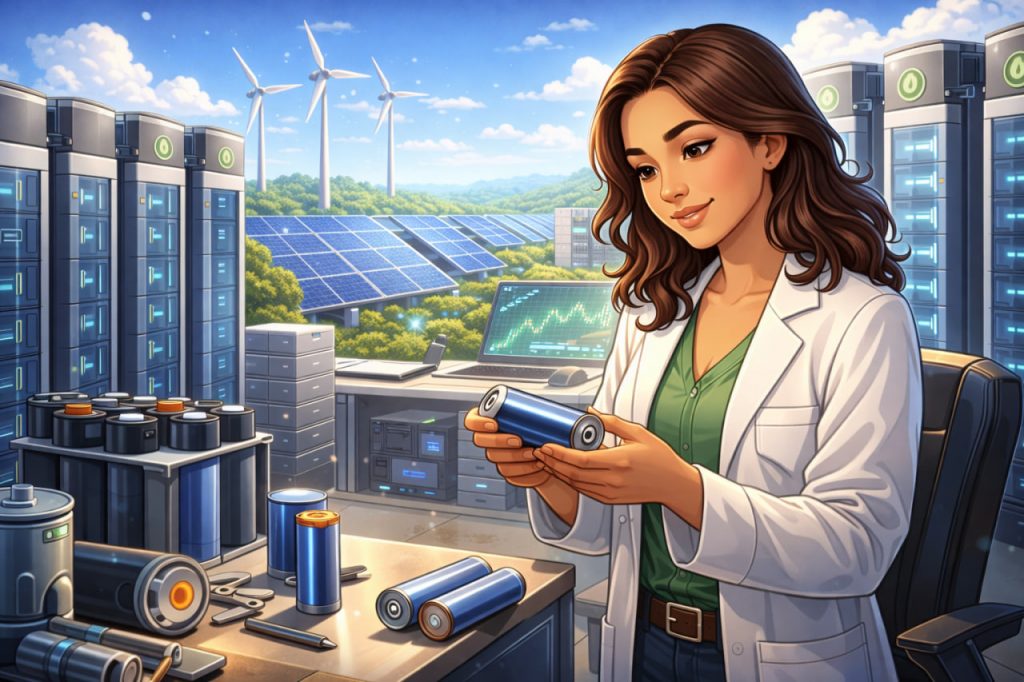
As renewable energy becomes a larger part of the global power system, one critical challenge continues to shape the future of energy infrastructure: energy storage. Solar panels and wind turbines generate electricity only when the sun shines or the wind blows, which means energy production does not always match demand. To solve this imbalance, scientists and engineers are developing advanced battery technologies capable of storing electricity for later use. Efficient energy storage systems allow renewable power to be saved during periods of high production and released when demand increases. These innovations are essential for building reliable and flexible energy systems that can support modern societies without relying heavily on fossil fuels. As a result, breakthroughs in battery technology are becoming one of the most important areas of research in the global transition to clean energy.
Why Energy Storage Is So Important
Electricity grids must maintain a constant balance between supply and demand. If too much electricity is generated at once or too little is available, the stability of the power system can be affected. Energy storage technologies help solve this problem by acting as energy buffers that absorb excess electricity and release it when needed. According to energy systems researcher Dr. Laura Bennett:
“Energy storage allows renewable power to become reliable power, transforming intermittent resources into stable energy supplies.”
This capability is especially important for integrating large amounts of renewable energy into national electricity networks.
Lithium-Ion Batteries and Their Impact
The most widely used energy storage technology today is the lithium-ion battery. These batteries power smartphones, laptops, electric vehicles, and increasingly large energy storage facilities connected to power grids. Lithium-ion technology offers high energy density, relatively long lifespans, and fast charging capabilities. Over the past decade, improvements in manufacturing processes have dramatically reduced the cost of lithium-ion batteries. As a result, large-scale battery installations are now being built near solar and wind farms to stabilize electricity supply.
New Materials and Next-Generation Batteries
While lithium-ion batteries dominate current markets, researchers are exploring new materials that could dramatically improve energy storage performance. Solid-state batteries replace liquid electrolytes with solid materials, potentially increasing safety and energy density. Other experimental technologies include sodium-ion batteries, which use more abundant materials, and lithium-sulfur batteries, which may provide much higher storage capacity. Scientists are also investigating advanced nanomaterials and novel electrode structures that could significantly increase battery efficiency and durability.
Grid-Scale Storage Solutions
Large energy systems require storage technologies capable of handling massive amounts of electricity. In addition to batteries, engineers are exploring alternatives such as flow batteries, compressed air storage, and pumped hydro storage. Flow batteries store energy in liquid electrolytes contained in external tanks, allowing their capacity to be scaled easily for large power grids. Pumped hydro systems use excess electricity to pump water uphill into reservoirs, releasing it later through turbines to generate power. These technologies help stabilize power grids and support renewable energy integration on a national scale.
Future Prospects for Energy Storage
As renewable energy continues to expand, the demand for reliable energy storage will only increase. Advances in materials science, manufacturing techniques, and system integration are expected to make batteries more efficient, affordable, and sustainable. Researchers are also focusing on improving battery recycling methods to recover valuable materials and reduce environmental impact. The development of better storage technologies could ultimately reshape global energy systems, making clean electricity available whenever it is needed.
Interesting Facts
- Some large battery storage systems can power thousands of homes for several hours during peak demand.
- The cost of lithium-ion batteries has dropped dramatically over the past decade due to technological improvements.
- Flow batteries can operate for tens of thousands of charge cycles without significant degradation.
- Energy storage helps prevent power outages and grid instability during sudden demand changes.
- Researchers are exploring batteries made from abundant materials like sodium and iron.
Glossary
- Energy Storage — technologies that store electricity for use at a later time.
- Lithium-Ion Battery — a rechargeable battery widely used in electronics, vehicles, and energy storage systems.
- Solid-State Battery — a battery that uses solid materials instead of liquid electrolytes.
- Flow Battery — an energy storage system where electrolytes are stored in external tanks and circulated through the battery.
- Grid Stability — the ability of an electricity network to maintain consistent and reliable power supply.