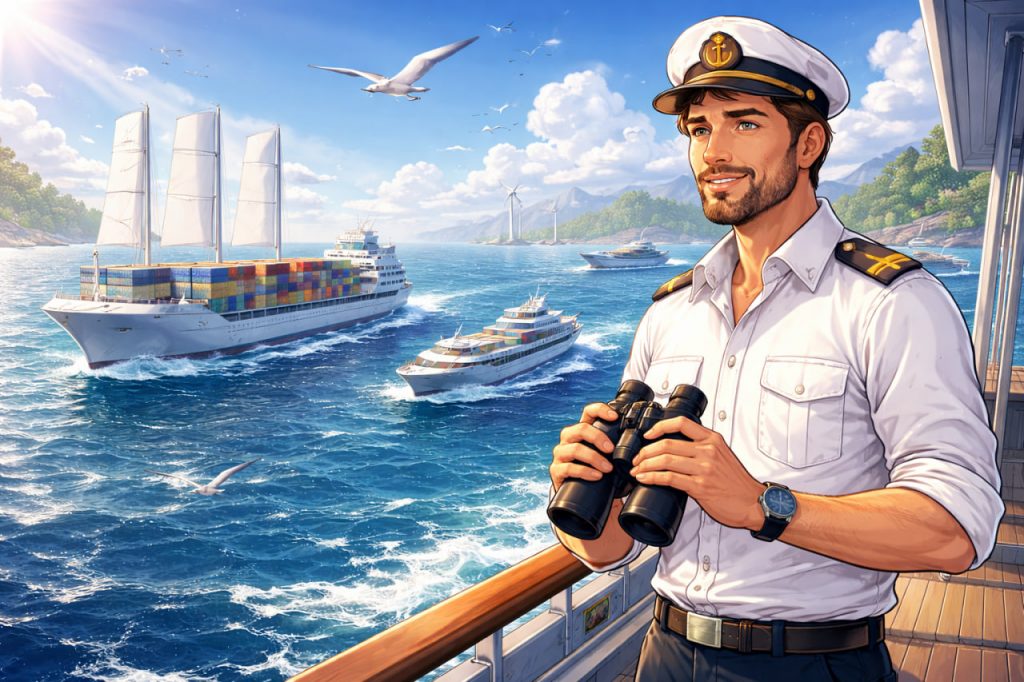
For thousands of years, ships have played a crucial role in transportation, exploration, and global trade. From ancient wooden sailing vessels to modern cargo ships and cruise liners, maritime technology has continuously evolved to meet the needs of human civilization. Today, more than 80% of global trade is transported by sea, making ships one of the most important elements of the global economy. However, rapid technological development, environmental concerns, and the search for new transportation methods have raised questions about the future of maritime shipping. Some experts wonder whether traditional sea vessels could eventually be replaced by alternative systems such as autonomous ships, underwater cargo transport, or even advanced air-based logistics. While these ideas are being explored, ships continue to adapt to new technologies rather than disappear entirely.
The Importance of Ships in Global Trade
Modern cargo ships are the backbone of international trade, transporting raw materials, manufactured goods, and food products between continents. Their ability to carry massive amounts of cargo makes them one of the most efficient forms of long-distance transportation. Large container ships can carry tens of thousands of containers at once, significantly reducing transportation costs per unit of cargo. According to maritime logistics researcher Dr. Adrian Keller:
“Sea transport remains one of the most energy-efficient ways to move large quantities of goods across the planet.”
Because of this efficiency, maritime shipping continues to dominate global logistics systems.
Technological Changes in Modern Shipping
Rather than disappearing, ships are undergoing significant technological transformation. New vessel designs focus on automation, digital navigation systems, and improved fuel efficiency. Some shipping companies are developing autonomous cargo ships capable of operating with minimal human crews. These vessels use advanced sensors, satellite communication, and artificial intelligence to navigate safely across oceans. Automation could improve operational efficiency while reducing human risk during long voyages.
Cleaner Energy for Future Ships
Another major focus of maritime innovation is reducing environmental impact. Traditional ships often rely on heavy fuel oils that produce greenhouse gas emissions. To address this challenge, researchers and engineers are exploring alternative propulsion systems, including hydrogen fuel cells, ammonia-based fuels, wind-assisted propulsion, and advanced battery systems. Some experimental vessels even combine modern sails with electric engines to reduce fuel consumption.
Possible Future Alternatives
Although ships remain essential today, researchers are exploring alternative transportation systems that could complement maritime shipping. Concepts such as high-speed cargo drones, underground logistics networks, and floating automated platforms are being studied in experimental projects. However, these technologies currently lack the capacity and cost efficiency required to replace large-scale ocean shipping. As a result, they are more likely to supplement traditional maritime transport rather than replace it completely.
The Future of Maritime Transportation
The future of shipping will likely involve a combination of technological innovation, environmental improvements, and smarter logistics systems. Autonomous navigation, cleaner fuels, and digital supply chains are expected to transform the maritime industry in the coming decades. Instead of disappearing, ships will probably become smarter, cleaner, and more efficient, continuing their long history as one of the most important transportation systems on Earth.
Interesting Facts
- Around 80–90% of global trade is transported by sea.
- The largest container ships can carry over 20,000 cargo containers.
- Some modern cargo ships are longer than four football fields.
- Wind-assisted propulsion technologies are being reintroduced to reduce fuel consumption.
- Autonomous ship prototypes are already being tested in several countries.
Glossary
- Maritime Shipping — the transportation of goods and passengers by sea.
- Container Ship — a vessel designed to carry standardized cargo containers.
- Autonomous Ship — a vessel capable of navigating and operating with minimal or no human crew.
- Fuel Cell — a device that generates electricity through chemical reactions, often using hydrogen.
- Maritime Logistics — the planning and management of sea transportation and global shipping routes.