Air conditioners have become one of the most important technologies for modern comfort and public health. In many regions of the world, especially during increasingly intense summer heatwaves, air conditioning is no longer considered a luxury but a necessity.
From homes and offices to hospitals, schools, and transportation systems, air conditioners help people stay safe and productive during hot weather. However, despite their widespread use, many people still do not fully understand how air conditioning works, how it affects health, or how to use it correctly.
Modern experts emphasize that air conditioners can greatly improve quality of life when used responsibly and maintained properly.
What Is an Air Conditioner?
An air conditioner is a system designed to:
- Cool indoor air
- Remove excess humidity
- Improve air circulation
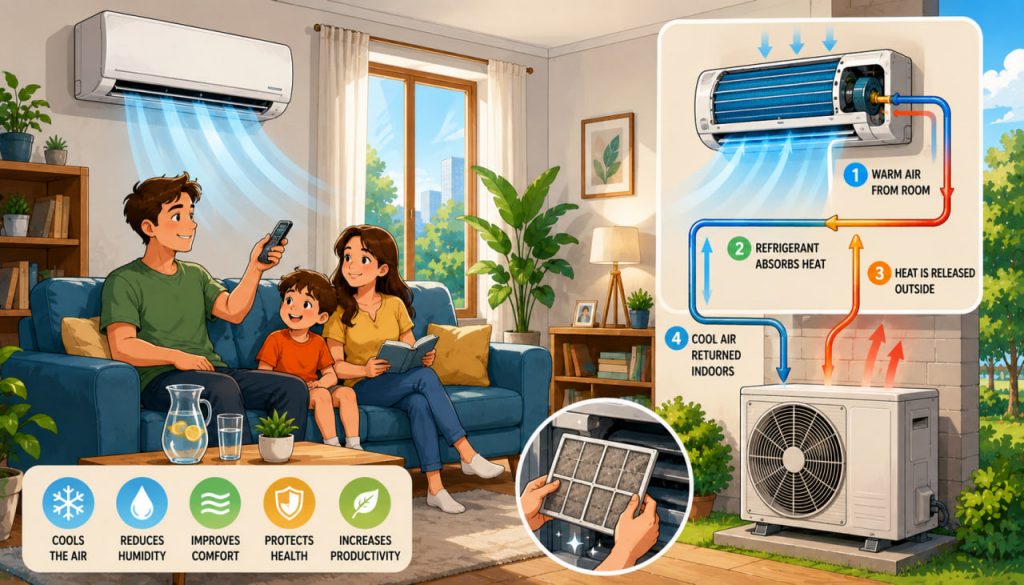
Most modern air conditioners work using a refrigeration cycle that transfers heat from inside a building to the outside environment.
Instead of “creating cold,” the system removes heat from indoor air.
This process makes enclosed spaces feel cooler and more comfortable.
How Air Conditioners Work
Air conditioners rely on a substance called a refrigerant, which absorbs and releases heat during circulation.
The basic cooling process involves:
- Warm indoor air enters the system
- Heat is absorbed by the refrigerant
- The heat is transferred outside
- Cooler air returns indoors
Key components include:
- Compressor
- Evaporator
- Condenser
- Fans and filters
This continuous cycle allows indoor temperatures to remain stable even during extreme heat.
Why Air Conditioning Became So Important
Air conditioning transformed modern society in major ways.
It allowed:
- Cities to grow in hot climates
- Safer workplaces during heatwaves
- Better food preservation
- Improved hospital environments
- Modern data centers to operate safely
Historian and writer Marsha Ackermann once described air conditioning as:
“One of the most influential inventions of the modern world.”
Without cooling systems, many modern industries and densely populated cities would function very differently.
Health Benefits of Air Conditioning
When used correctly, air conditioning can protect health during dangerous heat.
Benefits include:
- Lower risk of heatstroke
- Improved sleep quality
- Reduced humidity-related discomfort
- Better indoor air circulation
Air conditioning is especially important for:
- Elderly people
- Young children
- People with heart or respiratory conditions
During severe heatwaves, cooled indoor environments can save lives.
Potential Health Problems
Doctors also warn that improper use of air conditioners may cause discomfort or health issues.
Possible problems include:
- Dry eyes and throat
- Headaches
- Muscle stiffness from cold airflow
- Allergies caused by dirty filters
Poorly maintained systems may accumulate:
- Dust
- Mold
- Bacteria
This is why regular cleaning and filter replacement are extremely important.
The Importance of Proper Temperature Settings
Many experts recommend avoiding extreme temperature differences between indoors and outdoors.
If outdoor temperatures are very high, setting air conditioners too cold may increase stress on the body.
Doctors often suggest maintaining indoor temperatures around:
- 22–26°C (72–79°F) depending on conditions and comfort
Sudden transitions between intense outdoor heat and freezing indoor air may cause discomfort for some people.
Humidity and Comfort
Air conditioners do more than cool the air — they also reduce humidity.
Lower humidity helps:
- Sweat evaporate more effectively
- Prevent mold growth
- Improve indoor comfort
Excess humidity can make heat feel much more intense.
This is why dry cool air often feels more comfortable even if temperatures are only moderately lower.
Energy Consumption and Environmental Concerns
Air conditioners require significant electricity.
As global temperatures rise, demand for cooling continues increasing rapidly.
This creates challenges involving:
- Energy consumption
- Power grid stress
- Environmental impact
Some older refrigerants also harmed the ozone layer or contributed strongly to climate change.
Modern systems increasingly use:
- More efficient technologies
- Safer refrigerants
- Smart energy-saving controls
Improving cooling efficiency is now a major engineering priority worldwide.
Smart Air Conditioners and Modern Technology
Modern air conditioners are becoming increasingly advanced.
New features include:
- Smartphone control
- AI-based temperature adjustment
- Energy monitoring
- Air purification systems
Some systems can automatically adjust cooling based on:
- Occupancy
- Outdoor weather
- User habits
This improves both comfort and energy efficiency.
Air Conditioning and Productivity
Studies suggest that extremely hot indoor environments reduce:
- Concentration
- Productivity
- Decision-making ability
Comfortable temperatures may improve:
- Workplace efficiency
- Learning conditions
- Sleep quality
This is one reason why climate control has become standard in many offices and schools.
What Experts Recommend
Specialists usually advise:
- Cleaning filters regularly
- Avoiding excessively cold settings
- Maintaining ventilation
- Servicing systems periodically
- Using energy-efficient models when possible
Good maintenance improves both air quality and system lifespan.
The Future of Cooling Technology
As climate change increases global temperatures, cooling technology will likely become even more important.
Future developments may include:
- Solar-powered air conditioning
- Ultra-efficient cooling systems
- Environmentally safer refrigerants
- Passive cooling architecture
Scientists are working to balance human comfort with environmental sustainability.
Interesting Facts
- Modern air conditioning helped cities grow in very hot climates.
- Air conditioners remove both heat and humidity from indoor air.
- Poorly maintained systems may spread dust or mold.
- Cooling technology is becoming increasingly energy efficient.
- Some hospitals rely heavily on climate control to protect patients and equipment.
Glossary
- Refrigerant — A substance used in cooling systems to transfer heat.
- Humidity — The amount of moisture present in the air.
- Compressor — A component that pressurizes refrigerant in an air conditioner.
- Heatstroke — A dangerous condition caused by excessive body overheating.
- Energy Efficiency — Using less energy to achieve the same result.