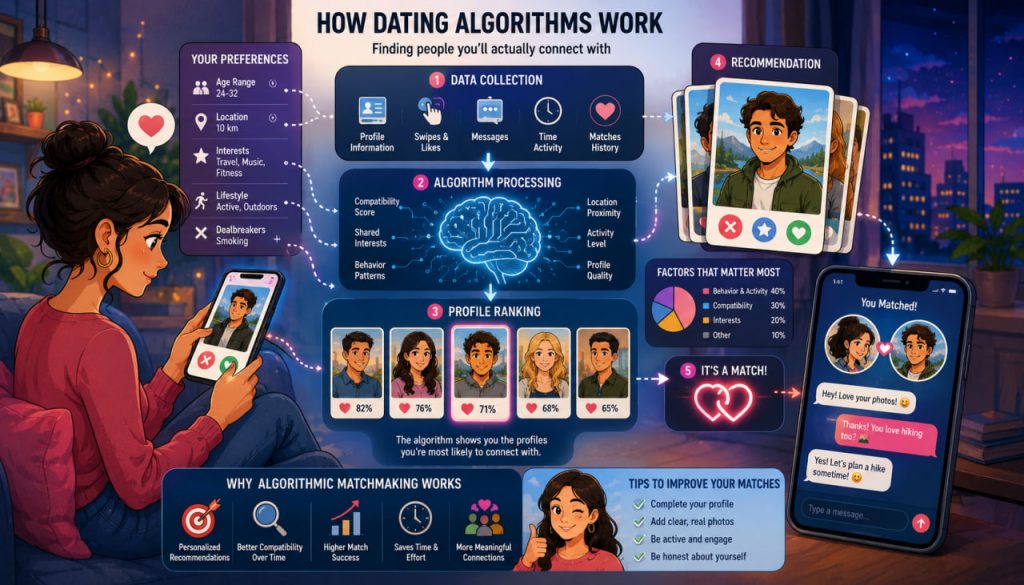
Modern dating has changed dramatically over the last decade. Instead of meeting through friends, workplaces, or random encounters, millions of people now rely on dating apps powered by complex algorithms. Platforms like Tinder, Bumble, Hinge, and others do much more than simply display random profiles — they actively analyze behavior, preferences, and interaction patterns to determine which people users are most likely to engage with.
Behind every swipe lies a sophisticated digital system designed to maximize compatibility, attention, and user activity. These algorithms influence modern relationships in ways many people do not fully realize.
So how do dating algorithms actually work, and how do apps decide who appears on your screen?
What Is a Dating Algorithm?
A dating algorithm is a system that uses data and behavioral analysis to recommend potential matches between users.
The algorithm analyzes information such as:
- Age
- Location
- Interests
- Profile activity
- Swiping behavior
- Messaging patterns
Its goal is usually to:
- Increase successful matches
- Keep users engaged
- Improve interaction rates
Modern dating platforms rely heavily on machine learning systems capable of adapting recommendations over time.
Tinder’s Original “Elo Score”
One of the most famous early systems used by Tinder was informally known as the Elo score.
Originally inspired by chess ranking systems, it attempted to estimate user desirability based on interactions.
For example:
- If many users liked a profile, its score increased
- Matches between highly rated profiles affected rankings differently
Although Tinder later stated that its modern system became more advanced and no longer relies strictly on Elo scoring, the concept helped popularize the idea that dating apps rank users algorithmically.
What Modern Dating Apps Analyze
Today’s algorithms consider far more than simple attractiveness ratings.
Modern systems may analyze:
- Swipe speed
- Profile completion
- Shared interests
- Conversation frequency
- Time spent viewing profiles
- Activity consistency
Apps continuously gather behavioral data to improve recommendations.
For example:
- Profiles you linger on longer may influence future suggestions
- Repeated interest in certain personality traits may adjust recommendations automatically
This creates highly personalized dating feeds.
Why Engagement Matters to Apps
Dating platforms are businesses, and engagement is extremely valuable.
Algorithms are often optimized not only for compatibility but also for:
- User retention
- Time spent in the app
- Subscription purchases
- Continued interaction
This creates an important debate:
- Are apps maximizing successful relationships?
- Or maximizing long-term user activity?
Technology ethicist Tristan Harris has warned that many digital platforms optimize for attention rather than well-being.
The Psychology of Swiping
Swipe-based systems strongly influence human psychology.
Features such as:
- Instant feedback
- Match notifications
- Variable rewards
activate dopamine-related reward systems in the brain.
This makes dating apps psychologically engaging and sometimes addictive.
The unpredictability of matches creates a reward structure similar to many social media platforms.
Artificial Intelligence in Modern Matchmaking
Artificial intelligence increasingly shapes digital matchmaking.
AI systems may analyze:
- Communication styles
- Facial expressions in photos
- Behavioral compatibility patterns
- Long-term interaction outcomes
Some future systems may become capable of predicting relationship compatibility far more accurately than current models.
However, this also raises privacy and ethical concerns.
Are Dating Algorithms Truly Accurate?
Experts disagree about how effectively algorithms can predict romantic compatibility.
Human relationships involve:
- Emotions
- Chemistry
- Timing
- Personal growth
- Social context
These factors are difficult to measure mathematically.
Sociologist Eva Illouz noted that digital dating transforms romance into a more market-like experience where people are evaluated rapidly and systematically.
Algorithms may improve opportunities for connection, but they cannot fully predict emotional compatibility.
The Role of Photos and First Impressions
Dating apps rely heavily on visual impressions.
Research suggests users often make decisions within seconds based on:
- Facial expressions
- Clothing
- Background settings
- Perceived confidence
Because of this, profile photos strongly influence algorithmic performance and match visibility.
This visual-first structure changes how people present themselves online.
Geographic and Behavioral Matching
Most dating apps prioritize nearby users for practical reasons.
Location data helps apps:
- Suggest geographically realistic matches
- Improve meeting likelihood
- Increase interaction probability
Behavioral similarity also matters.
Algorithms may pair users with:
- Similar activity levels
- Shared interests
- Comparable communication styles
This creates more targeted recommendations over time.
The Criticism of Algorithmic Dating
Critics argue that dating algorithms may create several problems:
- Superficial judgments
- Endless choice overload
- Reduced commitment
- Emotional burnout
Some researchers believe swipe culture encourages treating people more like products than individuals.
The abundance of choices may also create the illusion that a “better option” is always available.
Positive Effects of Dating Apps
Despite criticism, dating apps have also produced major social changes.
Benefits include:
- Connecting people globally
- Helping shy individuals meet others
- Expanding social opportunities
- Supporting niche communities
Millions of long-term relationships and marriages now begin through online platforms.
For many people, dating apps provide opportunities they may not otherwise have.
The Future of Digital Matchmaking
Future dating systems may use:
- AI personality analysis
- Voice interaction data
- Virtual reality dating
- Biometric compatibility research
As algorithms become more advanced, digital matchmaking may become increasingly personalized and predictive.
However, ethical debates about privacy, manipulation, and emotional well-being will likely continue growing.
Interesting Facts
- Tinder popularized swipe-based dating globally.
- Many dating apps use machine learning to personalize recommendations.
- User activity levels influence profile visibility on some platforms.
- Dating apps analyze large amounts of behavioral data.
- Millions of modern relationships now begin online.
Glossary
- Algorithm — A system of rules or calculations used to process data and make decisions.
- Machine Learning — Artificial intelligence systems that improve through data analysis.
- Elo Score — A ranking system originally developed for chess players and adapted conceptually for dating algorithms.
- User Retention — Keeping users active on a platform over time.
- Behavioral Data — Information collected from user actions and interactions.