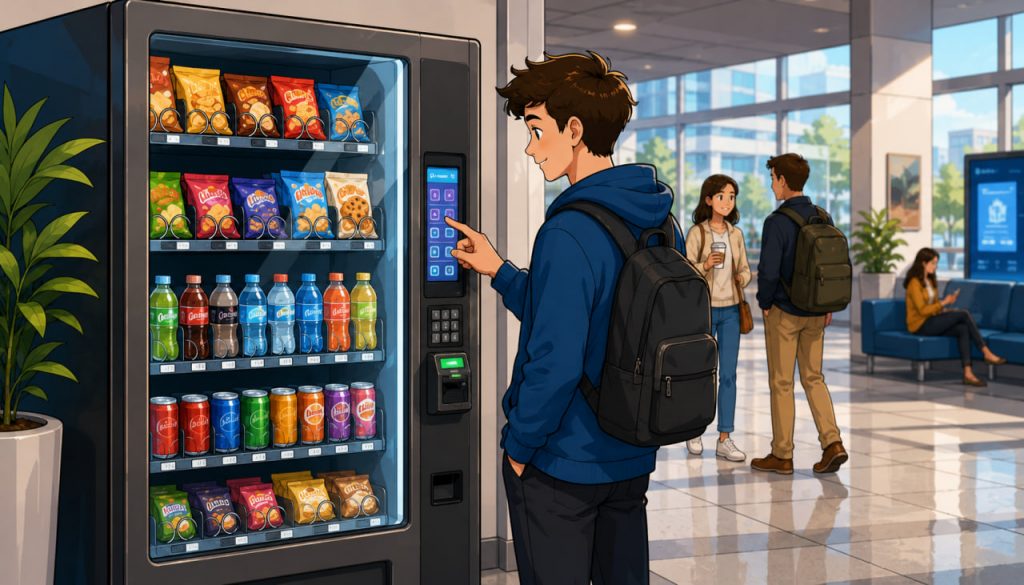
Vending machines became one of the most recognizable symbols of modern automated commerce. Found in:
- Airports
- Shopping centers
- Offices
- Train stations
- Schools
- Hospitals
these machines allow people to purchase products quickly without interacting directly with a cashier.
What began as a simple mechanical invention evolved into a highly advanced technological industry involving:
- Robotics
- Artificial intelligence
- Cashless payments
- Inventory tracking
- Smart retail systems
Today vending machines sell far more than snacks and drinks. Around the world, automated machines now offer:
- Electronics
- Fresh meals
- Medicine
- Books
- Flowers
- Cosmetics
- Pizza
- Even luxury products
The rise of vending technology reflects broader changes in:
- Consumer behavior
- Urban lifestyles
- Automation
- Digital commerce
As cities become faster and more technologically connected, vending systems continue evolving into increasingly intelligent retail platforms.
What Is a Vending Machine?
A vending machine is an automated device designed to dispense products after receiving payment.
Traditional vending systems usually contain:
- Product storage compartments
- Payment systems
- Dispensing mechanisms
- Control electronics
Modern machines often include:
- Touchscreens
- Digital interfaces
- Internet connectivity
- AI-based monitoring systems
The goal is simple:
- Fast convenient self-service purchasing
The Early History of Vending Machines
The idea of automated sales is surprisingly ancient.
One of the earliest known vending devices was reportedly created in ancient Egypt by engineer Hero of Alexandria. His machine dispensed holy water after coins were inserted.
Modern vending machines began appearing during the:
- 19th century
Early machines sold:
- Postcards
- Gum
- Cigarettes
- Drinks
As industrial manufacturing expanded, vending systems became increasingly widespread.
Why Vending Machines Became Popular
Several factors helped vending machines grow globally.
They provide:
- Speed
- Convenience
- 24-hour availability
- Reduced staffing costs
For businesses, vending systems may lower:
- Labor expenses
- Retail space requirements
For consumers, vending offers:
- Quick purchases
- Accessibility
- Minimal waiting time
Modern urban life strongly favors convenience-oriented services.
How Modern Vending Machines Work
Modern vending systems are far more advanced than earlier mechanical models.
Today many machines use:
- Sensors
- Digital payment systems
- Internet connections
- Inventory software
Some smart vending machines can:
- Track product demand
- Monitor stock levels automatically
- Detect technical problems
- Analyze consumer behavior
Artificial intelligence increasingly improves operational efficiency.
Cashless Payments and Digital Technology
One major change in vending technology involves:
- Cashless payment systems
Modern machines often support:
- Credit cards
- Smartphones
- Contactless payments
- QR codes
This transition reflects broader digital transformation across retail industries.
Cashless systems improve:
- Convenience
- Speed
- Security
Many vending businesses now operate almost entirely digitally.
Vending Machines Around the World
Different countries developed unique vending machine cultures.
Japan is especially famous for its enormous number of vending machines.
Japanese machines may sell:
- Umbrellas
- Fresh eggs
- Hot meals
- Ice cream
- Clothing
Some regions rely heavily on vending because of:
- Dense urban populations
- High labor costs
- Strong automation culture
Vending machine diversity continues expanding worldwide.
Smart Vending and Artificial Intelligence
Modern smart vending systems increasingly use AI technologies.
Artificial intelligence may help:
- Predict consumer demand
- Optimize inventory
- Reduce waste
- Improve product placement
Some machines even use:
- Facial recognition
- Age verification
- Personalized recommendations
Retail analyst Doug Stephens explained:
“The future of retail is frictionless convenience.”
Vending technology strongly reflects this trend.
Fresh Food and Healthy Products
Traditional vending machines were often associated with:
- Sugary snacks
- Soft drinks
- Fast food
Today many machines increasingly offer:
- Salads
- Fresh meals
- Protein products
- Healthy snacks
Consumer demand for healthier options influenced vending industry development significantly.
Refrigerated smart vending systems now support fresh food distribution in many cities.
Vending Machines and Urban Life
Vending systems became deeply connected to modern city lifestyles.
They provide quick access to products in:
- High-traffic areas
- Transportation hubs
- Office districts
Urban populations increasingly value:
- Time efficiency
- Automation
- Accessibility
Vending machines therefore fit naturally into modern fast-paced environments.
Environmental Challenges
The vending industry also faces environmental concerns.
Challenges include:
- Plastic waste
- Energy consumption
- Packaging pollution
Some companies now develop:
- Energy-efficient machines
- Recyclable packaging
- Smart cooling systems
Sustainability is becoming increasingly important in automated retail industries.
Security and Technical Problems
Modern vending systems may experience:
- Technical malfunctions
- Payment errors
- Theft attempts
- Cybersecurity risks
As vending machines become internet-connected, digital security becomes increasingly important.
Smart retail systems require both:
- Physical security
- Data protection
The Future of Automated Retail
Future vending technology may become even more advanced.
Possible developments include:
- Fully robotic retail systems
- AI-based personalization
- Biometric payment systems
- Autonomous restocking
Some futurists imagine vending systems integrated with:
- Smart cities
- Delivery robots
- Personalized shopping ecosystems
Automation continues reshaping how people buy products daily.
Vending Machines and Human Behavior
The popularity of vending machines reveals important trends in consumer psychology.
People increasingly prefer:
- Immediate access
- Minimal interaction
- Fast decision-making
- Convenience
Modern technology continues reducing friction between:
- Desire
- Purchase
- Delivery
Vending systems became one of the clearest examples of this transformation.
Why Vending Machines Matter
Vending machines are more than simple snack dispensers.
They represent the broader evolution of:
- Automation
- Consumer culture
- Urban technology
- Digital commerce
As artificial intelligence and smart infrastructure continue advancing, vending systems may become increasingly integrated into everyday life.
The future of retail may involve highly automated environments where purchasing products becomes nearly instantaneous, personalized, and available everywhere.
Interesting Facts
- Some of the earliest vending machines existed in ancient civilizations.
- Japan has one of the highest numbers of vending machines per capita.
- Modern vending machines may use AI for inventory management.
- Some machines can prepare fresh hot meals automatically.
- Cashless payments transformed the vending industry significantly.
Glossary
- Vending Machine — An automated machine that dispenses products after payment.
- Cashless Payment — Digital payment without physical money.
- Automation — Technology performing tasks with minimal human involvement.
- Inventory — Stored products available for sale.
- Smart Retail — Technology-enhanced automated retail systems.