Bioengineering

Digestion in Space: How Does the Stomach Process Food Without Gravity?
Space Stories Bioengineering What if?

Digestion in Space: How Does the Stomach Process Food Without Gravity?

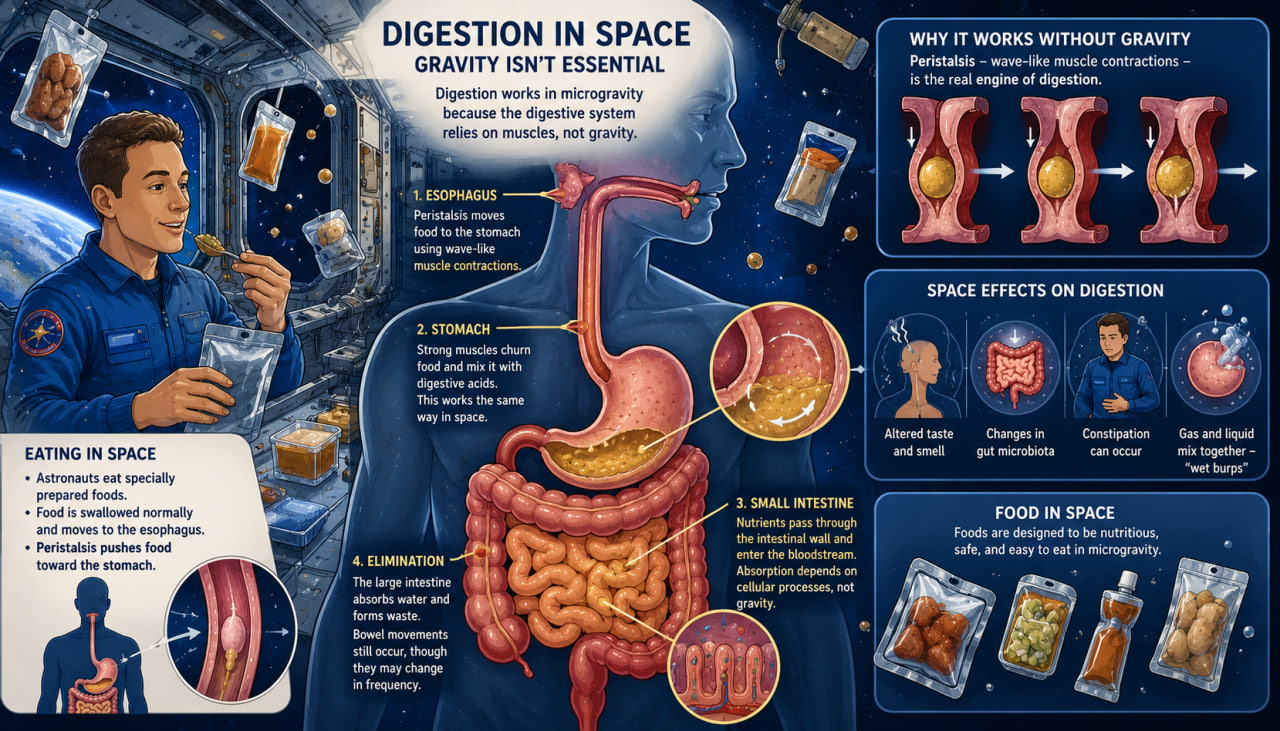
When most people imagine life in space, they think about floating astronauts, breathtaking views of Earth, and advanced spacecraft. However, one surprisingly common question is: how do astronauts digest food when gravity is almost absent? On Earth, gravity influences many aspects of daily life, from walking and drinking to the movement of fluids inside the body. Since digestion involves moving food through the digestive system, it might seem logical to assume that gravity plays a crucial role. Surprisingly, the human digestive system is far less dependent on gravity than many people realize. In fact, astronauts aboard space stations have been eating, digesting, and absorbing nutrients successfully for decades. The secret lies in the remarkable design of the digestive tract itself.
Epigenetic Clocks: How the Chemistry of DNA Reveals Biological Age
Bioengineering Science News

Epigenetic Clocks: How the Chemistry of DNA Reveals Biological Age

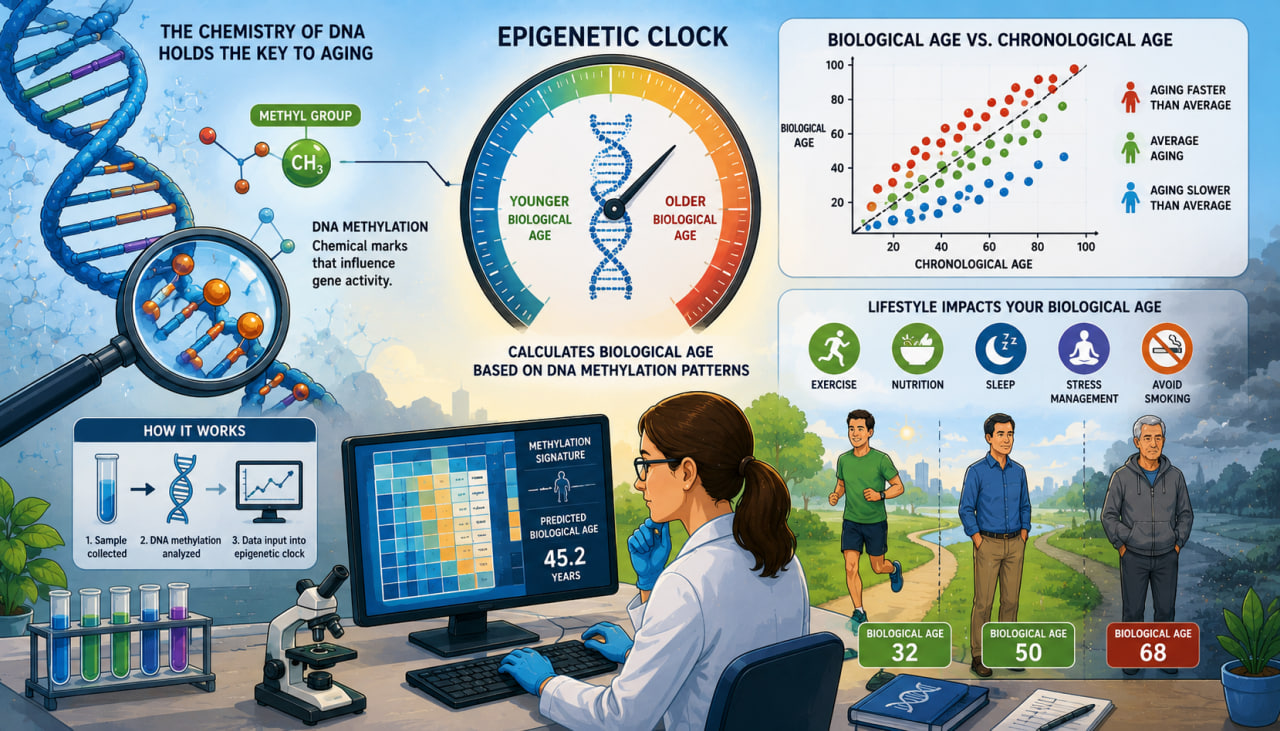
Most people know their chronological age—the number of years that have passed since their birth. However, scientists have increasingly discovered that chronological age does not always match biological age. Two people born on the same day can have remarkably different levels of health, disease risk, and life expectancy. This realization has led researchers to search for reliable ways to measure how old the body truly is. One of the most promising tools to emerge from this effort is the epigenetic clock. By analyzing chemical markers attached to DNA, scientists can estimate biological age with astonishing accuracy and gain insights into how quickly a person is aging. Some modern epigenetic clocks are so precise that they can predict age within a few years and, under certain laboratory conditions, detect changes that occur over relatively short periods. These discoveries are transforming aging research and may eventually help doctors monitor health in entirely new ways.

Enzymes: Biological Nanorobots That Outlive Molecules
Bioengineering Science Be Smart

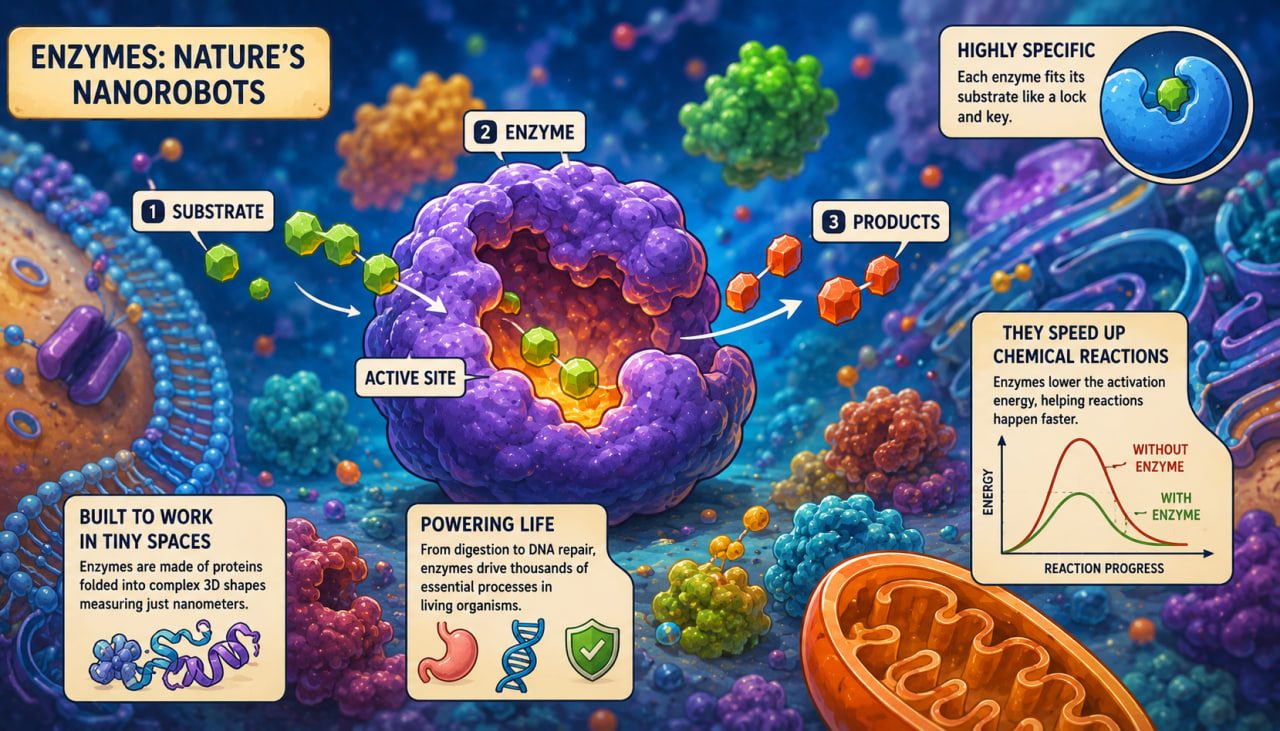
Enzymes: Biological Nanorobots That Outlive Molecules

Life as we know it would be impossible without enzymes. Every heartbeat, every breath, every thought, and every movement depends on these remarkable biological molecules. Although invisible to the naked eye, enzymes perform trillions of chemical operations inside living organisms every second. Scientists often compare enzymes to molecular machines because of their extraordinary precision and efficiency. Some researchers even describe them as biological nanorobots—tiny structures capable of recognizing specific molecules, carrying out complex tasks, and repeating those tasks thousands or even millions of times. What makes enzymes particularly fascinating is that they often survive long after the molecules they process have disappeared. While the substances they act upon are transformed into entirely new compounds, the enzyme itself frequently remains unchanged and ready for another cycle of work.

Hydrophilic and Hydrophobic Elements: How Chemistry Creates Cell Membranes
Hi-Tech Bioengineering Science

Hydrophilic and Hydrophobic Elements: How Chemistry Creates Cell Membranes

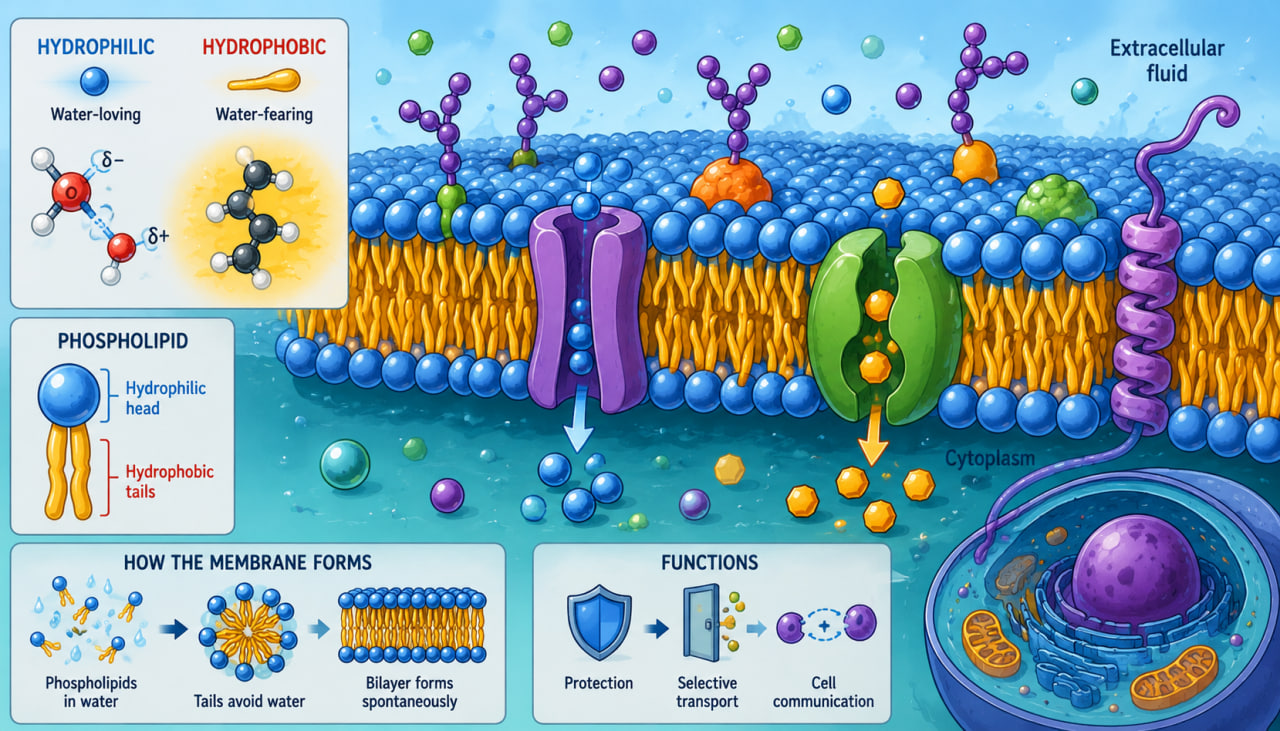
Every living organism, from the smallest bacterium to the largest whale, depends on cell membranes. These incredibly thin structures separate the inside of a cell from its surroundings, regulate the movement of substances, and help maintain the conditions necessary for life. What makes cell membranes especially fascinating is that they assemble themselves almost automatically. This remarkable phenomenon is possible because of two fundamental chemical properties: hydrophilicity and hydrophobicity. The interaction between water-loving and water-repelling molecules creates one of biology's most important structures—the cell membrane. Understanding how hydrophilic and hydrophobic elements work provides insight into the chemistry behind life itself.

Molecular Machines: The Nobel Prize for Robots the Size of Molecules
Neuro-Tech Bioengineering Inventions

Molecular Machines: The Nobel Prize for Robots the Size of Molecules

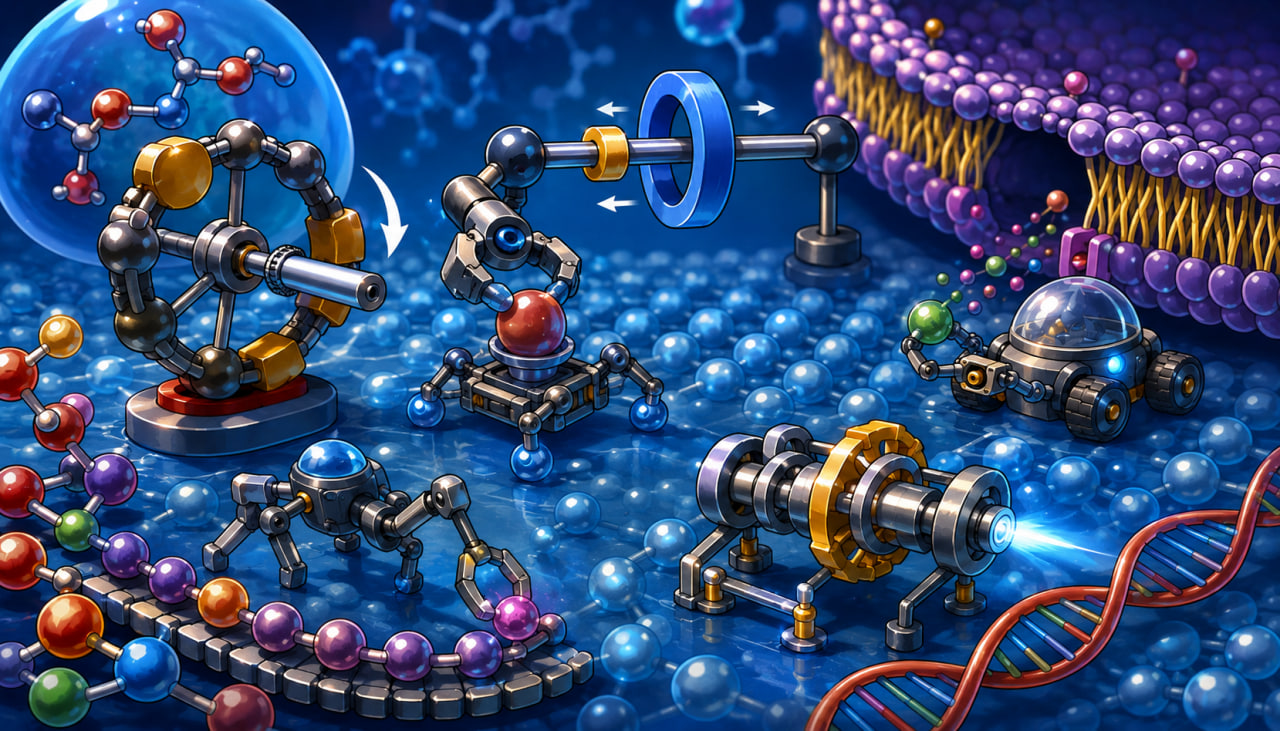
When people hear the word "robot," they usually imagine machines made of metal, wires, and electronic components. However, some of the most remarkable machines ever created are so small that millions of them could fit on the tip of a needle. These are molecular machines—structures built from individual molecules that can perform controlled movements and mechanical tasks. The development of molecular machines was such a groundbreaking achievement that the 2016 Nobel Prize in Chemistry was awarded to three scientists: Jean-Pierre Sauvage, Sir J. Fraser Stoddart, and Bernard L. Feringa. Their work opened the door to an entirely new field where chemistry, nanotechnology, and engineering intersect. Although molecular machines are still in the early stages of development, many scientists believe they could one day revolutionize medicine, computing, manufacturing, and materials science.

Food of the Future: When Will We Be Able to Assemble It From Atoms?
Bioengineering Smart Technology Science

Food of the Future: When Will We Be Able to Assemble It From Atoms?

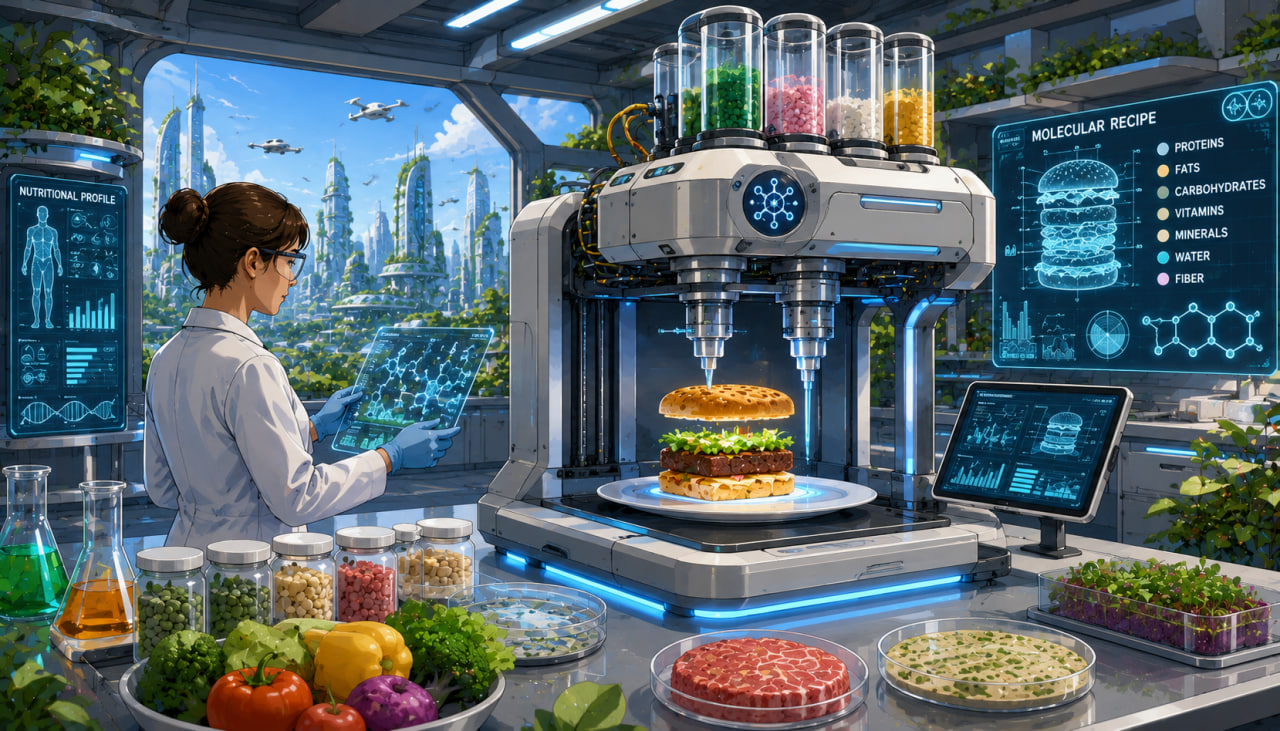
Human civilization has always depended on food technology. Agriculture transformed ancient societies, refrigeration changed global trade, and industrial food production allowed cities with millions of inhabitants to exist. Today, however, scientists and futurists are imagining something even more radical: Could humanity eventually create food directly from atoms or molecular building blocks? The idea sounds like science fiction, yet modern science is already exploring technologies involving: Molecular engineering Synthetic biology 3D food printing Lab-grown meat Precision fermentation Nanotechnology Future food systems may dramatically transform how humanity produces nutrition, especially as the world faces: Population growth Climate change Resource shortages Agricultural pressure Although true “atomic food assembly” remains far beyond current capabilities, many researchers believe future food production may become increasingly programmable and technologically controlled.

Life Extension: When Will Humans Live 150 Years or More?
Bioengineering Smart Technology What if?

Life Extension: When Will Humans Live 150 Years or More?

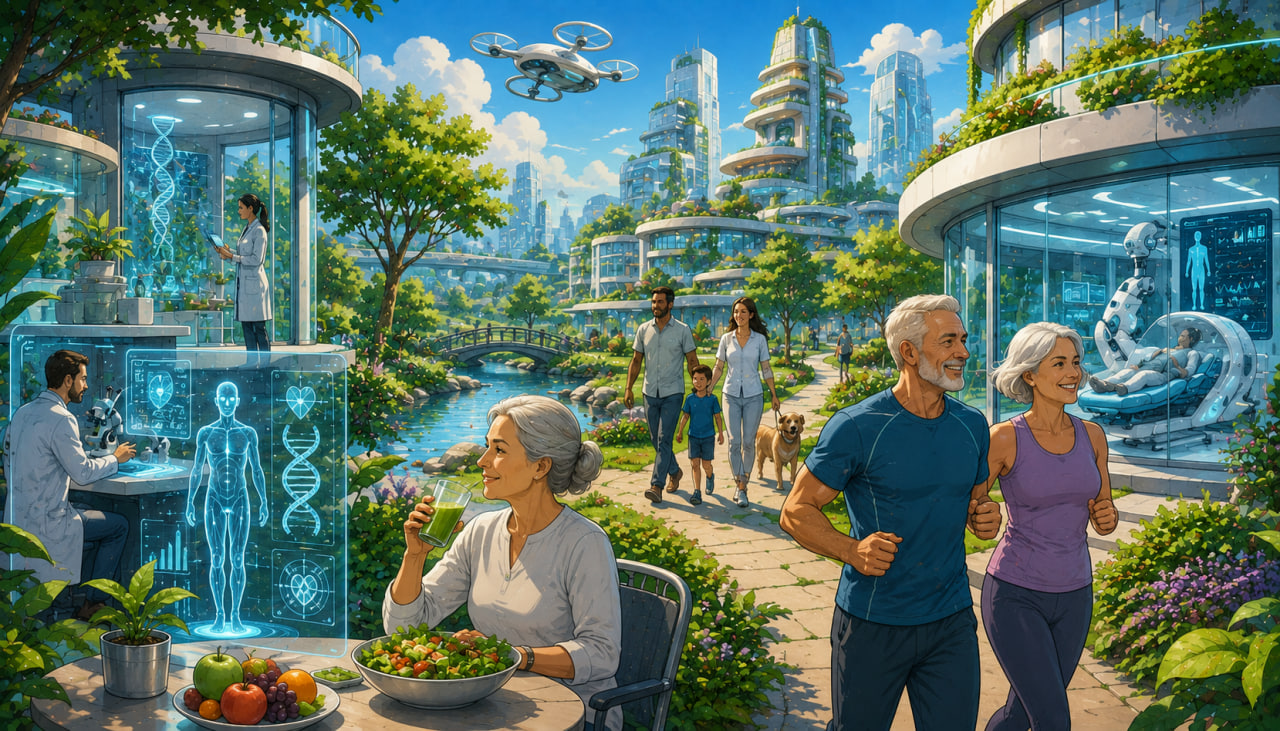
For most of human history, living beyond 40 or 50 years was considered remarkable. Diseases, poor sanitation, famine, and lack of medical knowledge limited human lifespan dramatically. During the last two centuries, however, advances in medicine, hygiene, nutrition, and technology significantly increased average life expectancy worldwide. Today, scientists are asking a question that once belonged entirely to science fiction: Could humans eventually live 150 years or even longer? Modern longevity research is rapidly expanding due to breakthroughs in: Genetics Artificial intelligence Biotechnology Regenerative medicine Anti-aging science Cellular biology Some researchers believe aging itself may eventually become partially treatable rather than an unavoidable biological fate. Although humans are still far from guaranteed 150-year lifespans, scientific progress in life extension is accelerating faster than ever before.

Transhumanism: When Will Humans Officially Become Cyborgs?
Hi-Tech Bioengineering Smart Technology

Transhumanism: When Will Humans Officially Become Cyborgs?

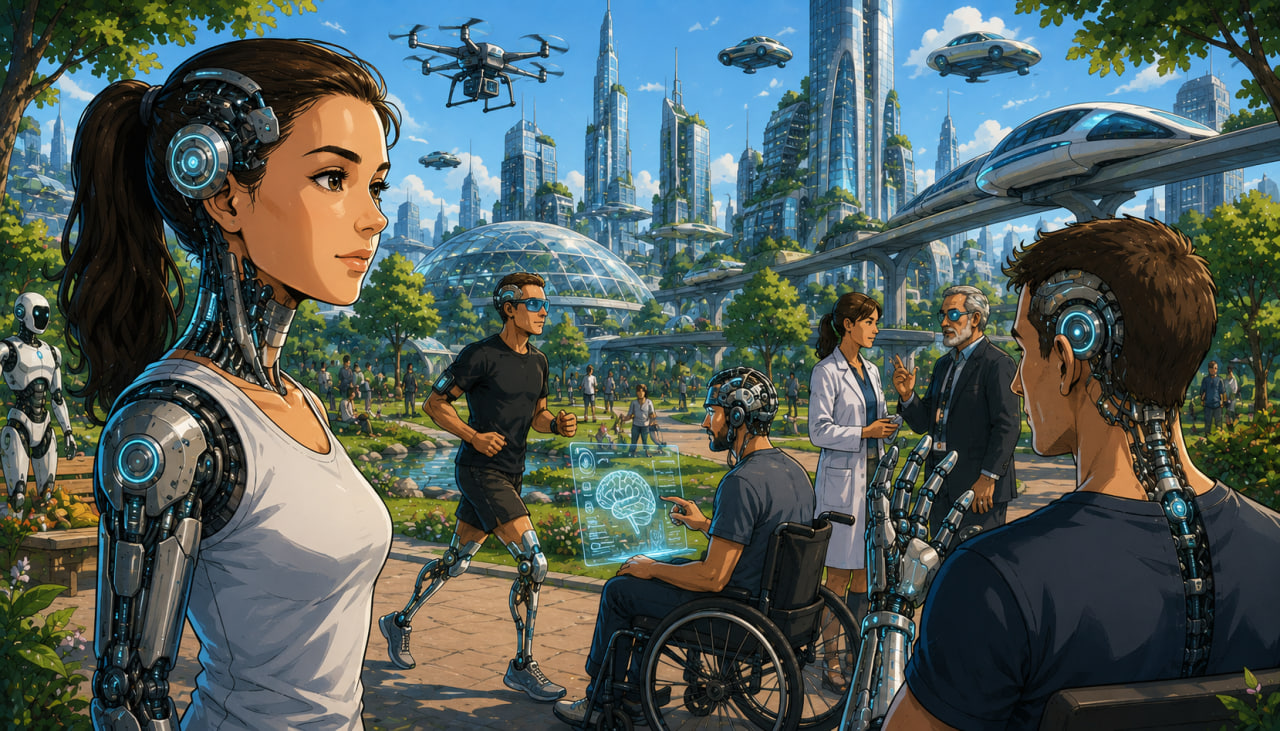
For centuries, humans dreamed about enhancing the body beyond its natural biological limits. Ancient myths described artificial limbs, immortality, and superhuman abilities long before modern science existed. Today, technologies once considered pure science fiction are becoming increasingly real. Artificial organs, robotic prosthetics, brain-computer interfaces, implanted medical devices, and neural technologies are already blurring the line between biology and machines. This raises one of the most fascinating questions of the modern era: When does a human officially become a cyborg? The idea is closely connected to transhumanism — a philosophical and technological movement supporting the use of science and technology to improve human physical and cognitive abilities. Supporters believe technological enhancement may eventually help humanity overcome: Disease Aging Physical limitations Cognitive decline Critics, however, warn about ethical, social, and philosophical risks. As biotechnology and artificial intelligence advance rapidly, the debate around transhumanism is becoming increasingly important.

Bacterial Flagellar Motors: Nature’s Tiny Rotating Engines
Bioengineering New Discoveries Be Smart

Bacterial Flagellar Motors: Nature’s Tiny Rotating Engines

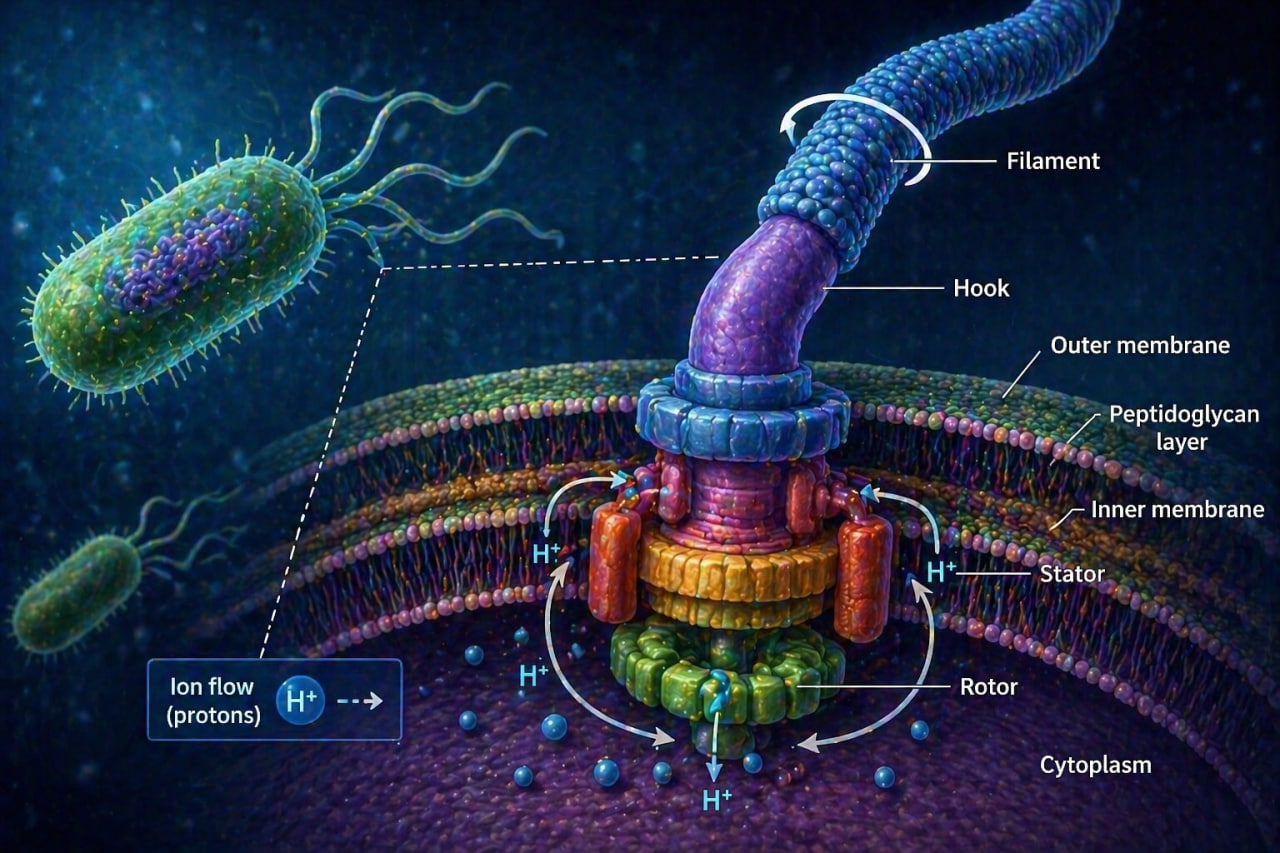
Among the most remarkable structures in biology is the flagellar motor of bacteria—a microscopic machine that allows single-celled organisms to move with incredible efficiency. These natural “engines” rotate like propellers, enabling bacteria to swim through liquids in search of nutrients or better environments. Despite their tiny size, flagellar motors are among the most sophisticated biological systems ever discovered.

Xenobots: Living Biological Constructs Built from Frog Cells
Neuro-Tech Hi-Tech Bioengineering

Xenobots: Living Biological Constructs Built from Frog Cells

Xenobots are a recent scientific development that blur the boundary between biology and robotics. They are not mechanical robots and not genetically modified animals. Instead, xenobots are microscopic biological constructs assembled from living cells of the African clawed frog (Xenopus laevis). These cells are arranged into specific shapes designed through computer modeling, allowing them to perform simple tasks such as movement and self-organization. Xenobots do not possess organs, brains, or reproductive systems. However, under controlled laboratory conditions, researchers observed a unique form of self-replication driven by physical movement. Their creation has opened new discussions about synthetic biology, cellular behavior, and the future of bioengineering.