History

Exact Sciences: The Foundation of Modern Civilization
History Science Physics

Exact Sciences: The Foundation of Modern Civilization

From smartphones and satellites to life-saving medicines and space exploration, nearly every technological achievement of modern society is built upon the exact sciences. These disciplines seek to understand the universe through precise measurements, logical reasoning, mathematical models, and repeatable experiments. Unlike fields that often rely on subjective interpretation, the exact sciences strive to produce objective knowledge that can be tested, verified, and refined. The exact sciences have transformed humanity's understanding of nature, enabling breakthroughs that once seemed impossible. They allow engineers to design bridges that withstand earthquakes, astronomers to predict planetary motions, physicists to explore the smallest particles of matter, and mathematicians to solve problems that shape the digital world. This article explores what the exact sciences are, why they matter, how they differ from other scientific disciplines, and why they continue to drive innovation across nearly every aspect of modern life.

Mathematics: The Universal Language That Shapes Our World
History Science Be Smart

Mathematics: The Universal Language That Shapes Our World

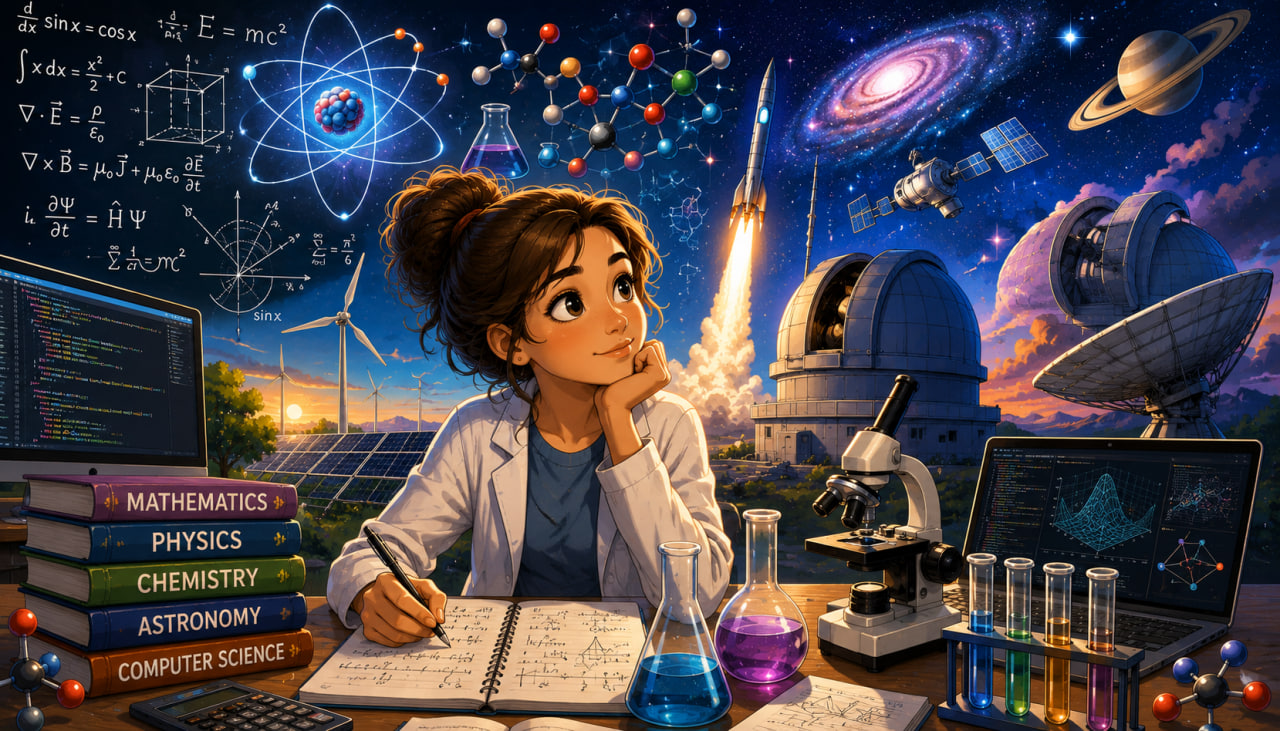
Mathematics is far more than numbers and equations taught in school. It is the universal language of science, technology, engineering, economics, and everyday life. From predicting the weather and designing spacecraft to securing online banking and developing artificial intelligence, mathematics forms the invisible foundation of modern civilization. Although many people associate mathematics with difficult formulas, its true purpose is much broader. Mathematics helps us recognize patterns, solve problems logically, and understand the world with remarkable precision. Whether calculating the trajectory of a satellite or optimizing traffic flow in a busy city, mathematics transforms complex problems into solutions.

Why Do Many Important Institutions Still Keep Paper Archives?
History Be Smart What if?

Why Do Many Important Institutions Still Keep Paper Archives?

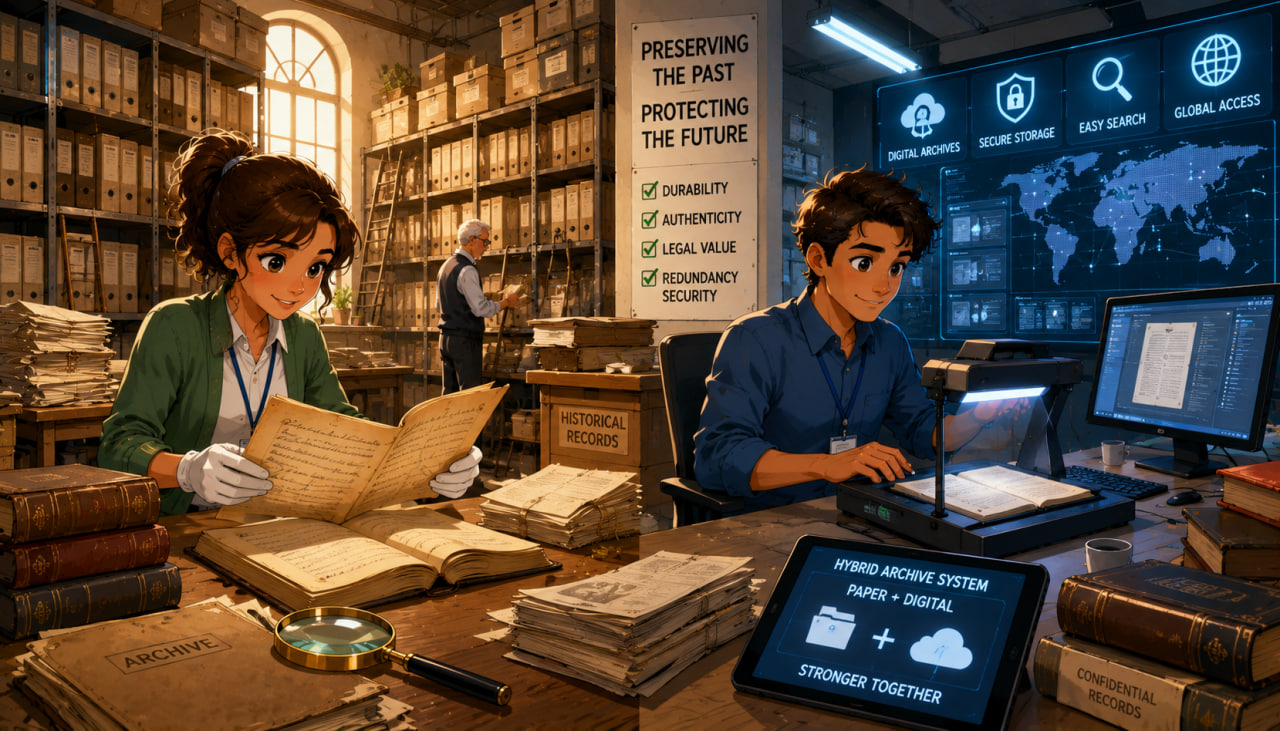
In an era of cloud computing, artificial intelligence, and digital records, it may seem surprising that governments, courts, hospitals, banks, museums, and national archives around the world continue to store enormous collections of paper documents. After all, digital files are easier to search, duplicate, and share. Yet despite rapid technological progress, paper remains one of the most trusted and durable methods of preserving critical information. Many organizations rely on both physical and digital records because each format has unique advantages and limitations. Rather than being outdated, paper archives continue to play an essential role in protecting history, legal rights, scientific research, and national security.

The Modern History of Moon Exploration: Humanity's Return to Earth's Closest Neighbor
Space Stories History Earth & Moon

The Modern History of Moon Exploration: Humanity's Return to Earth's Closest Neighbor

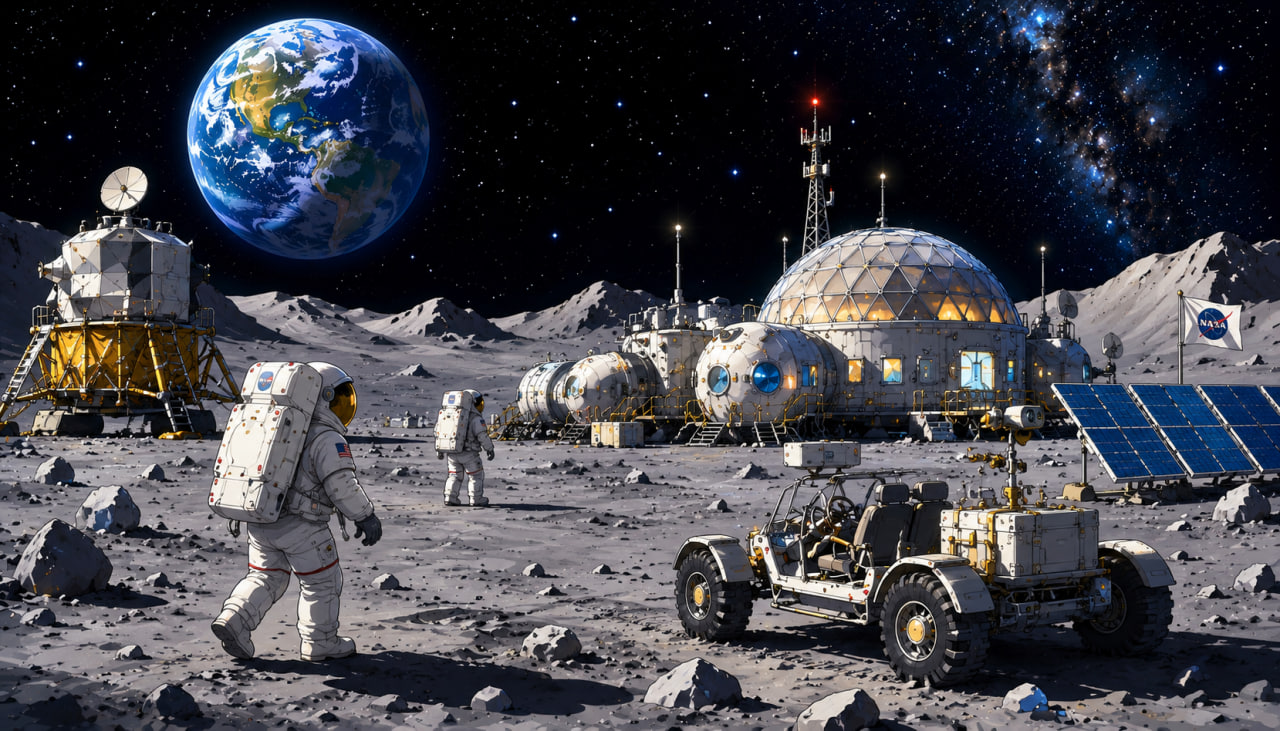
For centuries, the Moon inspired myths, scientific curiosity, and dreams of exploration. In the 20th century, those dreams became reality when humans first set foot on its surface. After decades of relative inactivity following the Apollo program, lunar exploration has entered an exciting new era. Governments and private companies are once again racing to explore the Moon—not simply to visit it, but to establish a long-term human presence. Modern Moon exploration combines advanced robotics, international cooperation, commercial innovation, and ambitious plans for future settlements. The Moon is no longer viewed only as a scientific destination but also as a stepping stone for future missions to Mars and beyond.

Paper: The Remarkable Material That Changed Human Civilization
History Be Smart Inventions

Paper: The Remarkable Material That Changed Human Civilization

Paper is one of the most important inventions in human history. Long before computers, smartphones, and the internet, paper enabled the storage and transmission of knowledge on an unprecedented scale. Books, newspapers, maps, scientific discoveries, legal systems, and educational institutions all relied heavily on this simple yet revolutionary material. Although digital technologies have reduced paper consumption in some areas, paper remains essential in modern society. Packaging, hygiene products, office supplies, currency, and countless other applications continue to depend on it. Understanding how paper is made, its environmental impact, and its role in modern life reveals why this humble material remains so important even in the digital age.

The History of the Transistor: The Tiny Invention That Changed the World
History Hi-Tech Smart Technology

The History of the Transistor: The Tiny Invention That Changed the World

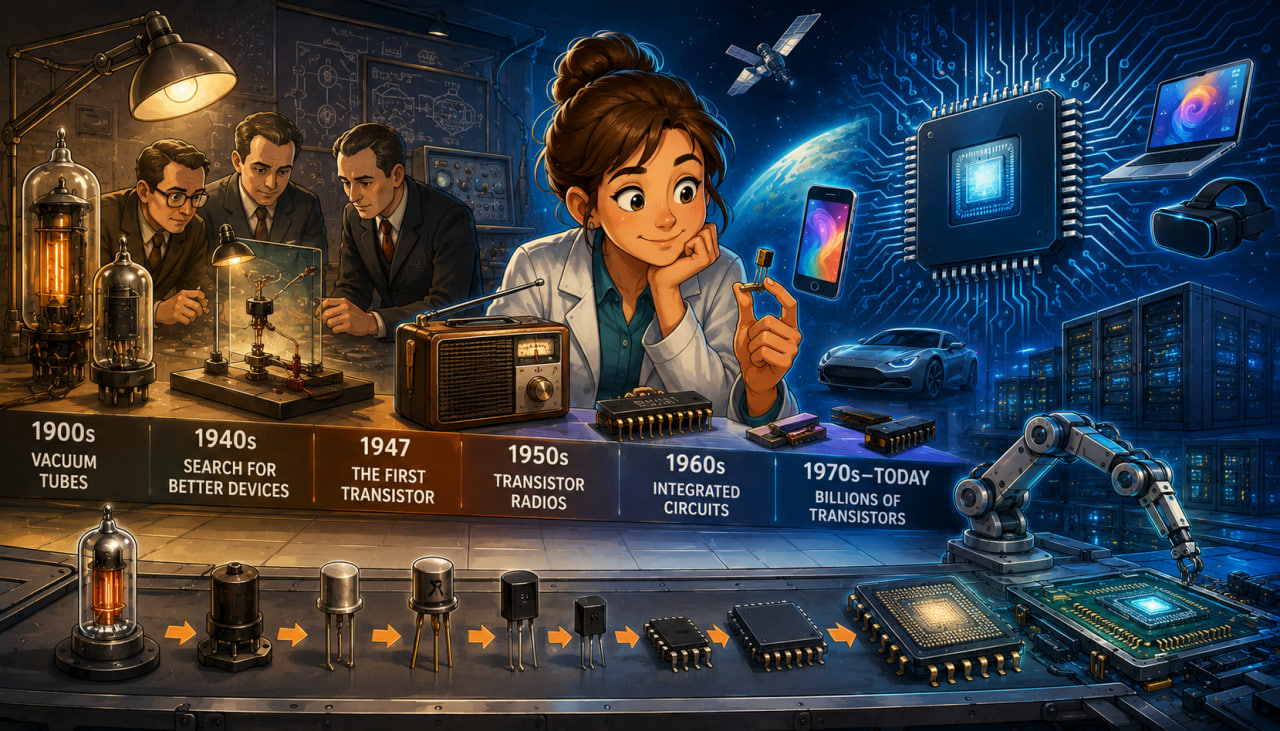
Modern civilization runs on transistors. Every smartphone, computer, server, satellite, television, game console, and artificial intelligence system depends on these microscopic electronic components. Although most people never see a transistor, it is difficult to imagine life without them. The digital revolution, the internet, and modern computing all trace their origins to this remarkable invention.

Michael Faraday: The Self-Taught Genius Who Electrified the World
History Science Tesla&Co

Michael Faraday: The Self-Taught Genius Who Electrified the World

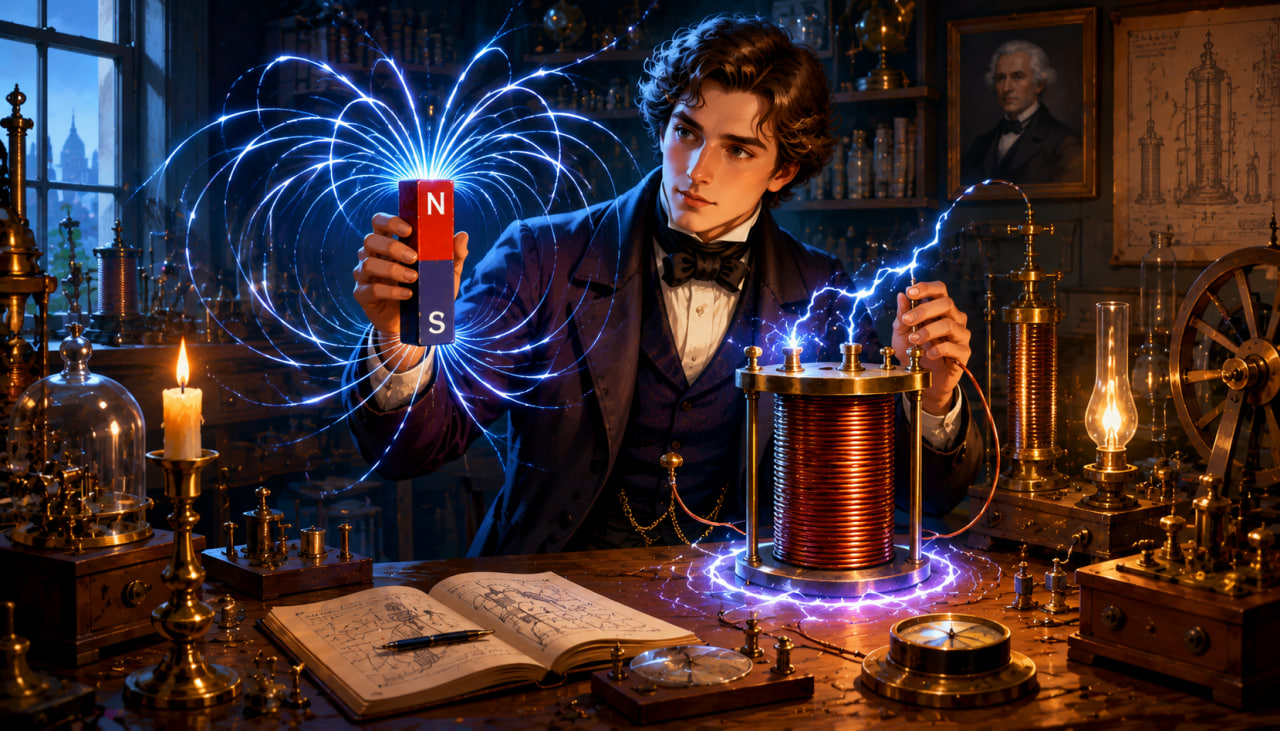
Few scientists have influenced modern civilization as profoundly as Michael Faraday. Although he received little formal education and began life in poverty, Faraday became one of the greatest experimental scientists in history. His discoveries laid the foundations of modern electricity, electromagnetism, and electrical engineering. Today, almost every electrical device—from power stations and electric motors to smartphones and computers—relies on principles that Faraday helped uncover. His work transformed humanity's understanding of nature and helped make the technological world we know possible. Faraday's life is also an inspiring story of curiosity, perseverance, and scientific creativity.

Candles: The Ancient Invention That Still Illuminates Our Lives
History Be Smart Inventions

Candles: The Ancient Invention That Still Illuminates Our Lives

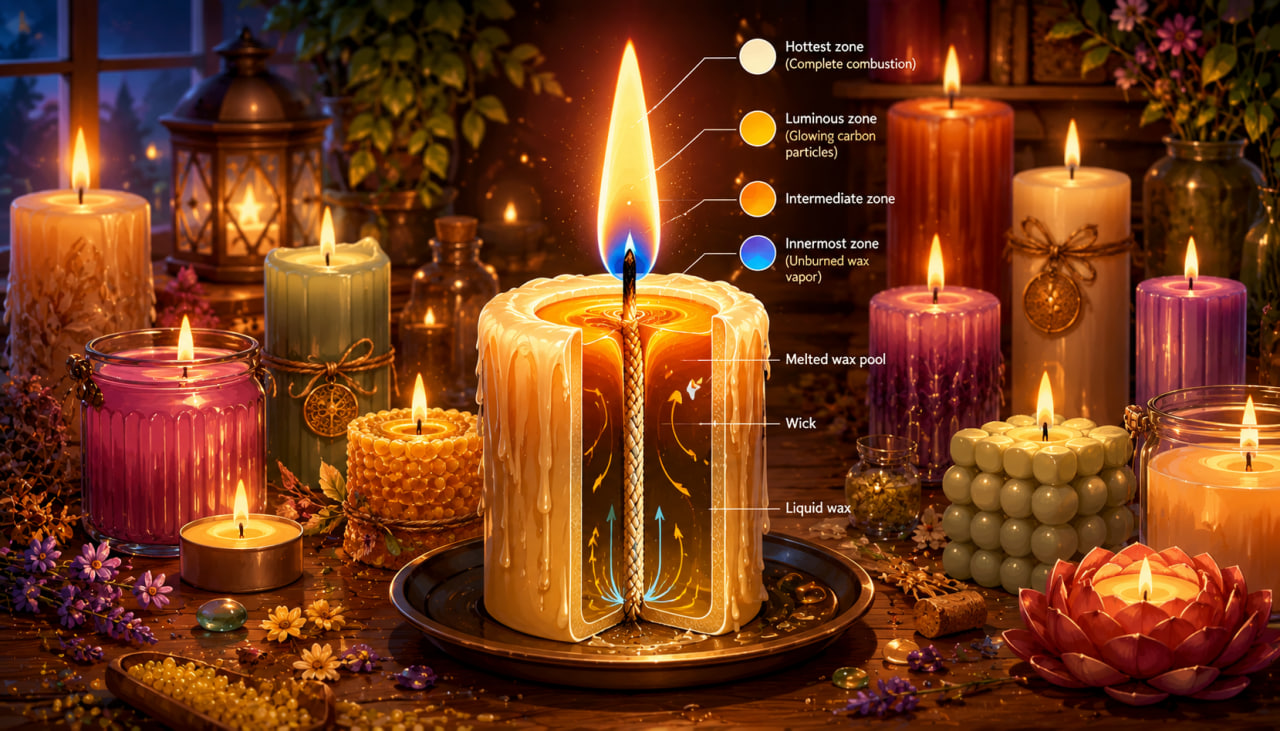
For thousands of years, candles have provided light, warmth, symbolism, and comfort. Although modern electric lighting has largely replaced candles for everyday illumination, they remain deeply woven into human culture. Today candles are used for decoration, religious ceremonies, aromatherapy, celebrations, emergency lighting, and relaxation. What appears to be a simple combination of wax and a wick is actually a fascinating example of chemistry and engineering. Every candle flame represents a carefully balanced process involving heat transfer, fuel vaporization, combustion, and airflow. The story of candles spans ancient civilizations, scientific discoveries, and modern craftsmanship, making them one of humanity's oldest and most enduring technologies.

The Einstein–Podolsky–Rosen Paradox: The Debate That Led to the Discovery of Quantum Entanglement
History Science Physics

The Einstein–Podolsky–Rosen Paradox: The Debate That Led to the Discovery of Quantum Entanglement

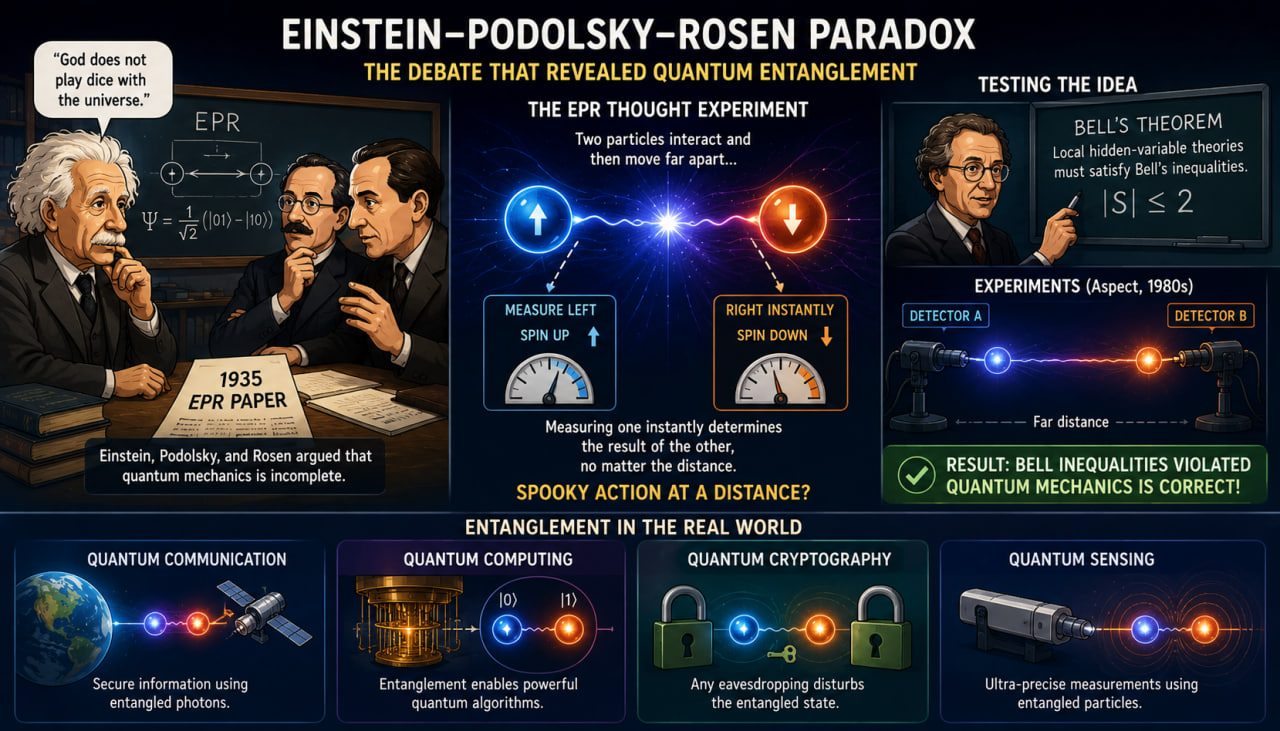
Few scientific arguments have had a greater impact on modern physics than the famous debate between: Albert Einstein Boris Podolsky Nathan Rosen In 1935, these three physicists published a paper that challenged one of the most successful scientific theories ever developed: Quantum Mechanics Their goal was simple: They wanted to show that quantum theory was incomplete. Instead, their argument unintentionally helped inspire one of the strangest and most important discoveries in science: Quantum Entanglement Today, entanglement lies at the heart of: Quantum computing Quantum cryptography Quantum teleportation research Modern quantum information science Ironically, Einstein hoped to expose a weakness in quantum mechanics, but the debate eventually strengthened confidence in the theory. The Einstein–Podolsky–Rosen paradox, usually called: The EPR Paradox remains one of the most fascinating stories in the history of physics.

Why Does a Day Have 24 Hours, an Hour 60 Minutes, and a Minute 60 Seconds?
History Science Be Smart

Why Does a Day Have 24 Hours, an Hour 60 Minutes, and a Minute 60 Seconds?

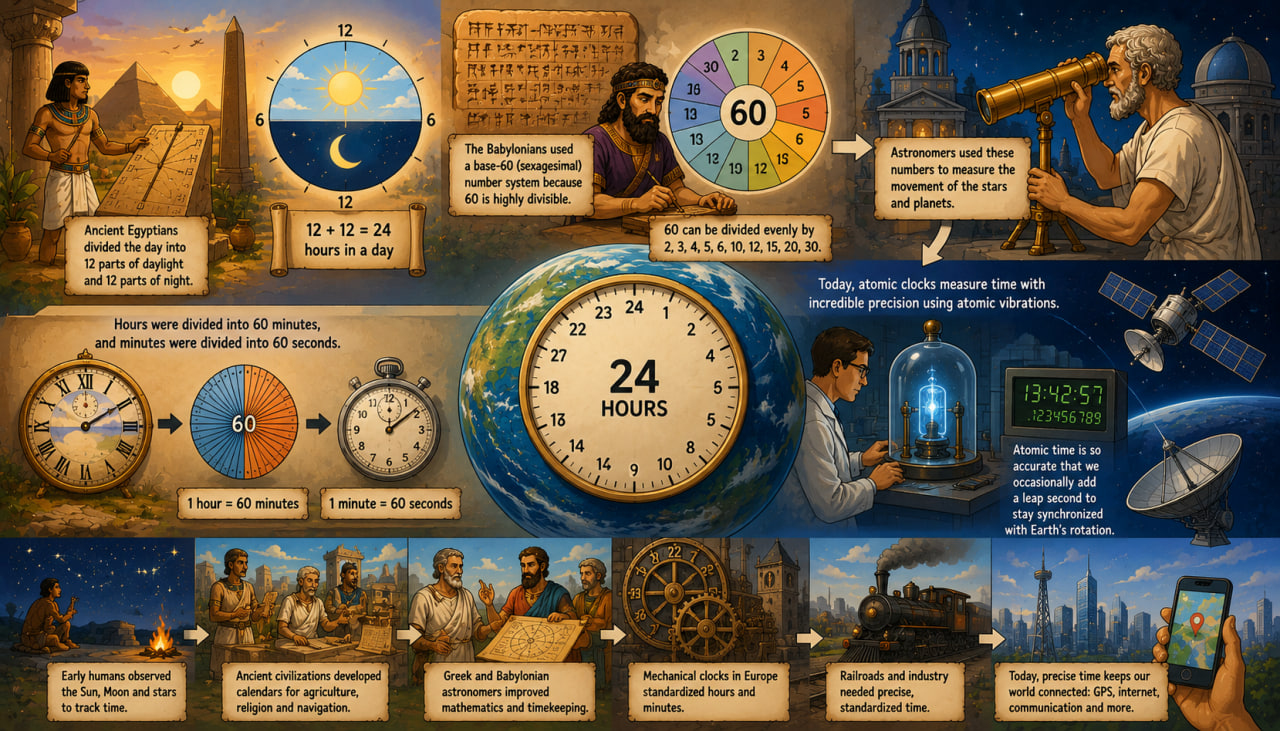
Modern people constantly use: Hours Minutes Seconds without thinking about where these strange numbers actually came from. Why does a day contain: 24 hours instead of: 10 or 100? And why are time units divided into: 60 minutes 60 seconds instead of simpler decimal systems? The answer lies deep in: Ancient astronomy Mathematics Early civilizations Human observation of the sky Modern timekeeping combines traditions developed thousands of years ago by: Babylonians Egyptians Greek astronomers Long before mechanical clocks existed, humans already needed reliable ways to measure: Daylight Seasons Planetary motion Agricultural cycles The strange structure of modern time is essentially a surviving piece of ancient mathematics still used every day across the planet. Understanding the history of time measurement reveals how astronomy shaped civilization itself.