Inventions

Carbon Nanotubes: Structure, Properties, and Modern Applications
Hi-Tech New Discoveries Inventions

Carbon Nanotubes: Structure, Properties, and Modern Applications

Carbon nanotubes (CNTs) are cylindrical nanostructures composed entirely of carbon atoms arranged in a hexagonal lattice, forming tubes with extraordinary mechanical, electrical, and thermal properties. Discovered in the early 1990s, they quickly became one of the most studied materials in nanotechnology due to their remarkable strength, low weight, and unique conductivity. CNTs can be single-walled or multi-walled, with each type offering different characteristics suitable for specialized applications. Scientists consider carbon nanotubes a major breakthrough because their properties exceed those of many conventional materials used in engineering and electronics. Research continues to uncover new uses for CNTs in fields such as energy storage, medicine, aerospace, and advanced manufacturing. Understanding their structure and behavior helps researchers design cutting-edge technologies that push the boundaries of modern science.

Atomic Clocks: The Most Precise Timekeepers in Human History
Hi-Tech Smart Technology New Discoveries

Atomic Clocks: The Most Precise Timekeepers in Human History

Atomic clocks are the most accurate timekeeping devices ever invented, capable of measuring time with extraordinary precision by tracking the natural vibrations of atoms. Unlike mechanical or quartz clocks, which rely on physical movement or crystal oscillation, atomic clocks use electromagnetic transitions within atoms, most commonly cesium or rubidium. These atomic oscillations are incredibly stable, allowing scientists to define the second based on the frequency of these transitions. Because of their unmatched accuracy, atomic clocks serve as the foundation of global navigation systems, telecommunications networks, scientific research, and international time standards. Their development represents a major milestone in physics and engineering, enabling technological advances that depend on nanosecond-level precision. Understanding how atomic clocks work reveals the extraordinary science behind modern timekeeping and the role they play in shaping today’s technological world.

Tesla’s Induction Motor: A Revolutionary Breakthrough in Electrical Engineering
History Tesla&Co Inventions

Tesla’s Induction Motor: A Revolutionary Breakthrough in Electrical Engineering

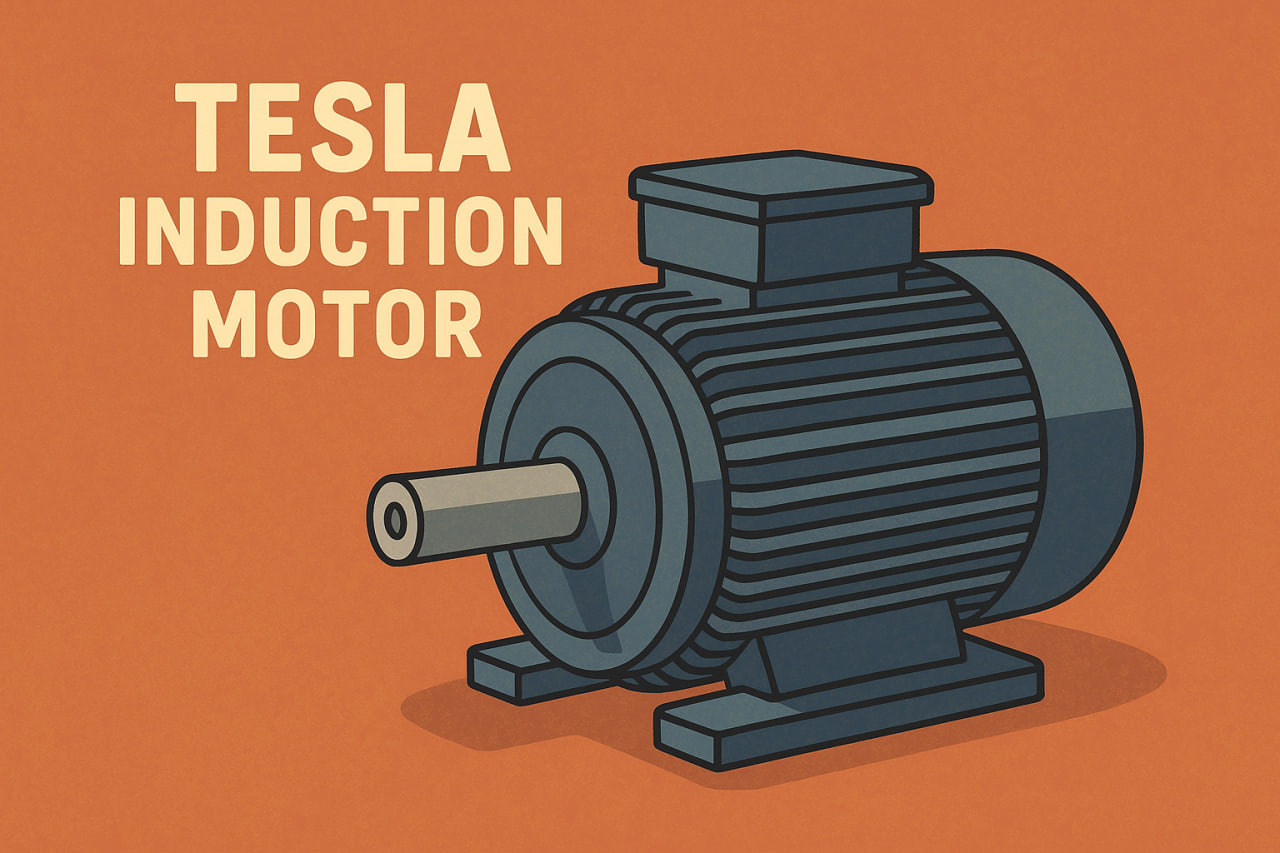
The induction motor invented by Nikola Tesla in 1887 is considered one of the most transformative technologies in the history of engineering. This motor changed the way industries operate by introducing a highly efficient, self-starting machine that runs on alternating current. Before Tesla’s work, electric motors were unreliable, required constant maintenance, and operated poorly under load. Tesla’s induction motor solved these problems by using a rotating magnetic field, a concept that became a cornerstone of modern electromechanical systems. Today, induction motors power everything from household appliances to large industrial machines, showcasing their durability, efficiency, and stability. Engineers often describe Tesla’s invention as the foundation upon which the modern electrical age was built, demonstrating his extraordinary vision and deep understanding of electromagnetic principles.

The Tesla Coil: History, Principles, and Modern Applications
History Tesla&Co Be Smart

The Tesla Coil: History, Principles, and Modern Applications

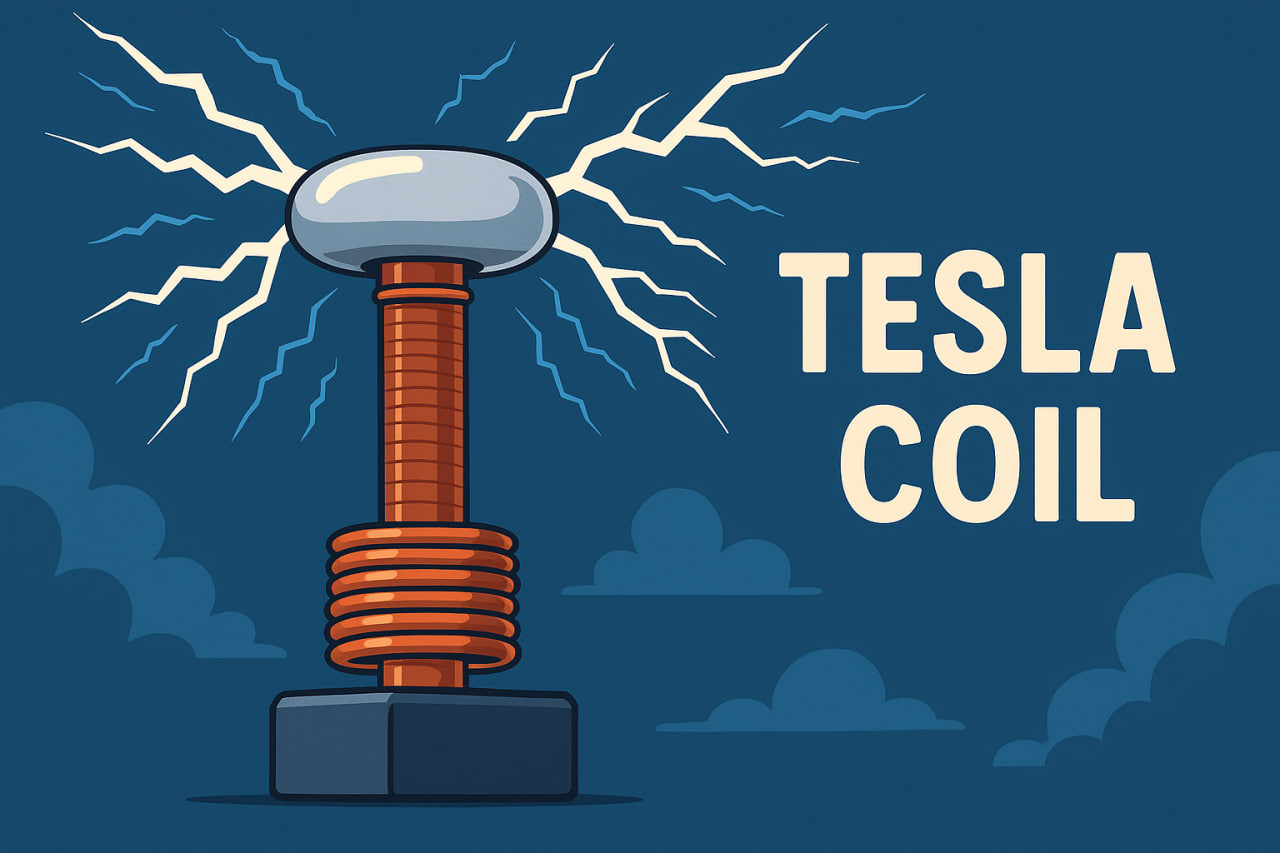
The Tesla Coil is one of the most iconic inventions in the history of electrical engineering, developed by Nikola Tesla in the 1890s as part of his pioneering research into high-frequency and wireless power transmission. This remarkable device produces extremely high voltages, creates spectacular electrical discharges, and demonstrates principles of resonance that were revolutionary for its time. Tesla originally designed the coil as a tool for transmitting electricity wirelessly across long distances, a concept he hoped would one day power homes and industries without traditional wires. Although this grand vision was never fully realized, the Tesla Coil became an essential experimental instrument that advanced the understanding of electromagnetism, radio-frequency engineering, and resonant circuits. Experts emphasize that despite being more than a century old, the Tesla Coil remains an extraordinary example of engineering creativity and scientific intuition.

Nikola Tesla’s Most Famous Inventions and Innovations
History Smart Technology Science

Nikola Tesla’s Most Famous Inventions and Innovations

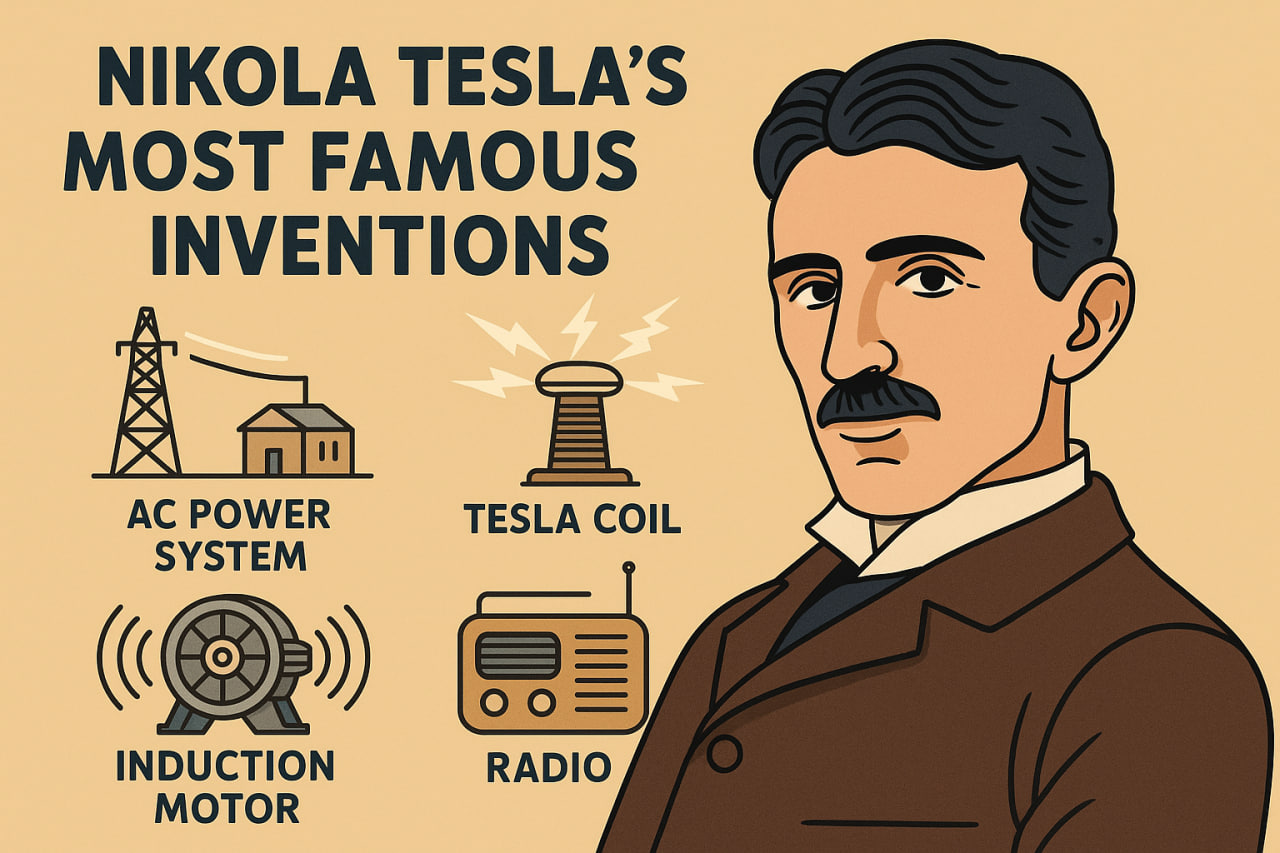
Nikola Tesla is regarded as one of the most influential inventors in history, whose ideas continue to shape modern technology more than a century later. His work laid the foundations for alternating current power distribution, wireless communication, radio systems, high-frequency electronics, and numerous visionary concepts far ahead of their time. Tesla approached science with exceptional imagination, combining deep theoretical knowledge with bold experimentation. Many of his innovations solved fundamental engineering problems that were limiting progress in the late 19th and early 20th centuries. Today, Tesla’s technologies are integrated into global power grids, communication networks, and scientific research facilities. Historians emphasize that Tesla’s legacy represents the bridge between early electrical engineering and the technological world we now inhabit.

Nikola Tesla and Atmospheric Electricity Collectors
History Smart Technology Science

Nikola Tesla and Atmospheric Electricity Collectors

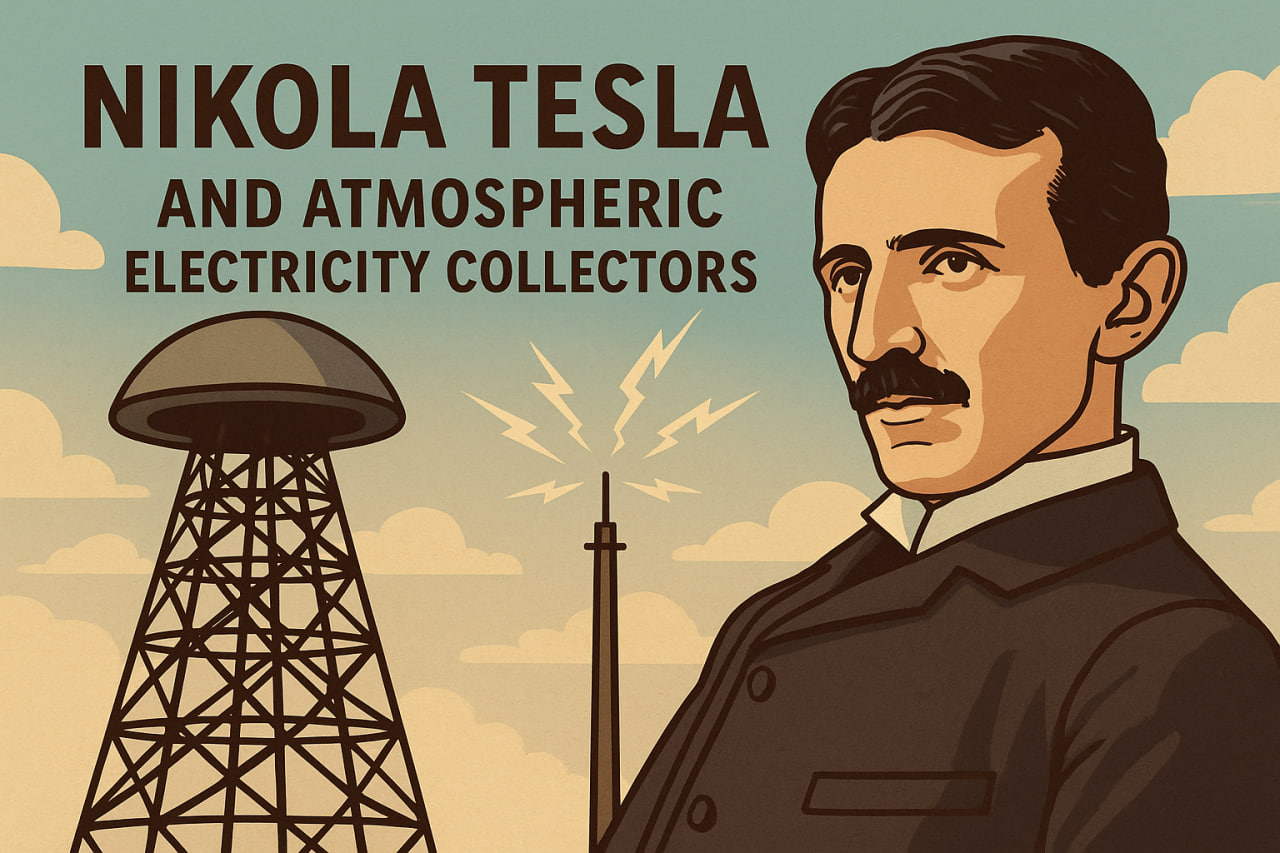
Nikola Tesla’s experiments with atmospheric electricity collectors remain one of the most intriguing chapters in the history of electrical engineering. Tesla believed that Earth’s atmosphere contained vast stores of electrical energy that could be captured and transmitted without traditional fuel sources. Throughout the late 19th and early 20th centuries, he conducted numerous experiments involving high-frequency currents, elevated conductive plates, and resonant transformers designed to tap into natural electrical potentials. Although many of Tesla’s patents and laboratory notes describe his concepts in detail, the full technical feasibility of his atmospheric collectors remains a subject of debate among historians and engineers. Even so, his pioneering research laid foundational ideas for modern wireless energy transfer and environmental energy harvesting. Tesla’s atmospheric electricity concepts continue to inspire scientists, inventors, and enthusiasts exploring alternative methods of clean power generation today.

Mirrors: From Ancient Times to the Modern World
History Science Be Smart

Mirrors: From Ancient Times to the Modern World

Mirrors have played a fascinating role in human civilization, evolving from polished stones and metals into the precision-crafted glass surfaces we use today. In ancient cultures, mirrors were not only practical tools but also symbolic objects associated with beauty, truth, and even the supernatural. Over centuries, as technologies advanced, societies learned to create clearer and more durable reflective surfaces, transforming mirrors into essential items found in homes, architecture, science, and art. Today, mirrors are manufactured using highly refined techniques that ensure perfect reflection and optical accuracy. Experts note that mirrors reflect not only technological progress but also cultural changes in how humanity perceives identity, appearance, and self-awareness. Understanding their history reveals how a simple reflective surface can influence entire eras of human thought and design.

History of Aircraft Development
History Hi-Tech Inventions

History of Aircraft Development

The history of aircraft development is a story of human curiosity, engineering creativity, and the desire to conquer the skies. From early myths of flight to modern jetliners and spacecraft, aviation has transformed the way people travel, communicate, and understand the world. The journey began with theoretical studies, continued through trial-and-error experiments, and grew into one of the most advanced fields of technology. Each stage of development built upon previous discoveries, creating a chain of innovation that continues today. Understanding the history of aircraft not only highlights scientific progress but also shows how deeply flight has influenced culture, global connection, and human imagination.

The Future of Aircraft Engineering
Hi-Tech Smart Technology Be Smart

The Future of Aircraft Engineering

The future of aircraft engineering is shaped by the demand for faster, cleaner, and more efficient air travel. As global connectivity increases, the aviation industry faces new challenges, including environmental sustainability, noise reduction, and improved passenger safety. Researchers and engineers are working to develop new materials, propulsion systems, and aircraft designs that will transform how humans travel. These innovations aim not only to improve flight performance but also to reduce the ecological impact of aviation. The future of aircraft engineering will likely combine advanced technology with responsible design to create an era of smarter and more sustainable air transportation.

History of Helicopter Development
History Hi-Tech Inventions

History of Helicopter Development

The history of helicopter development is a journey of innovation driven by the desire to achieve vertical flight. Unlike airplanes, which require runways, helicopters can take off and land vertically, hover in place, and move in any direction. This capability opened possibilities in rescue operations, military missions, medicine, and transportation. The dream of vertical flight appeared long before technology made it possible; early inventors studied birds, wind, and rotational forces. Over time, improvements in engine power, rotor design, and control systems allowed helicopters to evolve from experimental prototypes into highly versatile aircraft. Today, helicopters are used worldwide in environments where no other aircraft can operate effectively.