Physics

Piezoelectric Effect: How to Generate a Spark by Compressing a Crystal
Science Be Smart Physics

Piezoelectric Effect: How to Generate a Spark by Compressing a Crystal

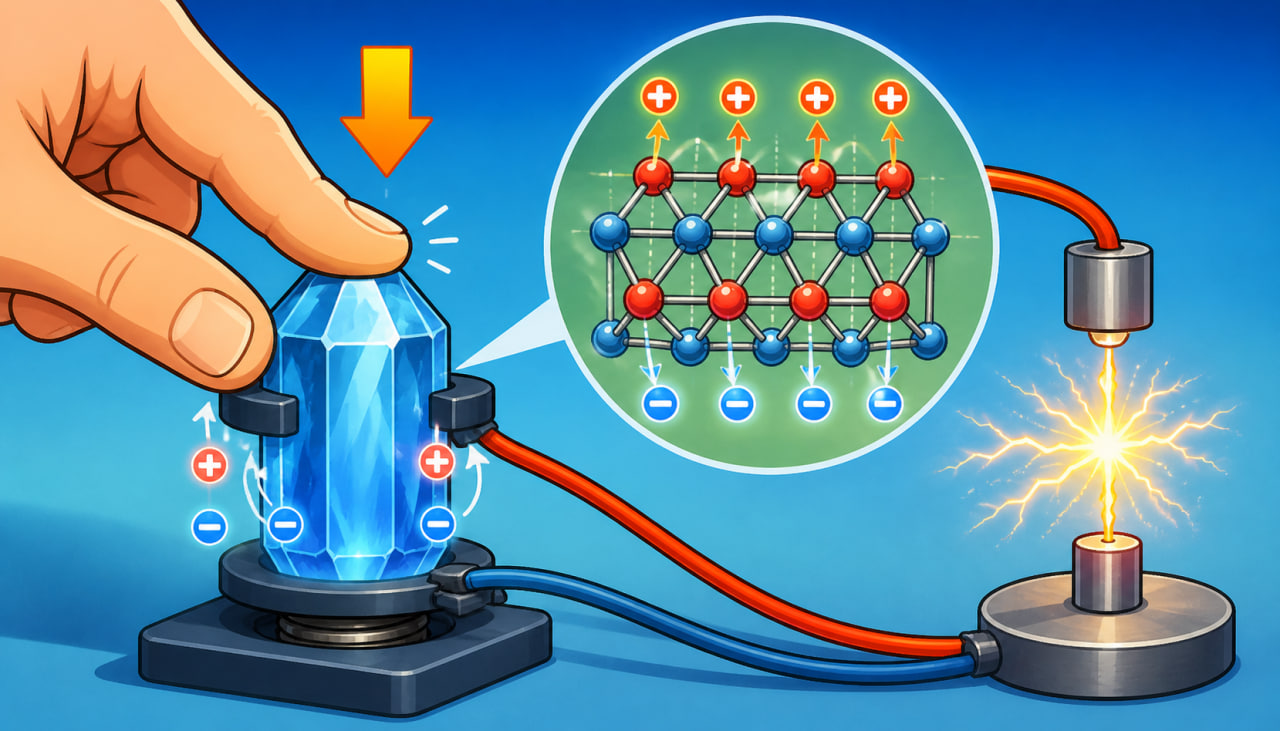
The piezoelectric effect is one of the most fascinating phenomena in physics and materials science. It allows certain materials to generate electricity when they are mechanically stressed. This principle is widely used in everyday devices such as lighters, sensors, and microphones. Understanding how it works reveals how mechanical energy can be directly converted into electrical energy.
Electrostatic Machine: How It Works and Why It Matters
Science Tesla&Co Inventions

Electrostatic Machine: How It Works and Why It Matters

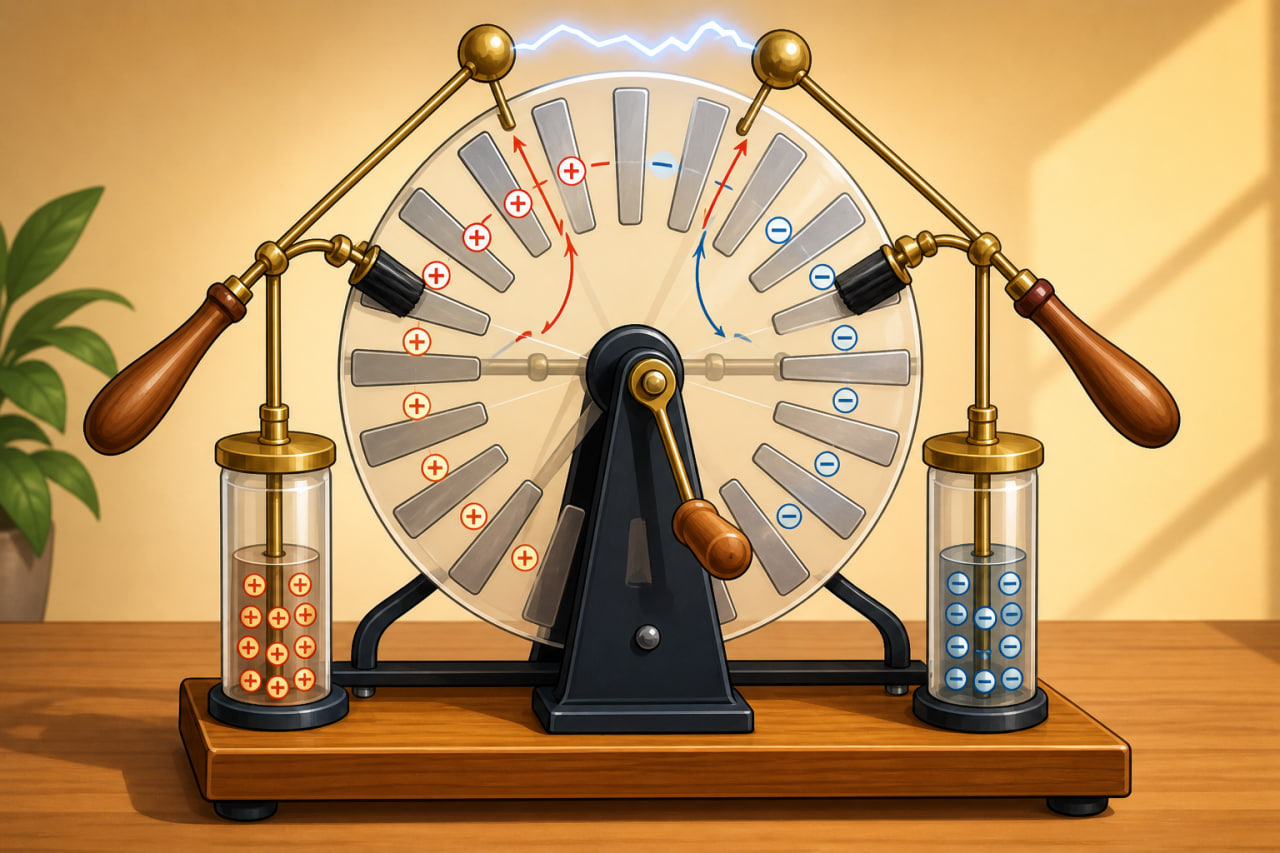
Electrostatic machines are devices that generate electricity through the buildup and separation of electric charges. Unlike modern electrical generators that rely on magnetic fields and continuous current, these machines produce high voltage static electricity with very low current. They played a key role in early scientific discoveries and remain important for education and demonstrations today.

Static Electricity: How Invisible Charges Shape Everyday Life
Science Be Smart Physics

Static Electricity: How Invisible Charges Shape Everyday Life

Static electricity is one of the simplest yet most fascinating phenomena in physics. Almost everyone has experienced it—whether through a small shock after touching a metal object or hair standing on end when rubbed with a balloon. Despite its simplicity, static electricity reveals fundamental principles about how electric charges behave. Understanding static electricity not only explains everyday effects but also provides insight into the broader world of electromagnetism.

Metallic Hydrogen: The Holy Grail of High-Pressure Physics
New Discoveries Inventions Physics

Metallic Hydrogen: The Holy Grail of High-Pressure Physics

Metallic hydrogen is one of the most fascinating and elusive goals in modern physics. For decades, scientists have pursued the idea that hydrogen—the simplest and most abundant element in the universe—can transform into a metal under extreme pressure. If confirmed and stabilized, metallic hydrogen could revolutionize energy, materials science, and our understanding of planetary interiors.

Shock Waves: How Powerful Pressure Fronts Shape Nature and Technology
Science Be Smart Physics

Shock Waves: How Powerful Pressure Fronts Shape Nature and Technology

Shock waves are one of the most intense and fascinating phenomena in physics. They occur when energy moves through a medium—such as air, water, or solid material—faster than the speed at which disturbances normally travel in that medium. The result is a sudden, almost instantaneous change in pressure, temperature, and density. From supersonic jets and explosions to lightning and volcanic eruptions, shock waves play a crucial role in both natural events and modern technology. Understanding how they form and behave helps scientists improve safety, engineering, and even medical treatments.

The Observer Effect in Quantum Physics: Do Particles Change When We Look at Them?
Smart Technology Science Physics

The Observer Effect in Quantum Physics: Do Particles Change When We Look at Them?

The idea that simply observing a particle can change its behavior is one of the most fascinating and misunderstood concepts in modern science. Often popularized in movies and online discussions, the observer effect in quantum mechanics raises a profound question: does reality depend on observation? While the answer is more complex than it may seem, understanding this phenomenon reveals how strange and counterintuitive the quantum world truly is.

Shock Waves: The Physics of Sudden Pressure Changes
Science Be Smart Physics

Shock Waves: The Physics of Sudden Pressure Changes

A shock wave is a powerful physical phenomenon that occurs when a disturbance moves through a medium faster than the speed of sound. Unlike ordinary sound waves, shock waves involve abrupt changes in pressure, temperature, and density. These rapid changes create a sharp front that carries a large amount of energy. Shock waves can occur in air, water, and even solid materials under certain conditions. They are commonly associated with explosions, supersonic aircraft, and natural events such as volcanic eruptions or lightning strikes. Despite their dramatic nature, shock waves follow well-defined physical laws. Understanding them helps scientists and engineers predict and control high-energy processes.

Phase Transitions: The Physics of Changing States of Matter
Science Be Smart Physics

Phase Transitions: The Physics of Changing States of Matter

A phase transition is a fundamental physical process in which a substance changes from one state of matter to another, such as from solid to liquid or liquid to gas. These transformations occur when external conditions like temperature or pressure change, altering the internal structure and energy of the substance. Phase transitions are not only common in everyday life but also play a crucial role in natural and industrial processes. Examples include melting ice, boiling water, and the formation of clouds in the atmosphere. Despite appearing simple, these processes involve complex interactions between particles and energy. Understanding phase transitions helps scientists explain how matter behaves under different conditions. It also provides insights into broader physical systems, from materials science to cosmology.

Boiling: The Physics Behind a Common Phenomenon
Science Be Smart Physics

Boiling: The Physics Behind a Common Phenomenon

Boiling is a fundamental physical process that occurs when a liquid transforms into vapor throughout its entire volume. Unlike evaporation, which happens only at the surface, boiling involves the formation of vapor bubbles within the liquid. This process begins when the liquid reaches a specific temperature known as the boiling point. At this temperature, the pressure of the vapor inside the bubbles equals the external pressure acting on the liquid. As a result, bubbles can form and rise freely to the surface. Boiling is influenced by factors such as pressure, temperature, and the properties of the liquid. Understanding boiling helps explain many natural and technological processes, from cooking to industrial systems.