
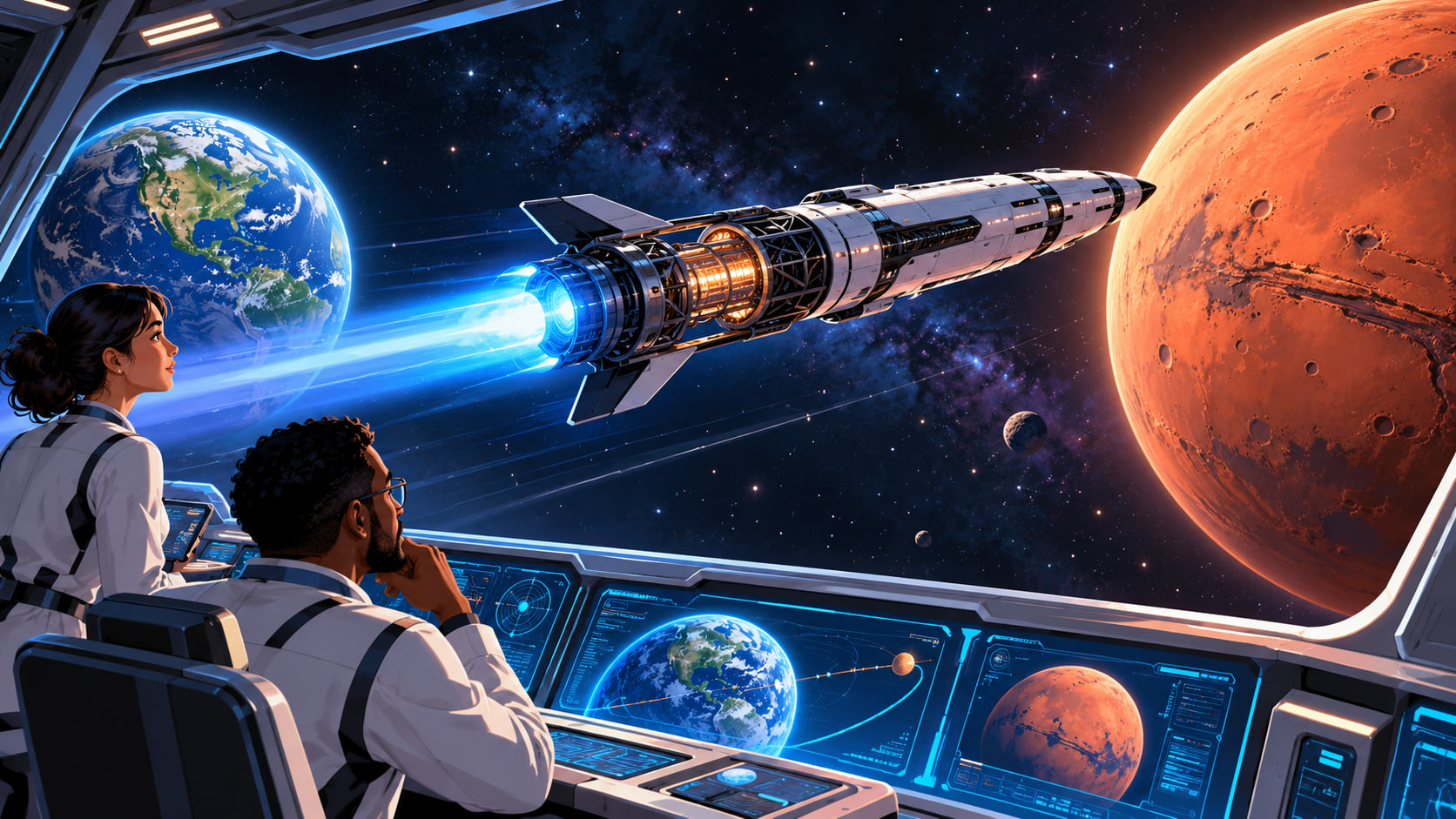
Can Nuclear Rocket Engines Make Space Travel Faster? The Future of Nuclear-Powered Missions to Mars and Beyond
The expert committee was co-chaired by aerospace specialists Robert D. Braun and Roger M. Myers.
The expert committee was co-chaired by aerospace specialists Robert D. Braun and Roger M. Myers.
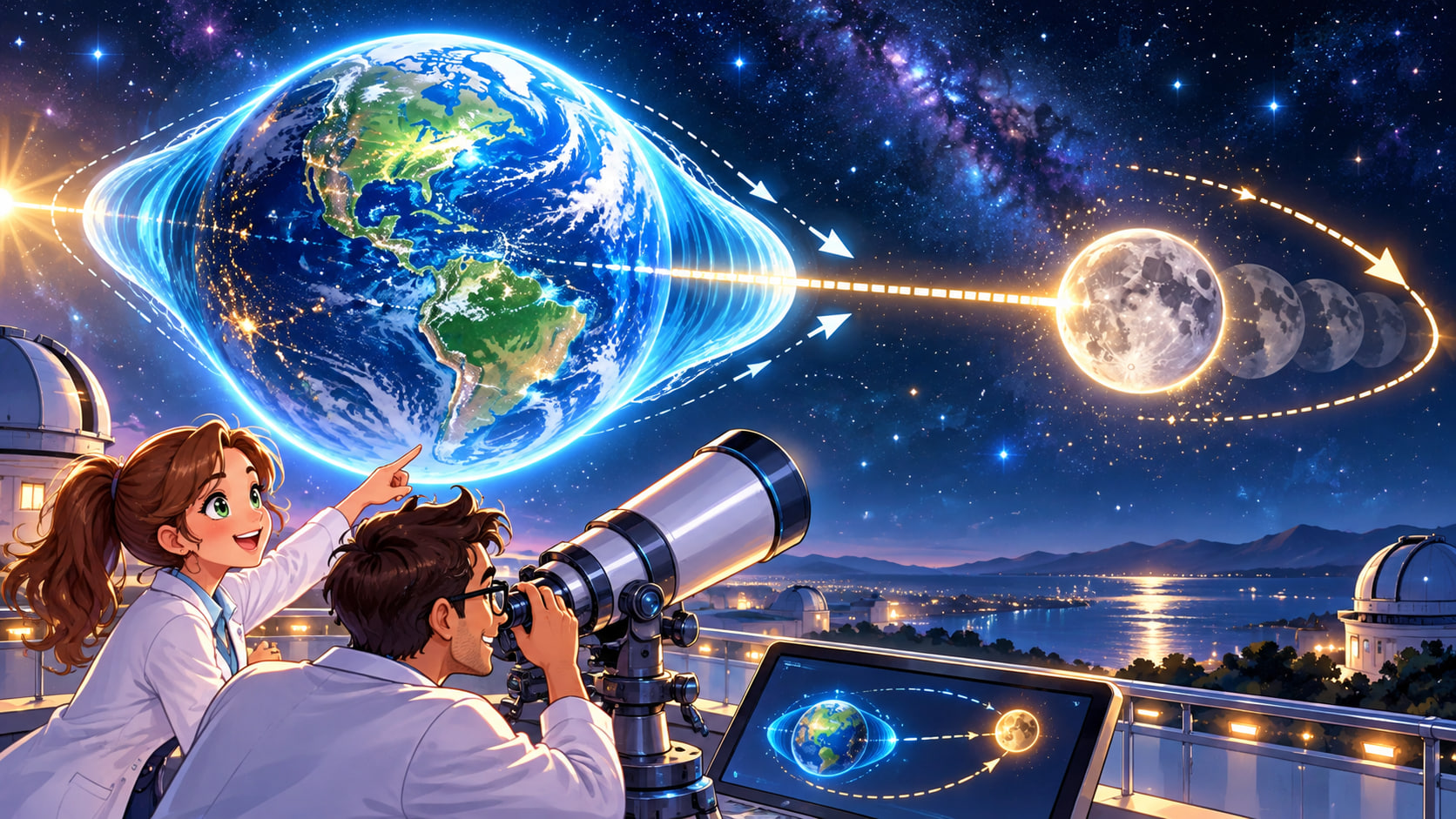
This movement is so gradual that it cannot be detected with the naked eye. However, modern scientific instruments can measure it with extraordinary precision.
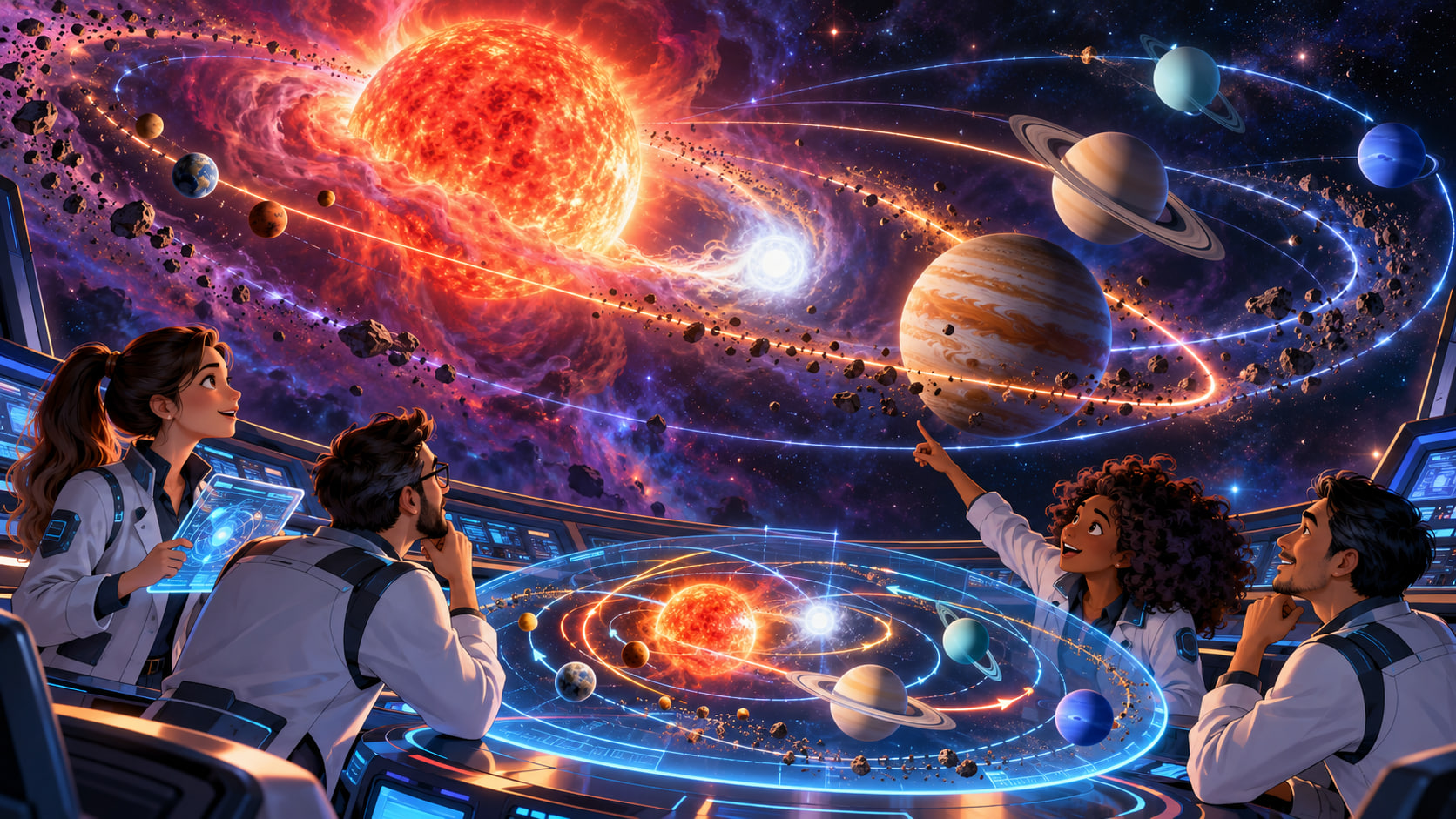
For decades, the outer Solar System looked extraordinarily durable. Even after the Sun grows old, loses much of its mass, and becomes a white dwarf, models suggested that the surviving giant planets could remain in recognizable orbits for tens of billions of years or far longer.
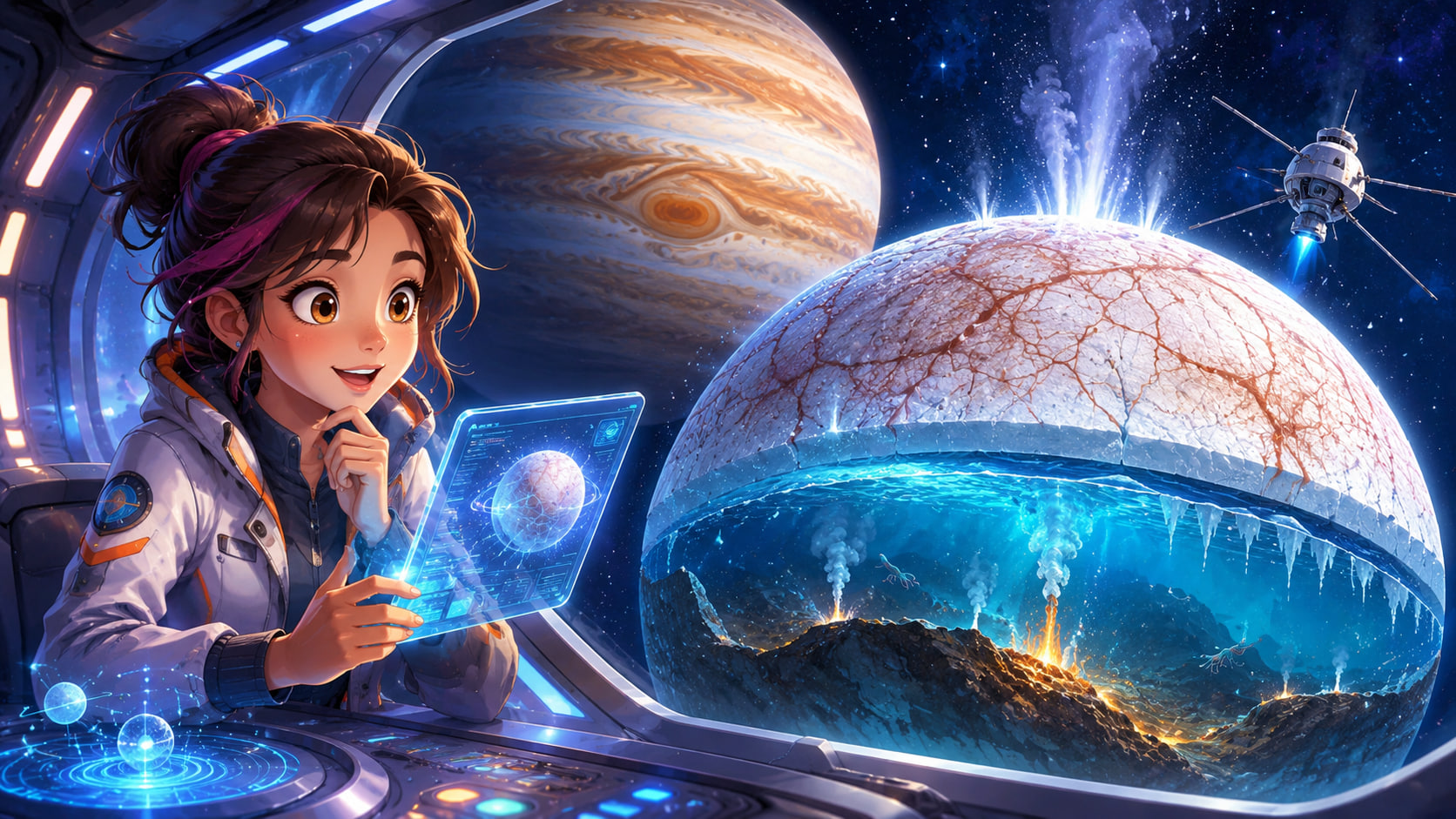
Europa is one of Jupiter’s largest moons and one of the most fascinating worlds in the Solar System. From a distance, it looks like a bright frozen sphere covered with long reddish-brown cracks.
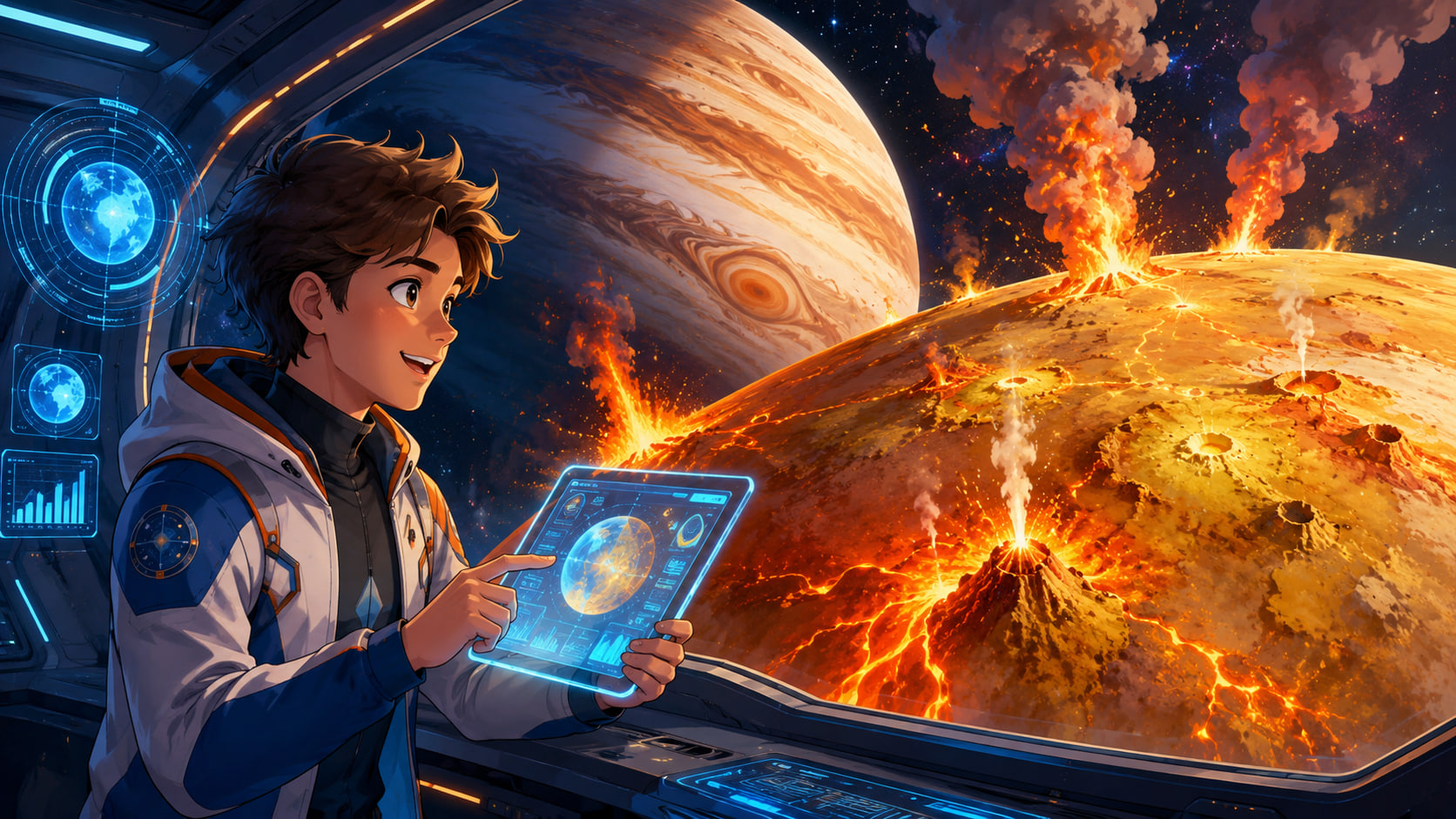
Io is one of the strangest and most dramatic moons in the Solar System. It orbits Jupiter, the largest planet, and its surface is constantly reshaped by enormous volcanic eruptions.
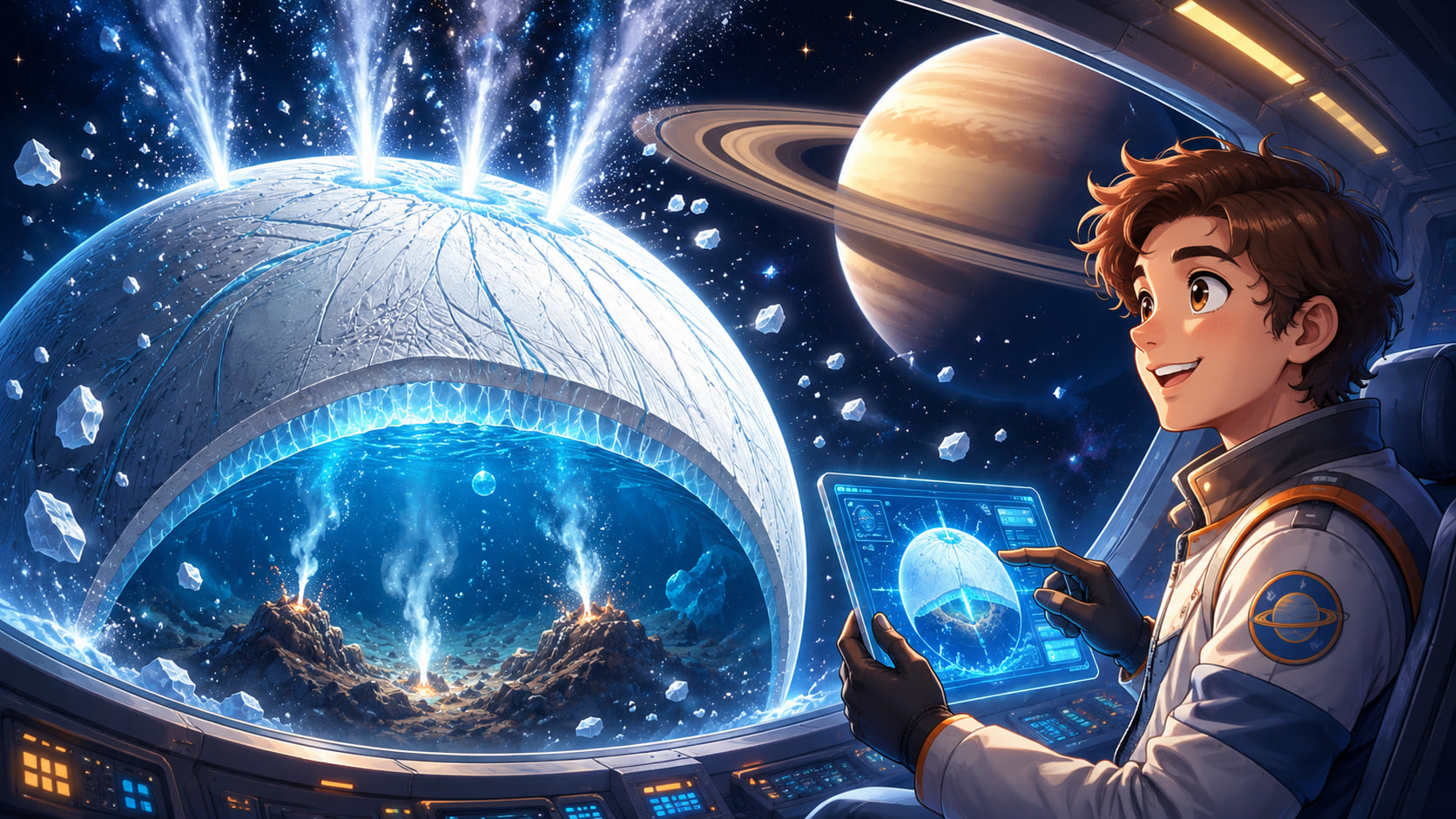
Enceladus is one of the most fascinating moons in the Solar System. At first glance, it looks like a small frozen world orbiting Saturn. Its surface is bright, icy, and covered with fractures.
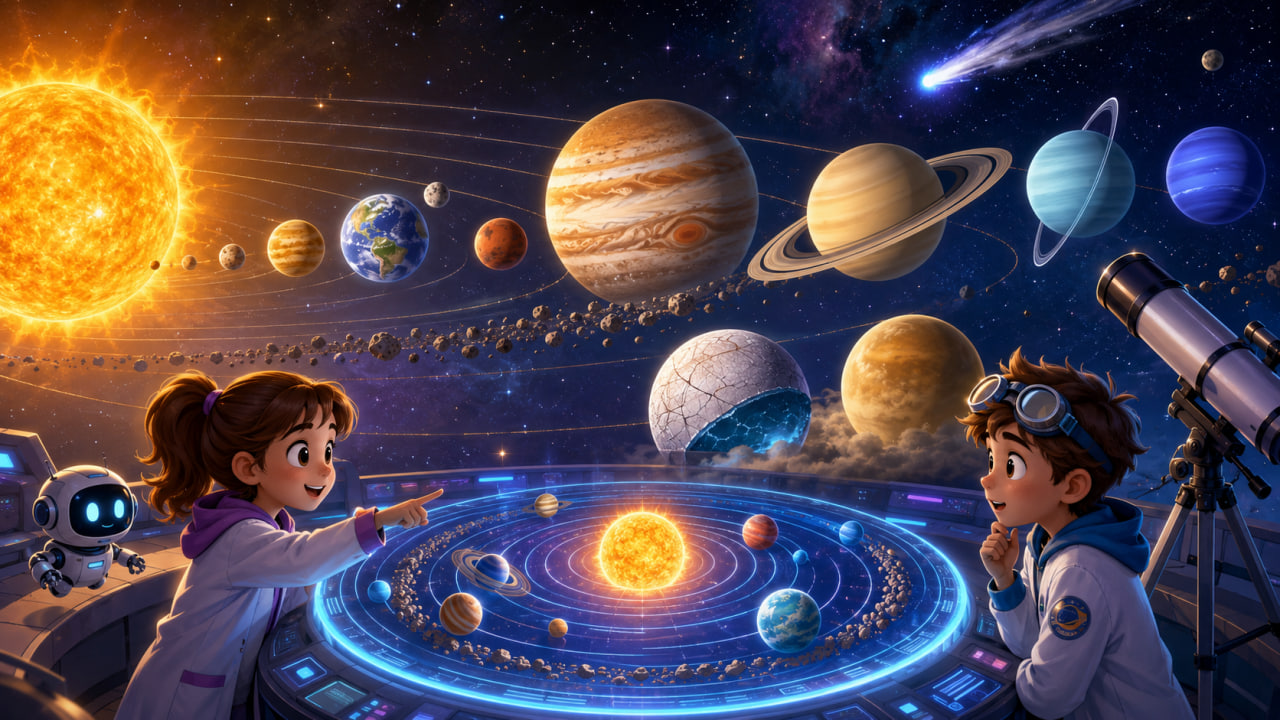
The Solar System is much more than the Sun and eight planets. It is a vast, dynamic neighborhood filled with moons, dwarf planets, asteroids, comets, icy worlds, violent storms, magnetic fields, rings, oceans, volcanoes, and ancient debris from the birth of the planets.
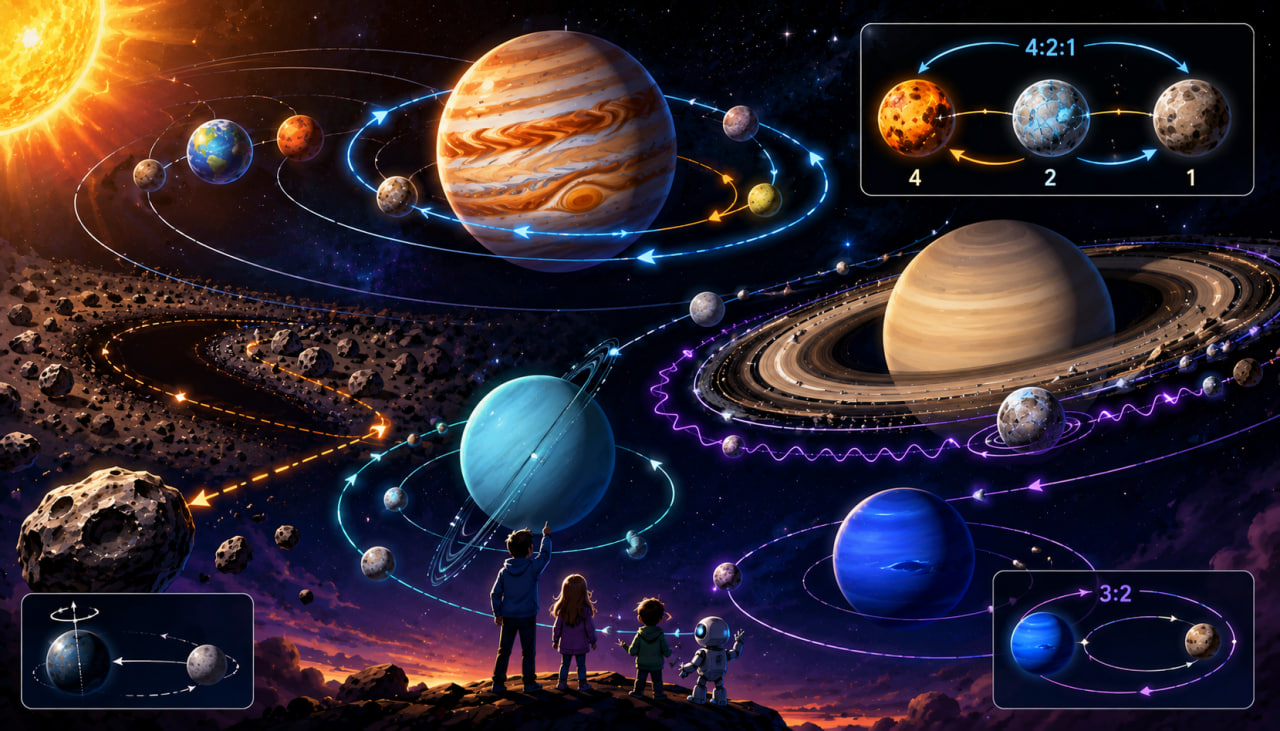
Moons, planets, asteroids, and ring particles do not simply move at random. Many of them are connected by repeating gravitational patterns. When two or more orbiting bodies regularly line up in a predictable way, their gravity can reinforce small effects over time. This is called orbital resonance.
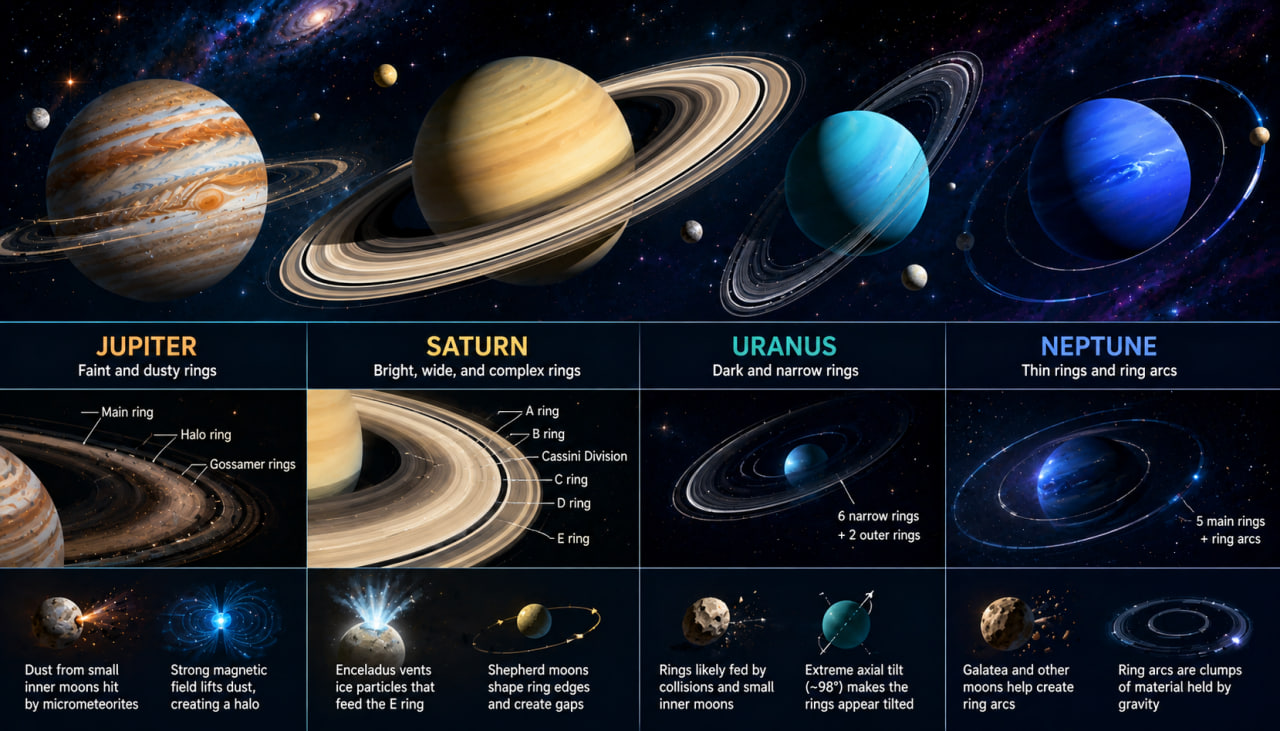
When people imagine planetary rings, Saturn usually steals the spotlight. Its bright, wide rings are one of the most recognizable sights in astronomy. But Saturn is not alone.
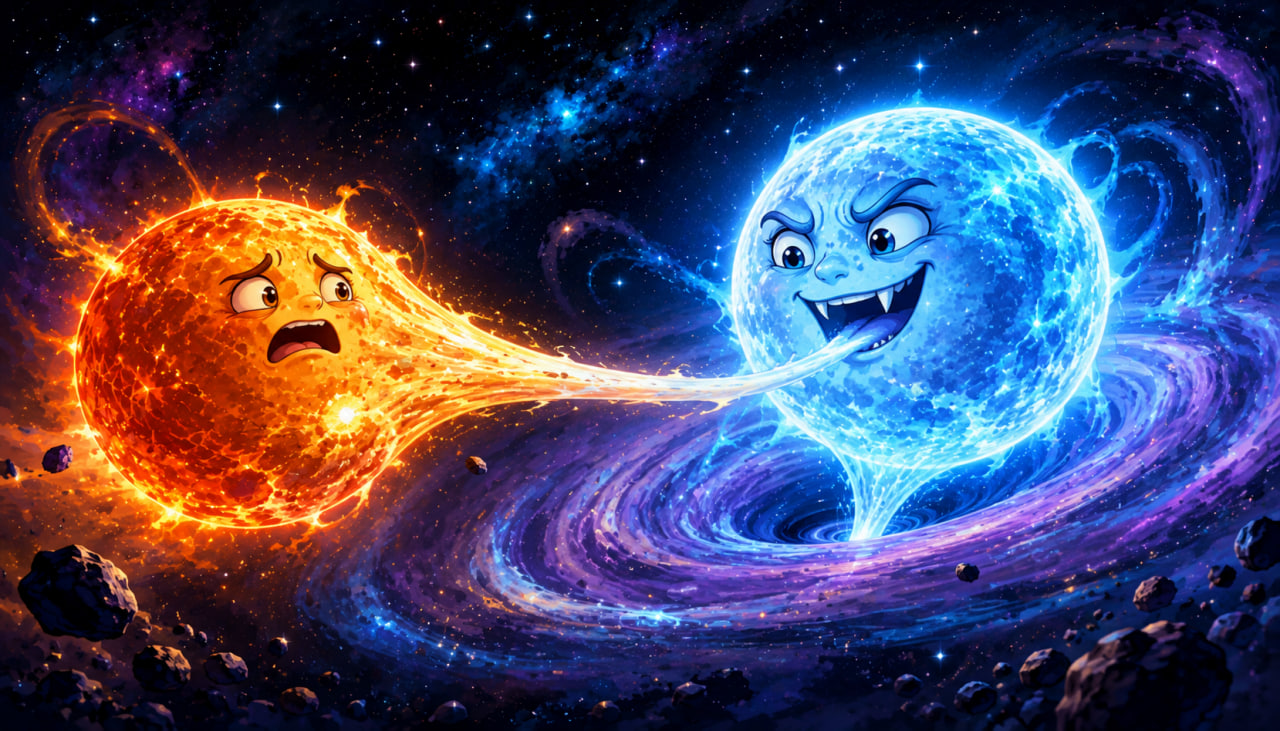
Many stars live in pairs, locked together by gravity. When two stars orbit close enough, one can begin pulling gas from the other. This dramatic process has inspired one of astronomy’s most memorable nicknames: vampire stars.