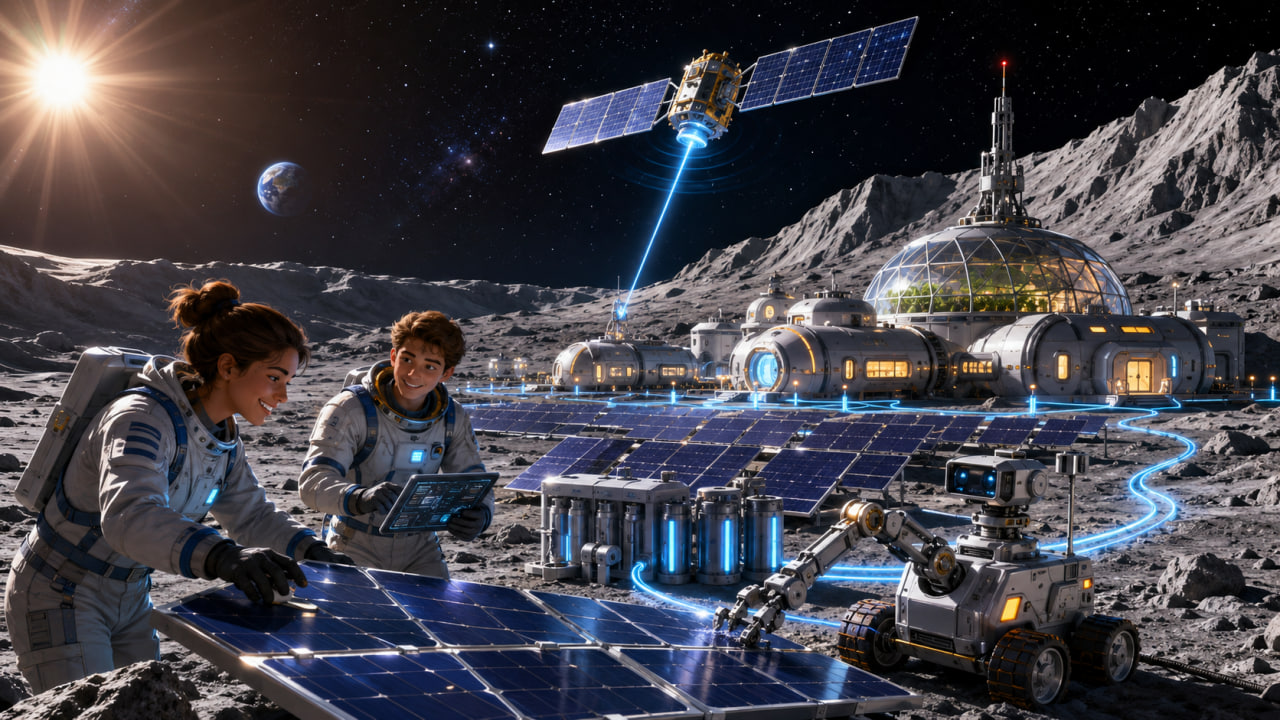
Solar energy is the foundation of modern space exploration. It powers communications satellites, scientific observatories, navigation systems, robotic spacecraft, and the International Space Station. Future lunar settlements may also depend heavily on sunlight for electricity, life support, communications, construction, and resource extraction.
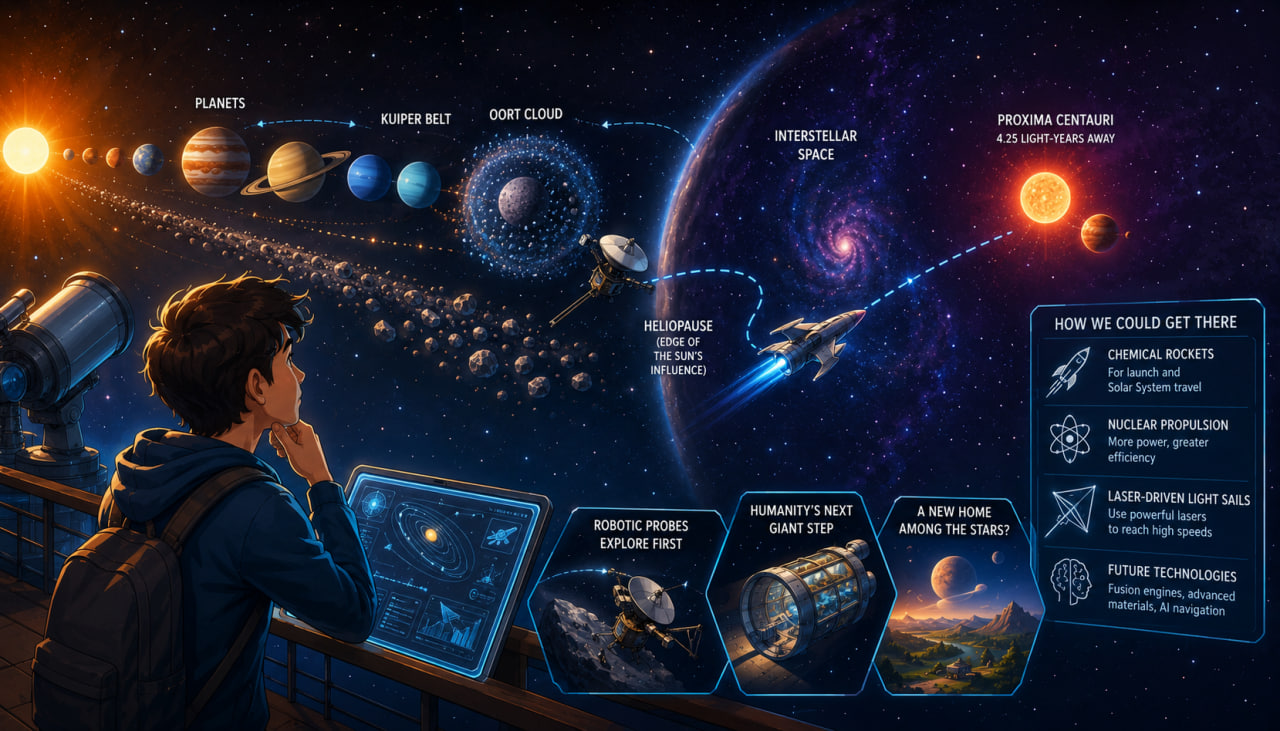
The Solar System does not end immediately after Neptune or Pluto. Beyond the planets lies an enormous sequence of increasingly distant regions: the Kuiper Belt, the scattered disc, the heliopause, the Oort Cloud, and finally the space between neighboring stars.
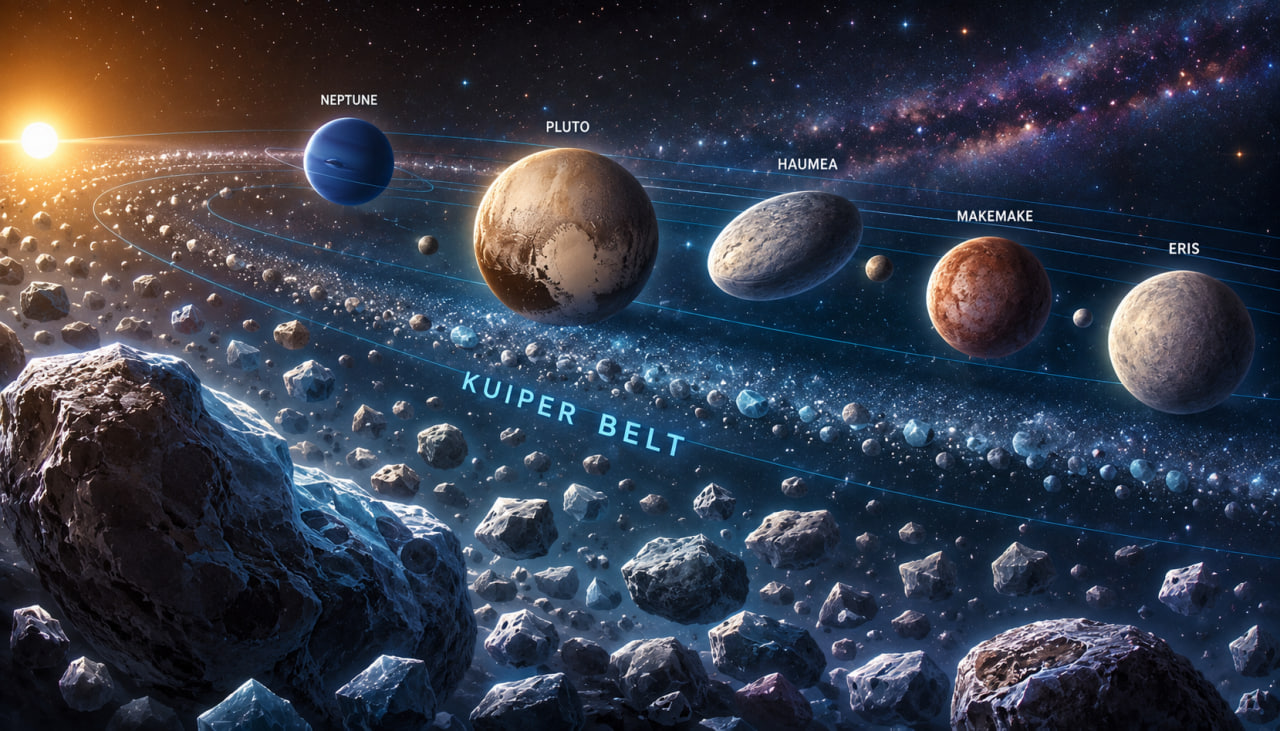
Far beyond the familiar planets lies a vast region filled with frozen worlds, dwarf planets, and ancient remnants of the early Solar System. This distant zone is known as the Kuiper Belt.
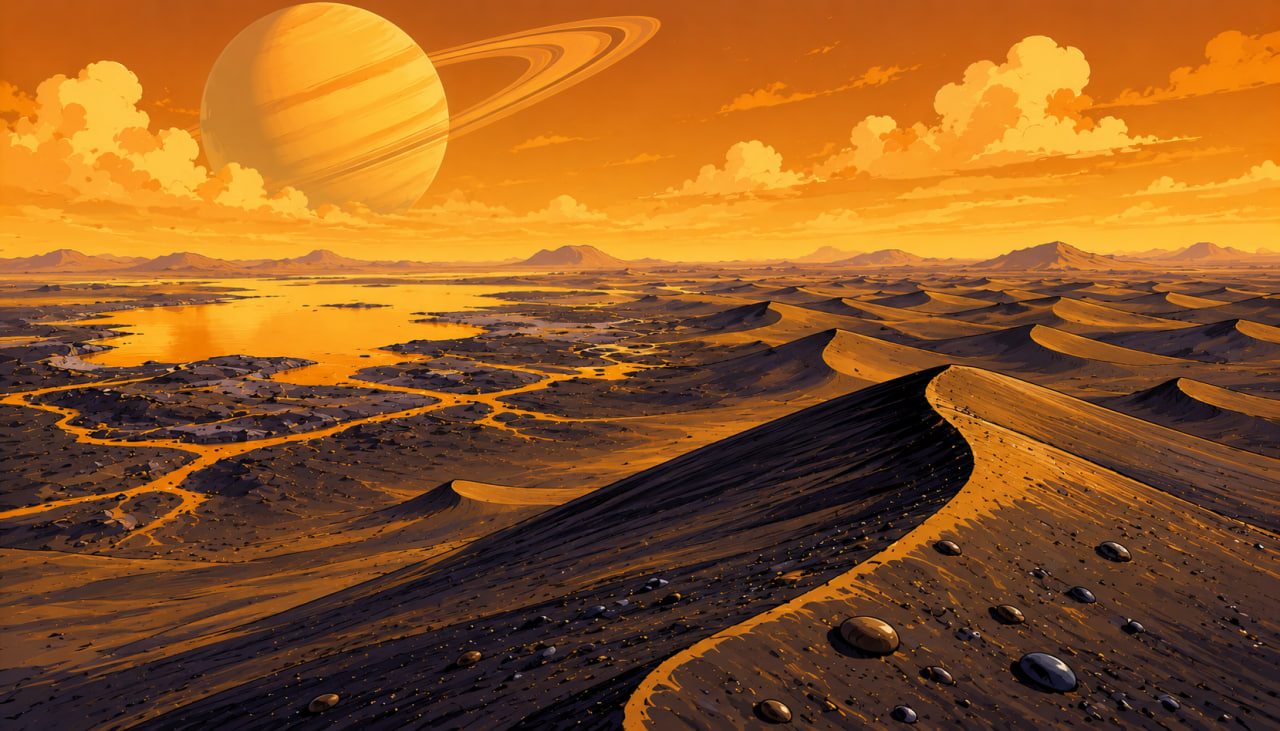
Among all the worlds in our Solar System, Titan, Saturn's largest moon, stands out as one of the most extraordinary. Hidden beneath a dense golden-orange atmosphere lies a landscape unlike anything on Earth. Instead of deserts made of quartz, Titan is covered by enormous fields of dark dunes composed of complex organic particles. Instead of rainwater, methane and ethane fall from the sky, carving rivers and filling lakes across its frozen surface. Discovered in detail by NASA and ESA's Cassini-Huygens mission, Titan has transformed scientists' understanding of planetary geology and chemistry. Its vast dune fields, stretching for thousands of kilometers beneath a hazy methane atmosphere, provide a fascinating glimpse into an alien world where familiar geological processes occur using completely different materials.
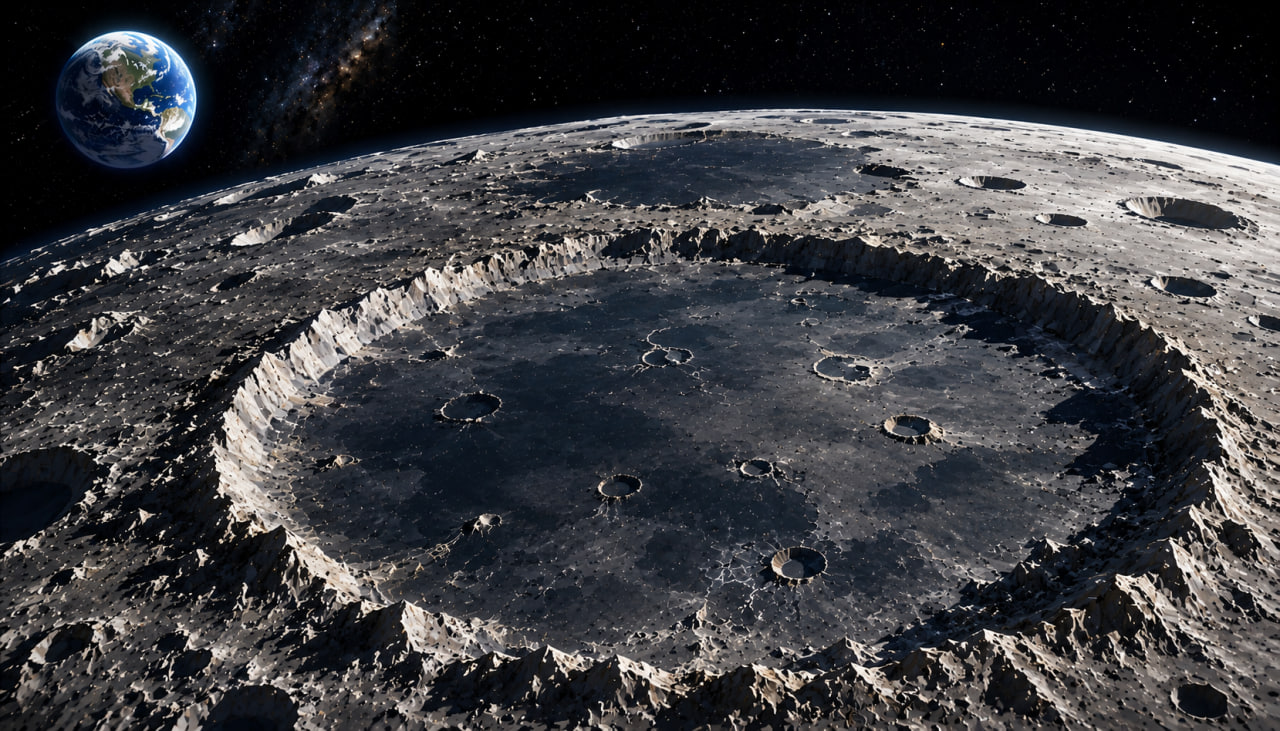
The Moon's surface is covered with countless craters, mountains, and vast dark plains that have fascinated astronomers for centuries. Among its most striking features is Mare Imbrium, or the Sea of Rains, one of the largest and most scientifically important impact basins in the Solar System. Despite its name, Mare Imbrium contains no water. Instead, it is a massive scar left by an ancient asteroid collision that forever changed the Moon's appearance. Studying Mare Imbrium allows scientists to reconstruct the violent history of the early Solar System, when enormous impacts were common and helped shape the planets and their moons. Today, it serves as a natural laboratory for planetary geology and provides valuable clues about the Moon's internal structure and evolution.
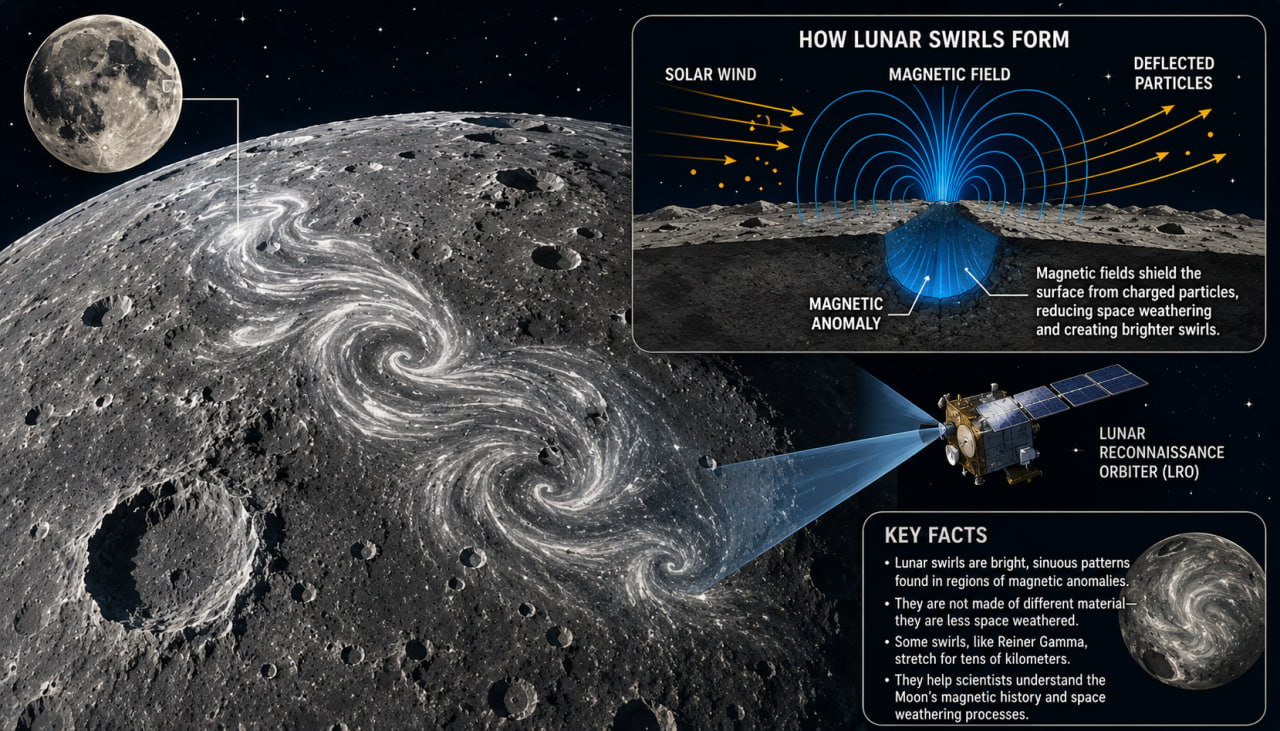
For centuries, the Moon appeared to be a simple gray world covered with craters and volcanic plains. However, modern spacecraft have revealed that its surface is far more complex than early astronomers imagined. Among the Moon's most fascinating features are lunar swirls—bright, sinuous markings that stretch across the surface in elegant looping patterns unlike any other known geological formation. These enigmatic structures puzzled scientists for decades because they do not correspond to mountains, valleys, lava flows, or impact craters. Instead, research has shown that lunar swirls are closely associated with localized magnetic fields, making them one of the most intriguing examples of planetary physics in the Solar System. Studying lunar swirls not only helps scientists understand the Moon's history but also provides valuable insights into space weathering, planetary magnetism, and the interaction between the solar wind and airless worlds.
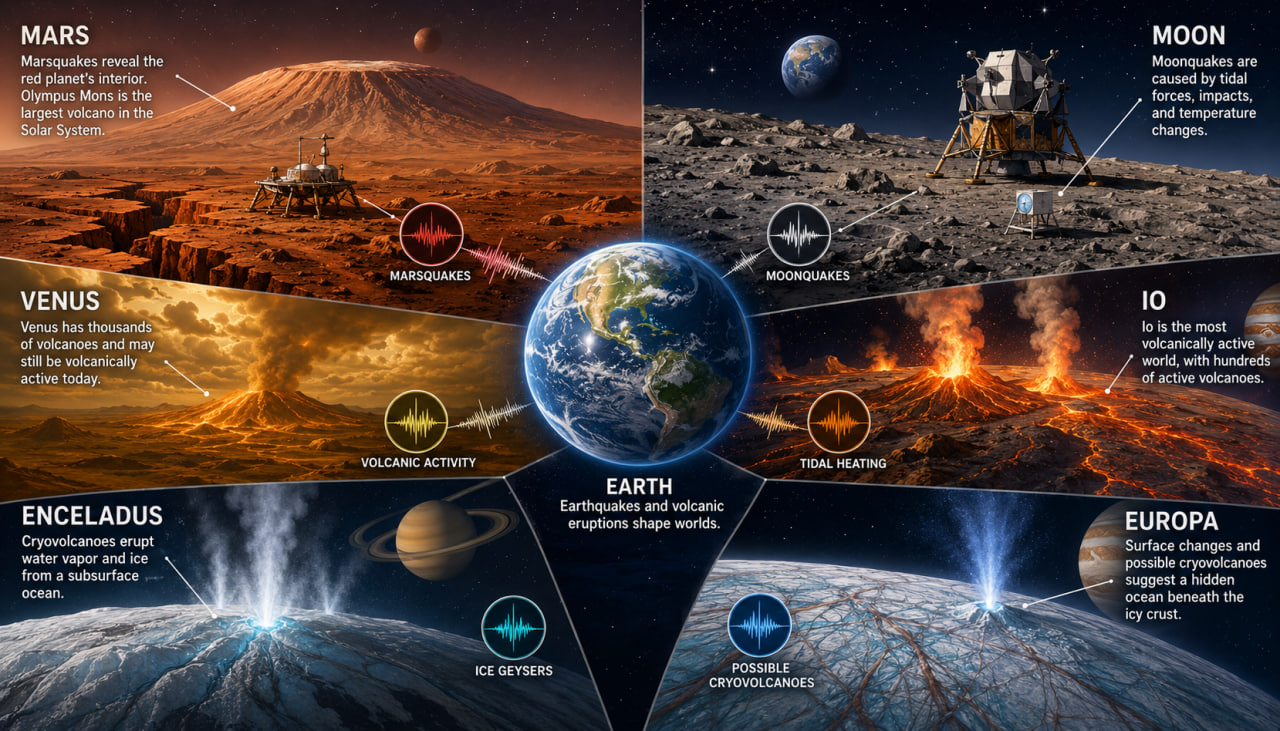
When people think about earthquakes and volcanoes, they usually imagine dramatic events on Earth. However, our planet is not the only world with geological activity. Modern space missions have revealed that earthquakes, volcanic eruptions, and tectonic processes occur—or have occurred—on several other planets and moons throughout the Solar System. These discoveries have transformed planetary science. What once seemed like lifeless rocky worlds are now understood as dynamic environments shaped by powerful internal forces. By studying extraterrestrial geology, scientists gain valuable insights into planetary evolution, interior structure, and even the potential for life beyond Earth. The search for "alien earthquakes" and volcanic activity has become one of the most exciting areas of modern space exploration.
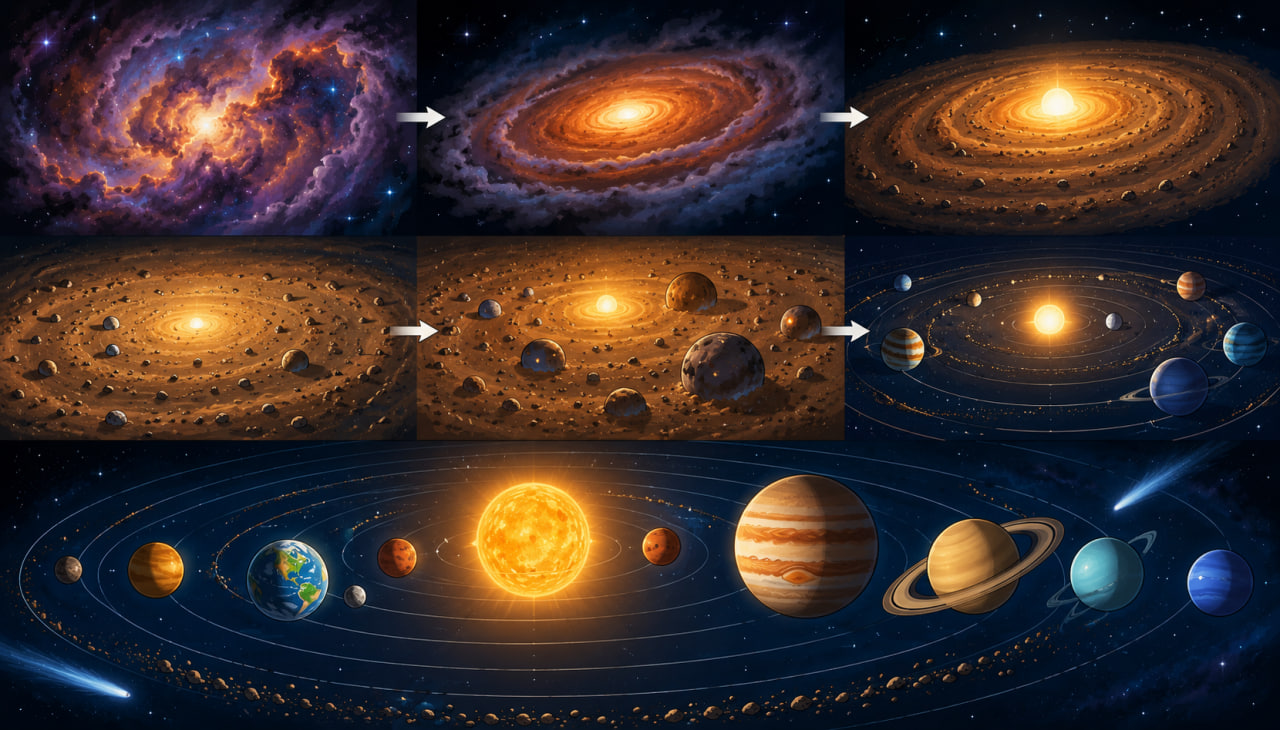
The Solar System may look stable and peaceful today, but its origin was violent, chaotic, and filled with cosmic collisions. Billions of years ago, before Earth, the Sun, or the planets existed, our region of space contained only: Gas Dust Heavy elements from ancient stars Over time, gravity transformed this enormous cloud into: The Sun Eight planets Moons Asteroids Comets Entire planetary systems Understanding how the Solar System formed helps scientists answer major questions about: Earth’s origin Planet formation The possibility of alien worlds The history of life itself Modern astronomy, physics, and space exploration continue uncovering clues about the incredible events that shaped our cosmic neighborhood roughly: 4.6 billion years ago. The story of the Solar System is ultimately the story of how chaos in deep space became an organized planetary system capable of supporting life.
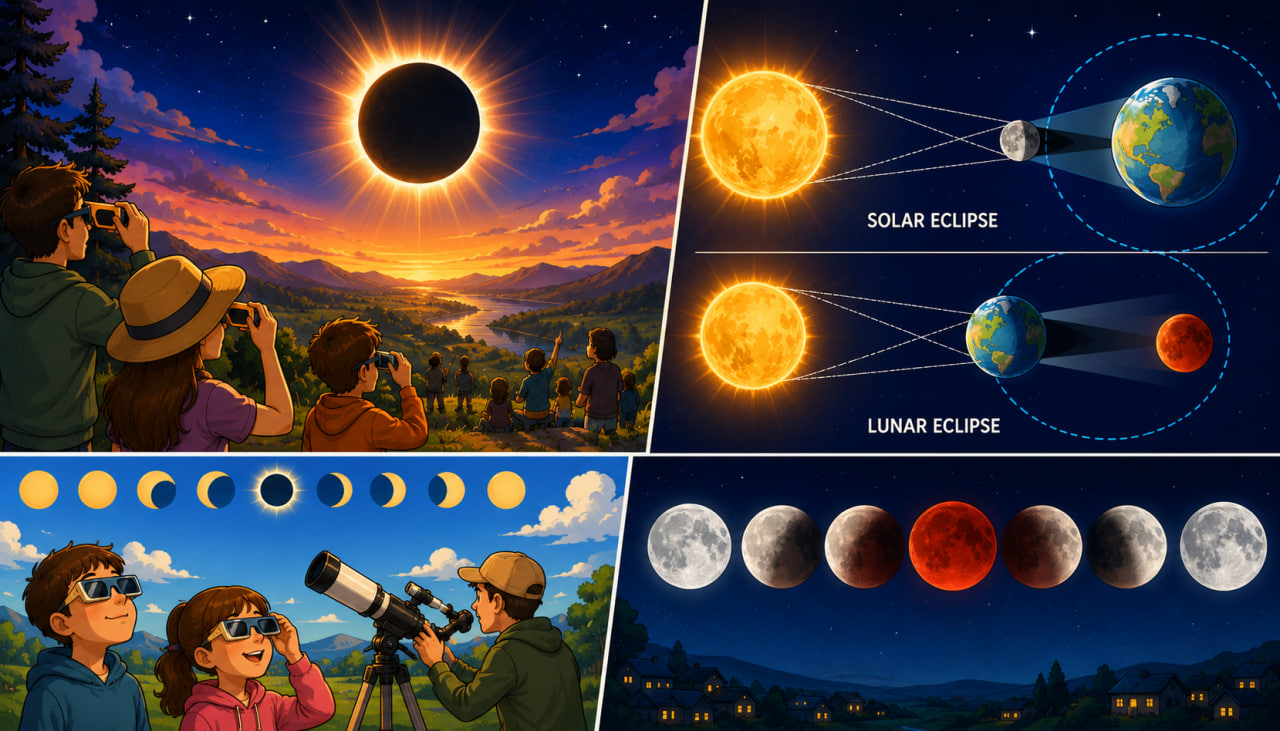
Few astronomical events capture human attention as powerfully as eclipses. For thousands of years, people viewed eclipses with fear, wonder, and curiosity. Ancient civilizations often considered them supernatural signs, while modern science explains them as predictable alignments between celestial bodies. Despite their scientific explanation, eclipses remain among the most breathtaking natural phenomena visible from Earth. Whether it is the dramatic darkening of the sky during a solar eclipse or the mysterious reddish glow of a lunar eclipse, these events remind humanity of the immense cosmic mechanics governing our Solar System. Today, eclipses continue to fascinate astronomers, photographers, travelers, and millions of ordinary observers around the world.
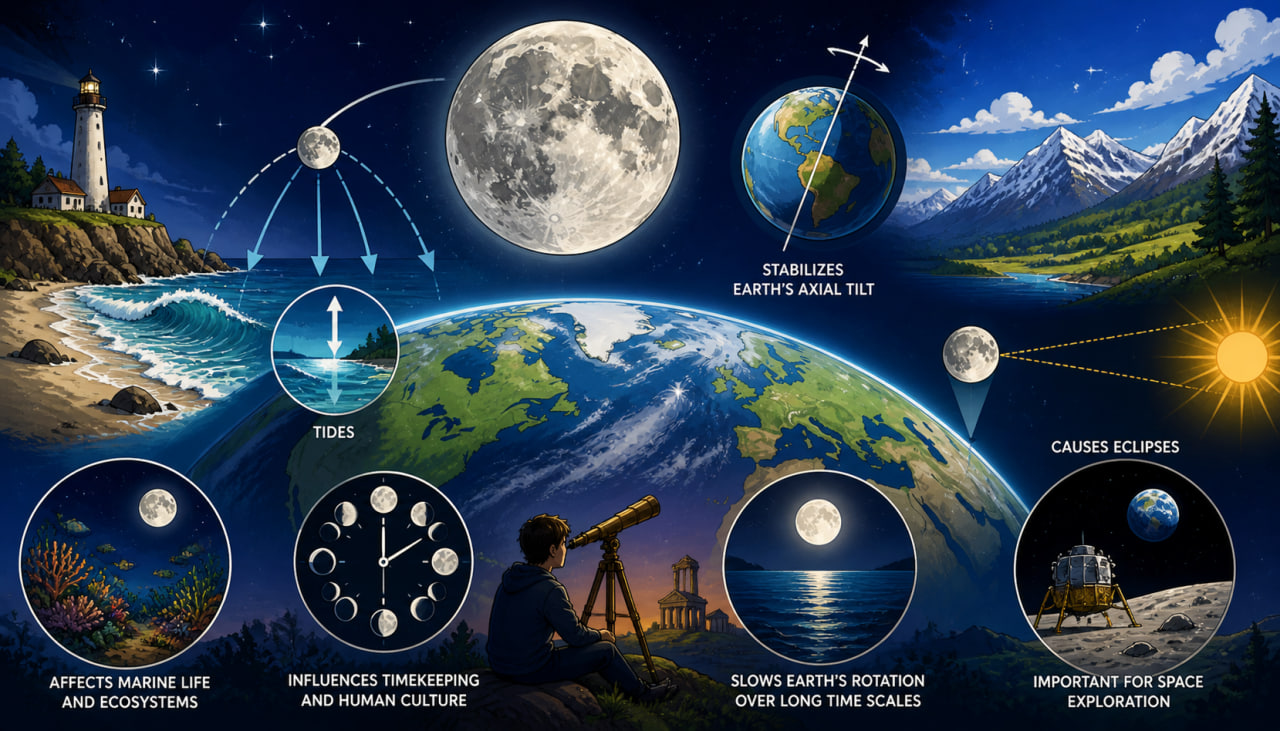
Earth’s natural satellite, the Moon, has fascinated humanity for thousands of years. Visible almost every night, it affects not only the beauty of the night sky, but also many important processes on our planet. Although the Moon appears calm and distant, its gravitational influence shapes Earth’s oceans, climate stability, biological rhythms, and even the long-term evolution of life itself. Without the Moon, Earth would likely be a very different world. Modern astronomy and planetary science show that this satellite plays a much greater role than many people realize.