Universe

Asteroid Mining: Science Fiction or the New Gold Rush?
Space Stories Cosmic Innovations Universe

Asteroid Mining: Science Fiction or the New Gold Rush?

The idea of extracting valuable resources from asteroids once belonged exclusively to science fiction, but in recent years it has become a serious topic of scientific and economic discussion. Rapid progress in space technology, robotics, and automation has transformed asteroid mining from a distant dream into a long-term strategic possibility. Asteroids contain vast amounts of metals, water, and rare elements that are increasingly scarce or expensive to extract on Earth. As global demand for resources grows, interest in off-world mining continues to intensify. The central question is no longer whether asteroids contain valuable materials, but whether humanity can realistically access and use them.

Artificial Gravity: How It Works and Why Humanity Needs It
Space Stories Cosmic Innovations Universe

Artificial Gravity: How It Works and Why Humanity Needs It

Artificial gravity is a concept designed to solve one of the most serious challenges of long-term space travel: the absence of natural gravity. While weightlessness may look fascinating, prolonged exposure to microgravity has significant negative effects on the human body, including muscle loss, bone weakening, and cardiovascular changes. To support long-duration missions, space stations, and future colonies, scientists and engineers have explored ways to simulate gravity using physical principles rather than massive planets. Artificial gravity is not science fiction—it is a scientifically grounded idea with real experimental foundations. Understanding how it works reveals how humans may one day live comfortably beyond Earth.

Strange Matter: What Is It and Does It Exist in Neutron Stars?
Space Stories Universe New Discoveries

Strange Matter: What Is It and Does It Exist in Neutron Stars?

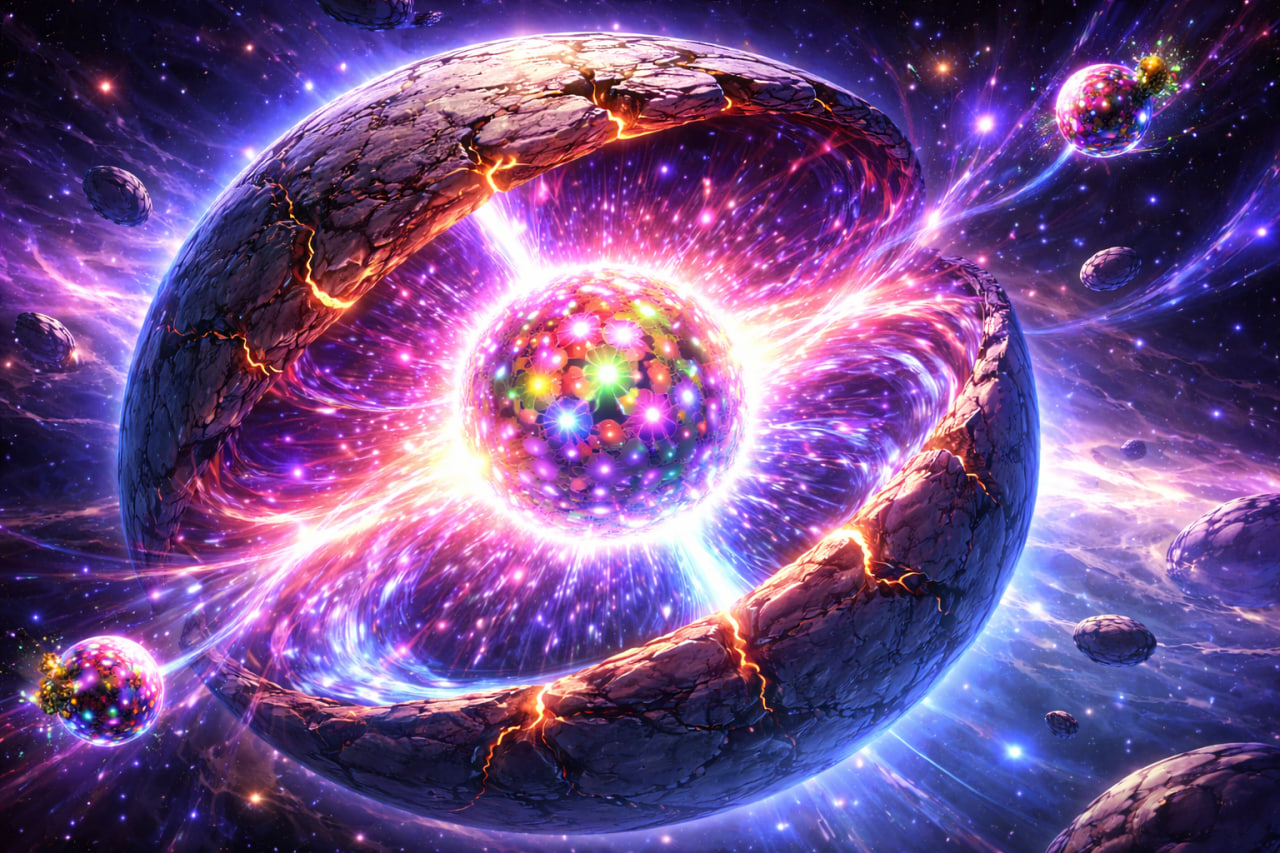
Strange matter is one of the most intriguing and speculative concepts in modern astrophysics and particle physics. It refers to a hypothetical form of ultra-dense matter that may exist under extreme pressures, far beyond anything achievable in laboratories on Earth. Scientists became interested in strange matter while studying the interiors of neutron stars, where gravity compresses matter to densities that challenge our understanding of physics. Under such conditions, familiar particles may break down into more exotic states, potentially forming entirely new phases of matter. If strange matter truly exists, it could fundamentally reshape how we understand neutron stars, cosmic evolution, and the behavior of matter at its most extreme limits.

Pulsars: Cosmic Beacons of the Universe
Space Stories Universe New Discoveries

Pulsars: Cosmic Beacons of the Universe

Pulsars are among the most extraordinary objects in the universe, acting like precise cosmic lighthouses that sweep beams of radiation across space. First discovered in 1967, these rapidly spinning remnants of massive stars challenged scientists’ understanding of matter, gravity, and time itself. What makes pulsars unique is their incredible regularity: some rotate hundreds of times per second, emitting signals so stable they rival atomic clocks. These objects are not only fascinating remnants of stellar death but also powerful tools for studying extreme physics. By observing pulsars, astronomers gain insight into the behavior of matter under conditions that cannot be reproduced on Earth.

Gravitational Lensing: Einstein’s Natural Cosmic Magnifying Glass
Space Stories Universe Science

Gravitational Lensing: Einstein’s Natural Cosmic Magnifying Glass

Gravitational lensing is one of the most elegant and visually striking predictions of modern physics, revealing how massive objects can bend light itself. First described by Albert Einstein in his theory of general relativity, this phenomenon shows that space and time are not rigid frameworks, but flexible structures shaped by mass and energy. When light from a distant galaxy passes near a massive object such as a galaxy cluster or black hole, its path curves, producing distorted, magnified, or even duplicated images. What appears at first glance to be a visual illusion is, in fact, a powerful scientific tool that allows astronomers to study objects far beyond the reach of conventional telescopes. Gravitational lensing has transformed how we explore the deep universe, turning gravity into a natural cosmic telescope.

Can a Black Hole Be Used as a Source of Energy?
Space Stories Universe Be Smart

Can a Black Hole Be Used as a Source of Energy?

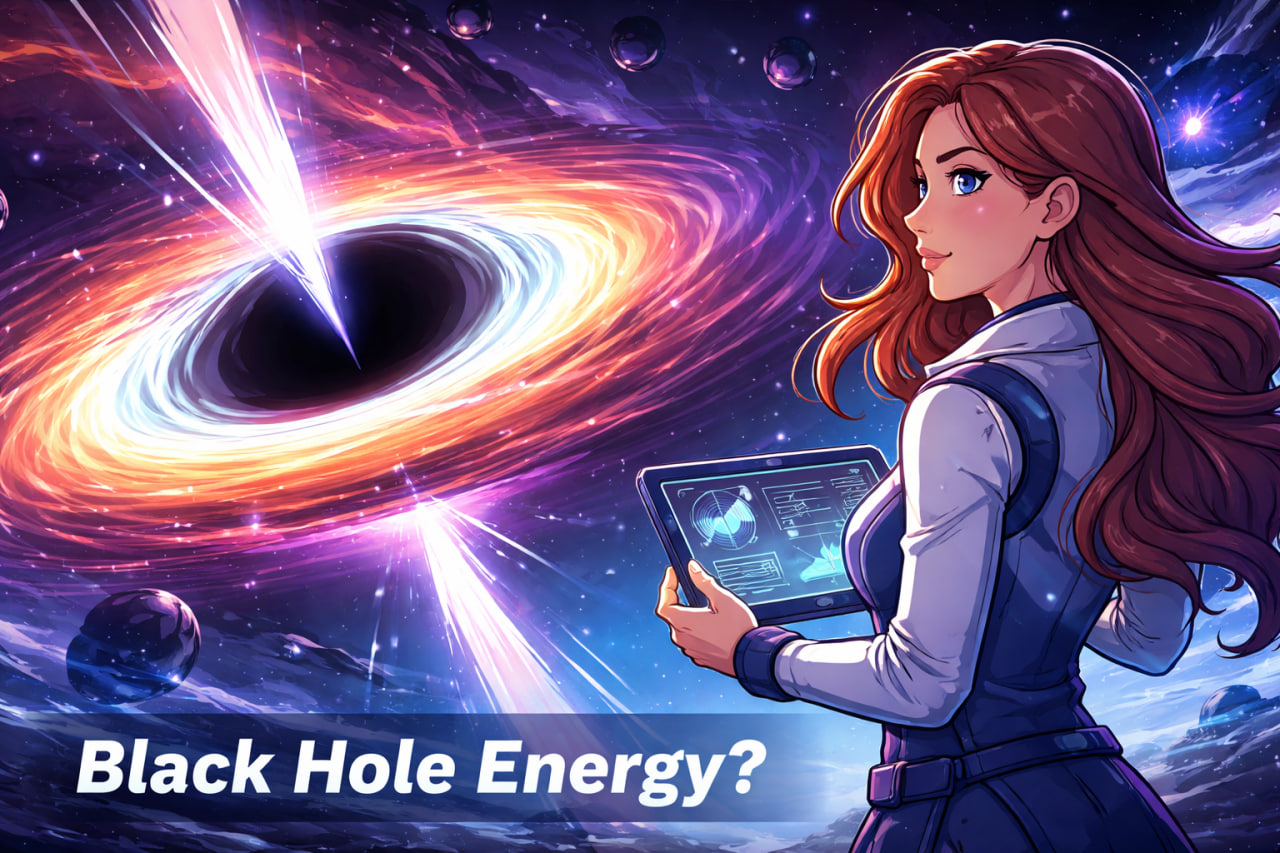
Black holes are often imagined as cosmic destroyers that consume everything around them, but modern physics suggests a far more complex picture. Under certain conditions, black holes may act not only as sinks of matter and energy, but also as potential sources of usable energy. This idea, once purely theoretical, has been explored seriously by physicists studying general relativity, quantum mechanics, and astrophysics. While harvesting energy from a black hole remains far beyond current technological capabilities, the underlying principles reveal fascinating insights into how extreme objects interact with space, time, and energy. Understanding these mechanisms helps scientists test the limits of known physics and imagine future civilizations operating on cosmic scales.

Cosmic Microwave Background: The Baby Picture of the Universe
Space Stories Universe New Discoveries

Cosmic Microwave Background: The Baby Picture of the Universe

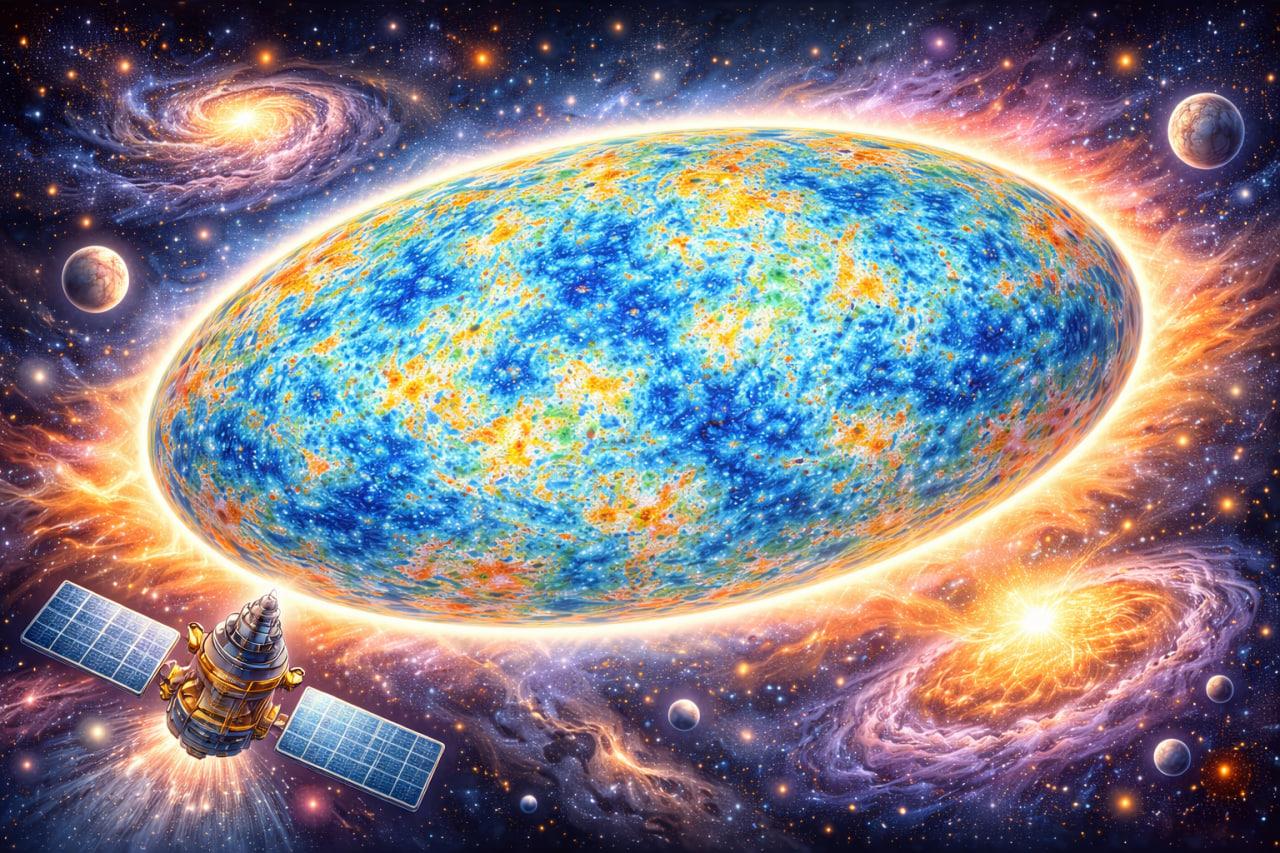
The cosmic microwave background (CMB) is one of the most important discoveries in modern cosmology. It is often described as the “baby photograph” of the Universe because it shows what the cosmos looked like shortly after its birth. This faint radiation fills all of space and comes from a time when the Universe was extremely young, hot, and dense. Although invisible to the naked eye, the CMB carries crucial information about the origin, structure, and evolution of the Universe. By studying it, scientists can look back almost to the moment when the Universe first became transparent.

The Fate of Our Sun: What Science Tells Us
Space Stories Universe Solar System

The Fate of Our Sun: What Science Tells Us

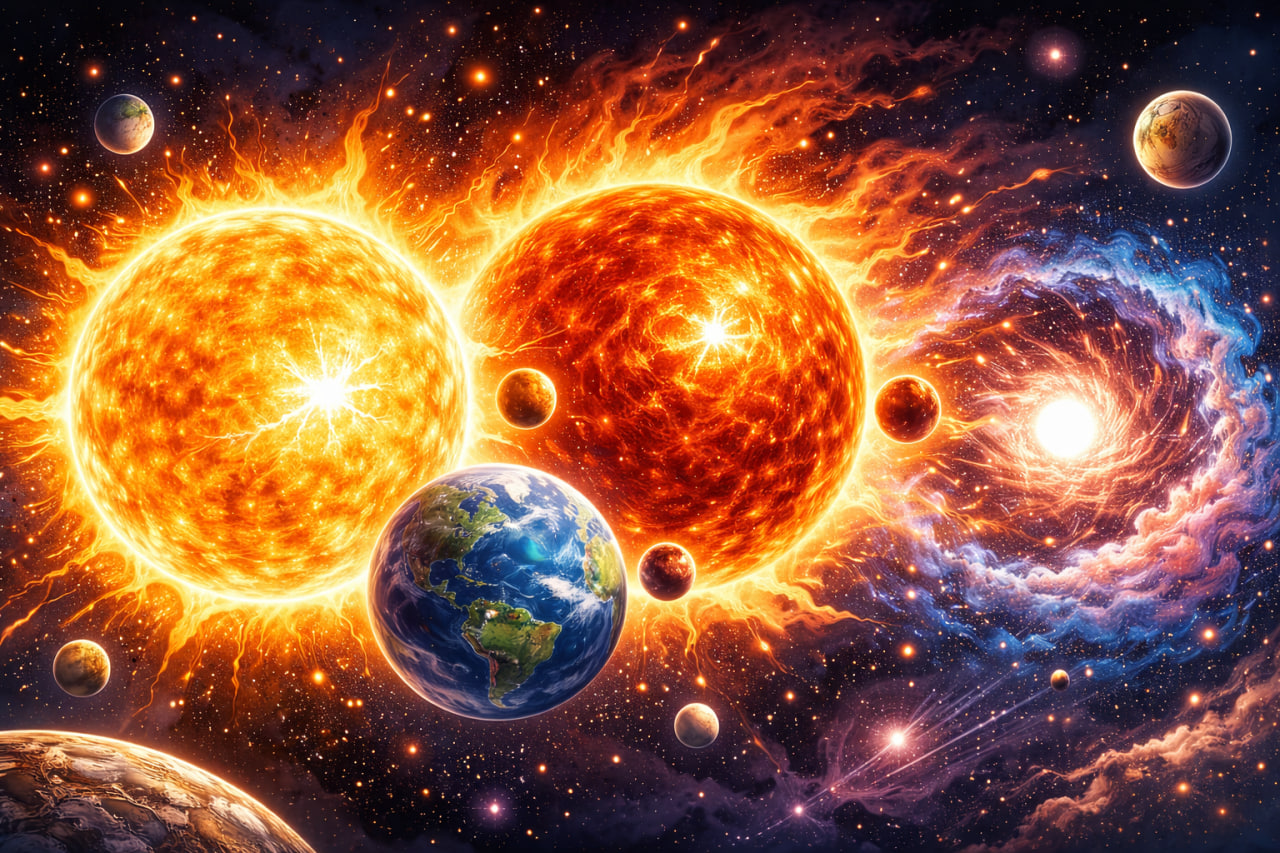
The Sun is the central engine of the Solar System and the primary source of energy for life on Earth. Although it feels permanent and unchanging on a human timescale, the Sun is a dynamic star with a well-defined life cycle. Astronomy allows scientists to understand not only how the Sun works today, but also how it will evolve over billions of years. The fate of the Sun is governed by physical laws that apply to stars across the universe. Studying this future helps place humanity in a broader cosmic context.

What Would Happen If a Neutron Star Passed Near the Solar System?
Space Stories Universe What if?

What Would Happen If a Neutron Star Passed Near the Solar System?

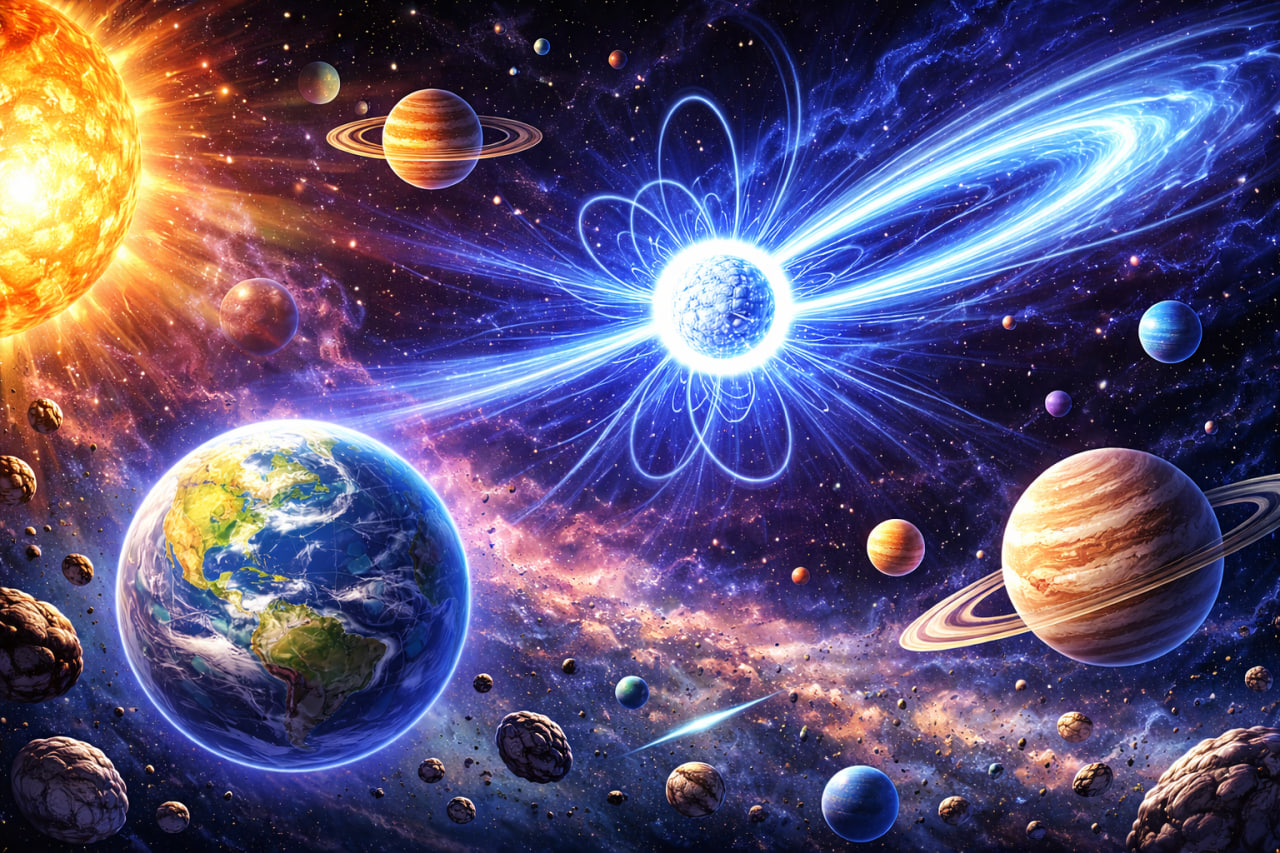
A neutron star passing close to the Solar System would be one of the most extreme astrophysical encounters imaginable. Neutron stars are remnants of massive stars that collapsed after supernova explosions, concentrating enormous mass into an incredibly small volume. Despite their compact size, their gravitational and electromagnetic influence is immense. Such an event is extraordinarily unlikely, but examining it allows scientists to understand how fragile—or resilient—planetary systems are in a dynamic galaxy. This scenario highlights the balance between cosmic forces and the stability of our Solar System.

What Would Happen If a Neutron Star Passed Near the Solar System?
Space Stories Universe What if?

What Would Happen If a Neutron Star Passed Near the Solar System?

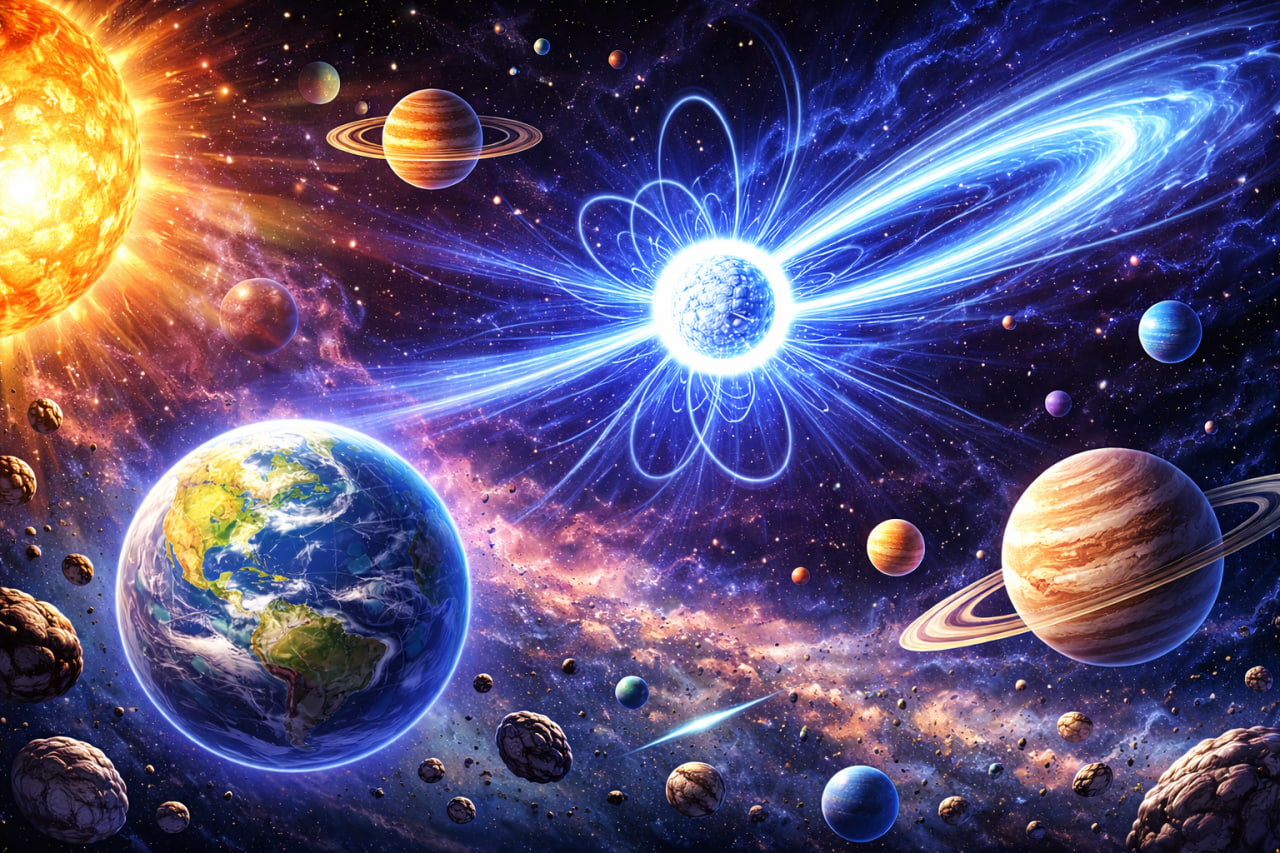
A neutron star passing close to the Solar System would be one of the most extreme astrophysical encounters imaginable. Neutron stars are remnants of massive stars that collapsed after supernova explosions, concentrating enormous mass into an incredibly small volume. Despite their compact size, their gravitational and electromagnetic influence is immense. Such an event is extraordinarily unlikely, but examining it allows scientists to understand how fragile—or resilient—planetary systems are in a dynamic galaxy. This scenario highlights the balance between cosmic forces and the stability of our Solar System.