Universe

Quasars: The Luminous Monsters at the Hearts of Young Galaxies
Space Stories Universe New Discoveries

Quasars: The Luminous Monsters at the Hearts of Young Galaxies

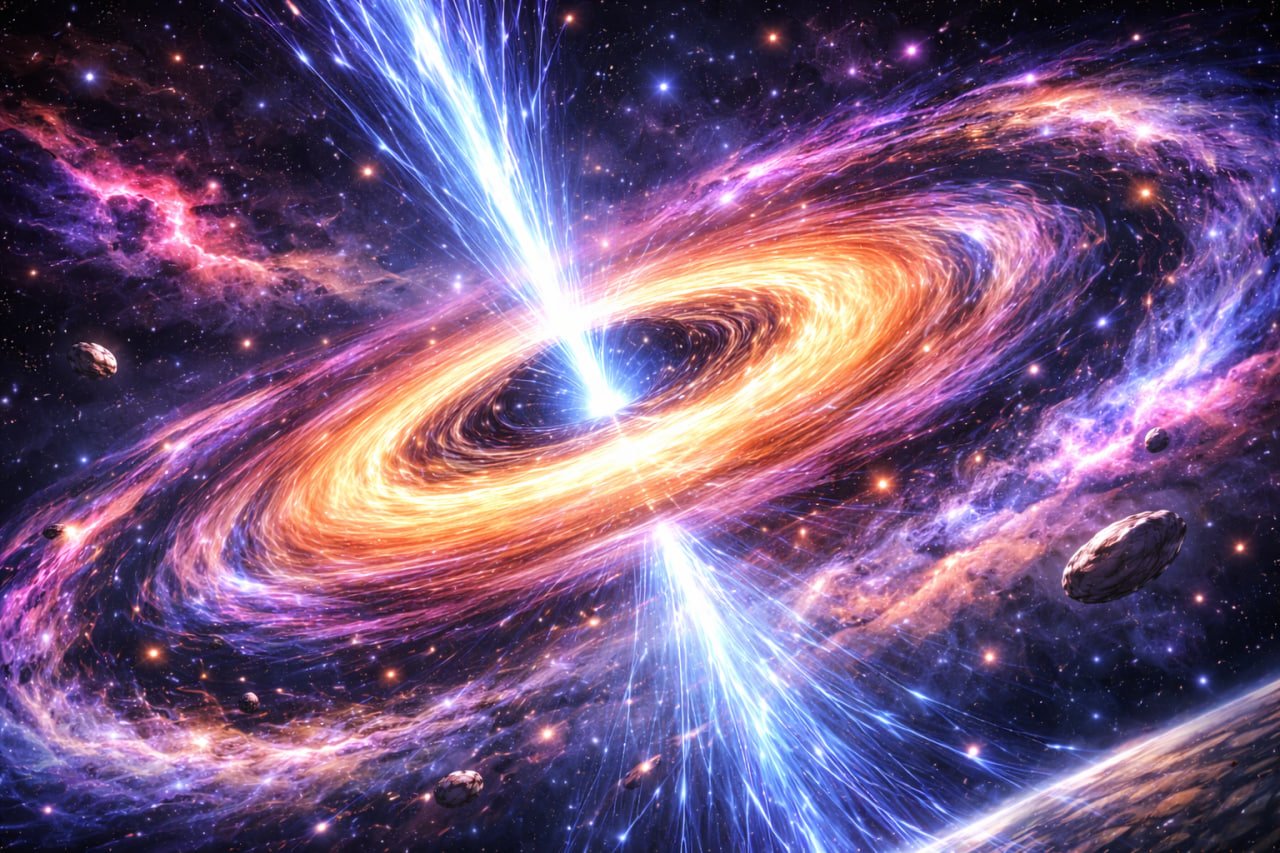
Quasars are among the brightest and most energetic objects ever observed in the universe. Although they appear as point-like sources of light, quasars are not stars but the active cores of distant galaxies powered by supermassive black holes. They shine so intensely that they can outshine all the stars in their host galaxies combined. Most quasars are observed in the early universe, making them key markers of cosmic youth and rapid galactic growth. Studying quasars allows astronomers to look back in time and understand how galaxies and black holes evolved together.
The Black Hole Information Paradox: What Happens to Information?
Space Stories Universe New Discoveries

The Black Hole Information Paradox: What Happens to Information?

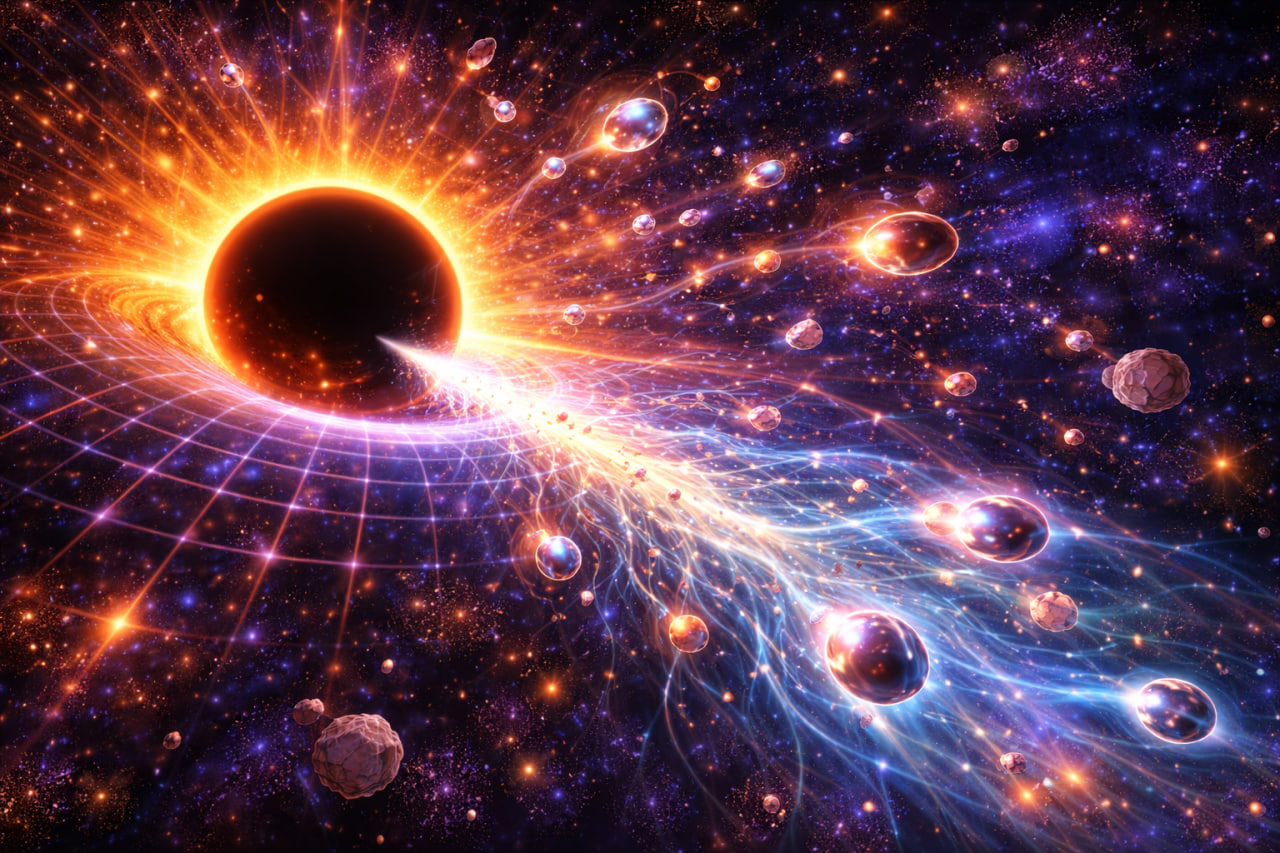
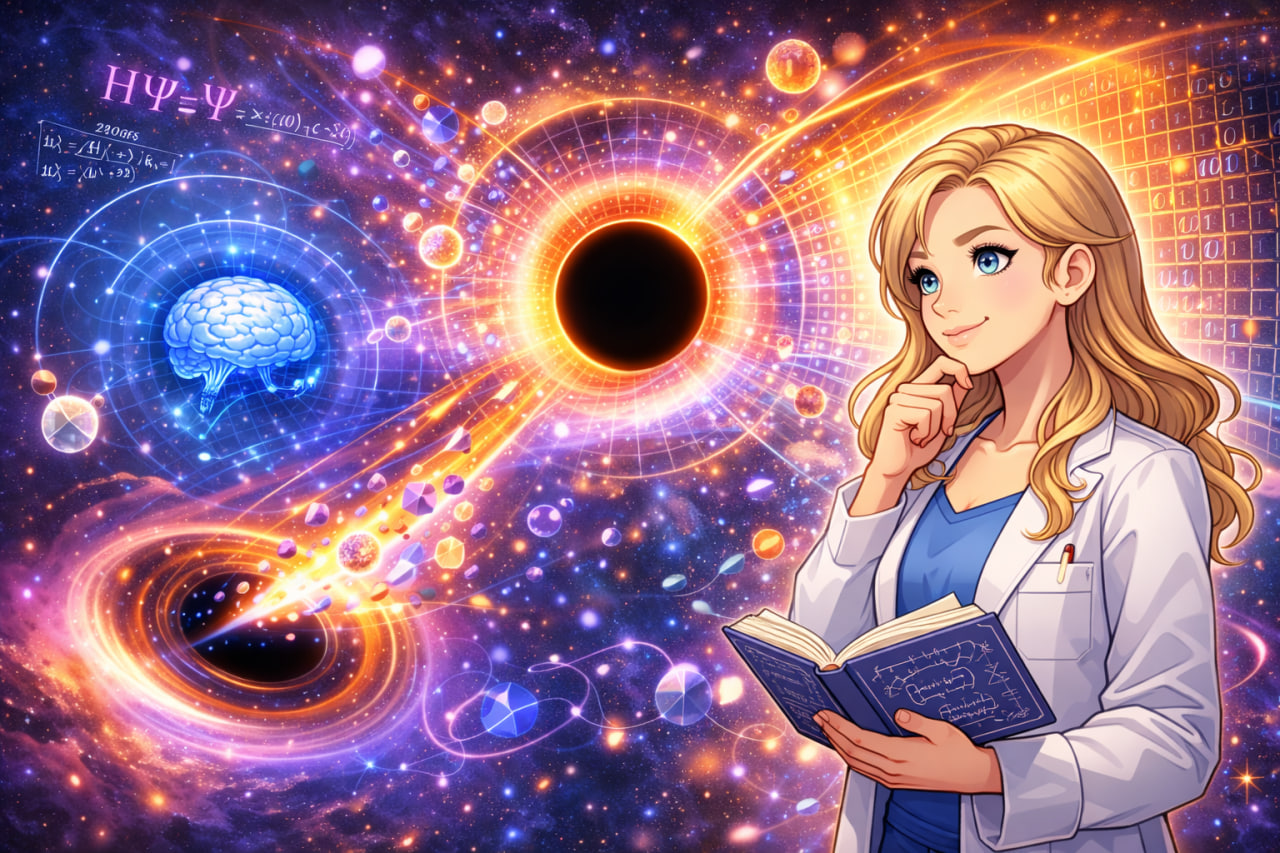
The black hole information paradox is one of the deepest unresolved problems at the intersection of gravity, quantum mechanics, and cosmology. It arises from an apparent contradiction between two foundational principles of modern physics: the laws of quantum mechanics, which state that information is never destroyed, and general relativity, which predicts that anything falling into a black hole may be lost forever. This tension has challenged physicists for decades, forcing a re-examination of how space, time, and information are fundamentally connected. The paradox is not just about black holes—it questions whether the laws of physics are internally consistent.

What Is an Event Horizon?
Space Stories Universe New Discoveries

What Is an Event Horizon?

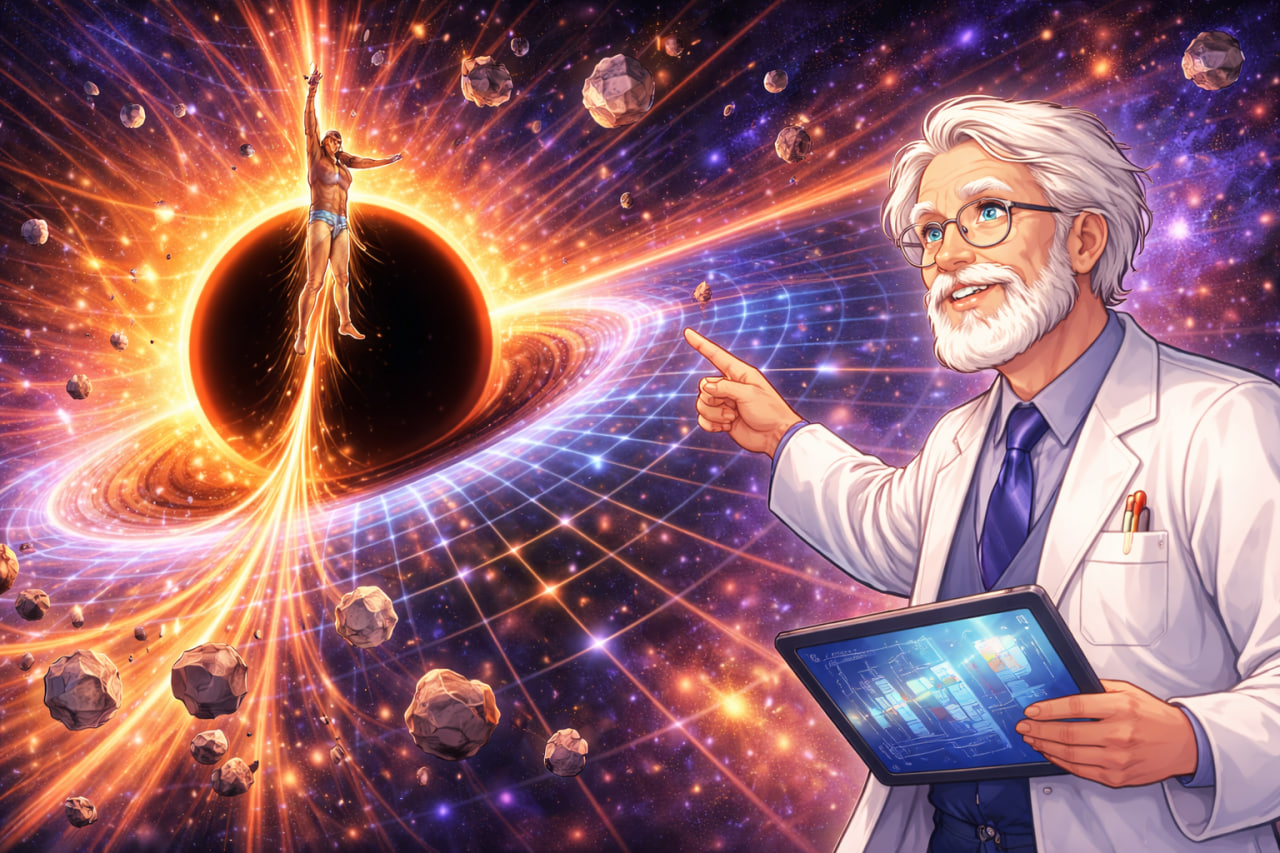
The event horizon is one of the most intriguing and misunderstood concepts in modern physics. It is commonly associated with black holes, yet it is not a physical surface or object in the usual sense. Instead, the event horizon represents a boundary in spacetime, beyond which events can no longer influence an outside observer. Once this boundary is crossed, information cannot escape back to the rest of the universe. Understanding the event horizon is essential for grasping how gravity, space, and time behave under extreme conditions.

Tidal Forces Near a Black Hole: What They Are and Why They Matter
Space Stories Universe Science

Tidal Forces Near a Black Hole: What They Are and Why They Matter

Tidal forces near a black hole are among the most extreme effects predicted by modern physics. They arise not from a mysterious new force, but from the way gravity changes over distance in strongly curved spacetime. While tidal forces exist everywhere in the universe—including on Earth—they become dramatically stronger near compact objects such as black holes. Understanding these forces is essential for explaining phenomena like spaghettification, orbital instability, and the limits of survivability near a black hole. Tidal forces reveal how gravity acts differently across space, not just how strong it is at a single point.

Do We Know What Happens Inside a Black Hole — and Why Not?
Space Stories Universe New Discoveries

Do We Know What Happens Inside a Black Hole — and Why Not?

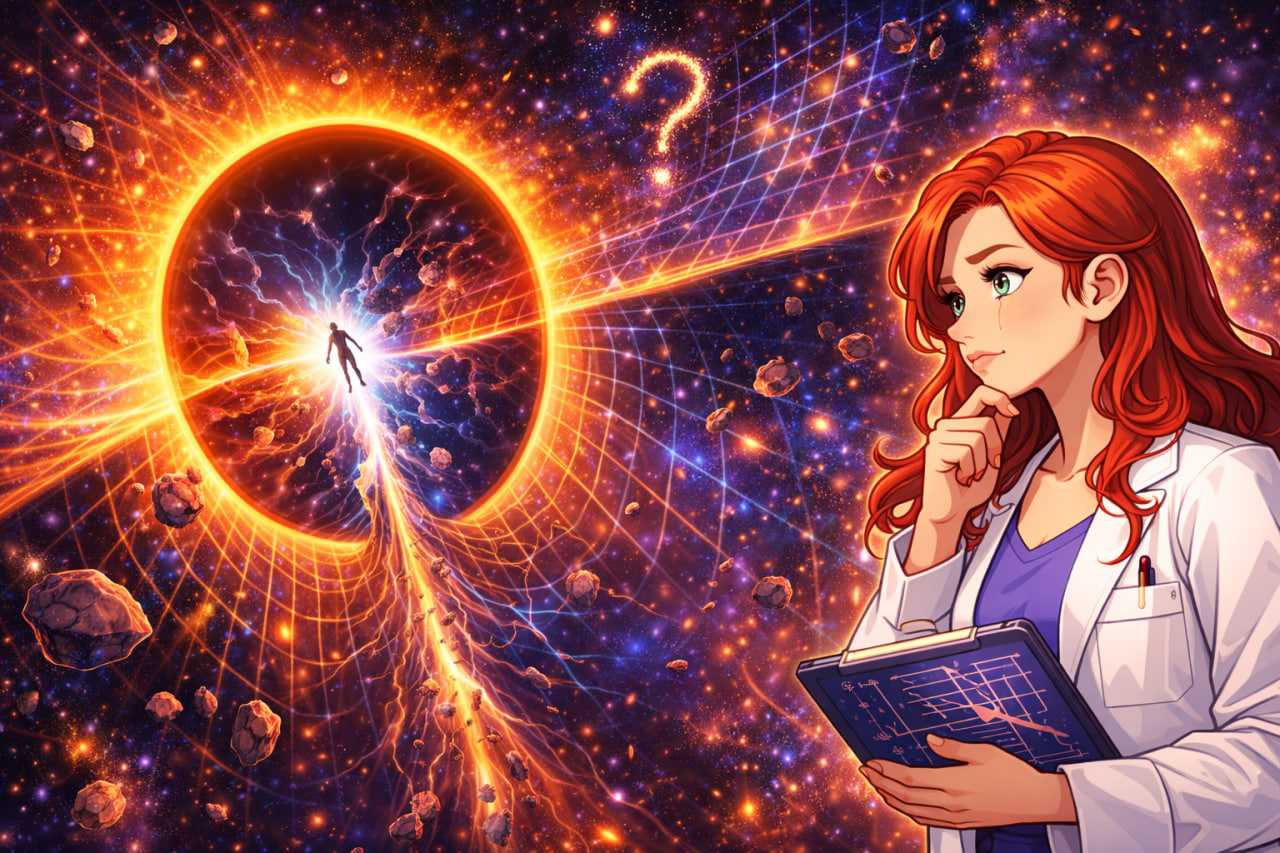
Black holes are among the most extreme objects in the universe, yet what happens inside them remains one of the greatest unanswered questions in physics. While modern science can describe black holes with remarkable precision from the outside, their interiors lie beyond direct observation and experimental testing. This limitation is not due to technological weakness alone, but to the fundamental structure of spacetime itself. The question is therefore not only what happens inside a black hole, but also why physics struggles to answer it. Understanding this distinction is crucial for separating knowledge from speculation.

Gravity and Quantum Gravity: Where Classical Physics Meets Its Limits
Space Stories Universe Science

Gravity and Quantum Gravity: Where Classical Physics Meets Its Limits

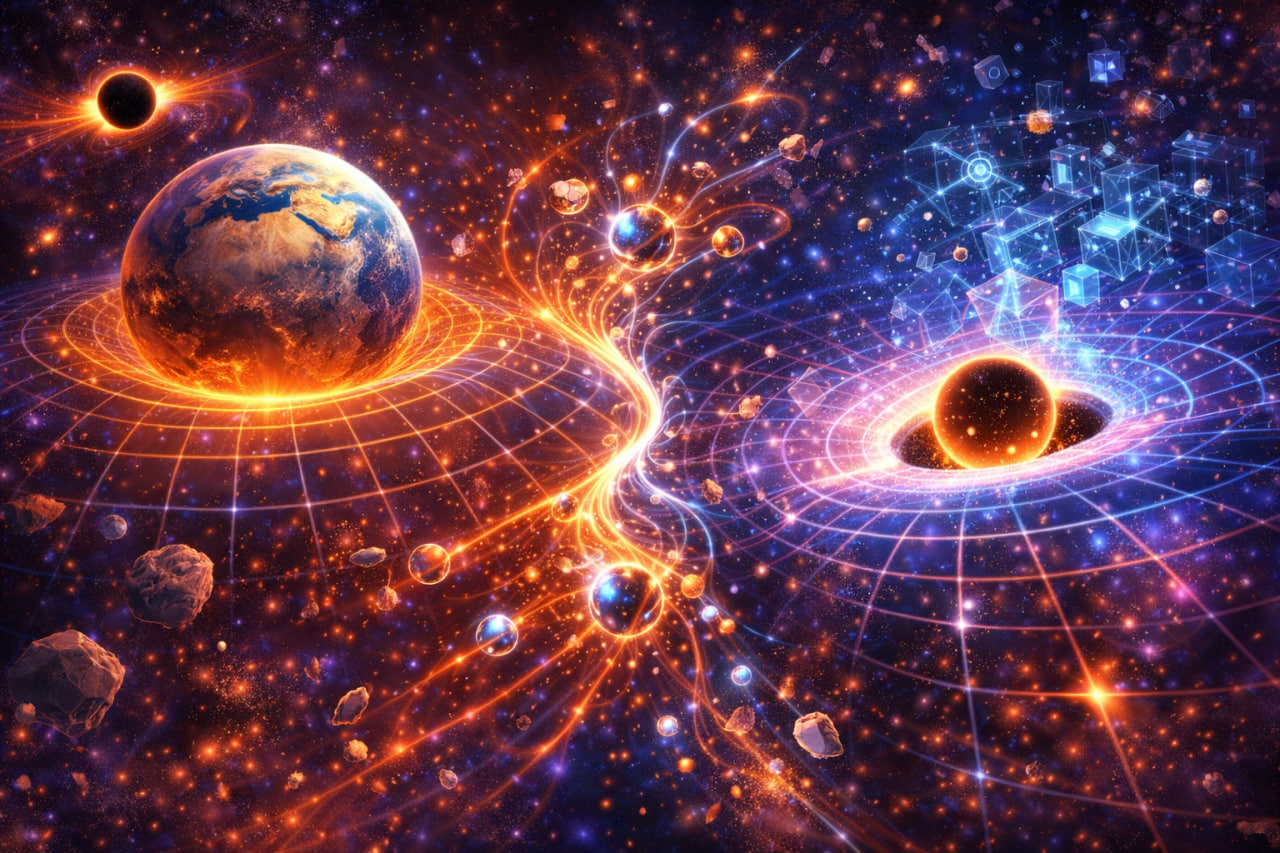
Gravity is the most familiar of the fundamental forces, shaping everything from falling objects to the motion of galaxies. At everyday and astronomical scales, it is described with extraordinary accuracy by classical physics. Yet when gravity is examined at extremely small distances or extreme energies, the classical description breaks down. This mismatch reveals a deep conflict between gravity and quantum mechanics. Quantum gravity is the name given to the unfinished effort to resolve this conflict and describe gravity within a quantum framework.

Neutron Star Mergers: The Cosmic Factories of Gold and Platinum
Space Stories Universe Be Smart

Neutron Star Mergers: The Cosmic Factories of Gold and Platinum

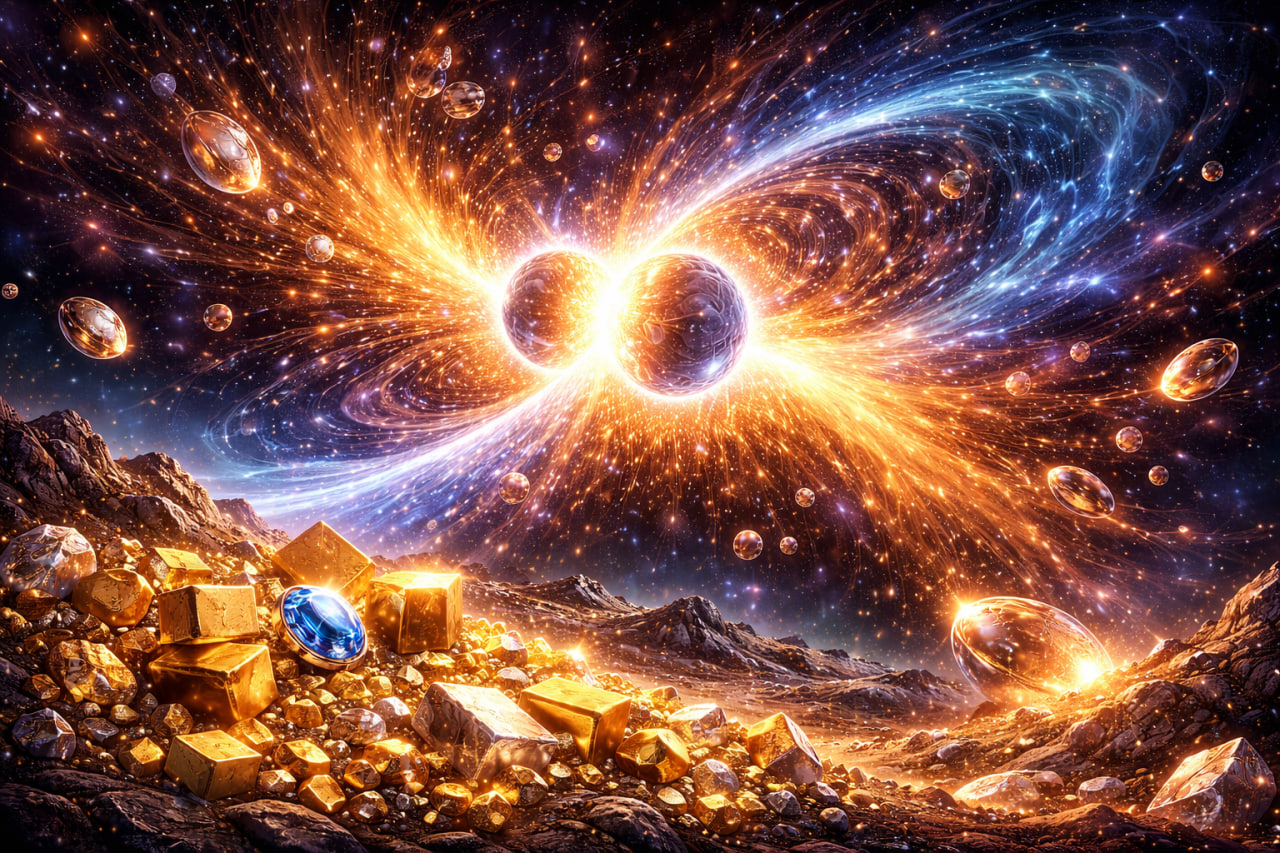
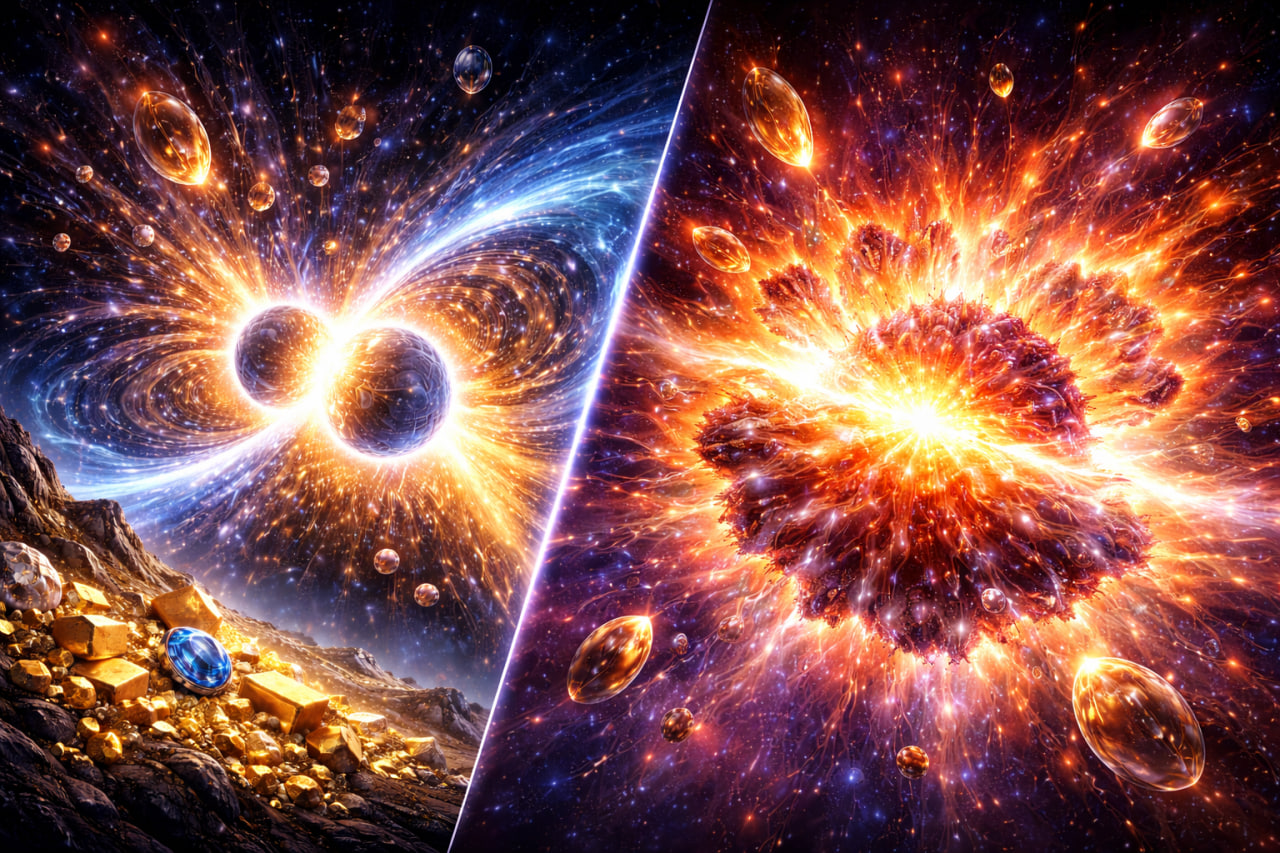
For much of the twentieth century, the origin of the heaviest elements in the universe remained an open question. While stars are known to forge elements like carbon and iron, they cannot easily explain the existence of large quantities of gold, platinum, and other heavy metals. The solution emerged only recently with the observation of neutron star mergers—violent cosmic collisions that create conditions unlike anything else in the universe. These rare events act as natural element factories, producing and dispersing heavy elements across space. Understanding neutron star mergers has fundamentally changed how science explains the chemical richness of the cosmos.

Hawking Radiation: How Black Holes Slowly Evaporate
Space Stories Universe New Discoveries

Hawking Radiation: How Black Holes Slowly Evaporate

For a long time, black holes were thought to be perfect cosmic traps—objects from which nothing could ever escape. This view changed in the 1970s when physicist Stephen Hawking showed that quantum effects alter this picture in a subtle but profound way. According to his work, black holes are not completely black: they emit a faint form of radiation and gradually lose mass over time. This process, now known as Hawking radiation, links gravity, quantum mechanics, and thermodynamics in a single framework. Although extremely weak for astrophysical black holes, the concept has deep implications for our understanding of the universe.

Kilonova and Supernova: Two Different Cosmic Explosions
Space Stories Universe Star Wars

Kilonova and Supernova: Two Different Cosmic Explosions

Explosive events play a central role in shaping the universe, redistributing matter and energy across galaxies. Among the most powerful of these events are supernovae and kilonovae, which are often confused due to their dramatic nature and similar names. Despite superficial similarities, they arise from very different physical processes and have distinct consequences for cosmic evolution. Understanding the differences between kilonovae and supernovae helps clarify how stars die, how elements are created, and how modern astronomy observes the violent side of the cosmos.

Black Holes: What Science Knows Today and What It Still Hypothesizes
Space Stories Universe

Black Holes: What Science Knows Today and What It Still Hypothesizes

Black holes are among the most extreme and fascinating objects in the universe, once considered purely theoretical and now firmly established by observation. They represent regions of spacetime where gravity becomes so intense that nothing—not even light—can escape beyond a certain boundary. Modern astronomy no longer asks whether black holes exist, but instead focuses on understanding their properties, behavior, and role in cosmic evolution. At the same time, black holes sit at the boundary between known physics and unresolved questions, forcing scientists to distinguish clearly between what is supported by evidence and what remains theoretical. This balance between certainty and speculation defines current black hole research.