Universe

The Habitable Zone: Where to Search for Exoplanets
Space Stories Universe Science

The Habitable Zone: Where to Search for Exoplanets

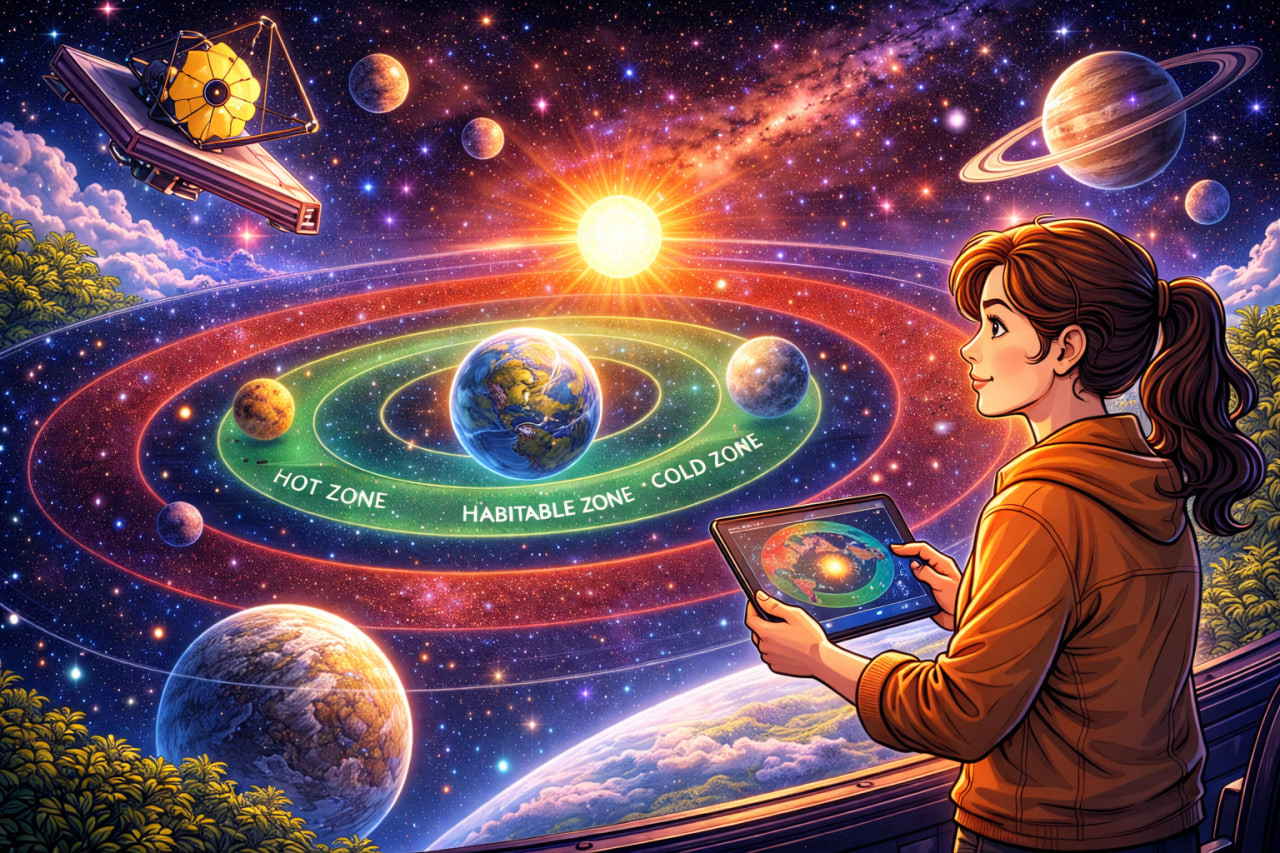
The habitable zone is one of the most important concepts in the search for life beyond Earth. It describes a region around a star where conditions may allow liquid water to exist on the surface of a planet. Because water is essential for all known forms of life, this zone is often called the “Goldilocks zone”—not too hot and not too cold. However, being in the habitable zone does not automatically mean a planet is inhabited. Instead, it identifies places where life could exist under the right conditions. Understanding the habitable zone helps astronomers narrow down the vast number of exoplanets to the most promising candidates.
How Many Planets in the Universe Could Potentially Support Life
Space Stories Universe Be Smart

How Many Planets in the Universe Could Potentially Support Life

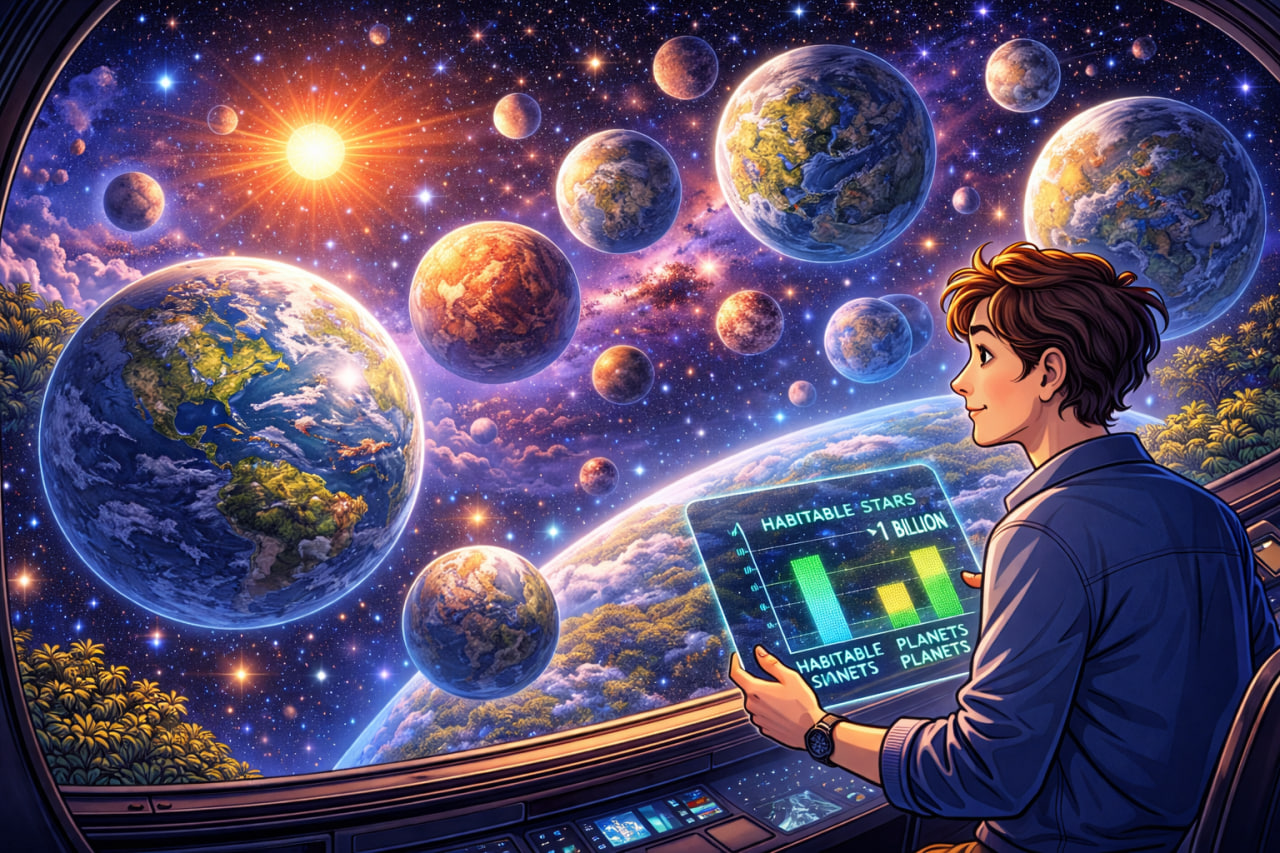
The question of how many planets in the universe might support life is one of the most profound in modern science. For centuries, humanity wondered whether Earth was unique, but recent astronomical discoveries suggest a very different picture. Advances in space telescopes and detection methods have revealed that planets are not rare exceptions, but common features of the universe. Many of these worlds orbit within conditions that could allow liquid water to exist. While the exact number remains uncertain, scientific estimates indicate that potentially habitable planets may be far more abundant than once imagined. Understanding these estimates helps place life on Earth into a broader cosmic context.

Technosignatures: How Scientists Search for Signs of Extraterrestrial Civilizations
Space Stories Universe Science

Technosignatures: How Scientists Search for Signs of Extraterrestrial Civilizations

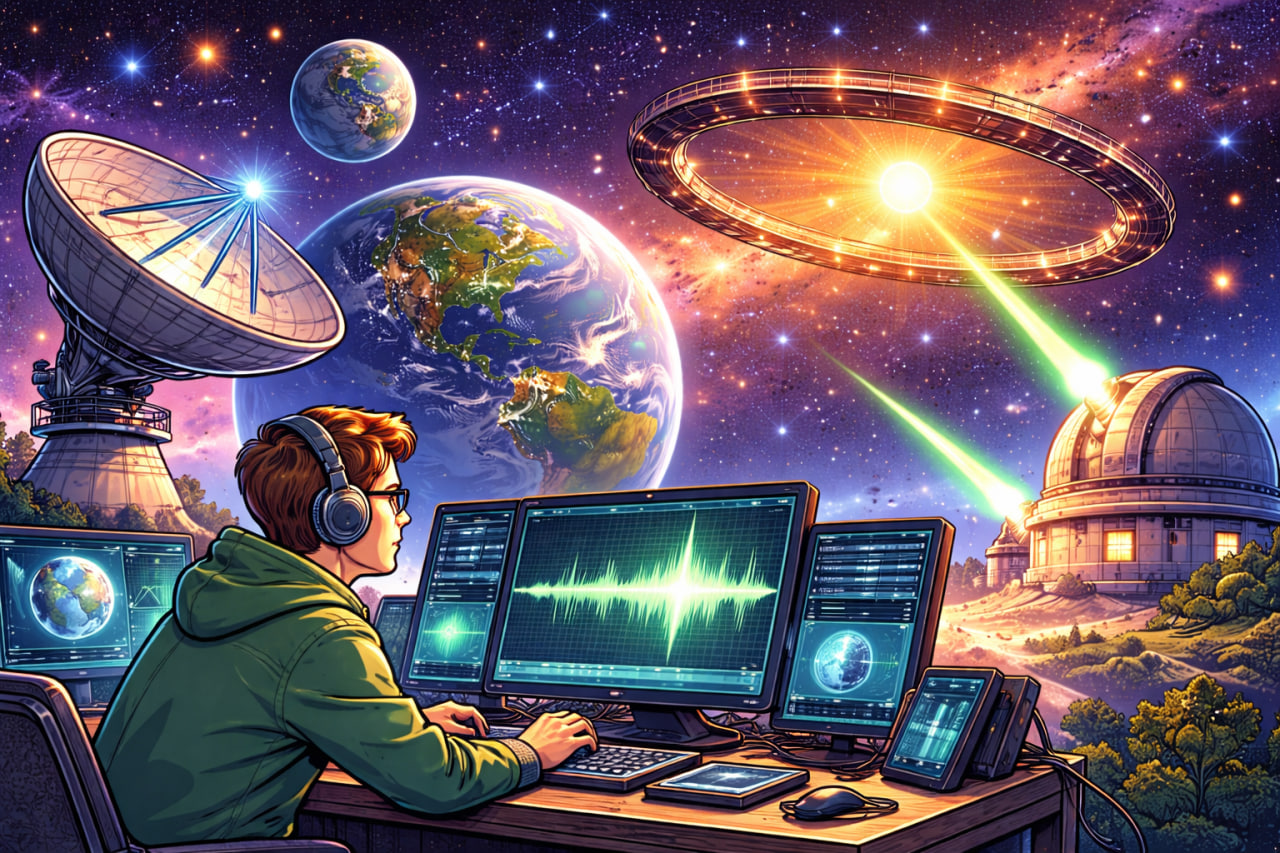
The search for extraterrestrial life has traditionally focused on biology, but in recent years scientists have increasingly explored another possibility: technosignatures. These are observable signs of technology created by advanced civilizations, rather than direct evidence of living organisms. The idea is simple but powerful—if intelligent civilizations exist elsewhere in the universe, they may leave detectable traces of their technological activity. From artificial radio signals to unusual atmospheric compounds, technosignatures expand the search beyond microbes and into the realm of intelligent life. This approach reflects a shift in astrobiology toward broader and more interdisciplinary strategies. Understanding technosignatures helps scientists ask not only where life might exist, but how intelligence could reveal itself across cosmic distances.

Ocean Planets: What They Are and Could Intelligent Life Exist There
Space Stories Universe

Ocean Planets: What They Are and Could Intelligent Life Exist There

Ocean planets, sometimes called water worlds, are a class of exoplanets almost entirely covered by deep global oceans. Unlike Earth, where oceans coexist with continents, these planets may have little or no exposed land at all. Their vast amounts of liquid water make them especially intriguing in the search for life beyond our Solar System. Scientists consider water one of the most important ingredients for life, but the presence of water alone does not guarantee habitability. Ocean planets challenge traditional ideas about where and how life might develop. Studying them expands our understanding of possible living environments in the universe.

The James Webb Space Telescope: How It Changed Our View of Exoplanets
Space Stories Cosmic Innovations Hi-Tech

The James Webb Space Telescope: How It Changed Our View of Exoplanets

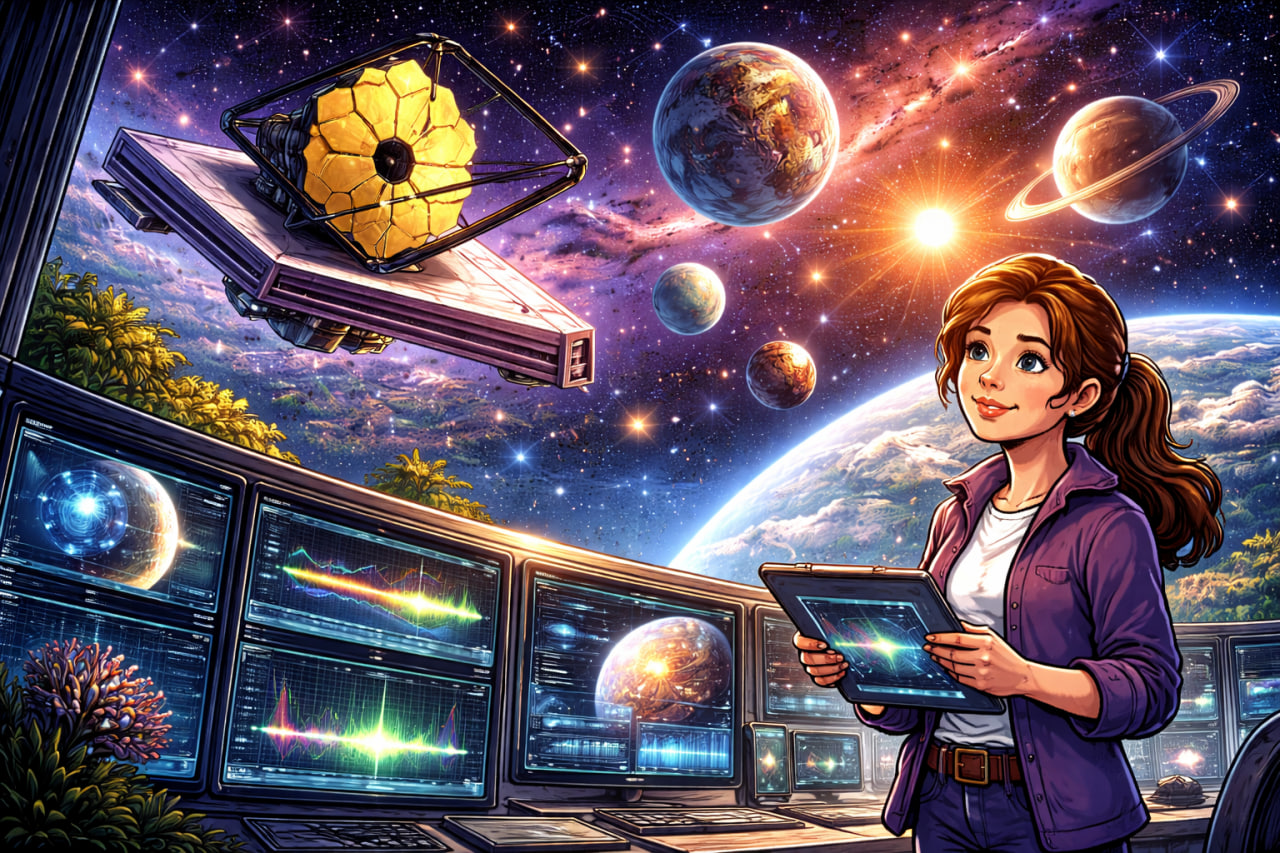
The launch of the James Webb Space Telescope marked a turning point in the study of exoplanets. Before Webb, astronomers could detect many distant worlds, but understanding their true nature remained limited. Most observations focused on size, mass, and orbit, leaving atmospheres and surface conditions largely unknown. With its unprecedented sensitivity and infrared capabilities, Webb transformed exoplanets from distant points of data into complex, character-rich worlds. It allowed scientists to study their atmospheres in detail and investigate their potential habitability. As a result, our understanding of planets beyond the Solar System has become deeper, more precise, and far more nuanced.

Atmospheric Spectroscopy: How Scientists Read the Chemistry of Distant Worlds
Space Stories Hi-Tech Universe

Atmospheric Spectroscopy: How Scientists Read the Chemistry of Distant Worlds

Atmospheric spectroscopy is one of the most powerful tools in modern astronomy and planetary science. It allows scientists to study the composition, structure, and physical properties of planetary atmospheres without direct contact. By analyzing how light interacts with gases surrounding a planet, researchers can identify specific chemical elements and molecules. This method has transformed planets from distant points of light into complex environments with measurable characteristics. Atmospheric spectroscopy is central to the study of exoplanets, climate systems, and the search for life beyond Earth. In essence, it enables scientists to “read” atmospheres across vast distances of space.

Asteroid Threat: How Can Earth Be Protected?
Space Stories Universe Star Wars

Asteroid Threat: How Can Earth Be Protected?

Asteroid impacts are among the few natural disasters capable of causing global consequences, which is why planetary defense has become an important scientific and strategic priority. While large asteroid collisions are rare, history and astronomical data confirm that Earth has been struck many times in the past. Modern technology now allows scientists to detect potentially hazardous objects long before they approach our planet. The challenge lies not only in spotting these asteroids, but also in developing reliable methods to alter their trajectories if necessary. Understanding how Earth can be protected from asteroid threats helps separate scientific reality from science fiction and highlights the role of international cooperation in planetary safety.

Jupiter and Saturn: The Formation History of Their Moons
Space Stories Universe Solar System

Jupiter and Saturn: The Formation History of Their Moons

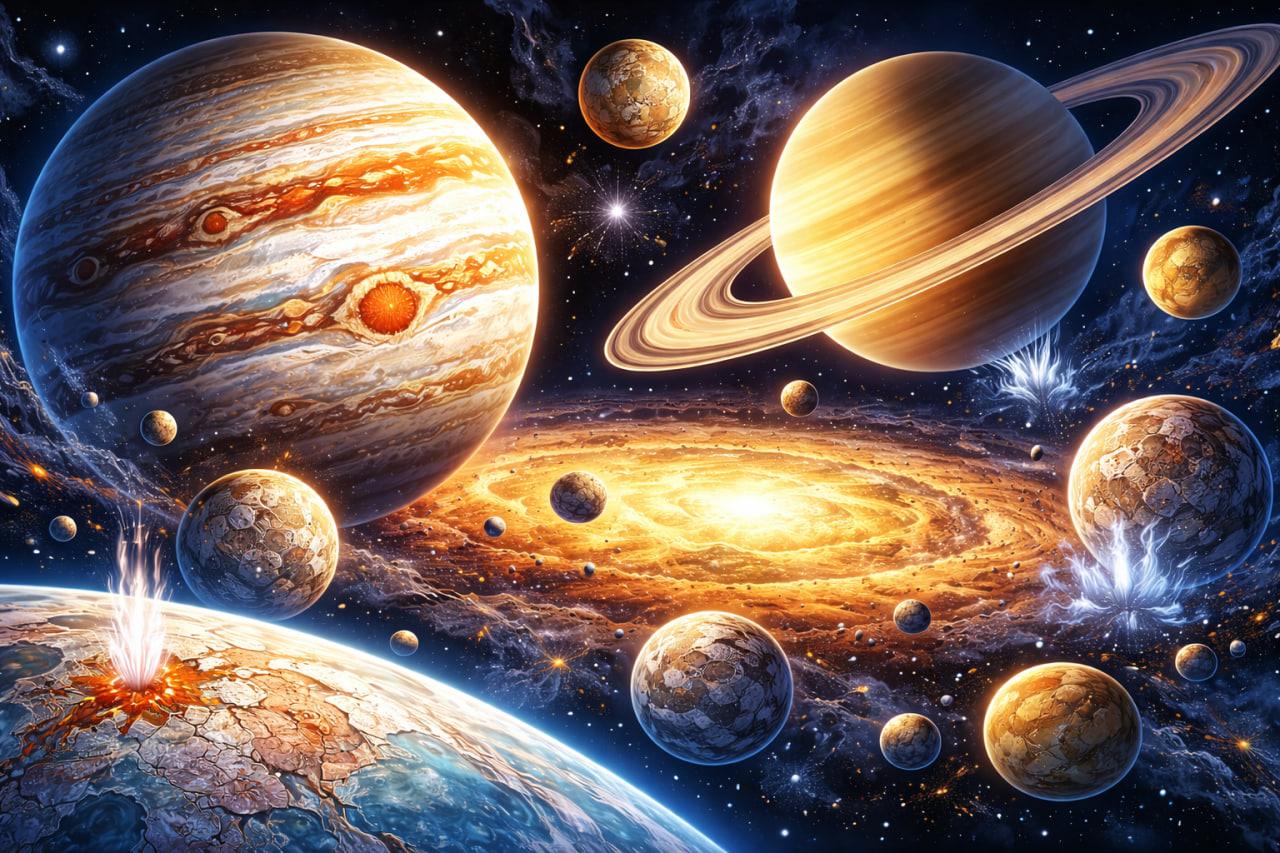
Jupiter and Saturn are not only the largest planets in the Solar System but also the centers of complex miniature planetary systems formed by their numerous moons. These satellites range from icy worlds with subsurface oceans to volcanically active bodies, each preserving clues about the early stages of planetary formation. Scientists believe that the moons of Jupiter and Saturn formed alongside their parent planets, shaped by gravity, gas dynamics, and collisions billions of years ago. Studying these moons allows researchers to reconstruct the conditions that existed in the protoplanetary disk and understand how giant planets influence their surroundings. The diversity of these satellites reveals that moon formation is a dynamic and evolving process rather than a single uniform event.

Mercury: Why Does the Closest Planet to the Sun Have Ice?
Space Stories Universe Solar System

Mercury: Why Does the Closest Planet to the Sun Have Ice?

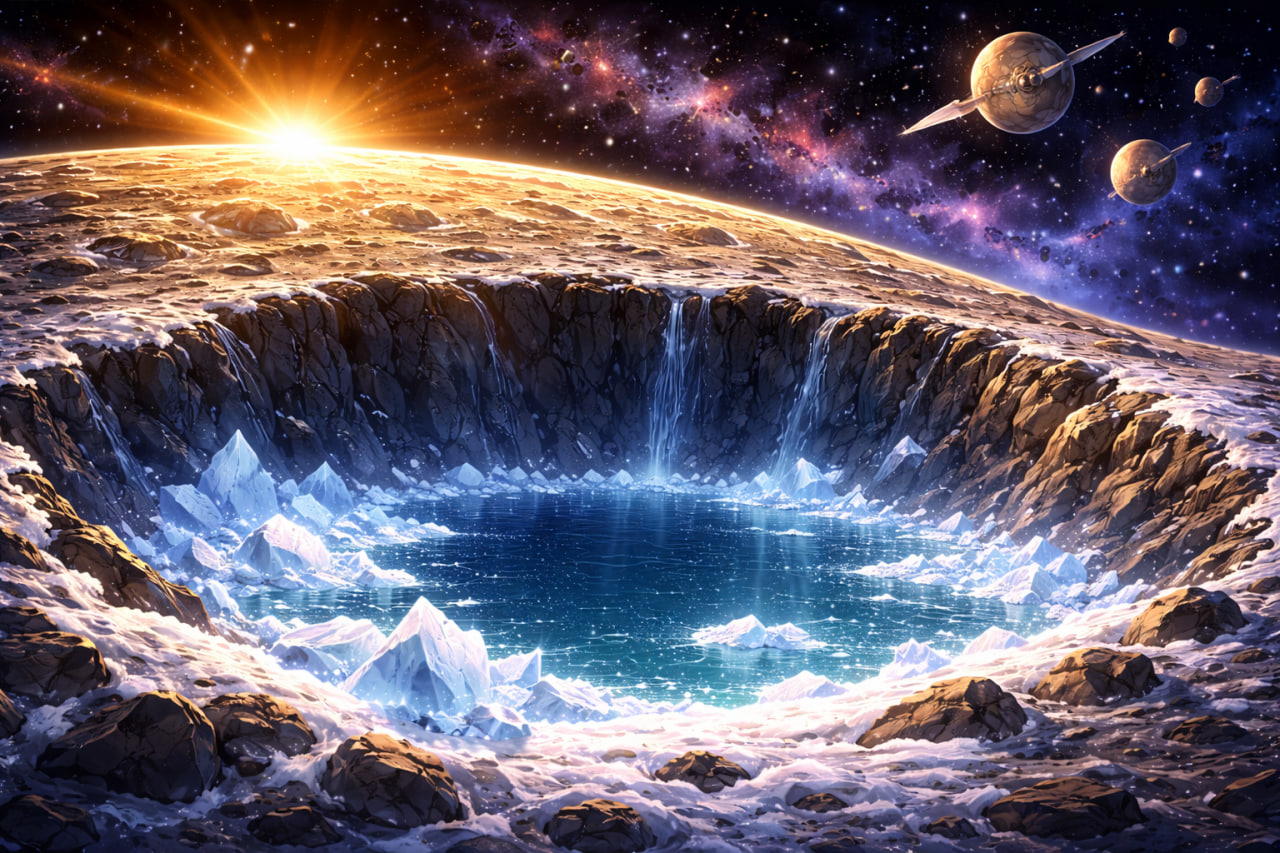
At first glance, Mercury seems like the last place in the Solar System where ice could exist. As the planet closest to the Sun, its surface can heat up to extreme temperatures during the day. For a long time, scientists assumed that any water or ice on Mercury would have evaporated billions of years ago. However, modern space missions have revealed a surprising reality: water ice exists on Mercury, preserved in some of the coldest places in the inner Solar System. This discovery reshaped our understanding of planetary environments and showed how extreme conditions can coexist on a single world. Explaining this paradox requires looking closely at Mercury’s orbit, rotation, and unique surface features.

MESSENGER Mission: Exploring the Secrets of Mercury
Space Stories Universe

MESSENGER Mission: Exploring the Secrets of Mercury

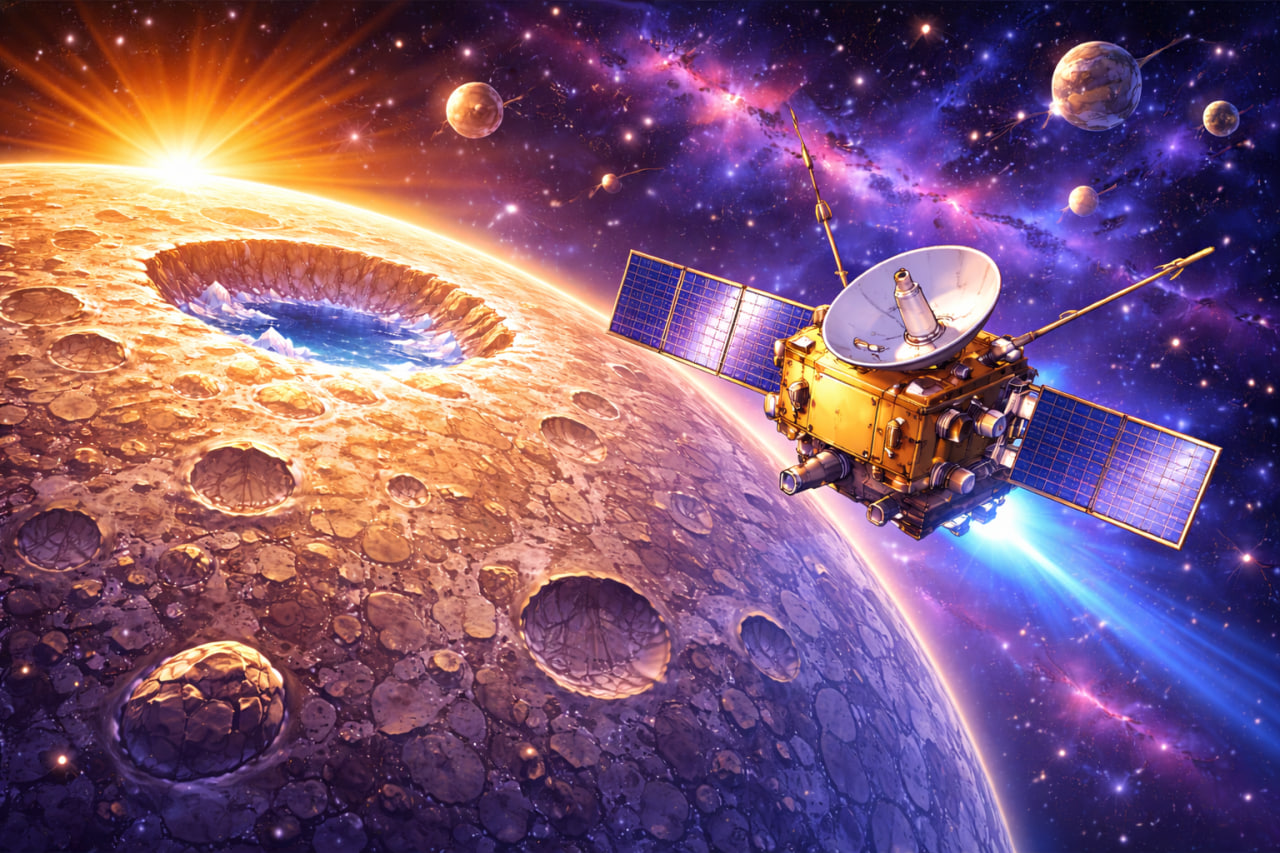
The MESSENGER mission marked a turning point in humanity’s understanding of Mercury, the smallest and innermost planet of the Solar System. For decades, Mercury remained one of the least explored planets due to its proximity to the Sun and the extreme conditions surrounding it. Launched by NASA, MESSENGER provided the first long-term orbital study of Mercury, delivering unprecedented data about its surface, composition, magnetic field, and geological history. The mission revealed that Mercury is far more complex and dynamic than scientists once believed. By studying this harsh environment, researchers gained valuable insights into how rocky planets form and evolve near their parent stars.