Skip to content
Science Observer Science Observer

Useful articles about our universe and science

  • Home
  • Calculators
    • Artificial intelligence
      • AI Automation ROI Calculator
      • AI Ethics & Governance Risk Checker
      • AI Hallucination Risk Estimator
      • AI Model Training Cost Calculator
      • AI Time Saved Calculator
      • AI Token & Cost Calculator
      • Data Transfer Time Calculator
      • Internet Data Usage Calculator
    • Bioengineering
      • Bacterial Growth Calculator (Doubling Time)
      • DNA Melting Temperature (Tm) Calculator
      • Genetic Trait Probability Calculator
      • Neural Signal Latency Calculator
      • Neural Signal Speed Calculator
      • Punnett Square Calculator
    • Hi-tech
      • GPU Training Time Calculator
      • Screen PPI Calculator
      • Smart Home Energy Savings Calculator
    • Science
      • Capacitor Calculator (C, Q, V, Energy, RC)
      • Coulomb’s Law Calculator
      • Dew Point Calculator
      • Dilution Calculator (C₁V₁ = C₂V₂) !
      • Doppler Effect Calculator (Sound)
      • Electric Power Calculator
      • Exponential Growth Calculator
      • Free Fall Time Calculator
      • Gravitational Force Calculator
      • Heat Capacity Calculator (Q = m·c·ΔT)
      • Heat Conduction Calculator (Fourier’s Law)
      • Historical Time Gap Calculator
      • Ideal Gas Law Calculator (pV = nRT)
      • Kinetic Energy Calculator
      • Magnetic Field Strength Calculator
      • Momentum & Impulse Calculator!
      • Newton’s Second Law Calculator (F = m·a)
      • pH Calculator
      • pH Dilution Calculator
      • Pressure Calculator
      • Projectile Motion Calculator
      • Radioactive Half-Life Calculator
      • Research Impact Projection Calculator
      • Resistors in Series / Parallel Calculator
      • Science Unit Converter
      • Sound Distance Calculator (Thunder)
      • Sound Level (dB) Calculator
      • Time Dilation Calculator
      • Torque Calculator
      • Underwater Pressure Calculator
      • VO₂max Estimate Calculator
      • Wave Calculator
    • Universe
      • Age on Other Planets Calculator
      • Asteroid Impact Energy Calculator
      • Black Hole Radius Calculator
      • Black Hole Survival Distance Calculator
      • Cosmic Lookback Time Calculator
      • Escape Velocity Calculator
      • Horizon Distance Calculator
      • How Many Stars Can You See?
      • Intergalactic Travel Energy Calculator
      • Light Travel Time Calculator
      • Mars vs Earth Day Length Calculator
      • Orbit Speed & Period Calculator
      • Planet Gravity Comparison Calculator
      • Rocket Delta-V Estimator
      • Satellite Signal Delay Calculator
      • Space Travel Time Calculator
      • Telescope Resolution Calculator
      • Tidal Force Comparison Calculator
      • Time to Reach a Planet Calculator
      • Weight on Other Planets Calculator
      • What If Earth Stopped Spinning Calculator
      • What If the Sun Disappeared Timer
      • What If You Fell Into Jupiter Calculator

Solar System

  • Home
  • Solar System
  • Page 2
The Solar System May Not Survive as Long as Scientists Once Thought
Posted inNew Discoveries News Solar System

The Solar System May Not Survive as Long as Scientists Once Thought

For decades, the outer Solar System looked extraordinarily durable. Even after the Sun grows old, loses much of its mass, and becomes a white dwarf, models suggested that the surviving…
Posted by deka October 8, 2026
Europa: Jupiter’s Icy Moon and One of the Best Places to Search for Life
Posted inSolar System Space Stories Universe

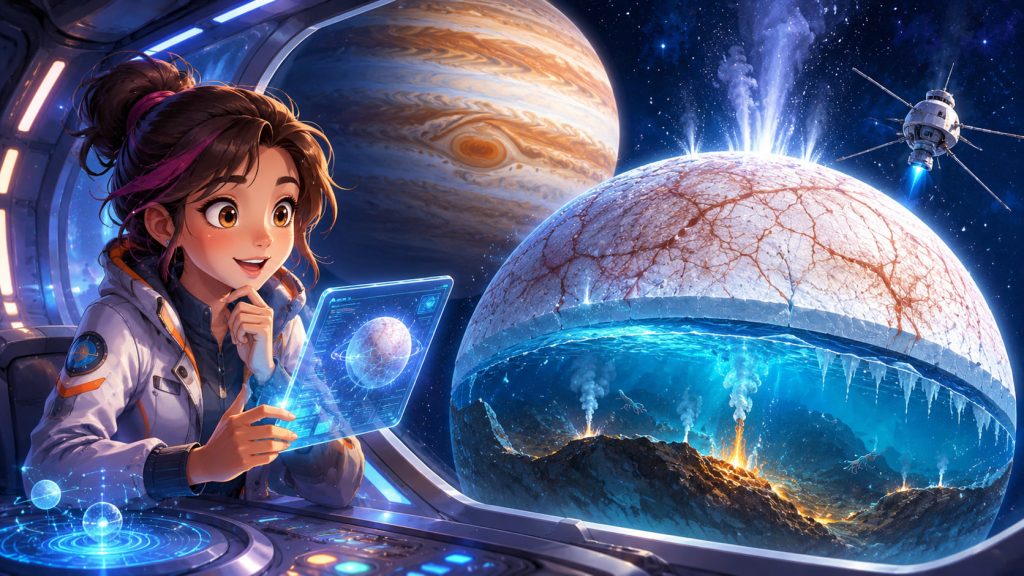
Europa: Jupiter’s Icy Moon and One of the Best Places to Search for Life

Europa is one of Jupiter’s largest moons and one of the most fascinating worlds in the Solar System. From a distance, it looks like a bright frozen sphere covered with…
Posted by deka September 5, 2026
Io: Jupiter’s Volcanic Moon and the Most Geologically Active World in the Solar System
Posted inSolar System Space Stories Universe

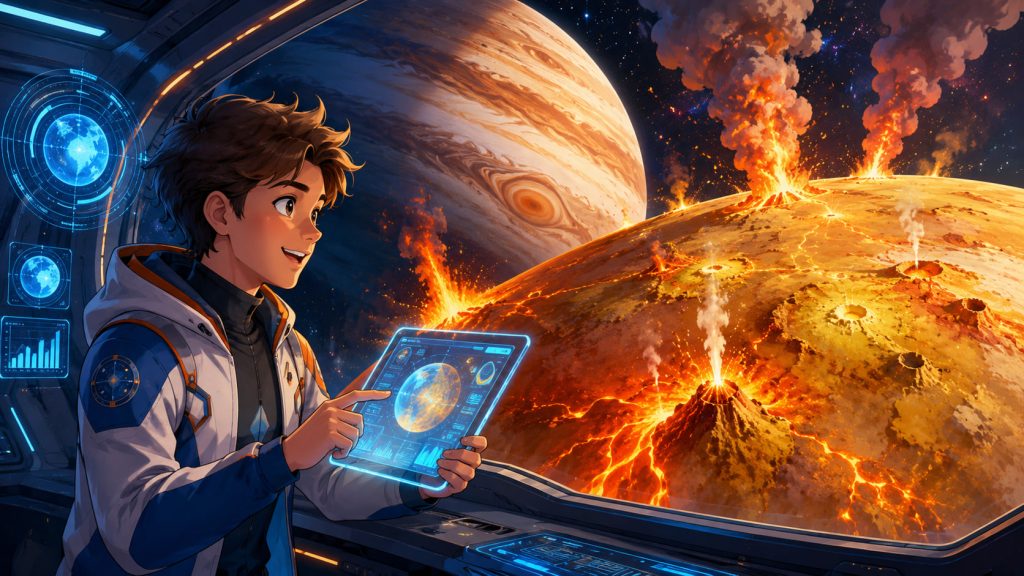
Io: Jupiter’s Volcanic Moon and the Most Geologically Active World in the Solar System

Io is one of the strangest and most dramatic moons in the Solar System. It orbits Jupiter, the largest planet, and its surface is constantly reshaped by enormous volcanic eruptions.…
Posted by deka September 2, 2026
Enceladus: Saturn’s Icy Moon with a Hidden Ocean and Possible Ingredients for Life
Posted inSolar System Space Stories Universe

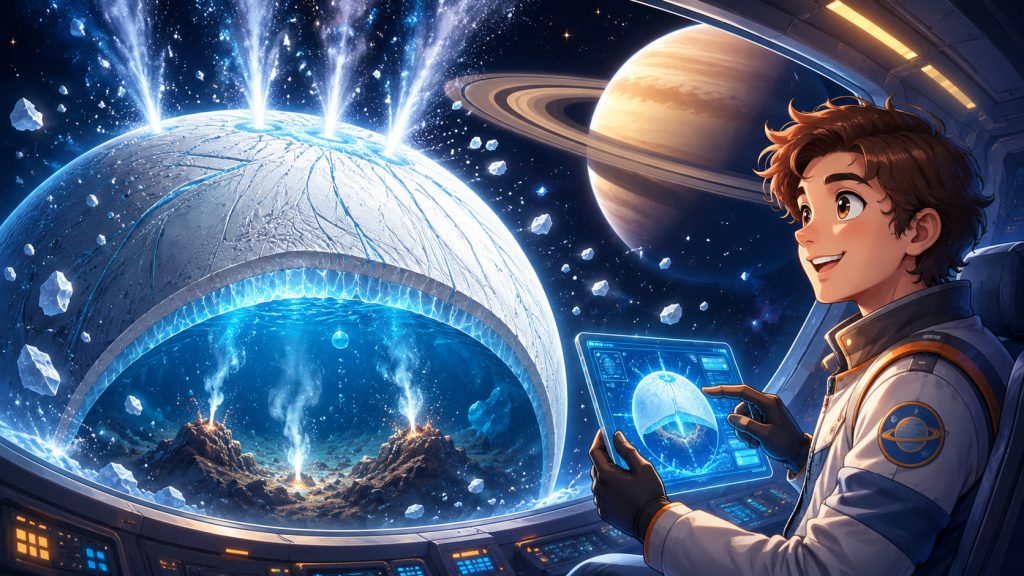
Enceladus: Saturn’s Icy Moon with a Hidden Ocean and Possible Ingredients for Life

Enceladus is one of the most fascinating moons in the Solar System. At first glance, it looks like a small frozen world orbiting Saturn. Its surface is bright, icy, and…
Posted by deka September 2, 2026
The Most Interesting Facts About Our Solar System: Strange Worlds, Hidden Oceans, and Cosmic Surprises
Posted inSolar System Space Stories Universe

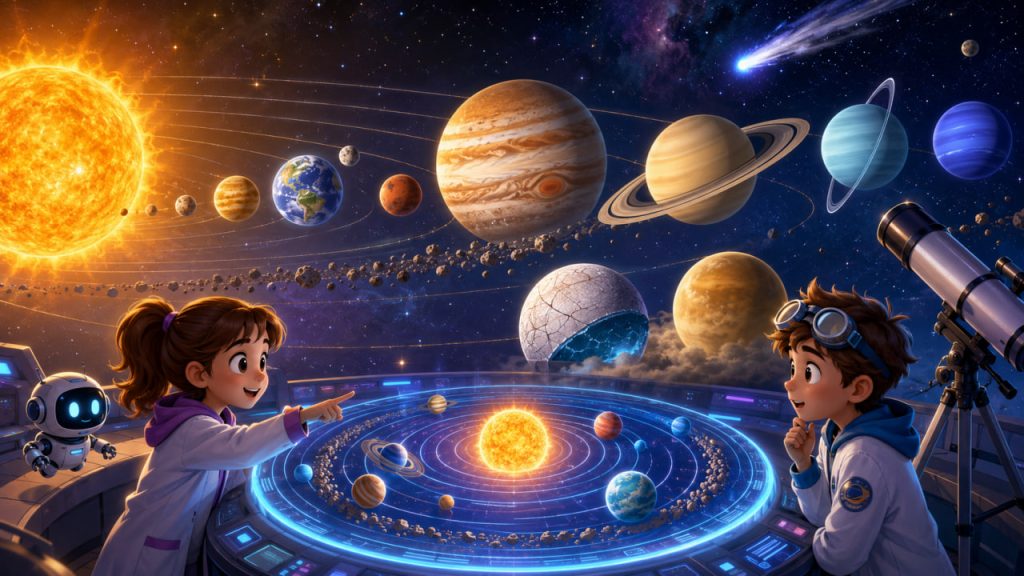
The Most Interesting Facts About Our Solar System: Strange Worlds, Hidden Oceans, and Cosmic Surprises

The Solar System is much more than the Sun and eight planets. It is a vast, dynamic neighborhood filled with moons, dwarf planets, asteroids, comets, icy worlds, violent storms, magnetic…
Posted by deka August 19, 2026
Orbital Resonance: How Gravity Synchronizes Orbits Across the Solar System
Posted inSolar System Space Stories Universe

Orbital Resonance: How Gravity Synchronizes Orbits Across the Solar System

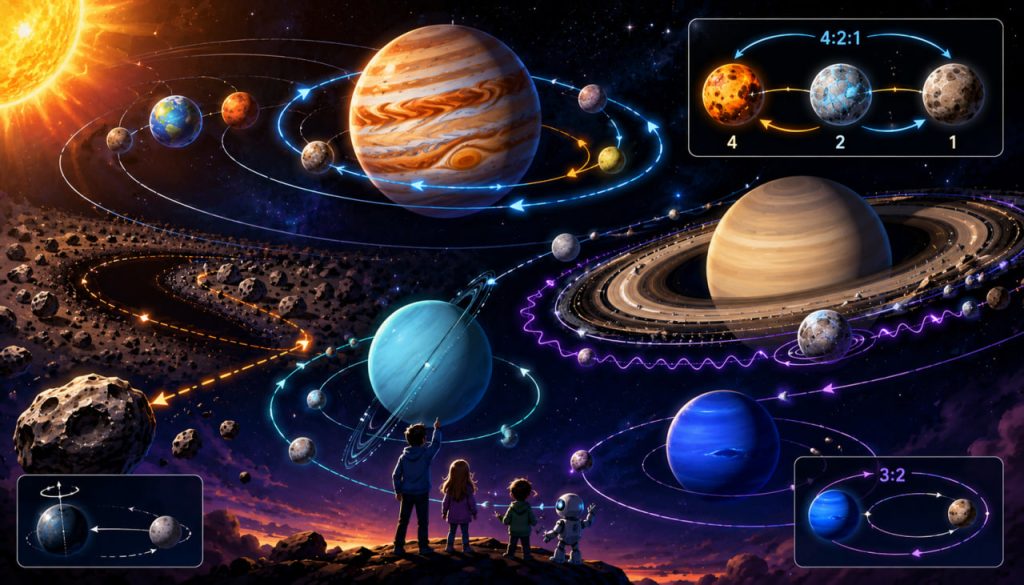
Space may look silent and empty, but the Solar System is full of rhythm. Moons, planets, asteroids, and ring particles do not simply move at random. Many of them are…
Posted by deka August 19, 2026
Rings Around Planets in the Solar System: Why Saturn Is Not the Only Ringed World
Posted inSolar System Space Stories Universe

Rings Around Planets in the Solar System: Why Saturn Is Not the Only Ringed World

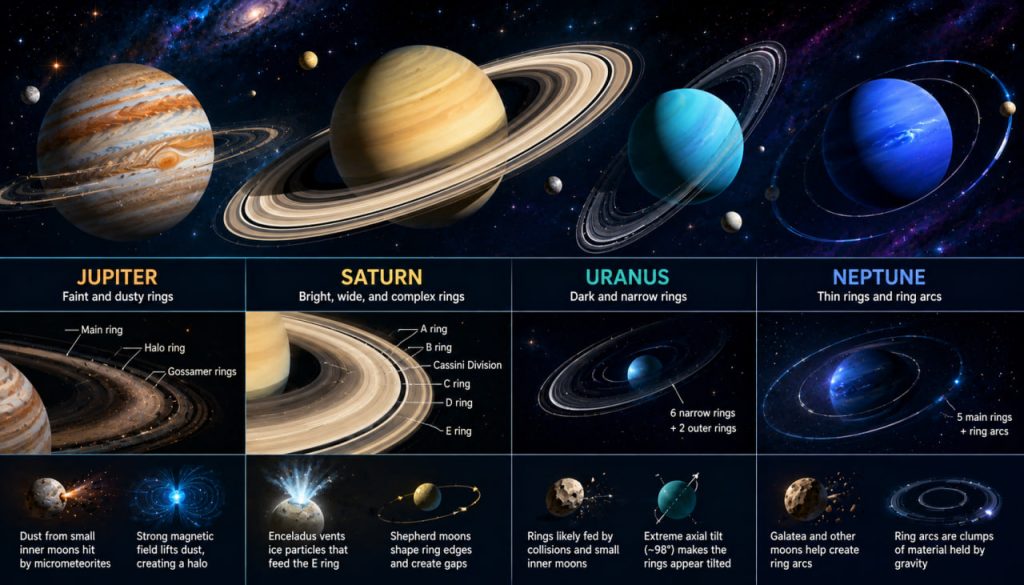
When people imagine planetary rings, Saturn usually steals the spotlight. Its bright, wide rings are one of the most recognizable sights in astronomy. But Saturn is not alone. All four…
Posted by deka August 19, 2026
Vampire Stars: How Some Stars Steal Life from Their Companions
Posted inSolar System Space Stories Star Wars

Vampire Stars: How Some Stars Steal Life from Their Companions

In space, not every star evolves alone. Many stars live in pairs, locked together by gravity. When two stars orbit close enough, one can begin pulling gas from the other.…
Posted by deka August 19, 2026
Solar Energy in Space: Powering Satellites and Future Moon Bases
Posted inCosmic Innovations Smart Technology Solar System

Solar Energy in Space: Powering Satellites and Future Moon Bases

Solar energy is the foundation of modern space exploration. It powers communications satellites, scientific observatories, navigation systems, robotic spacecraft, and the International Space Station. Future lunar settlements may also depend…
Posted by deka July 28, 2026
What Lies Beyond the Solar System and How Could Humanity Get There?
Posted inSolar System Space Stories Universe

What Lies Beyond the Solar System and How Could Humanity Get There?

The Solar System does not end immediately after Neptune or Pluto. Beyond the planets lies an enormous sequence of increasingly distant regions: the Kuiper Belt, the scattered disc, the heliopause,…
Posted by deka July 21, 2026

Posts pagination

Previous page 1 2 3 4 … 10 Next page
Recent Posts
  • The History of the Flashlight: From Its Invention in 1899 to Cutting-Edge Technology in 2026
  • How Do Flexible and Foldable Displays Work? The Technology Behind Bendable Screens
  • How Quantum Sensors Could Revolutionize Measurement Technology
  • How Augmented Reality Could Transform Everyday Life: The Future of AR Technology
  • The History of the Internet: From Military Research Networks to a Global Communication System
Categories
  • AI
  • AI & Ethics
  • Be Smart
  • Bioengineering
  • Challenges
  • Cosmic Innovations
  • Earth & Moon
  • Hi-Tech
  • History
  • Inventions
  • KnowHow
  • Mathematics
  • Neuro-Tech
  • New Discoveries
  • News
  • Physics
  • Science
  • Smart Home
  • Smart Technology
  • Solar System
  • Space Stories
  • Star Wars
  • Tesla&Co
  • Universe
  • What if?
Copyright 2026 — Science Observer. All rights reserved. Bloghash WordPress Theme
Scroll to Top