ChatGPT can write articles, analyze information, generate ideas, improve text, create plans, and help solve complex problems. However, the quality of its response depends heavily on the instructions it receives.
Personal stories are memorable because they involve real people, emotions, and visible outcomes. They can inspire useful research questions, but an anecdote cannot reliably prove that a product, treatment, diet, or habit caused the result.
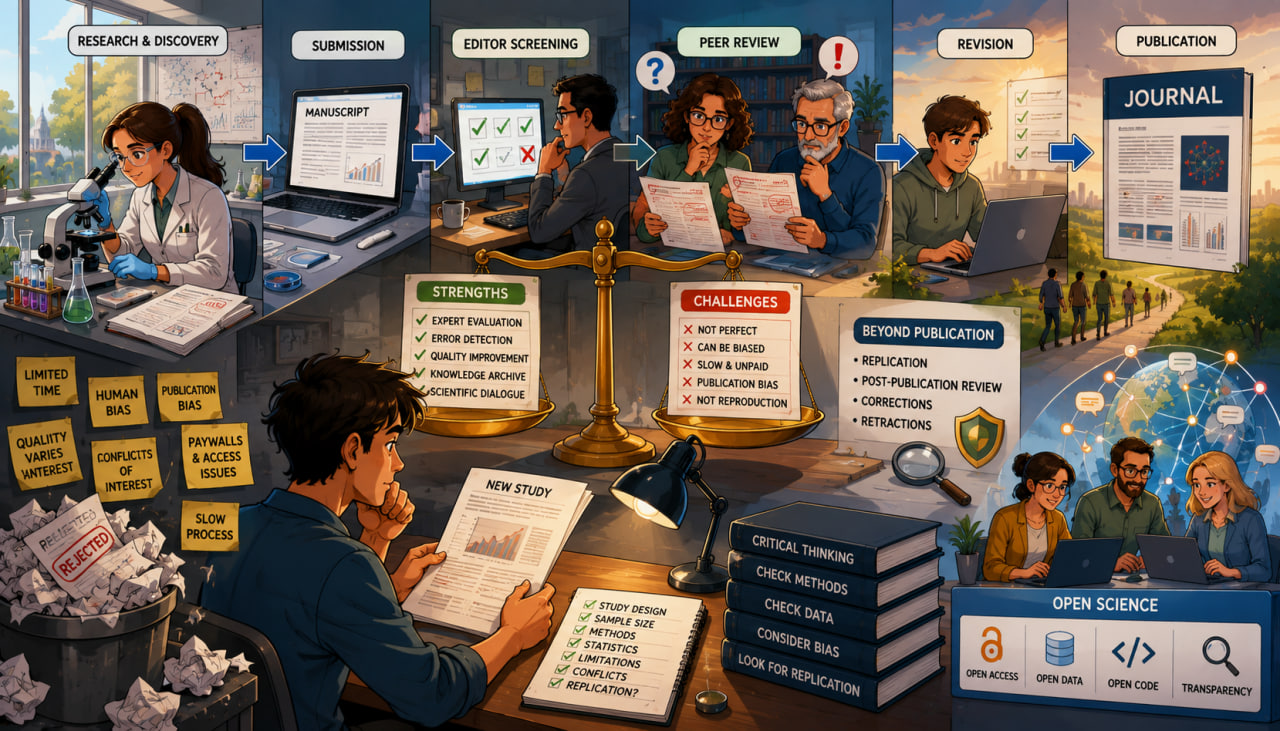
Scientific journals are the main channels through which researchers share experiments, clinical studies, theories, datasets, and new discoveries. Before most papers are published, they pass through peer review, a process in which other specialists evaluate the manuscript.
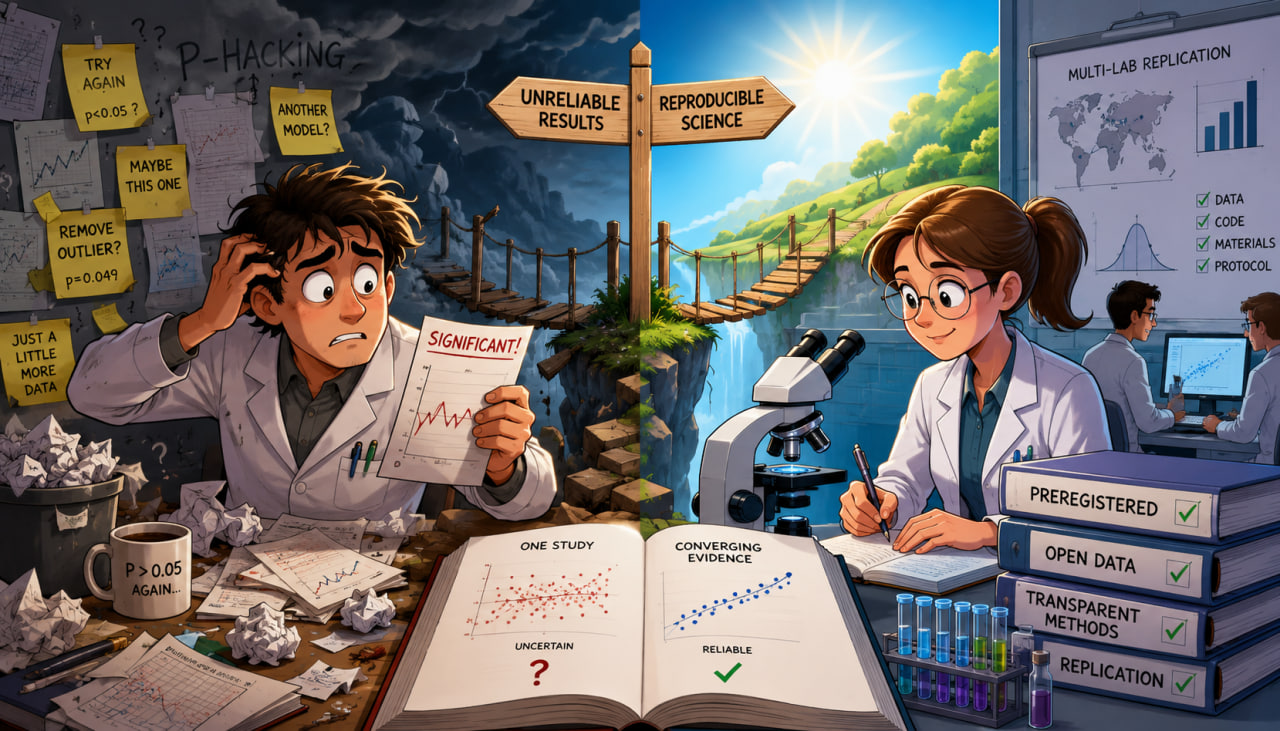
Scientific articles often appear definitive. They contain statistics, technical language, graphs, expert authors, and peer review. Yet publication does not guarantee that a finding is correct, universal, or independently repeatable.
Passwords feel simple from the user’s side. You type a secret phrase, click “Log in,” and the website either lets you in or rejects you. But behind that simple moment is one of the most important ideas in cybersecurity: a good website should not actually know your password.
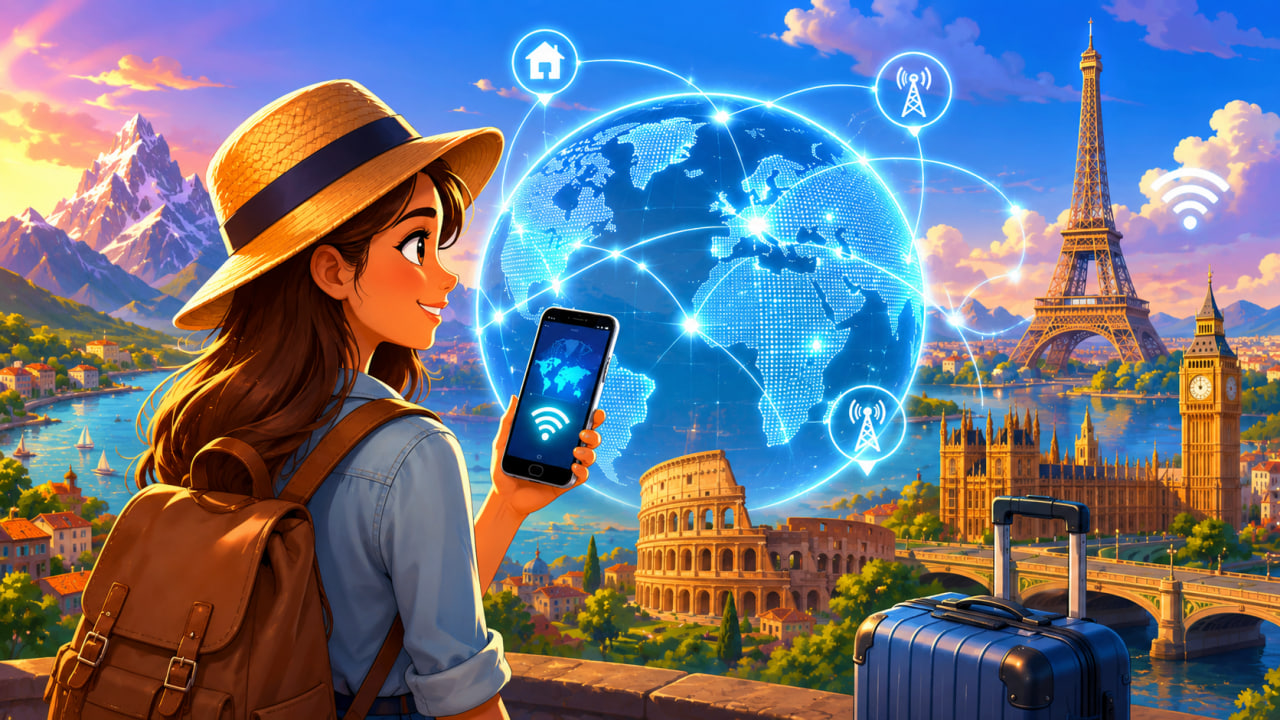
Roaming is one of those mobile technologies people usually notice only when something goes wrong: the internet becomes slow, a call costs more than expected, or a phone suddenly connects to a foreign network after crossing a border. Yet roaming is an essential part of modern communication. It allows your phone to keep working when you leave your mobile operator’s normal coverage area.
Data compression is one of the hidden miracles of the digital world. Every photo you send, every video you stream, every song you download, and every website you open depends on clever ways of making files smaller. Without compression, the modern internet would feel painfully slow, storage would be far more expensive, and high-definition video would be much harder to deliver. The surprising part is that compression often works by removing information. A JPEG image may discard details your eyes are unlikely to notice. An MP3 file may remove sounds your ears probably cannot hear clearly. A streaming video may simplify areas of the picture that barely change from frame to frame. Data compression works because not all information is equally important. Some details are essential. Others are repetitive, predictable, or invisible to human perception.
Transcendental numbers are among the most fascinating objects in mathematics. They are real or complex numbers that cannot be produced as solutions to any polynomial equation with integer coefficients. That sounds technical at first, but the idea is surprisingly powerful: some numbers are so mathematically “wild” that no finite algebraic equation can capture them. Famous numbers such as π and e are transcendental. They appear everywhere in mathematics, physics, engineering, geometry, probability, and calculus. Yet they do not behave like ordinary whole numbers, fractions, square roots, or even many irrational numbers. Transcendental numbers reveal that the number system is far richer than everyday arithmetic suggests. They also show that infinity is not just a philosophical idea, but a precise mathematical landscape filled with hidden structure.
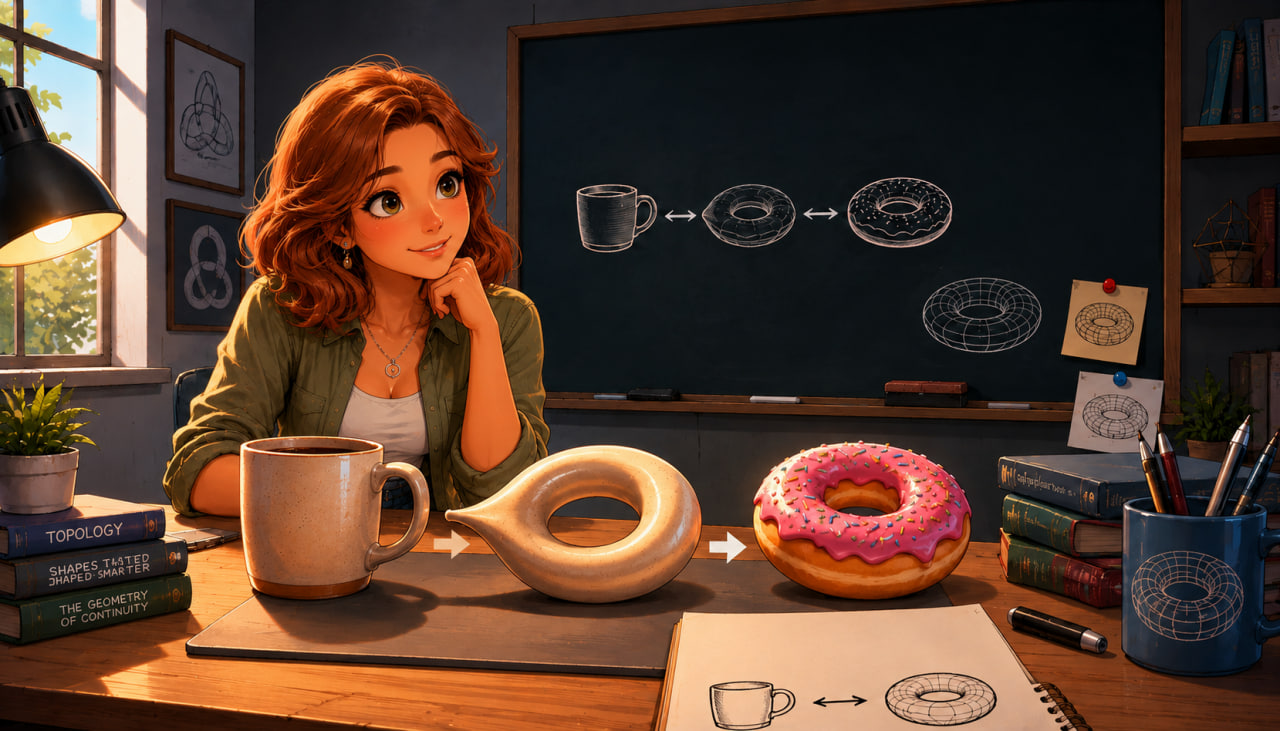
In everyday life, a coffee cup and a donut are clearly different objects. One holds tea or coffee, the other is something you eat. They have different materials, functions, colors, and sizes. But in topology, one of the most fascinating branches of mathematics, they can be considered the same kind of shape. This strange idea comes from the way topology studies objects. Instead of focusing on exact measurements, angles, distances, or rigid geometry, topology asks what remains unchanged when a shape is stretched, bent, twisted, or smoothly deformed. If one object can be transformed into another without cutting, tearing, gluing, or creating new holes, topologists may treat them as equivalent. That is why a cup with one handle and a donut are mathematically similar: both have exactly one hole. This simple example opens the door to a completely different way of thinking about space, form, continuity, and hidden structure.
A random walk is one of the simplest and most powerful ideas in probability theory. It describes a path made of many small steps, where each step is chosen randomly. The classic example is the drunkard’s walk: imagine a person leaving a bar and taking one step left, right, forward, or backward without a clear plan. Where will they end up after many steps? This may sound like a funny mathematical story, but random walks are deeply important in science. They help explain how molecules move, how stock prices fluctuate, how animals search for food, how diseases spread, how algorithms explore data, and how information travels through networks. The key idea is simple: randomness at the small scale can produce patterns at the large scale. Even when each step is unpredictable, the overall behavior can often be described with beautiful mathematical precision.