Be Smart

Fibonacci Numbers: The Mathematical Pattern Hidden Throughout Nature
Science Be Smart Mathematics

Fibonacci Numbers: The Mathematical Pattern Hidden Throughout Nature

At first glance, the Fibonacci sequence appears to be a simple list of numbers. Yet this remarkable mathematical pattern has fascinated scientists, mathematicians, artists, architects, and nature enthusiasts for centuries. From the arrangement of sunflower seeds to the spirals of galaxies, Fibonacci numbers seem to appear in surprising places throughout the natural world. While the sequence itself is mathematically straightforward, its connections to geometry, biology, computer science, and even financial modeling have made it one of the most famous numerical patterns ever discovered. This article explores what Fibonacci numbers are, how they were discovered, where they appear in nature, and why they continue to inspire scientific research today.
The Distribution of Prime Numbers: Understanding the Riemann Hypothesis
Science Be Smart Mathematics

The Distribution of Prime Numbers: Understanding the Riemann Hypothesis

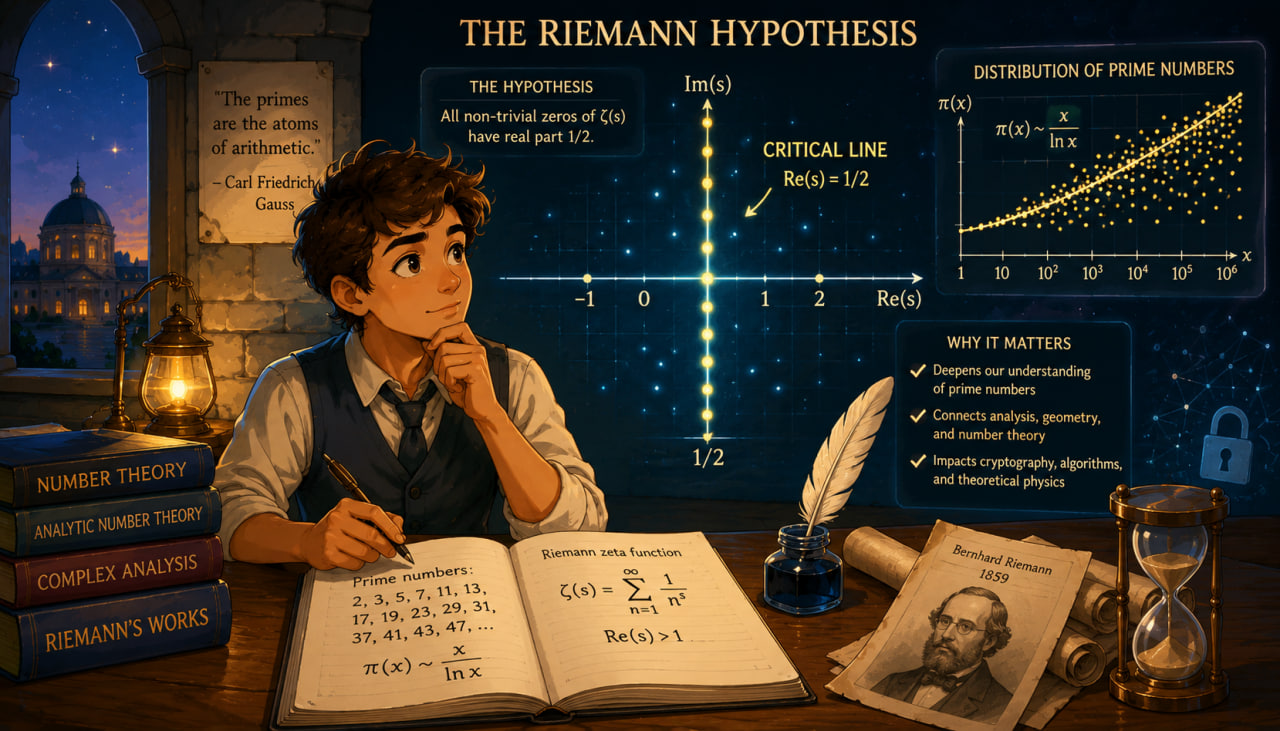
Prime numbers are among the most fundamental objects in mathematics. They are the "building blocks" of whole numbers because every positive integer can be expressed as a unique product of prime numbers. At first glance, primes appear to be scattered randomly along the number line. Sometimes they occur close together, while at other times enormous gaps separate them. For more than 160 years, mathematicians have tried to answer one of the greatest unanswered questions in mathematics: Is there a hidden pattern behind the distribution of prime numbers? This question lies at the heart of the Riemann Hypothesis, a mathematical conjecture that has influenced number theory, cryptography, computer science, and mathematical physics. Although millions of zeros have been tested and found to agree with the hypothesis, no complete proof or counterexample has ever been discovered. Today, the Riemann Hypothesis remains one of the most famous unsolved problems in mathematics and is one of the seven Millennium Prize Problems, carrying a prize of $1 million for a correct proof. This article explains what prime numbers are, what the Riemann Hypothesis states, why it matters, and how it continues to shape modern mathematics.

Gödel's Incompleteness Theorems: Why Every Axiomatic System Contains Truths That Cannot Be Proven
Science Be Smart Mathematics

Gödel's Incompleteness Theorems: Why Every Axiomatic System Contains Truths That Cannot Be Proven

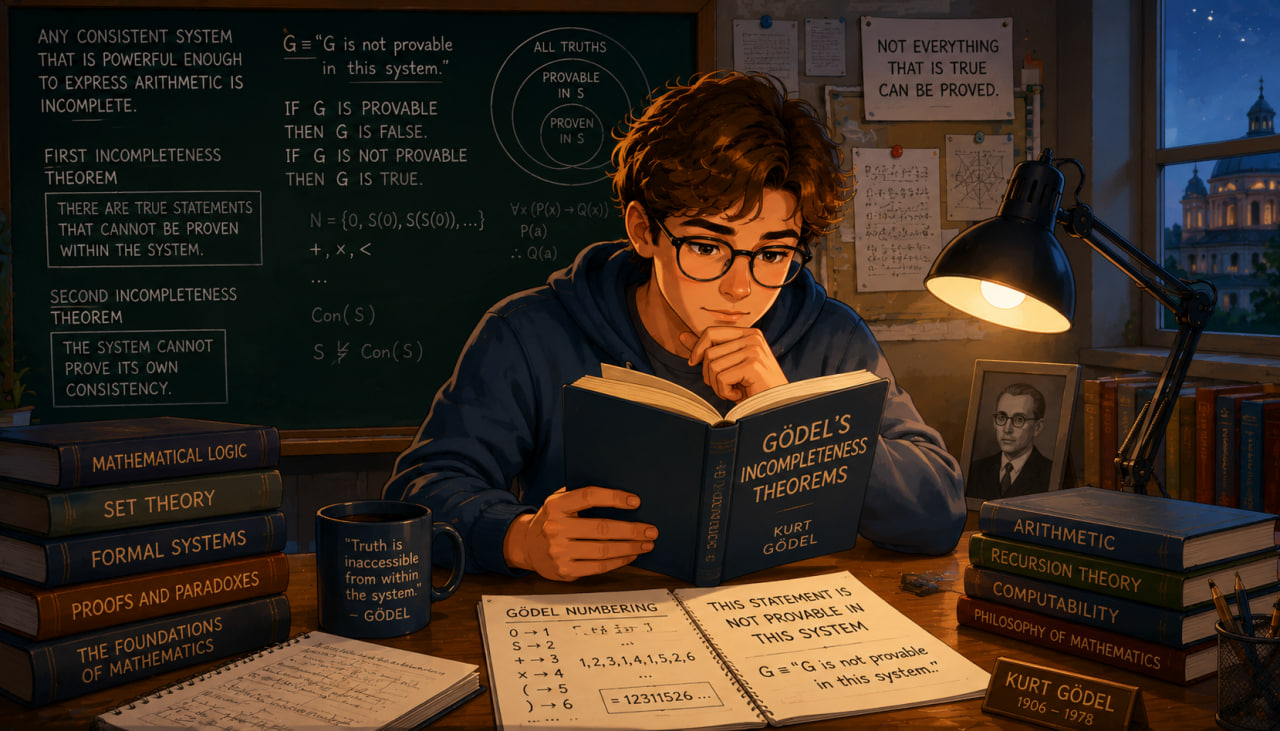
Mathematics is often viewed as the ultimate example of certainty. Starting with a small set of axioms and applying strict logical rules, mathematicians prove theorems that remain true forever. For centuries, many believed it might one day be possible to build a complete mathematical system capable of proving every true statement. That hope changed dramatically in 1931, when Austrian logician Kurt Gödel published one of the most influential papers in the history of mathematics and philosophy. His Incompleteness Theorems demonstrated that any sufficiently powerful formal system contains true mathematical statements that cannot be proven within the system itself. Gödel's discovery did not show that mathematics is flawed. Instead, it revealed something even more fascinating: every powerful logical system has fundamental limits, no matter how carefully it is constructed. This article explains what Gödel's Incompleteness Theorems say, why they transformed mathematics, and how they continue to influence logic, computer science, philosophy, and artificial intelligence.

The Golden Ratio: The Mathematical Pattern Behind Nature, Art, and Design
Science Be Smart

The Golden Ratio: The Mathematical Pattern Behind Nature, Art, and Design

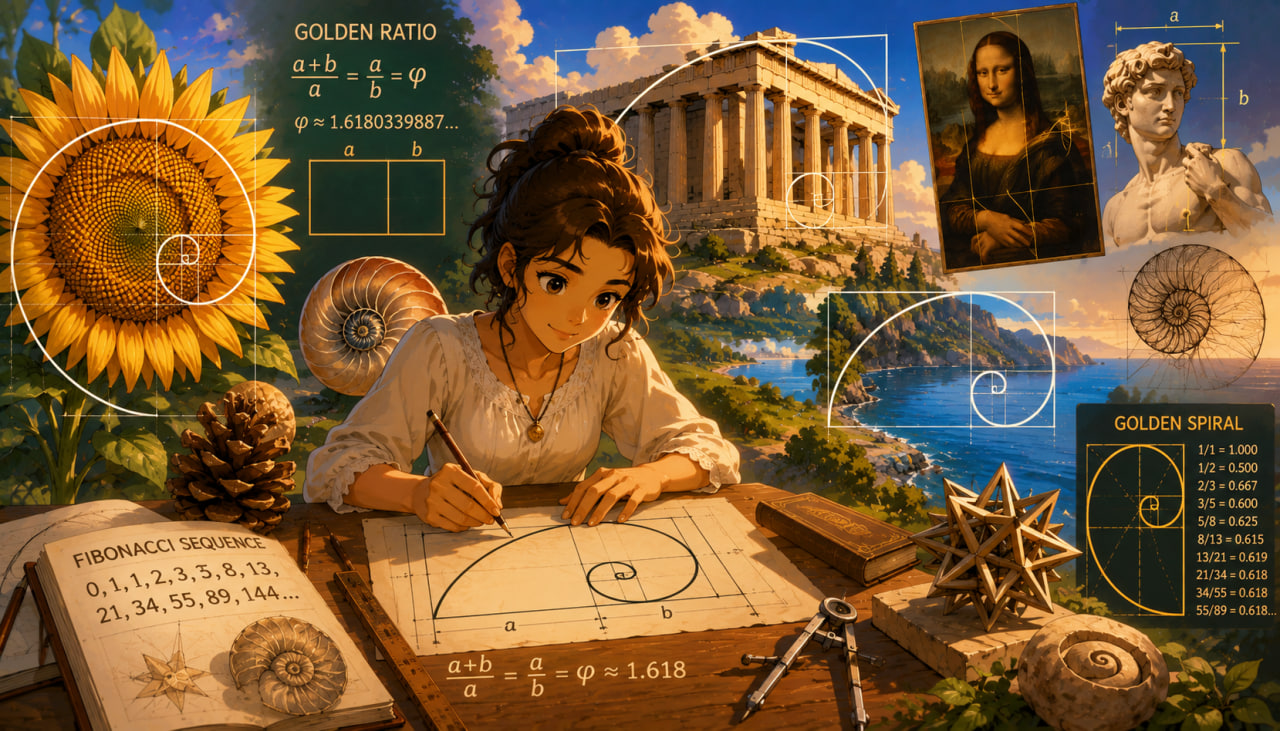
The Golden Ratio is one of the most fascinating concepts in mathematics. For centuries, mathematicians, artists, architects, scientists, and designers have been intrigued by this unique proportion, often represented by the Greek letter φ (phi) and approximately equal to 1.6180339887... Some people describe the Golden Ratio as the "perfect proportion" because it appears in geometry, certain natural growth patterns, architecture, and works of art. However, while the Golden Ratio is undeniably important in mathematics and design, modern science also warns against exaggerating its presence. Not every beautiful object or natural phenomenon follows this ratio exactly. Understanding what the Golden Ratio truly is—and what it is not—helps separate scientific fact from popular myths.

Graham's Number: So Enormous That You Couldn't Write It Even If You Filled the Entire Universe with Digits
Science Be Smart News

Graham's Number: So Enormous That You Couldn't Write It Even If You Filled the Entire Universe with Digits

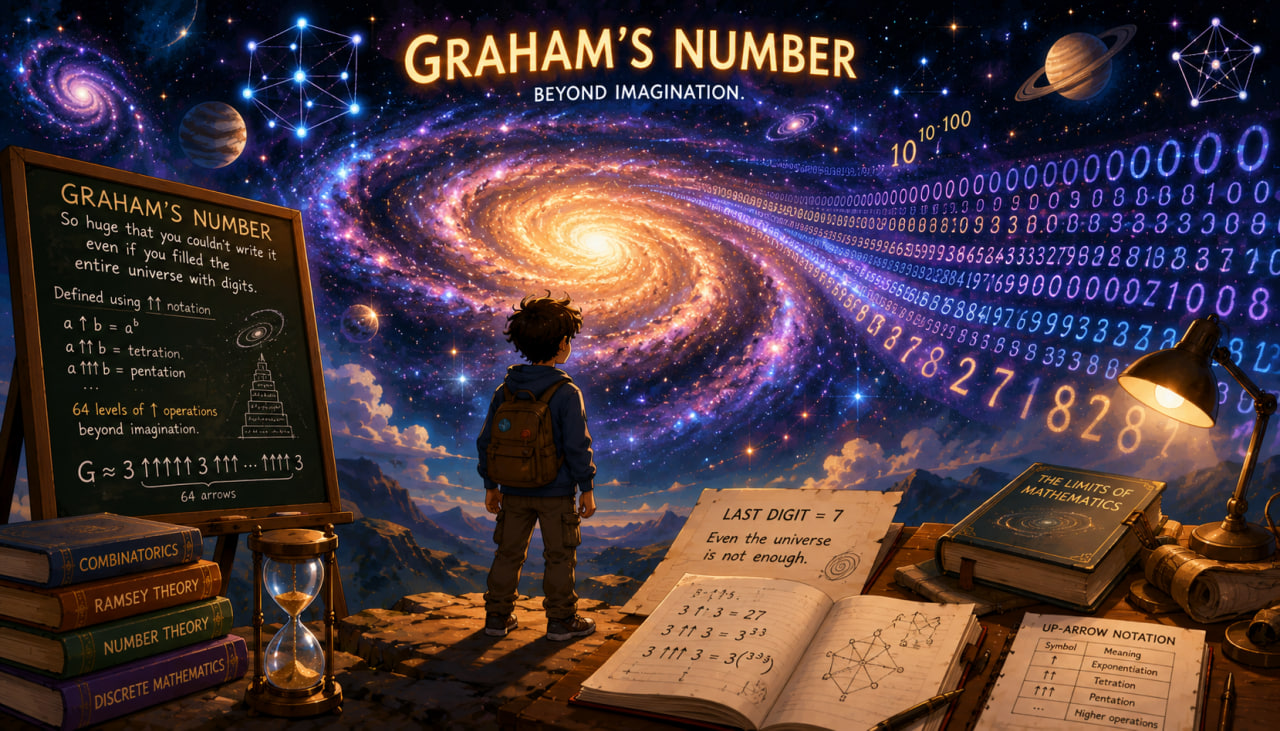
Some numbers are so large that they challenge the limits of human imagination. A million seems enormous. A billion feels almost unimaginable. Even numbers like a googol (10¹⁰⁰) and a googolplex (10^(10¹⁰⁰)) are far beyond anything we encounter in everyday life. Then comes Graham's Number—a number so unimaginably vast that it cannot be written in ordinary decimal notation, even if every atom in the observable universe were somehow transformed into a storage device for digits. Yet despite its incredible size, Graham's Number is not science fiction. It arose from a genuine mathematical proof in an area known as Ramsey theory. Perhaps the most surprising fact is that mathematicians can define Graham's Number precisely, even though they can never fully write it down.

Mathematics: The Universal Language That Shapes Our World
History Science Be Smart

Mathematics: The Universal Language That Shapes Our World

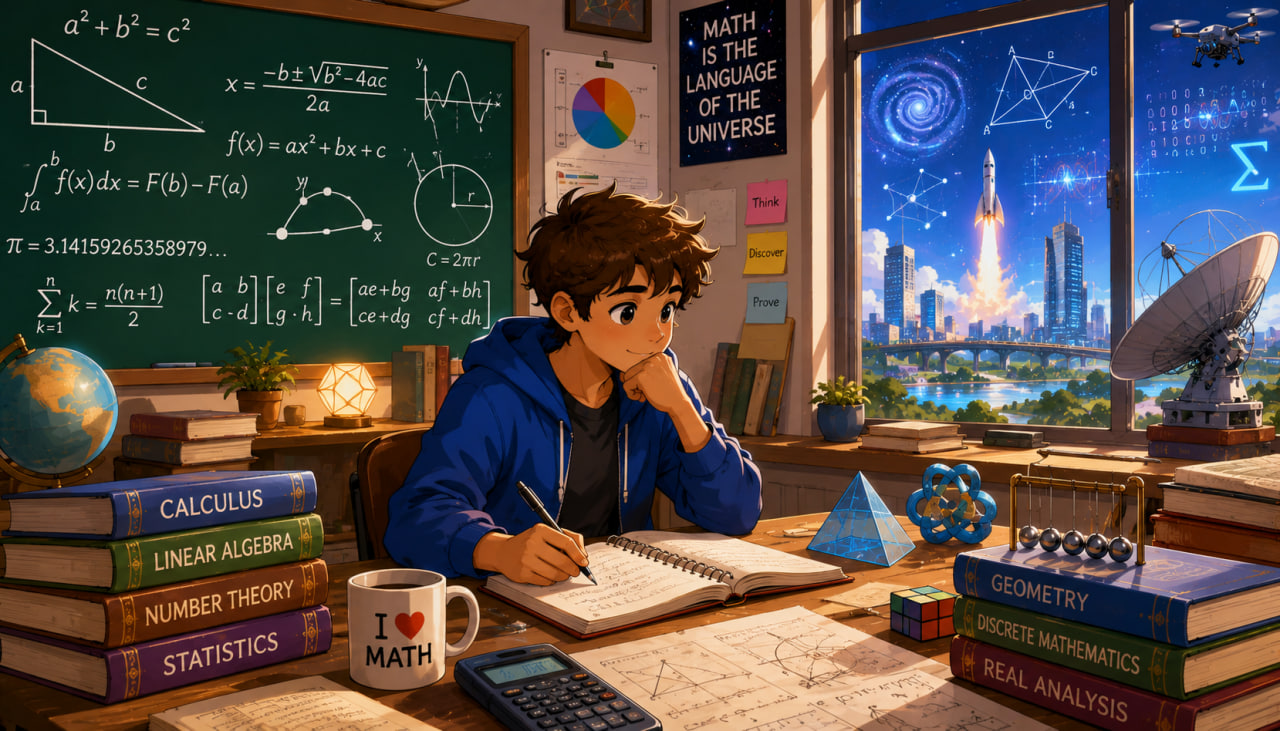
Mathematics is far more than numbers and equations taught in school. It is the universal language of science, technology, engineering, economics, and everyday life. From predicting the weather and designing spacecraft to securing online banking and developing artificial intelligence, mathematics forms the invisible foundation of modern civilization. Although many people associate mathematics with difficult formulas, its true purpose is much broader. Mathematics helps us recognize patterns, solve problems logically, and understand the world with remarkable precision. Whether calculating the trajectory of a satellite or optimizing traffic flow in a busy city, mathematics transforms complex problems into solutions.

Why Do Many Important Institutions Still Keep Paper Archives?
History Be Smart What if?

Why Do Many Important Institutions Still Keep Paper Archives?

In an era of cloud computing, artificial intelligence, and digital records, it may seem surprising that governments, courts, hospitals, banks, museums, and national archives around the world continue to store enormous collections of paper documents. After all, digital files are easier to search, duplicate, and share. Yet despite rapid technological progress, paper remains one of the most trusted and durable methods of preserving critical information. Many organizations rely on both physical and digital records because each format has unique advantages and limitations. Rather than being outdated, paper archives continue to play an essential role in protecting history, legal rights, scientific research, and national security.

AI Referees: Can Artificial Intelligence Replace Sports Officials and Commentators?
AI & Ethics AI Be Smart

AI Referees: Can Artificial Intelligence Replace Sports Officials and Commentators?

Artificial intelligence is rapidly transforming the world of sports. From automated offside detection in soccer to real-time performance analytics and AI-generated match commentary, technology is becoming an increasingly important part of both professional and amateur competitions. But an important question remains: Could AI eventually replace human referees and sports commentators altogether? The answer is more nuanced than a simple yes or no. While AI excels at processing data, detecting patterns, and making rapid calculations, sports involve human judgment, emotions, communication, and context that remain difficult for machines to fully understand. Most experts believe the future lies in collaboration between humans and artificial intelligence rather than complete replacement.

Weak AI vs Strong AI: Why Do We Fear a Technology That Doesn't Exist Yet?
AI & Ethics AI Be Smart

Weak AI vs Strong AI: Why Do We Fear a Technology That Doesn't Exist Yet?

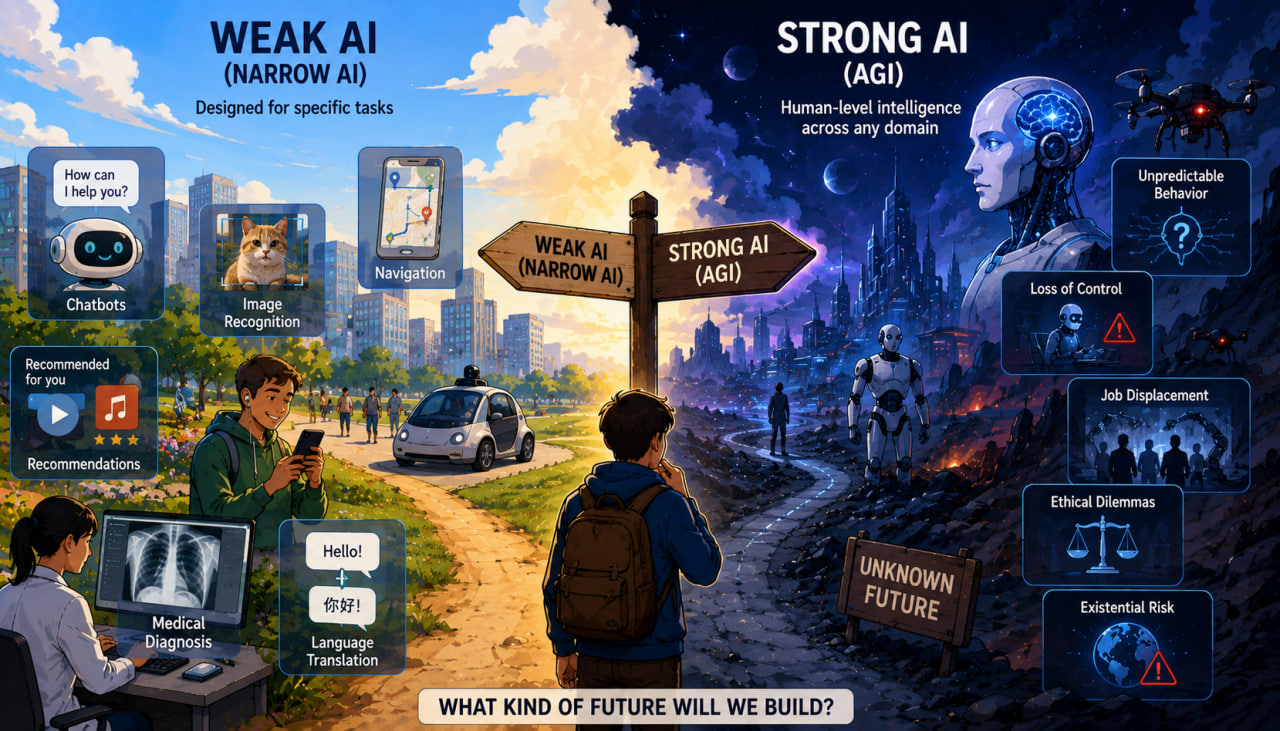
Artificial intelligence has rapidly become part of everyday life. AI helps recommend movies, translate languages, detect diseases, drive scientific discoveries, and power modern chatbots. Despite these impressive achievements, today's AI systems remain fundamentally different from the intelligent machines often portrayed in science fiction. This difference is commonly described as the distinction between Weak AI (Narrow AI) and Strong AI (Artificial General Intelligence, or AGI). While Weak AI already exists and is transforming society, Strong AI remains a theoretical concept that has not yet been achieved. Yet much of the public discussion—and many of our greatest fears—focuses on a technology that scientists have not created and do not know how to build.

Reinforcement Learning from Human Feedback (RLHF): How We Taught Chatbots to Be Helpful and Polite
AI & Ethics AI Be Smart

Reinforcement Learning from Human Feedback (RLHF): How We Taught Chatbots to Be Helpful and Polite

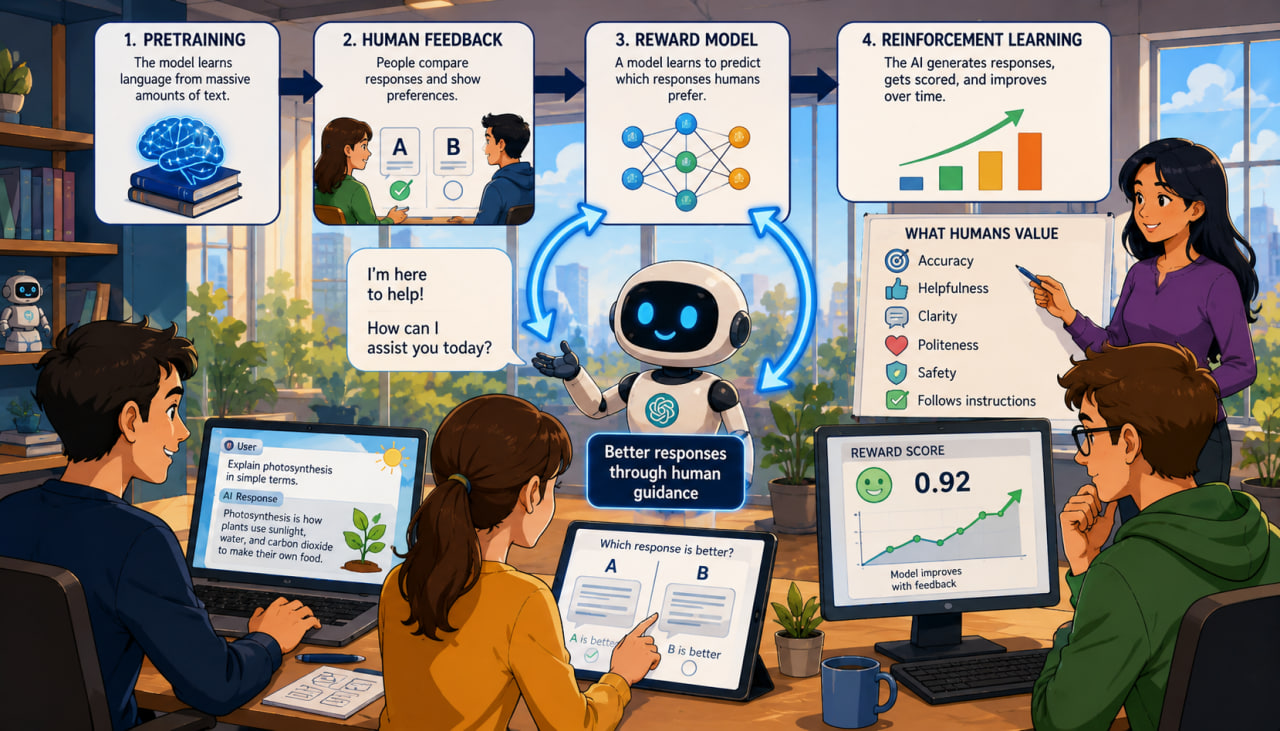
Modern AI chatbots can answer questions, explain complex topics, write code, summarize documents, and carry on surprisingly natural conversations. While large language models learn grammar, facts, and patterns from enormous collections of text, their ability to respond in a helpful, polite, and safe manner comes from additional training beyond simply predicting the next word. One of the most influential techniques behind today's conversational AI is Reinforcement Learning from Human Feedback (RLHF). Rather than teaching an AI by providing correct answers alone, RLHF allows human reviewers to evaluate model responses and guide the system toward behaviors that people generally find more useful, accurate, and respectful. This approach has played a major role in transforming powerful language models into practical assistants used by millions of people worldwide.