What Are Elementary Particles Made Of? What Modern Physics Really Says
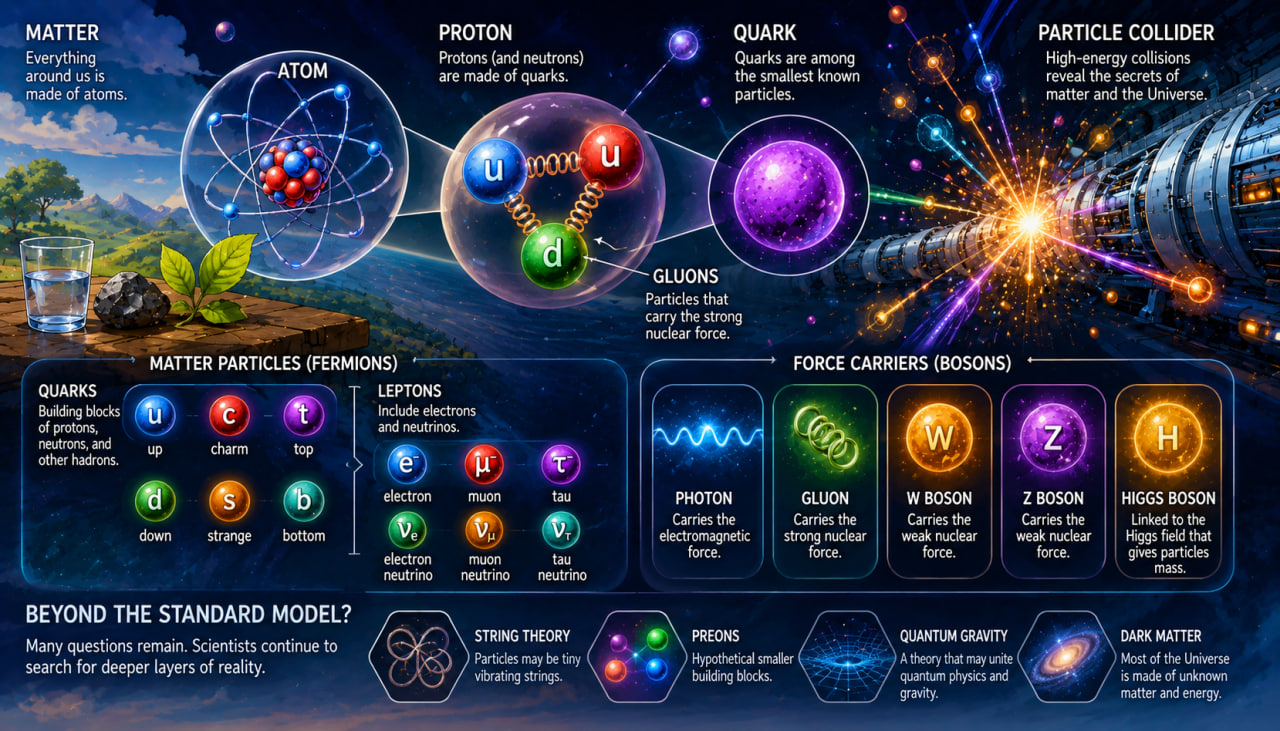
Everything we see in the Universe—from galaxies and stars to living cells and the atoms in our bodies—is built from incredibly tiny particles. For centuries, scientists believed atoms were the smallest indivisible building blocks of matter. Later, atoms were found to contain protons, neutrons, and electrons. Then physicists discovered that even protons and neutrons are composed of even smaller particles called quarks. This naturally leads to one of the biggest questions in modern physics: Are elementary particles truly fundamental, or are they themselves made of something even smaller? According to today's best scientific evidence, elementary particles appear to have no internal structure. However, scientists continue searching for deeper layers of reality that could reshape our understanding of the Universe.