Hi-Tech

Smart Grids: How Intelligent Networks Are Transforming Energy Distribution
Hi-Tech Smart Technology Science

Smart Grids: How Intelligent Networks Are Transforming Energy Distribution

Modern energy systems are undergoing a major transformation as digital technologies reshape the way electricity is generated, distributed, and consumed. One of the most important developments in this transformation is the emergence of smart grids, advanced electricity networks that use digital communication, sensors, and automation to manage energy more efficiently. Traditional power grids were designed for a one-way flow of electricity—from large power plants to homes and businesses. Smart grids, however, enable a two-way exchange of information and energy, allowing producers and consumers to interact dynamically within the system. This technological shift helps improve reliability, reduce energy losses, and integrate renewable energy sources such as solar and wind power into national electricity networks. As energy demand continues to grow, smart grids are becoming a key component of modern infrastructure designed to support a more flexible and sustainable energy system.


The Energy Storage Challenge: Breakthroughs in Battery Technologies
Hi-Tech Science Inventions

The Energy Storage Challenge: Breakthroughs in Battery Technologies

As renewable energy becomes a larger part of the global power system, one critical challenge continues to shape the future of energy infrastructure: energy storage. Solar panels and wind turbines generate electricity only when the sun shines or the wind blows, which means energy production does not always match demand. To solve this imbalance, scientists and engineers are developing advanced battery technologies capable of storing electricity for later use. Efficient energy storage systems allow renewable power to be saved during periods of high production and released when demand increases. These innovations are essential for building reliable and flexible energy systems that can support modern societies without relying heavily on fossil fuels. As a result, breakthroughs in battery technology are becoming one of the most important areas of research in the global transition to clean energy.

Xenobots: Living Biological Constructs Built from Frog Cells
Neuro-Tech Hi-Tech Bioengineering

Xenobots: Living Biological Constructs Built from Frog Cells

Xenobots are a recent scientific development that blur the boundary between biology and robotics. They are not mechanical robots and not genetically modified animals. Instead, xenobots are microscopic biological constructs assembled from living cells of the African clawed frog (Xenopus laevis). These cells are arranged into specific shapes designed through computer modeling, allowing them to perform simple tasks such as movement and self-organization. Xenobots do not possess organs, brains, or reproductive systems. However, under controlled laboratory conditions, researchers observed a unique form of self-replication driven by physical movement. Their creation has opened new discussions about synthetic biology, cellular behavior, and the future of bioengineering.

Biocomputers Based on Neurons: Growing Brain Tissue in a Dish and Teaching It to Compute
Hi-Tech Bioengineering Smart Technology

Biocomputers Based on Neurons: Growing Brain Tissue in a Dish and Teaching It to Compute

In recent years, scientists have developed experimental systems sometimes described as “biocomputers” — networks of living neurons grown in laboratory conditions and connected to electronic interfaces. These biological neural cultures can process electrical signals, adapt to stimuli, and in limited tasks demonstrate forms of learning. Although headlines often claim that researchers have “grown a brain in a dish,” the reality is more nuanced. These systems do not possess consciousness, thoughts, or awareness. Instead, they consist of clusters of neurons capable of forming networks that respond to input signals. Their development represents a frontier in neuroscience, bioengineering, and computational research.

Digital Twins: Virtual Replicas of Cities, Planets, and Patients
Hi-Tech Smart Technology AI & Ethics

Digital Twins: Virtual Replicas of Cities, Planets, and Patients

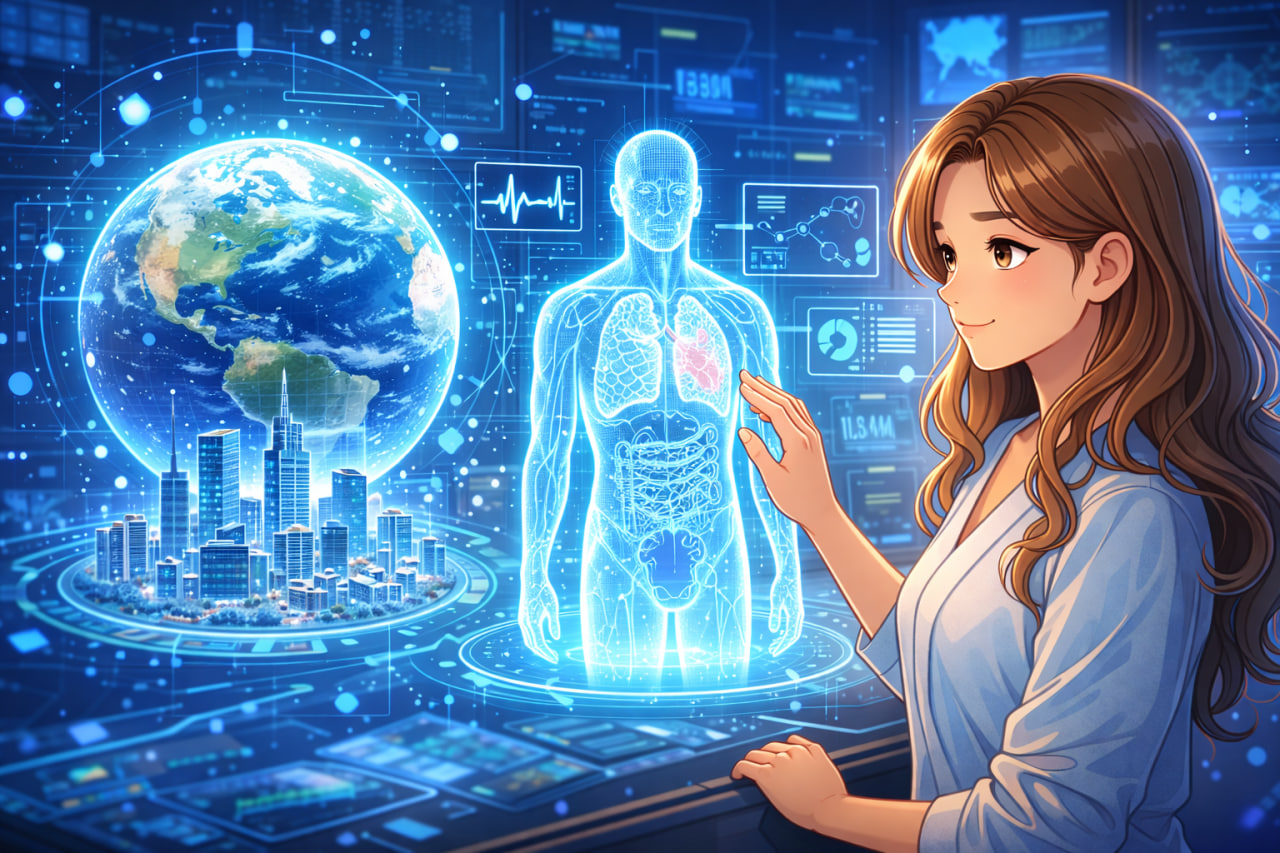
The concept of a digital twin refers to a highly detailed virtual model that mirrors a real-world object, system, or living organism. Originally developed for industrial engineering, digital twin technology is now expanding into urban planning, healthcare, environmental science, and even planetary research. By combining real-time data, sensors, simulations, and advanced analytics, digital twins allow researchers and professionals to test scenarios without physically altering the original system. This capability improves decision-making, reduces risk, and increases efficiency across many sectors. Whether modeling an entire smart city, a patient’s cardiovascular system, or global climate patterns, digital twins represent a powerful bridge between physical reality and computational insight. As technology evolves, these virtual replicas are becoming increasingly precise and dynamic.

AI in High-Energy Physics: Searching for New Particles in Colliders
Hi-Tech AI & Ethics Science

AI in High-Energy Physics: Searching for New Particles in Colliders

High-energy physics explores the fundamental building blocks of matter by accelerating particles to near-light speeds and colliding them inside massive detectors. Experiments conducted at particle colliders generate enormous volumes of data, recording billions of particle interactions every second. Identifying meaningful signals within this data is one of the greatest challenges in modern physics. Artificial intelligence has become an essential tool in filtering, classifying, and analyzing collision events. By recognizing subtle statistical patterns, AI systems assist physicists in the search for previously unknown particles. As experiments grow more complex, machine learning accelerates discovery while maintaining scientific rigor.

Interstellar Travel: The Breakthrough Starshot Project and Other Concepts
Space Stories Cosmic Innovations Hi-Tech

Interstellar Travel: The Breakthrough Starshot Project and Other Concepts

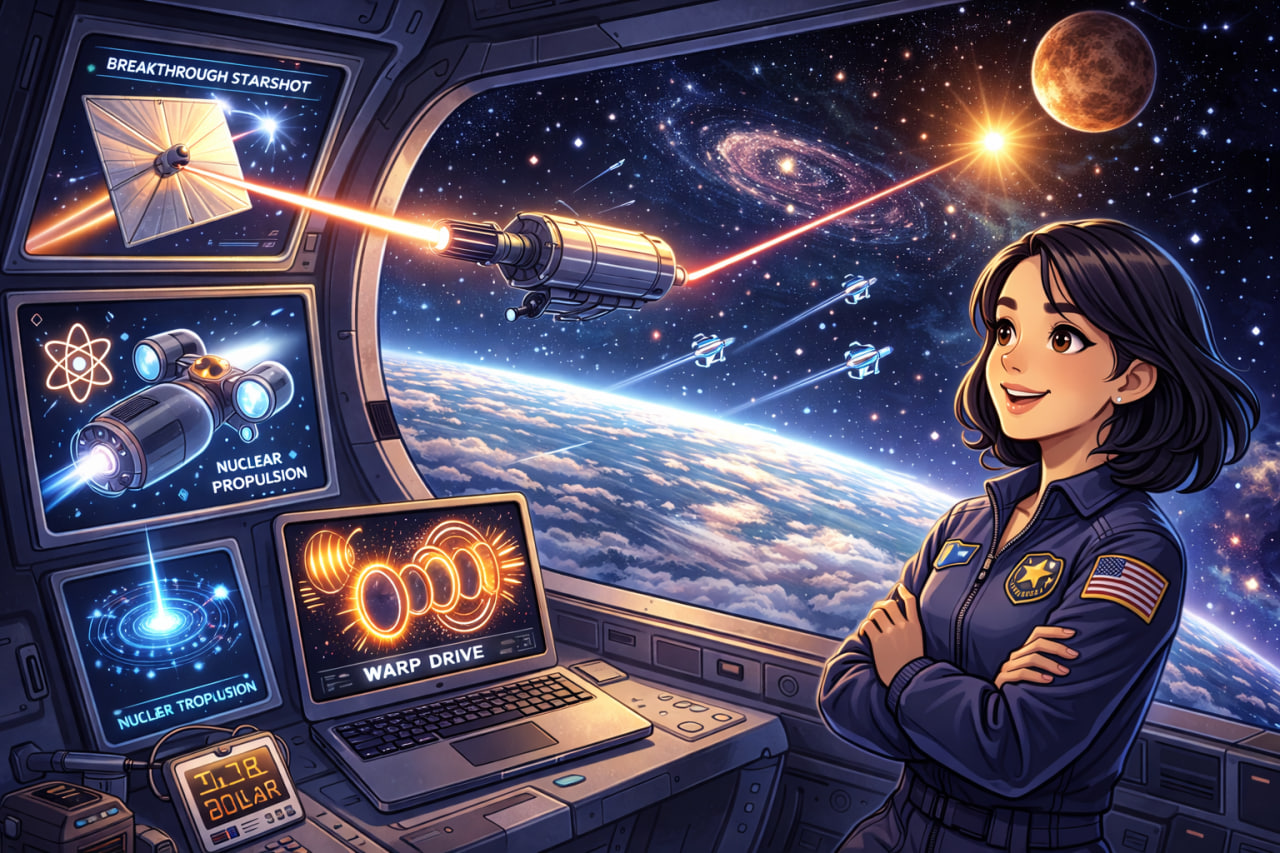
Interstellar travel—the journey beyond our solar system to other stars—has long been a dream of scientists and science fiction writers alike. Unlike missions to Mars or Jupiter, traveling to another star involves distances so vast that conventional spacecraft would require tens of thousands of years to arrive. However, in recent decades, serious scientific initiatives have begun exploring whether interstellar missions could become technically feasible. Among these efforts, Breakthrough Starshot stands out as one of the most ambitious and innovative concepts. While practical interstellar travel remains far beyond current human capability, research and theoretical engineering continue to push the boundaries of what might be possible in the future.

Radiation Protection During Long-Duration Space Travel
Space Stories Cosmic Innovations Hi-Tech

Radiation Protection During Long-Duration Space Travel

Long-duration space missions expose astronauts to radiation levels far higher than those experienced on Earth. Unlike our planet, which is protected by a magnetic field and thick atmosphere, deep space offers little natural shielding against high-energy particles. During missions to Mars or beyond, crews would spend months or even years outside Earth’s protective magnetosphere. Prolonged exposure to space radiation increases risks of cancer, nervous system damage, and other health complications. Protecting astronauts from radiation is therefore one of the most critical challenges in planning deep-space exploration. Effective solutions require a combination of engineering, biology, and mission design strategies.

Space Medicine: How Long-Term Exposure to Microgravity Changes the Human Body
Space Stories Cosmic Innovations Hi-Tech

Space Medicine: How Long-Term Exposure to Microgravity Changes the Human Body

Space medicine studies how the human body responds to the extreme conditions of space, especially prolonged exposure to microgravity, radiation, and isolation. While astronauts appear to float effortlessly in orbit, the absence of gravity triggers profound physiological changes. The human body evolved under constant gravitational pull, and when that force disappears, multiple systems begin to adapt—sometimes in harmful ways. Missions lasting months aboard space stations have revealed patterns of bone loss, muscle atrophy, cardiovascular shifts, and neurological changes. As space agencies plan missions to Mars and beyond, understanding these effects has become a central priority. Protecting astronaut health during long-duration missions is one of the most complex challenges in modern aerospace science.

Neuromorphic Chips: Computers That Work Like the Brain
Neuro-Tech Hi-Tech Smart Technology

Neuromorphic Chips: Computers That Work Like the Brain

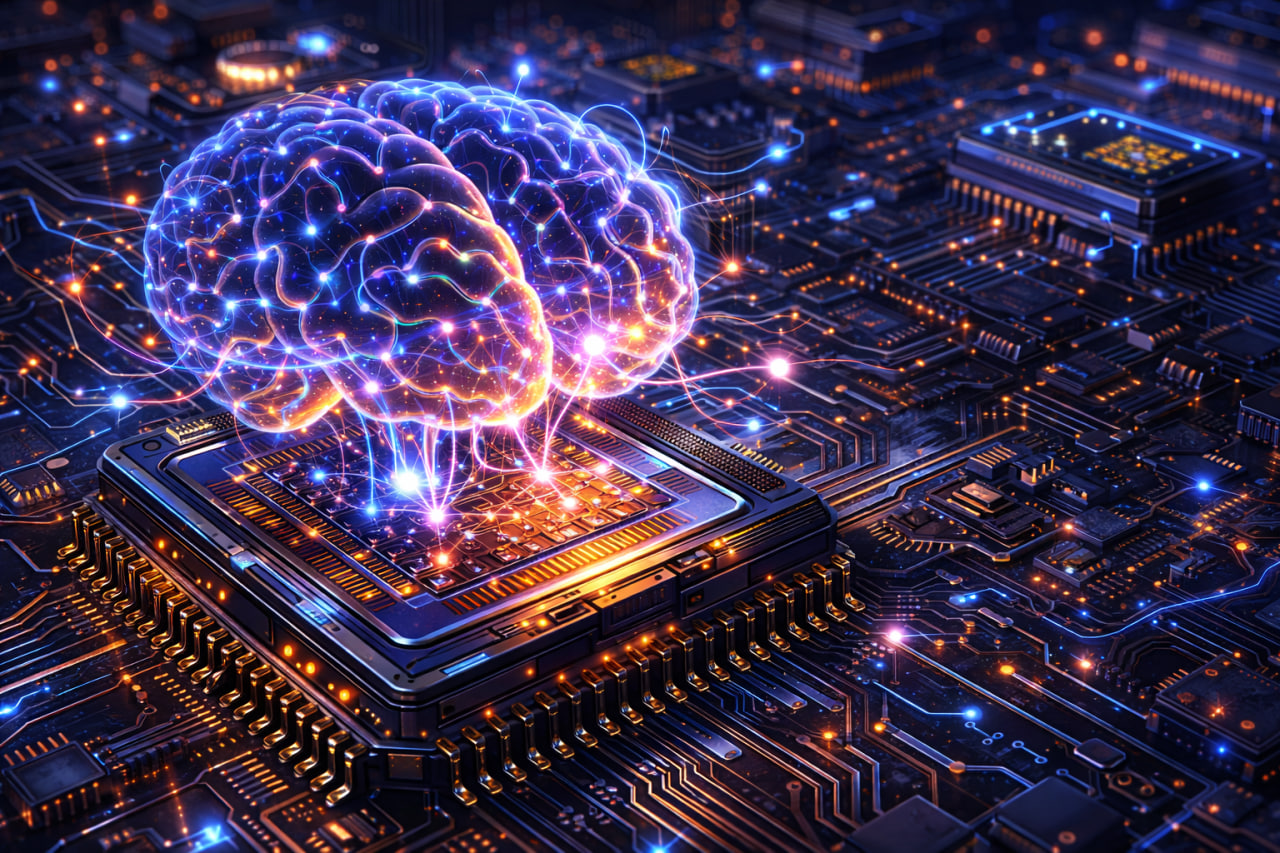
Neuromorphic chips are a new generation of processors designed to mimic the structure and function of the human brain. Unlike traditional computers that process information sequentially using rigid architectures, neuromorphic systems are inspired by biological neural networks. They attempt to replicate how neurons and synapses communicate, allowing machines to process information in parallel and adapt over time. This approach promises dramatic improvements in energy efficiency, pattern recognition, and real-time decision-making. As artificial intelligence becomes more integrated into daily life, neuromorphic computing may represent the next major shift in hardware design. Understanding how these chips work reveals why they are considered a potential revolution in computing.